Artwork
Matthew Boulton, F.R.S.
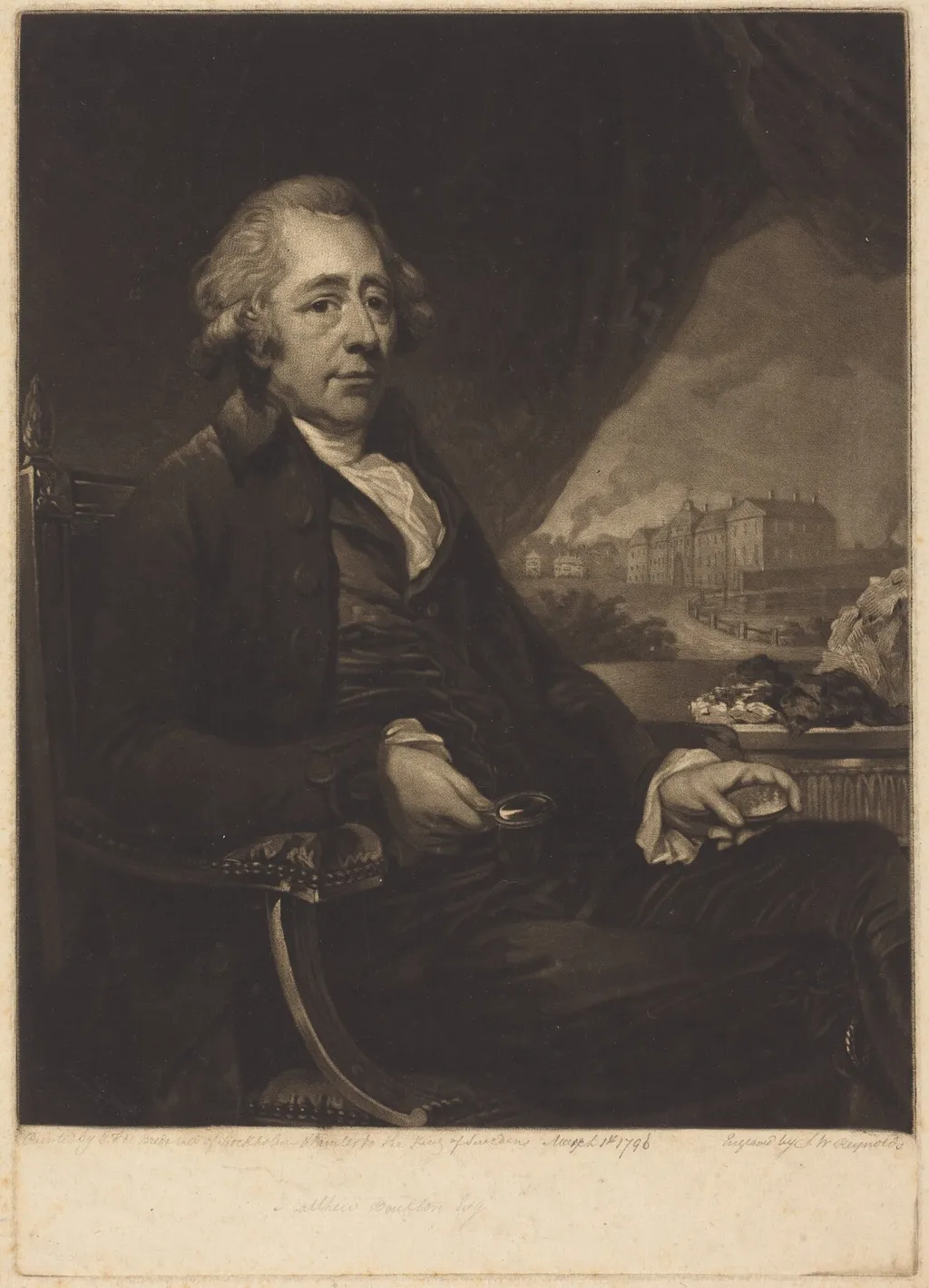
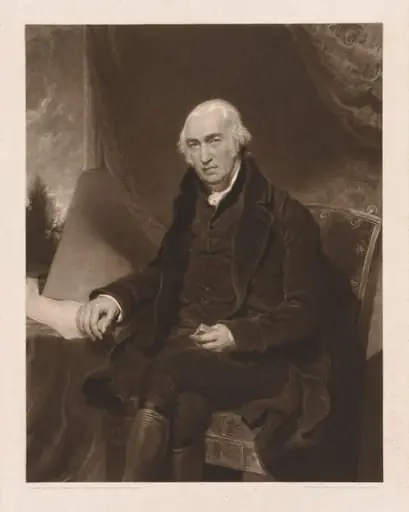
Matthew Boulton, F.R.S. is an ink print by the Romanticist artist Samuel William Reynolds I. It dates from 1796 and is held in the collection of the National Gallery of Art. Matthew Boulton, F.
About this work
The artist used a printmaking method called *mezzotint*, which creates deep shadows and smooth tones—notice how the light falls softly on his face.
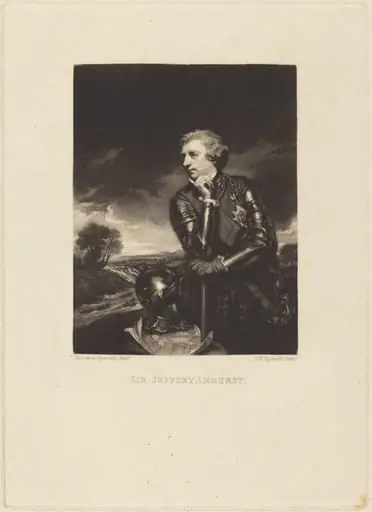
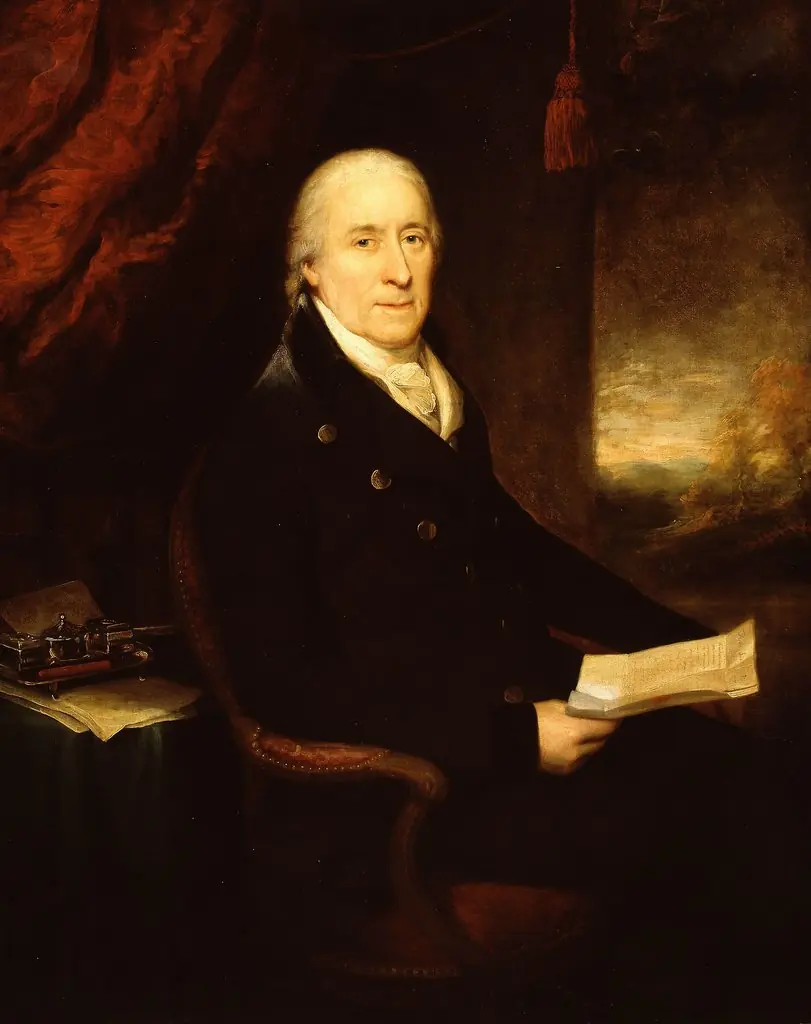
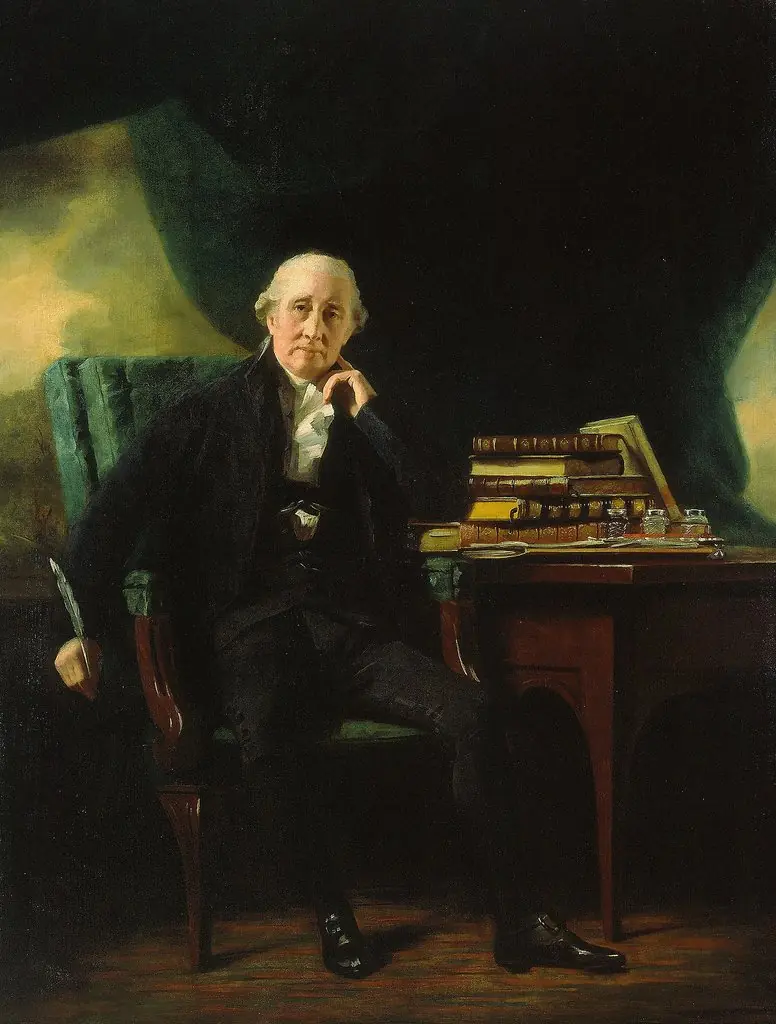
This is a black-and-white portrait of a man in a dark coat and white cravat, sitting with one hand resting on a table. Behind him, a small landscape shows buildings by a river, and a tray holds folded cloths. The man’s face is serious, with short curly hair and a slight frown.
The artist used a printmaking method called *mezzotint*, which creates deep shadows and smooth tones—notice how the light falls softly on his face. This was made in 1796.
If you like this style, look up *chiaroscuro* next to see how artists use light and dark for drama.
Overview
Matthew Boulton, F.R.S. is a portrait print created in 1796 by Samuel William Reynolds I, executed in mezzotint, a technique renowned for its ability to capture nuanced tonal ranges.
Subject & Meaning
The portrait depicts Matthew Boulton, a fellow of the Royal Society, in a contemplative pose. Seated in a dark coat and white cravat, his serious expression and slight frown convey a sense of introspection. The background, featuring a landscape with riverfront buildings and a tray of folded cloths, subtly contextualizes his persona.
Technique & Style
Reynolds I utilized mezzotint to achieve deep, rich shadows and smooth, graduated tones. This is evident in the soft, nuanced lighting on the subject’s face, highlighting the expressive capabilities of the medium. The work exemplifies the chiaroscuro effect, where contrast between light and dark enhances the portrait’s depth and drama.
History & Provenance
Created in 1796, specific details regarding the print’s provenance and historical context beyond its creation are not provided.
Context
The portrait reflects late 18th-century British portraiture trends, where mezzotint was a valued medium for capturing likenesses of esteemed individuals like Boulton. The inclusion of symbolic elements (e.g., the landscape, cloths) may allude to Boulton’s interests or achievements, though their precise meaning is not specified here.
Legacy
While the broader impact or notable exhibitions of *Matthew Boulton, F.R.S.* are not detailed, the piece contributes to the historical record of mezzotint’s application in portraiture during its time.
Artist & collection