Artwork
James Watt
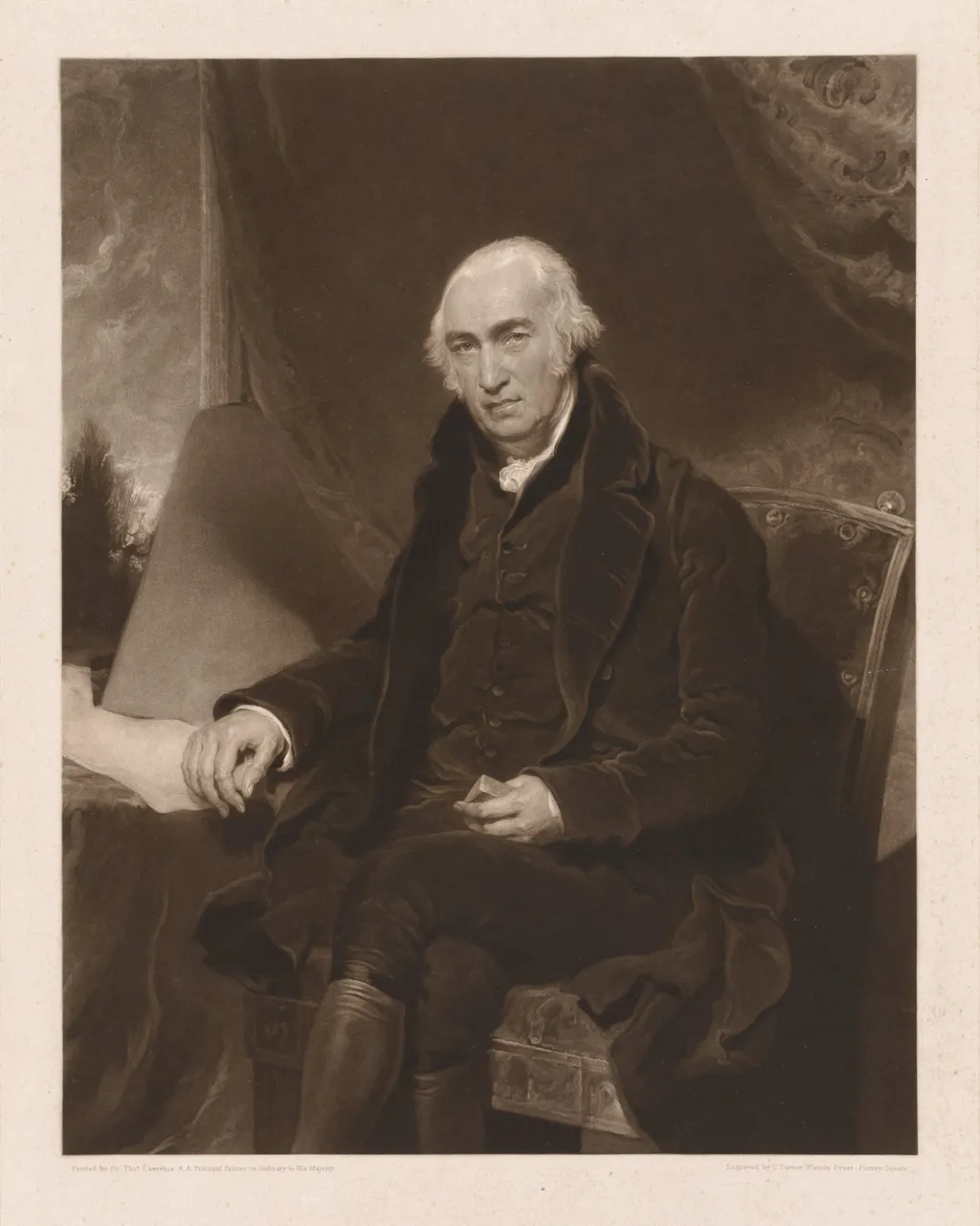
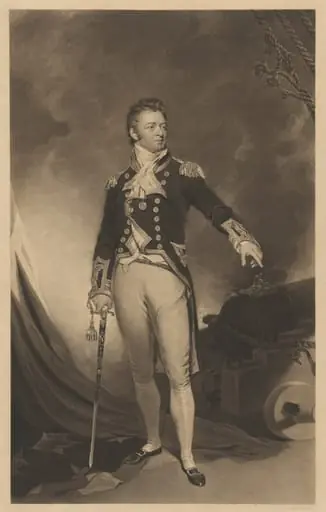
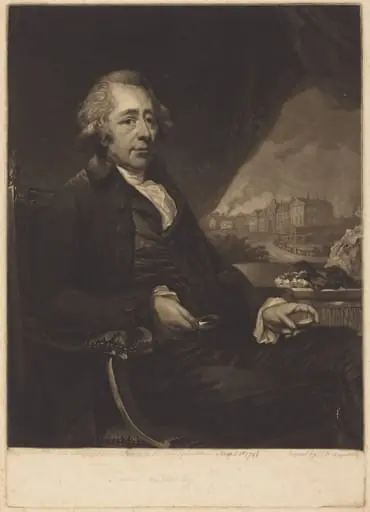
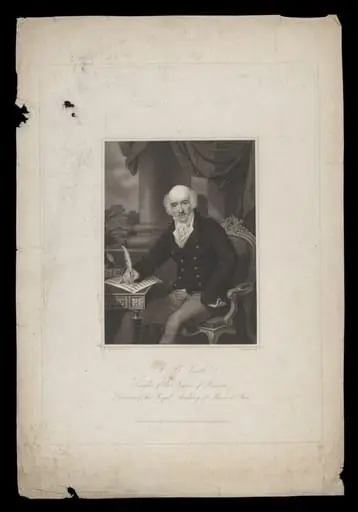
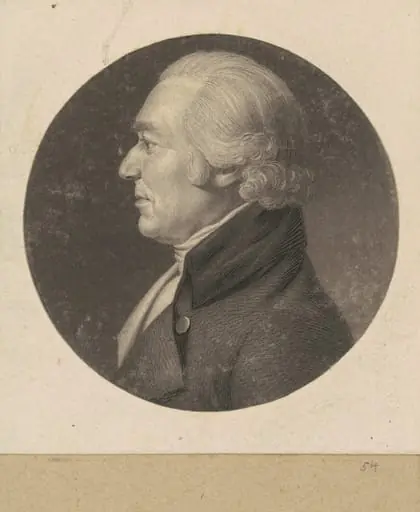
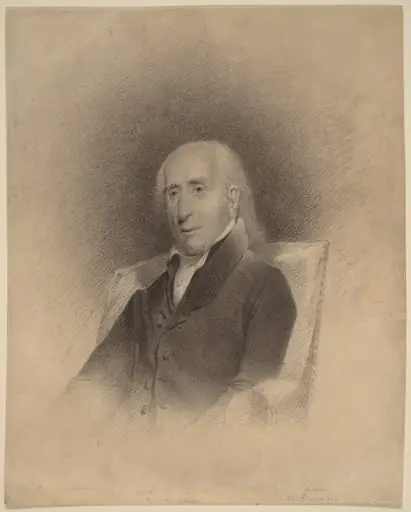
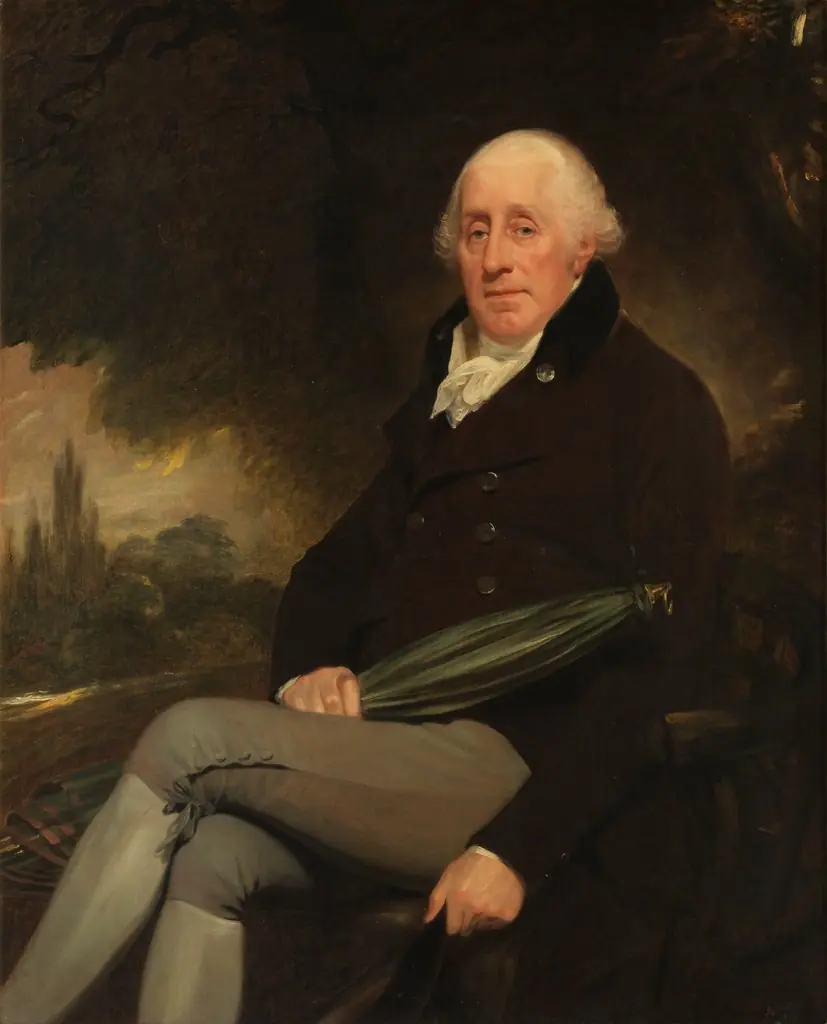
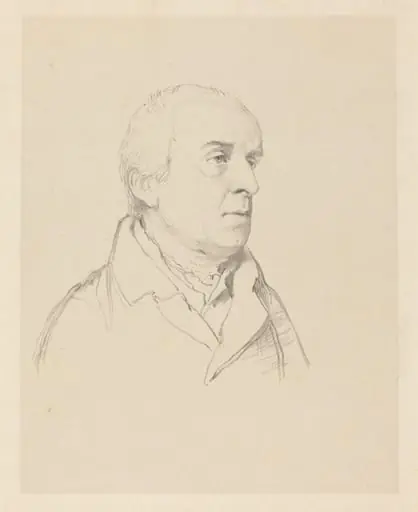
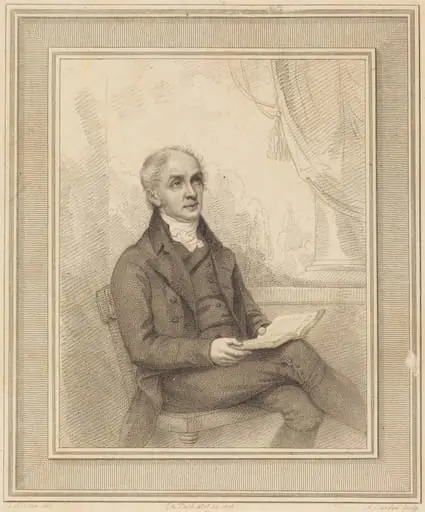
James Watt is a print by the Romanticist artist Charles Turner. It dates from 1815 and is held in the collection of the Cleveland Museum of Art.
About this work
Overview
Charles Turner’s 1815 engraving presents a likeness of the Scottish engineer James Watt. Executed in the early nineteenth century, the work is held by the Cleveland Museum of Art and exemplifies Turner’s focus on portraiture within the broader context of his printmaking career.
Subject & Meaning
The image shows an elderly Watt with white hair, seated in a dark jacket and trousers. He rests his right hand on a sheet of paper placed on a nearby table, while his left hand holds a small object that may reference his mechanical inventions. His gaze is directed outward, conveying a thoughtful, contemplative demeanor.
Technique & Style
Turner employed fine line engraving to render subtle textures in the dark background and to model the figure’s features with delicate shading. The restrained palette and emphasis on tonal variation align the piece with the Romantic era’s interest in individual character and introspection.
History & Provenance
The engraving was produced while Turner was assisting J. M. W. Turner on the initial plates for the *Liber Studiorum* series. After its creation, the print entered various collections before being acquired by the Cleveland Museum of Art, where it remains on view.
Context
Created during a period when industrial innovation was reshaping society, the portrait reflects contemporary respect for figures like Watt, whose improvements to the steam engine were pivotal to the Industrial Revolution. The work thus serves both as a personal likeness and a visual record of an era’s technological hero.
Artist & collection
Artist
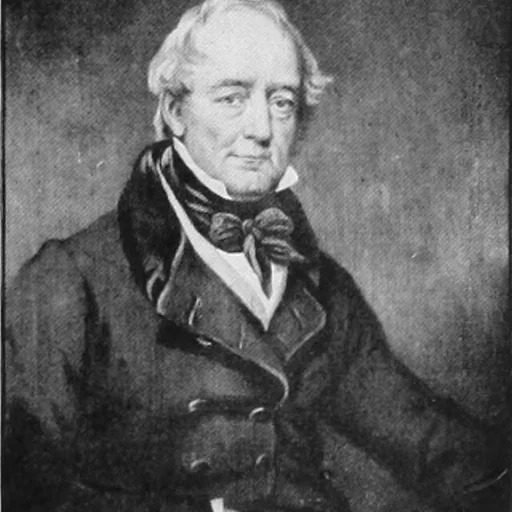
Charles Turner (31 August 1774 – 1 August 1857) was an English engraver and draughtsman who specialised in portraiture. He collaborated with J. M. W. Turner (to whom he was not related) on the early plates of the same's Liber Studiorum.