Artwork
Studies of the Colosseum and Monte Pincio (verso)
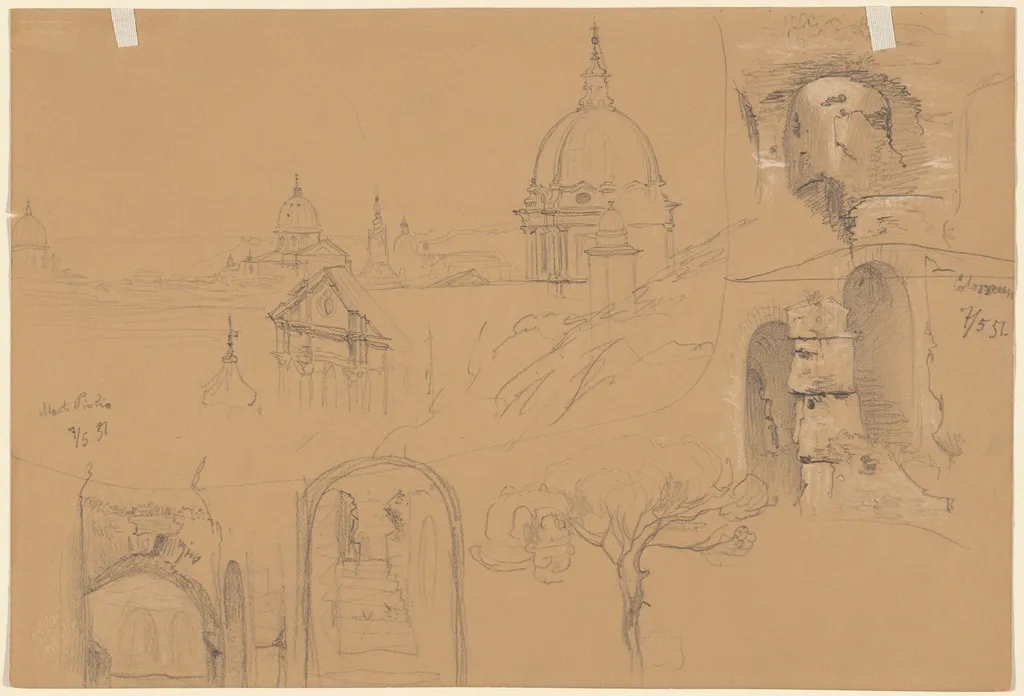
Studies of the Colosseum and Monte Pincio (verso) is a graphite drawing by the Impressionist artist Julius Jacob the Elder. It dates from 1851 and is held in the collection of the National Gallery of Art.
About this work
Overview
Created in 1851, this graphite drawing on brown paper records a series of rapid studies of two Roman landmarks: the Colosseum and the hill of Monte Pincio. The work consists of several small, loosely rendered sketches placed side by side, each capturing a fragment of architecture or landscape with a spontaneous, sketch‑book quality.
Subject & Meaning
The studies juxtapose the monumental arches of the ancient amphitheatre with the gentle slopes and ruins of Monte Pincio, offering a comparative view of Rome’s layered history. By recording both the grand scale of the Colosseum and the more modest, weathered structures on the hill, the artist highlights the coexistence of monumental and everyday ruin in the cityscape.
Technique & Style
Executed with graphite lines softened by white heightening, the drawing employs a subtle chiaroscuro that models forms through light and shadow. The brown paper, likely pre‑aged, provides a warm ground that enhances the contrast of the white accents, while the loose, gestural strokes convey immediacy and an exploratory approach to the subjects.
History & Provenance
Attributed to the German draughtsman Jacob the Elder, sometimes recorded as Julius, the piece emerged in the mid‑19th century, a period when artists frequently produced on‑site sketches of classical sites for study or publication. Its later ownership trail is not fully documented, but the work has remained within European collections focused on travel drawing.
Context
The drawing reflects the 19th‑century fascination with antiquity and the practice of creating preparatory studies for larger compositions or illustrated travel books. Rome’s ruins were a central motif for artists undertaking Grand Tour journeys, and such sketches served both as personal records and as material for academic discourse on architectural heritage.
Artist & collection


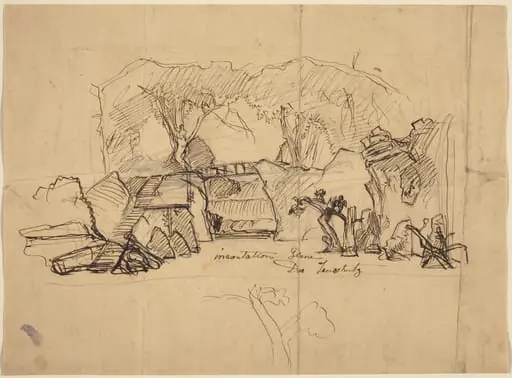 Incantation Scene from "Der Freischutz"
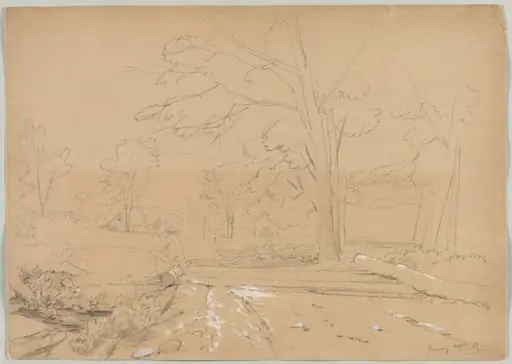 Landscape with Man Fishing, Conway, New Hampshire
![The Ripetta in Rome [verso], by Augustin Pajou](https://artifactworldgallery.com/img/augustin-pajou--the-ripetta-in-rome-verso--4bc04e9c9476a91b-w320.webp) The Ripetta in Rome [verso]
The Ripetta in Rome [verso]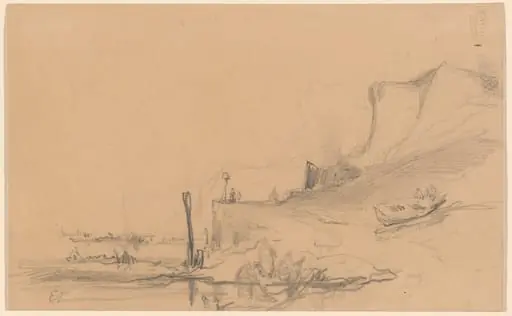 A Coast Road with Cliffs in the North of France
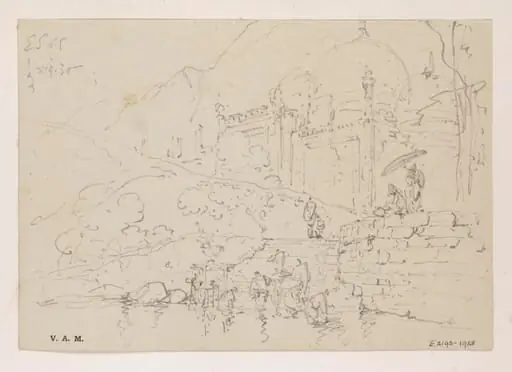 A domed tomb in India, with steps leading down to water
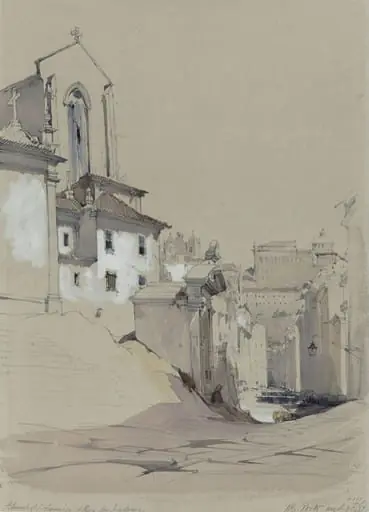 Church of San Francisco and Rua dos Ingleses, Oporto
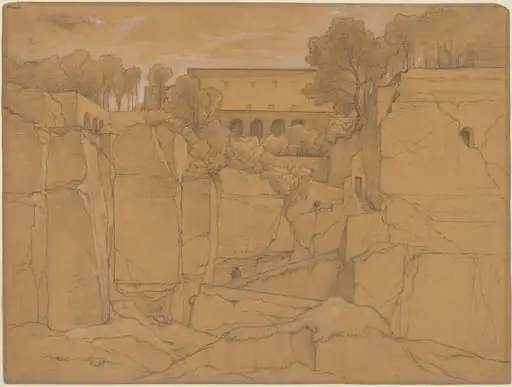 Sorrento
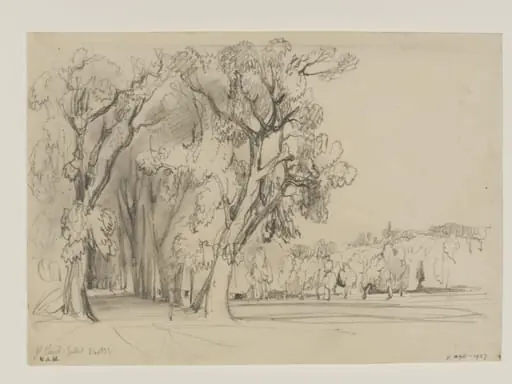 Drawing of St. Cloud
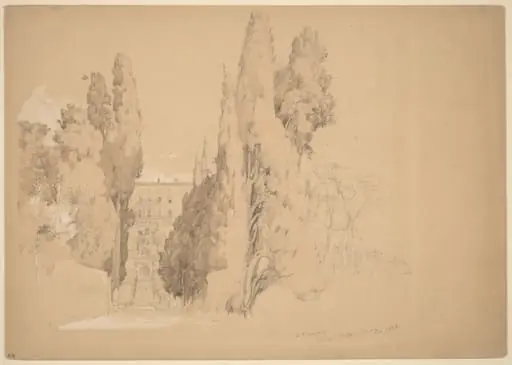 Villa d'Este, Tivoli
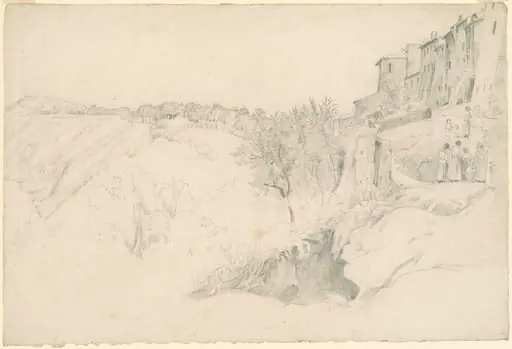 Hillside with Houses and Figures
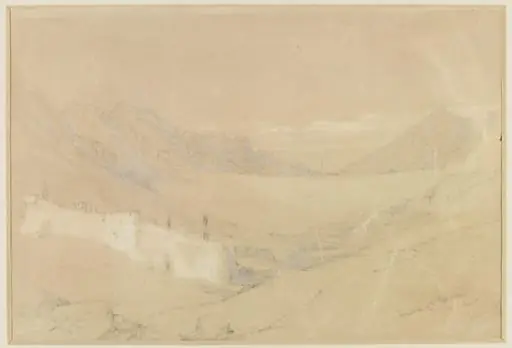 Convent of St. Katherine, Mount Sinai
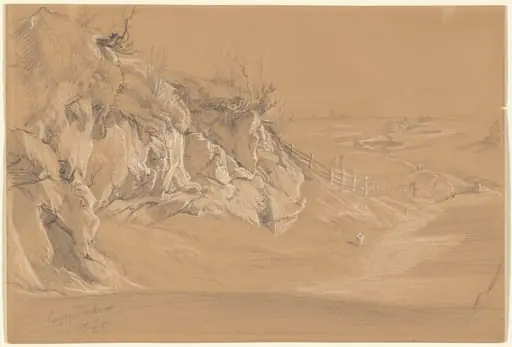 Campagna di Roma (Roman Countryside) (recto)