Artwork
Hercules Defeated the Centaurs
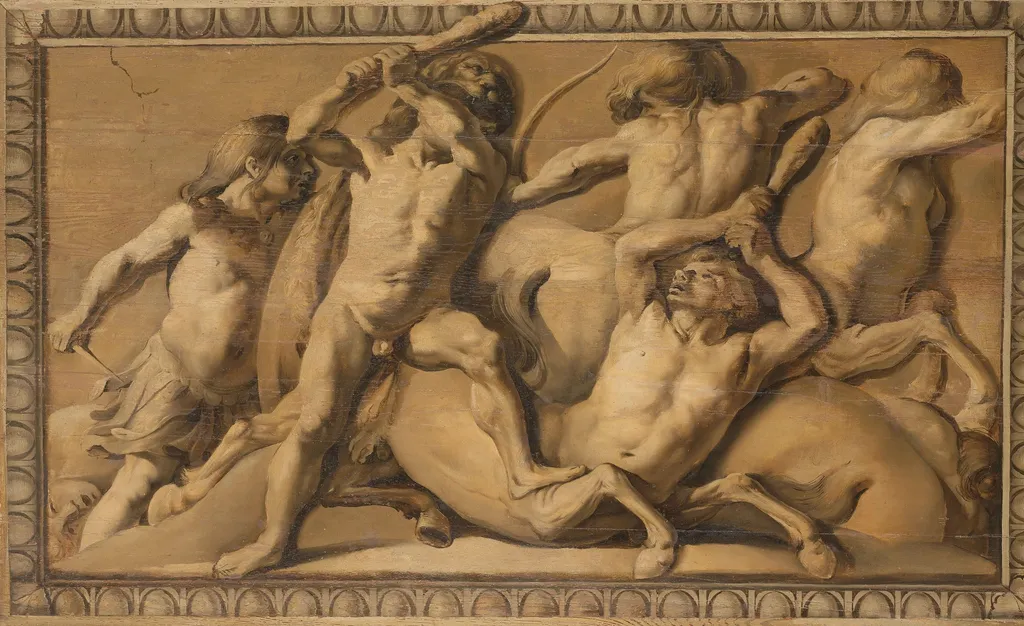
Hercules Defeated the Centaurs is an oil painting by the Dutch Golden Age artist Jacob van Campen. It dates from 1650 and is held in the collection of the Rijksmuseum.
About this work
Overview
Jacob van Campen’s oil painting, dated around 1650, depicts a mythic confrontation between Hercules and a group of centaurs. Executed in the Dutch Baroque period, the work is part of the Rijksmuseum’s collection. The composition centers on the heroic figure of Hercules, whose muscular form and club dominate the scene amid a chaotic melee of half‑human, half‑equine opponents.
Subject & Meaning
The narrative draws on the classical tale of Hercules subduing the unruly centaurs, symbolising the triumph of order over barbarism. By placing the hero at the focal point, van Campen emphasizes the virtues of strength and control, while the surrounding centaurs embody untamed nature and the challenges that the hero must overcome.
Technique & Style
Van Campen employs a pronounced chiaroscuro, allowing light to strike the bodies of Hercules and the centaurs, thereby separating them from a darker backdrop. The oil medium affords a rich palette and fluid brushwork that convey motion and tension, while the contrast of illuminated musculature against shadow heightens the drama of the encounter.
History & Provenance
Created circa 1650, the painting entered the Rijksmuseum’s holdings as part of its Dutch Golden Age collection. Although specific acquisition details are sparse, the work has remained in the museum’s public display, offering insight into van Campen’s lesser‑known contributions beyond his architectural achievements.
Context
During the mid‑17th century, Dutch artists frequently revisited classical mythology to explore moral and philosophical themes. Van Campen’s choice of a Hercules episode aligns with contemporary interests in heroic virtue, while his use of dramatic lighting reflects broader Baroque tendencies toward theatricality and emotional intensity.
Artist & collection