Artwork
Still Life with Fruit and Flower Garlands
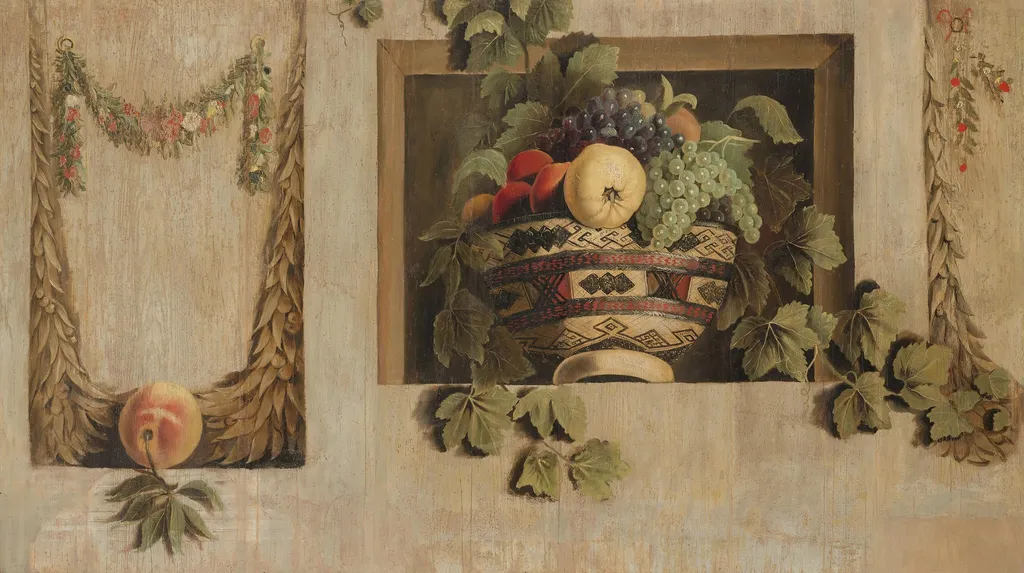
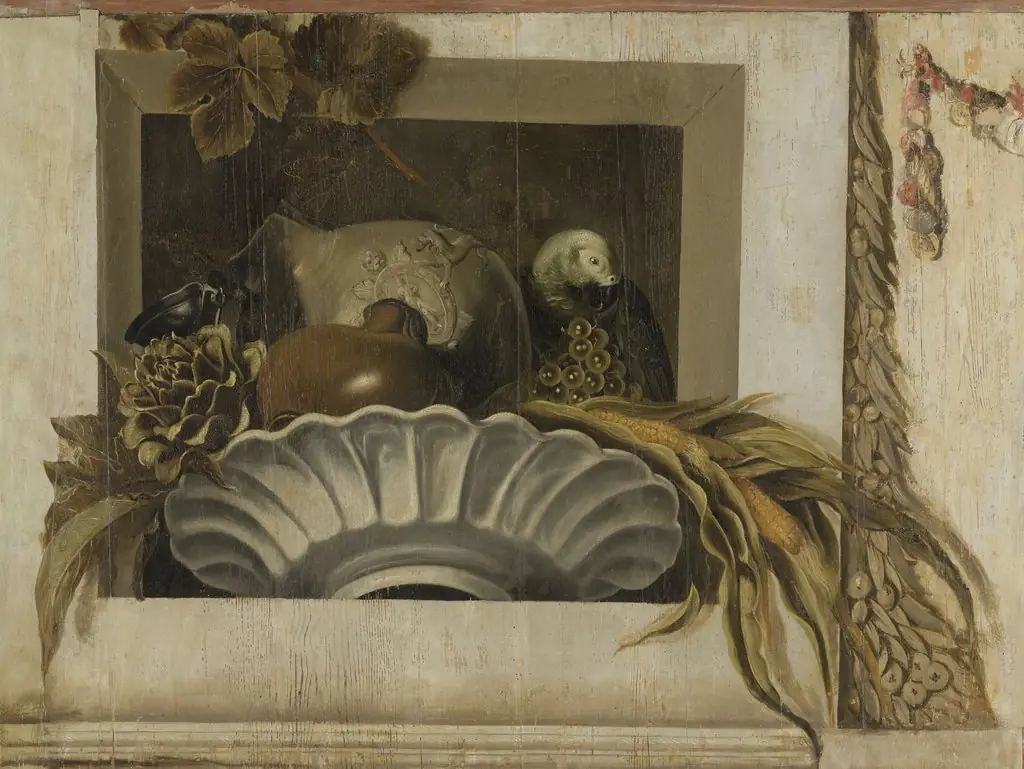
Still Life with Fruit and Flower Garlands is an oil painting by the Dutch Golden Age artist Jacob van Campen. It dates from 1650 and is held in the collection of the Rijksmuseum.
About this work
Overview
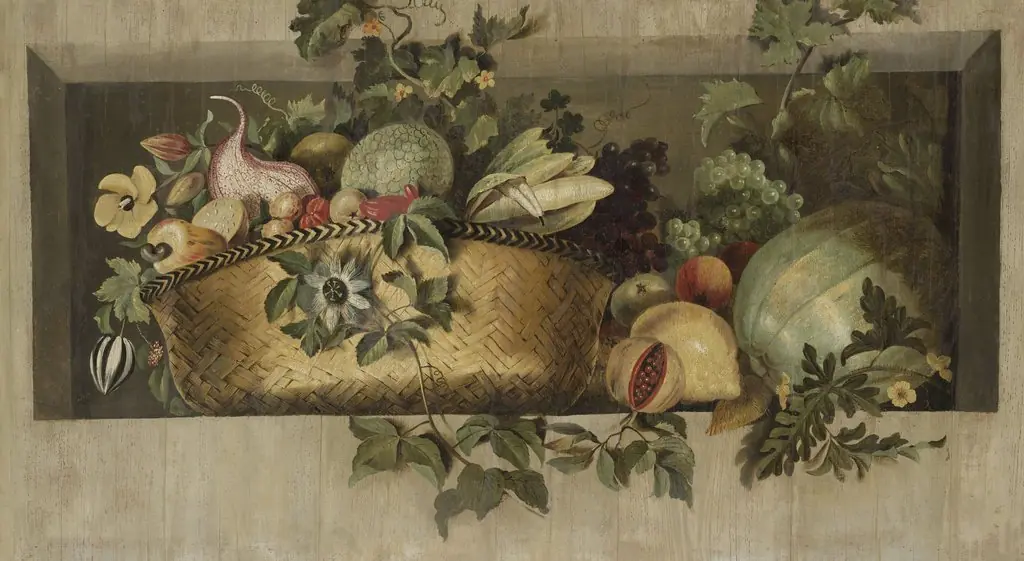
Jacob van Campen’s oil painting, dated around 1650, presents a modest still‑life arrangement that centers on a basket of fruit perched on a shelf. The composition is confined within a shallow niche, its simple background allowing the objects to dominate the viewer’s attention. The work is part of the Rijksmuseum’s collection and exemplifies mid‑seventeenth‑century Dutch genre painting.
Subject & Meaning
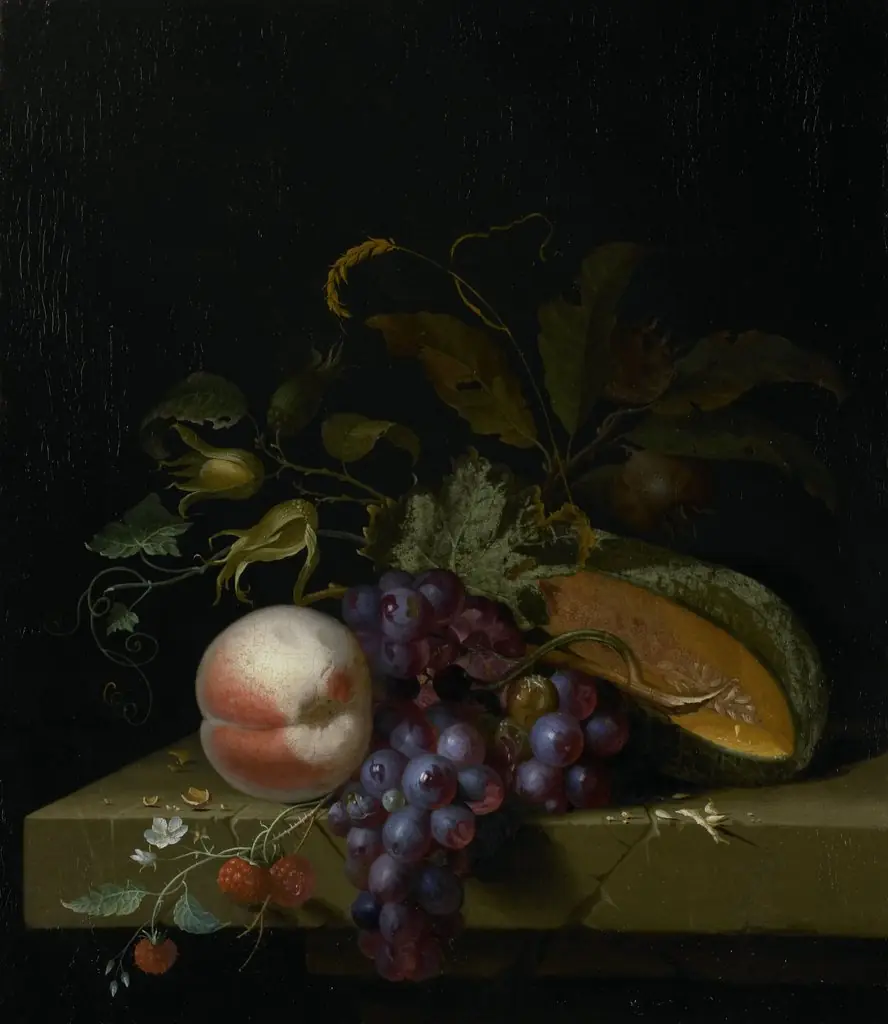
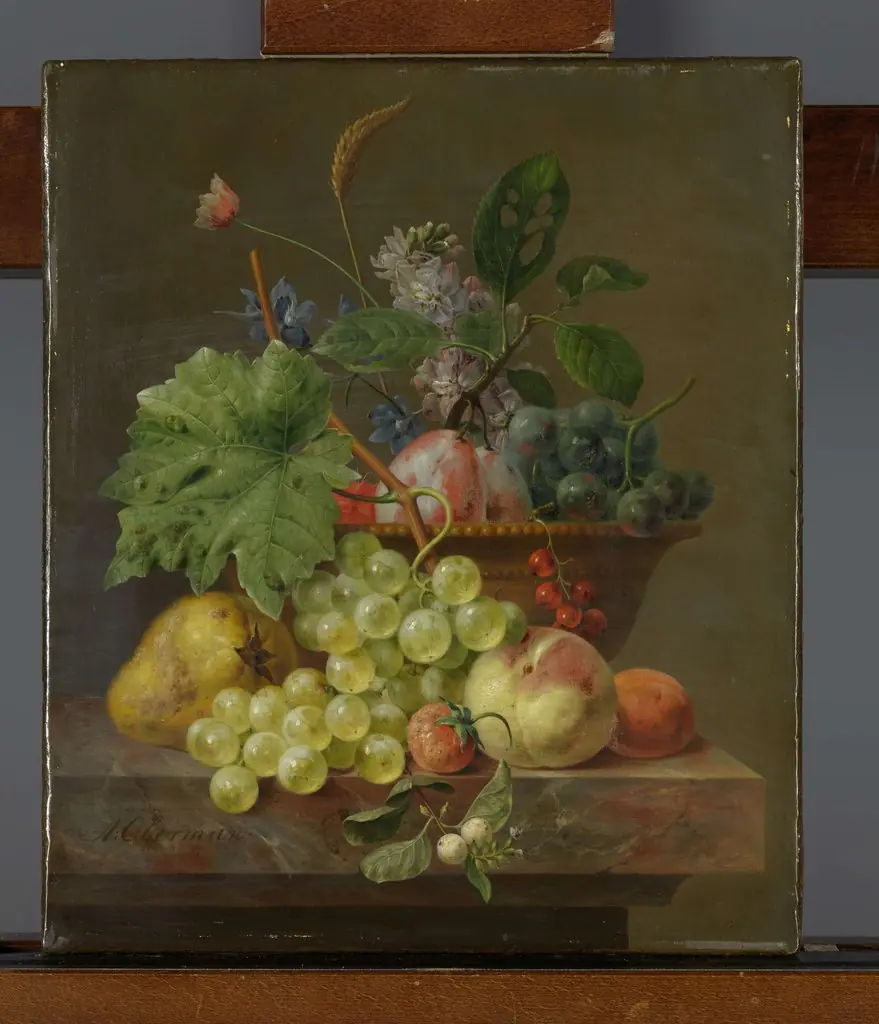
The tableau features a wicker basket brimming with grapes, a pear, peaches and a squash, while a solitary peach rests on the ledge outside the basket. Vines laden with small red berries frame the shelf, suggesting a cultivated abundance. The choice of everyday produce reflects the period’s interest in the transience of material goods and the quiet dignity of domestic life.
Technique & Style
Warm hues—deep reds, golden yellows, and muted greens—are balanced against a restrained, neutral backdrop, enhancing the tactile realism of the objects.
Van Campen employs a gentle chiaroscuro, using soft transitions of light and shadow to model the fruit’s volume and surface texture. Warm hues—deep reds, golden yellows, and muted greens—are balanced against a restrained, neutral backdrop, enhancing the tactile realism of the objects. The brushwork remains delicate, allowing subtle variations in color to convey the ripeness and freshness of the produce.
History & Provenance
Created circa 1650, the painting entered the Rijksmuseum’s holdings through a series of private collections before being acquired by the museum in the early twentieth century. Its attribution to Jacob van Campen, better known as an architect, rests on stylistic analysis and archival references linking the work to his brief period as a painter.
Context
The work belongs to the Dutch Golden Age, a time when still‑life paintings flourished as symbols of wealth, trade, and scientific curiosity about nature. Van Campen’s modest composition aligns with the era’s moralizing tradition, where the depiction of perishable food served as a reminder of life's fleeting pleasures.
Artist & collection