Artwork
Landscape with a Carriage Hold-Up
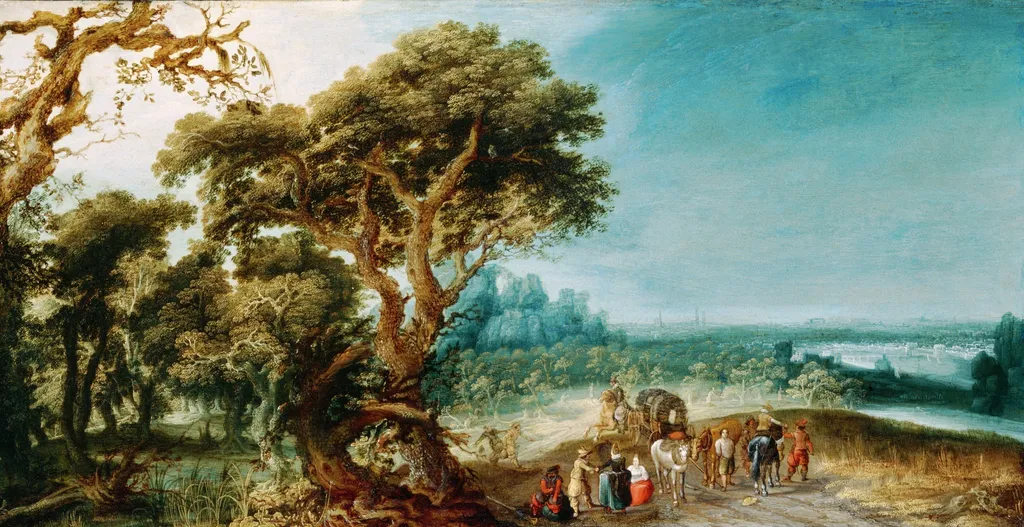
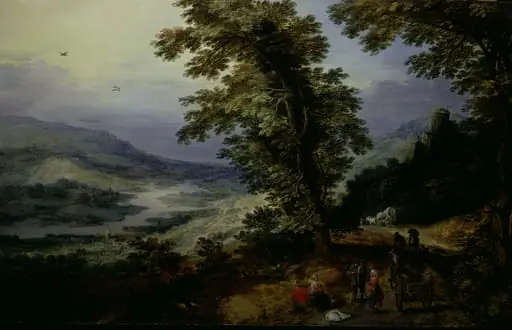
Landscape with a Carriage Hold-Up is an unspecified painting by the Dutch Golden Age artist Jacob van Geel. It dates from 1615 and is held in the collection of the Detroit Institute of Arts.
About this work
Overview
Jacob van Geel’s 1615 oil painting, Landscape with a Carriage Hold‑Up, presents a rural tableau that combines natural scenery with a moment of tension. The work is part of the Detroit Institute of Arts collection and measures the early‑seventeenth‑century Dutch interest in narrative landscapes, where everyday events unfold within a detailed environment.
Subject & Meaning
At the composition’s centre a horse‑drawn carriage is surrounded by a cluster of figures whose gestures suggest a robbery or ambush. A solitary, gnarled tree dominates the left foreground, while a tranquil waterway and rolling hills recede in the distance, contrasting the violent episode with the calm of the surrounding countryside.
Technique & Style
Van Geel employs a muted palette of greens, browns and blues, allowing light to filter through the foliage and illuminate the figures. Subtle chiaroscuro creates depth, and the brushwork varies between the finely rendered human forms and the broader, atmospheric treatment of the distant landscape, typical of Dutch genre painting of the period.
History & Provenance
The canvas was executed in 1615 and has remained in private hands before entering the Detroit Institute of Arts, where it is displayed as part of the museum’s European paintings collection. Its provenance reflects the broader 20th‑century interest of American institutions in acquiring early Dutch works.
Context
During the early 1600s Dutch artists often infused landscape scenes with narrative episodes drawn from daily life or moralizing tales. Van Geel’s inclusion of a carriage hold‑up aligns with contemporary concerns about lawlessness on country roads, offering viewers both a visual story and a subtle commentary on social order.
Artist & collection

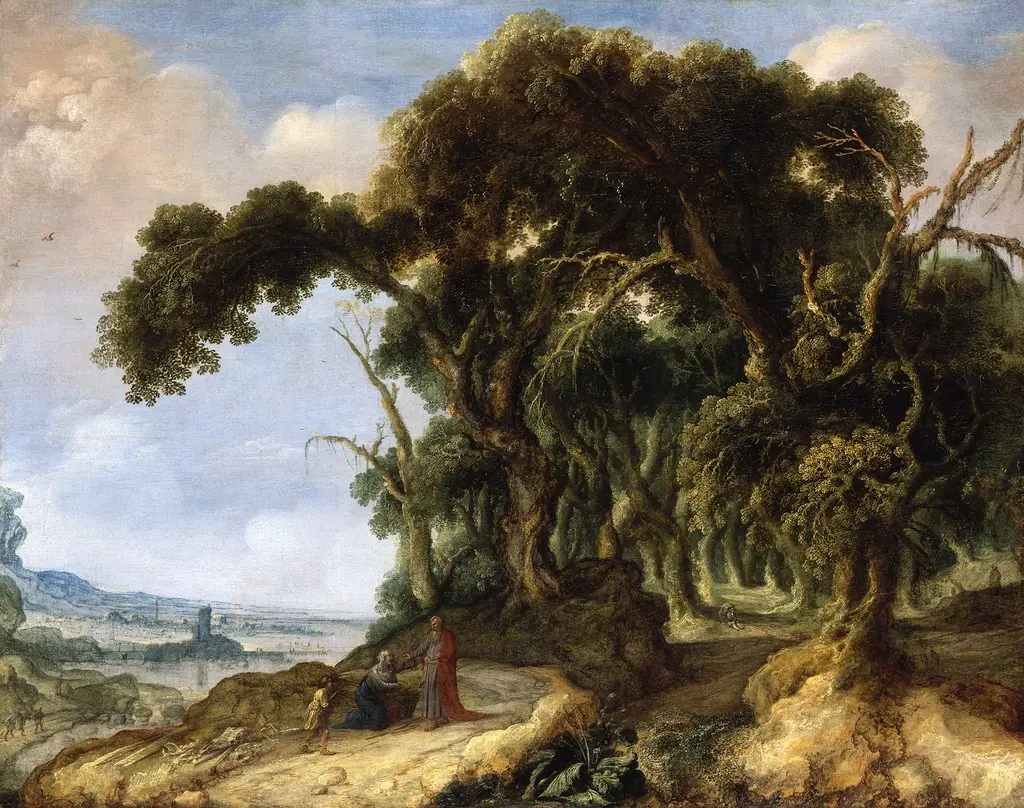
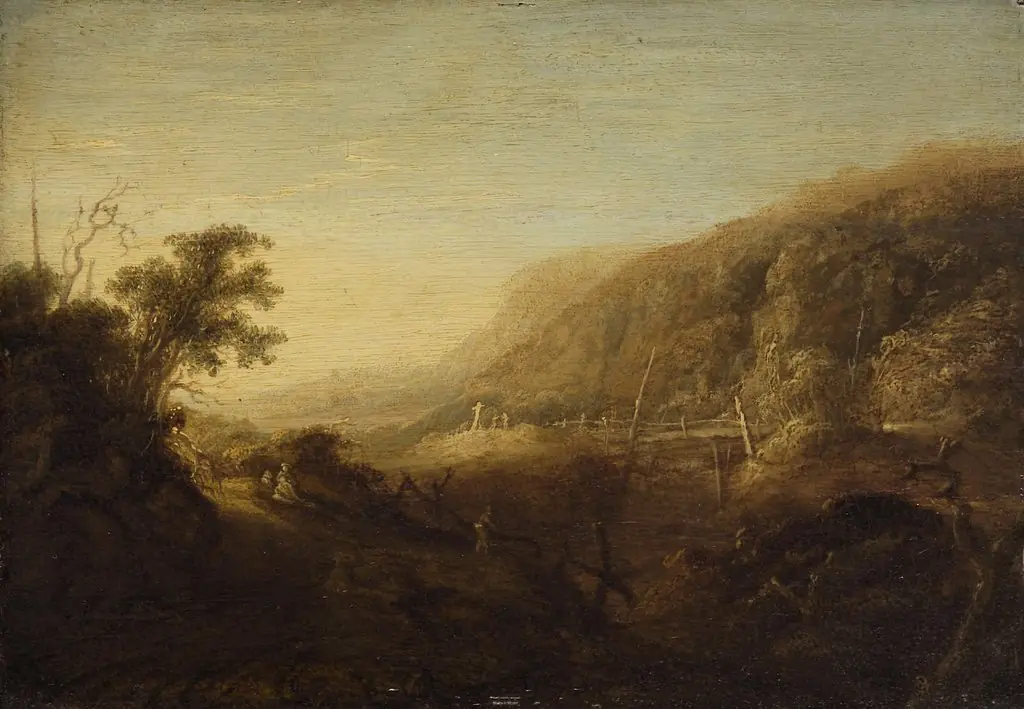
 Wooded Landscape
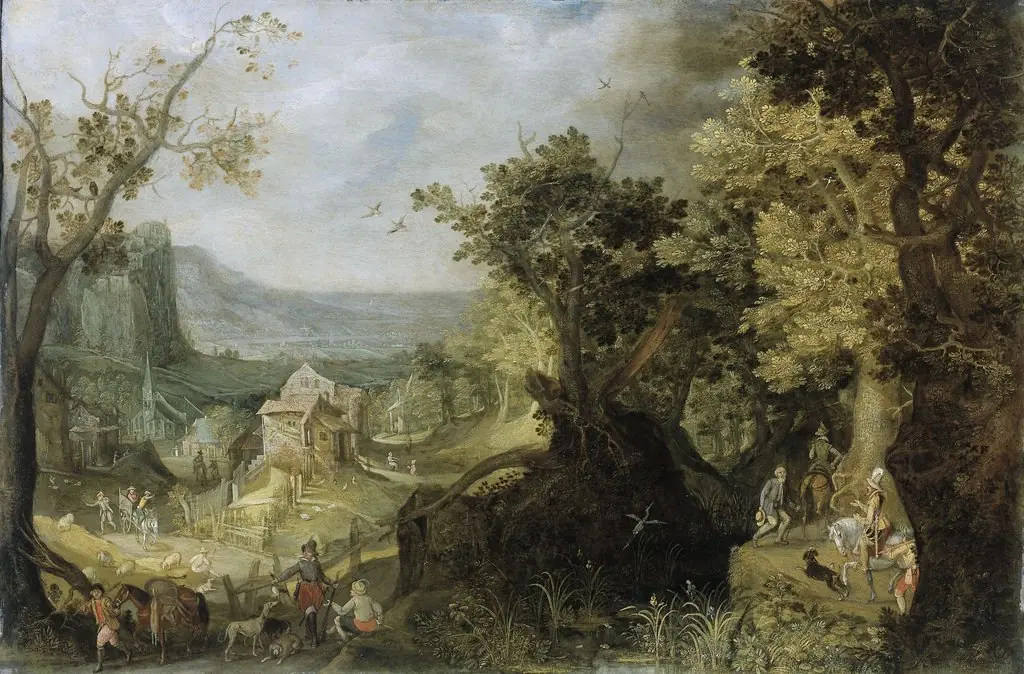
 Hunter and Horsemen on a Wooded Road, with a Village in a Valley beyond
 Mountain Road with Travelers
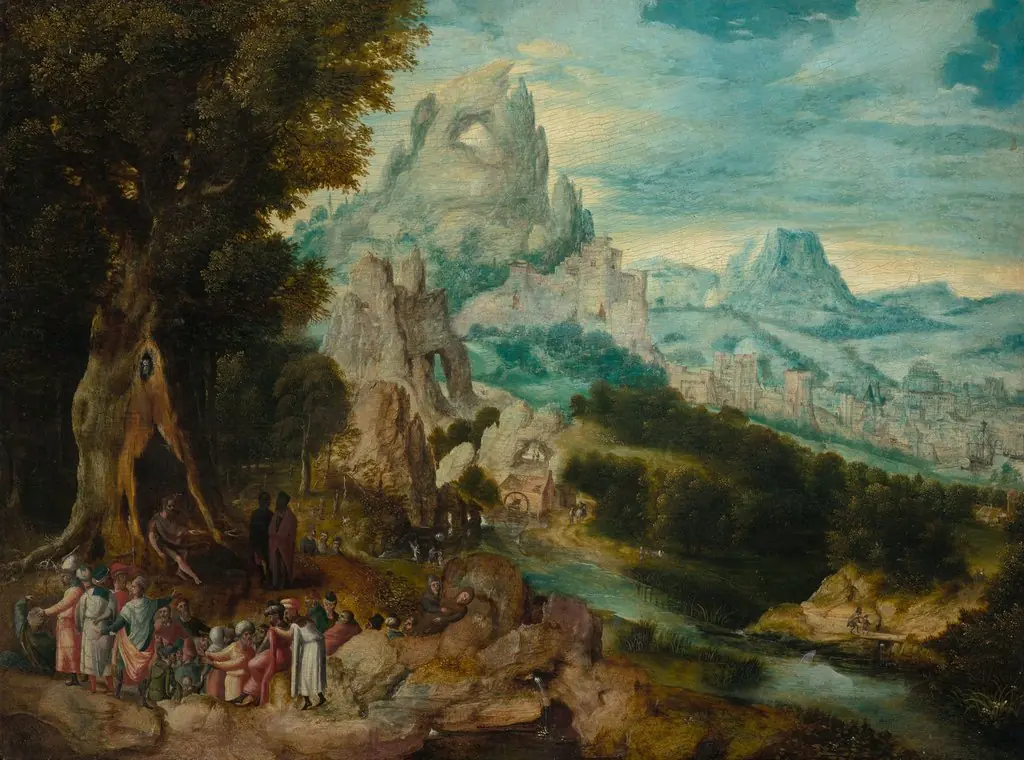 Landschaft mit der Predigt Johannes d. Täufers
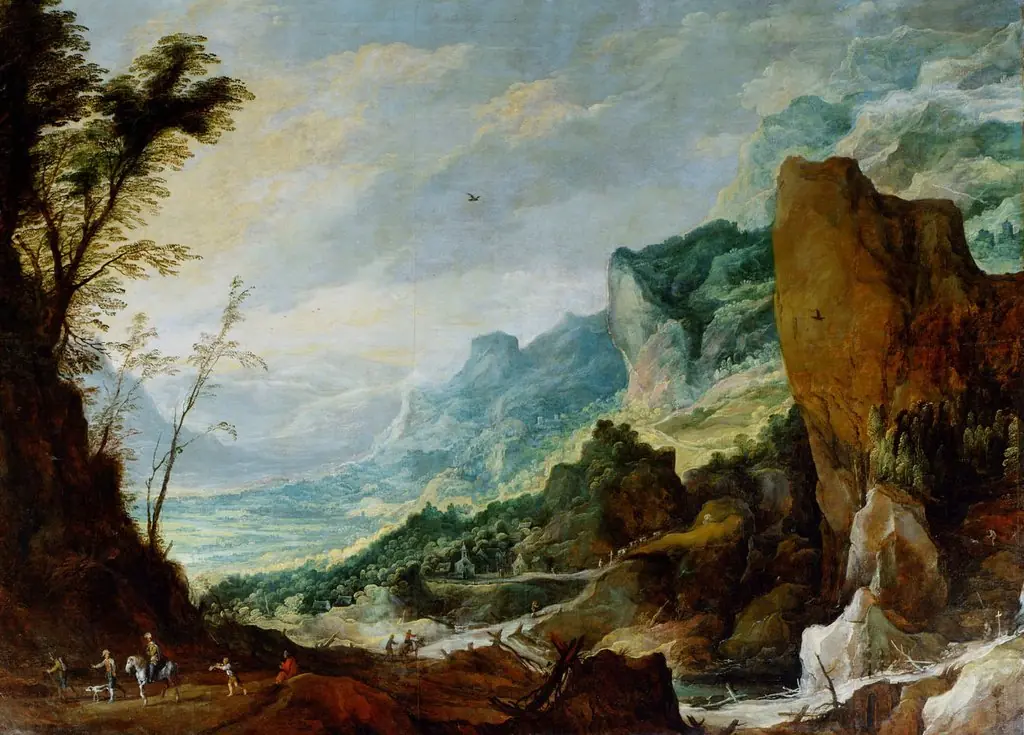 Mountain Landscape
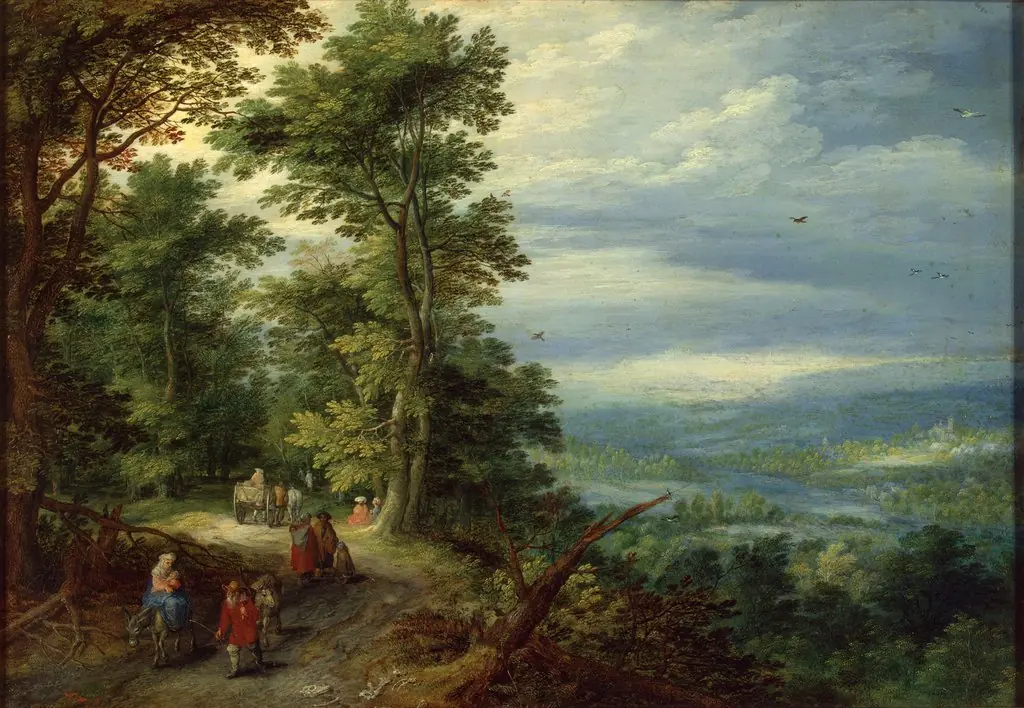 Edge of the Forest (The Flight into Egypt)
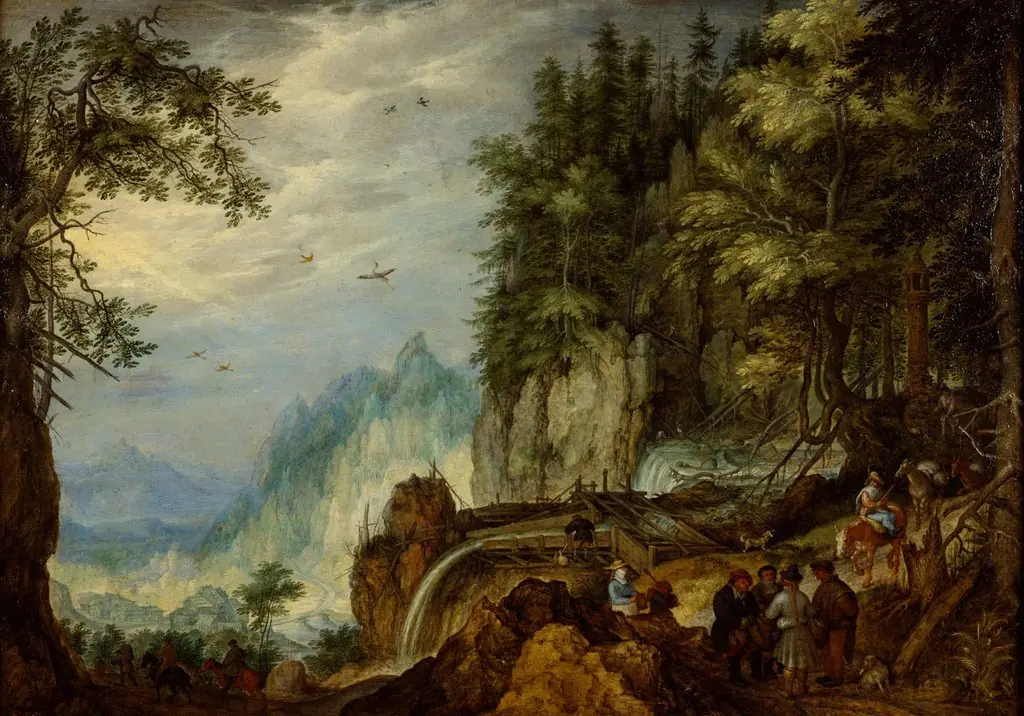 Gebirgslandschaft mit Reisenden
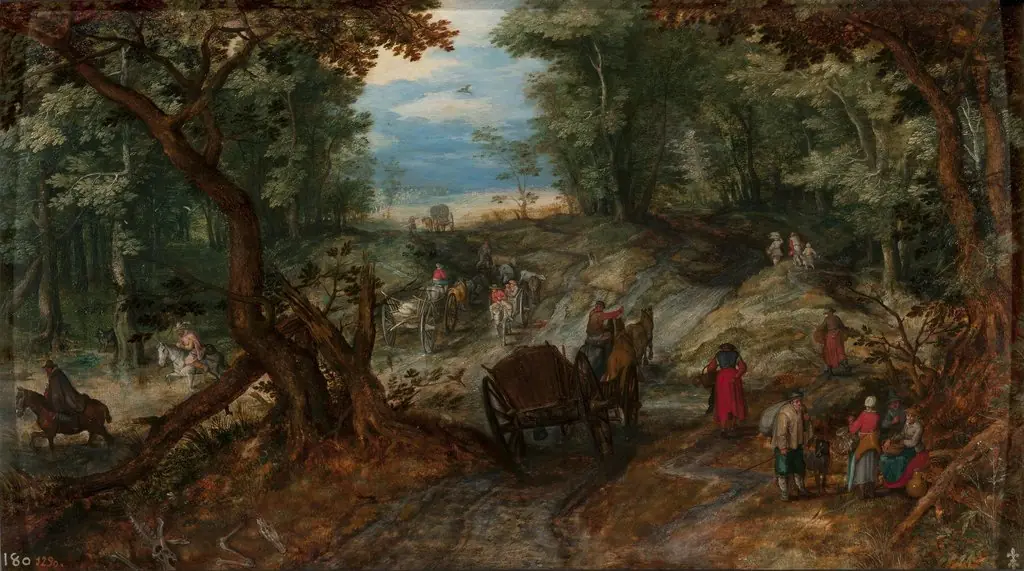 Forestroad next to a fordable pond wiht travelers
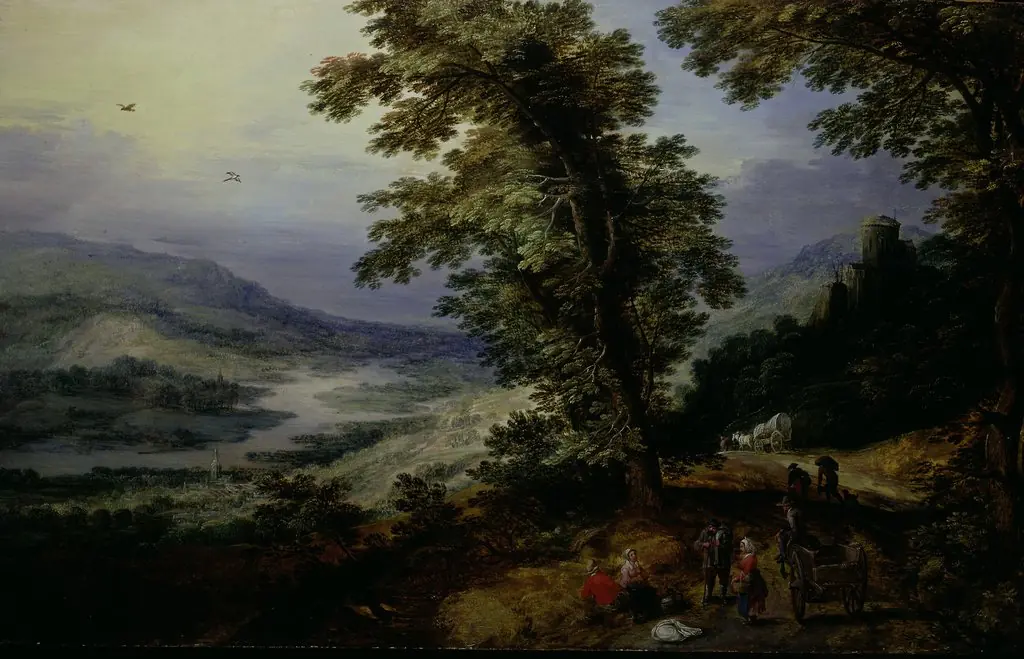 Mountain Road with Travelers
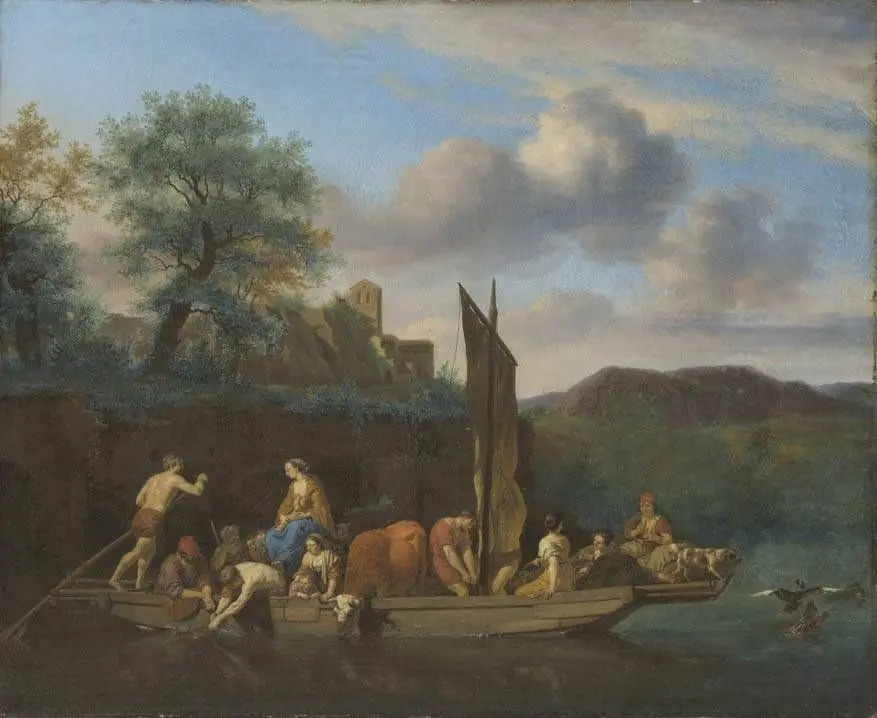 Landscape with Ferry