Artwork
Farm and Hayrick on a River
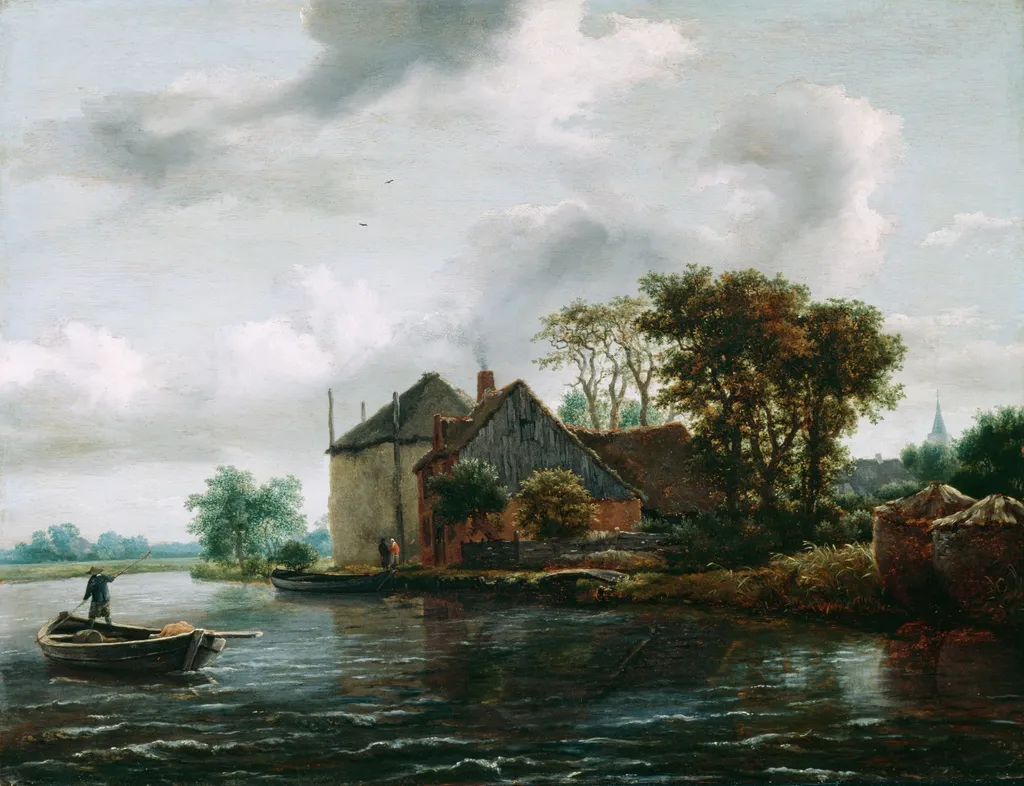
Farm and Hayrick on a River is an oil painting by the Dutch Golden Age artist Jacob van Ruisdael. It dates from 1640 and is held in the collection of the Detroit Institute of Arts.
About this work
Overview
The composition centers on a modest farmhouse with a thatched roof and a single chimney, accompanied by a stacked hayrick.
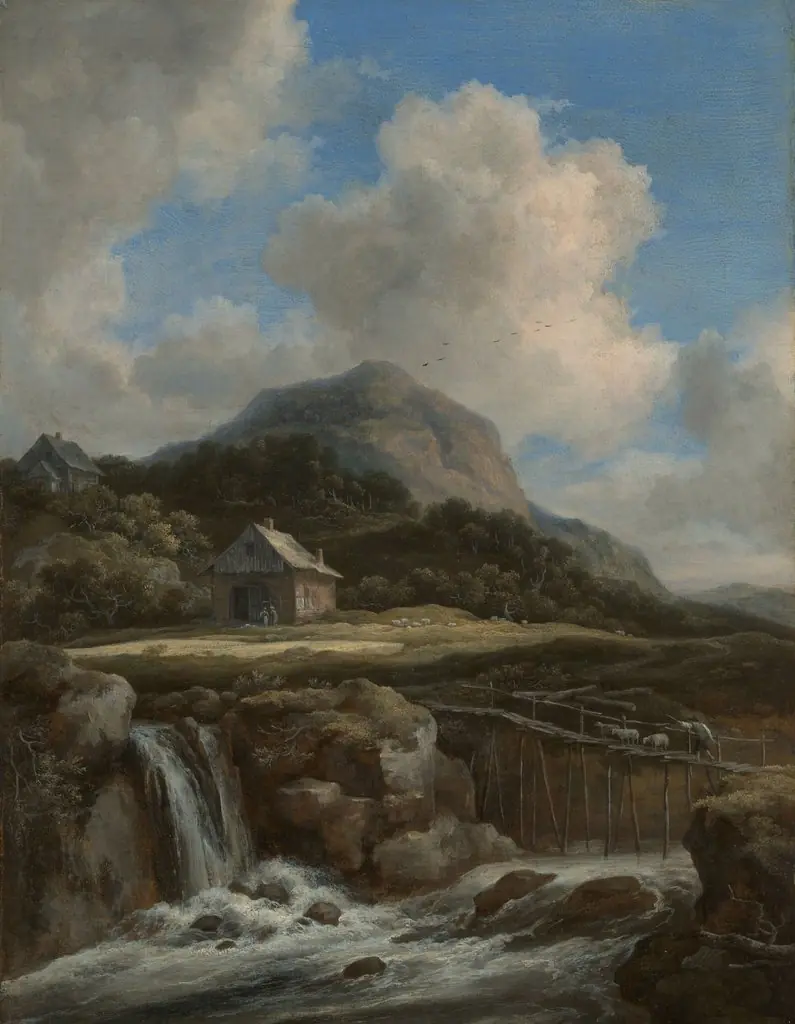
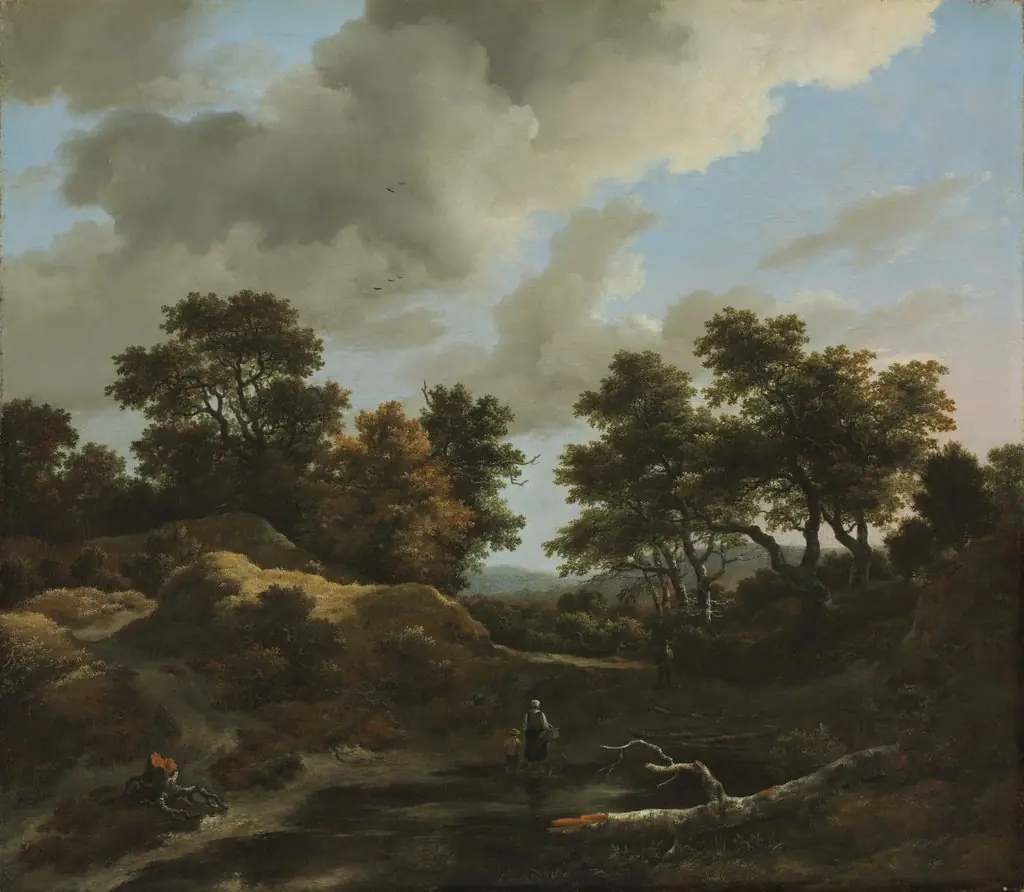
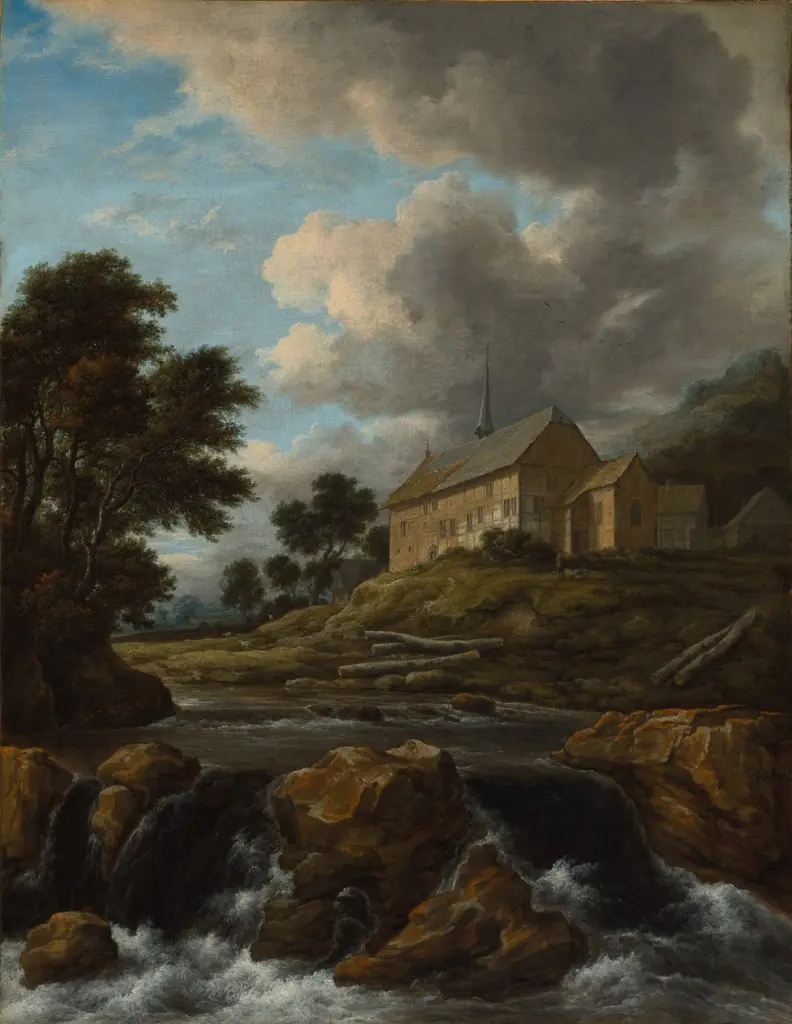
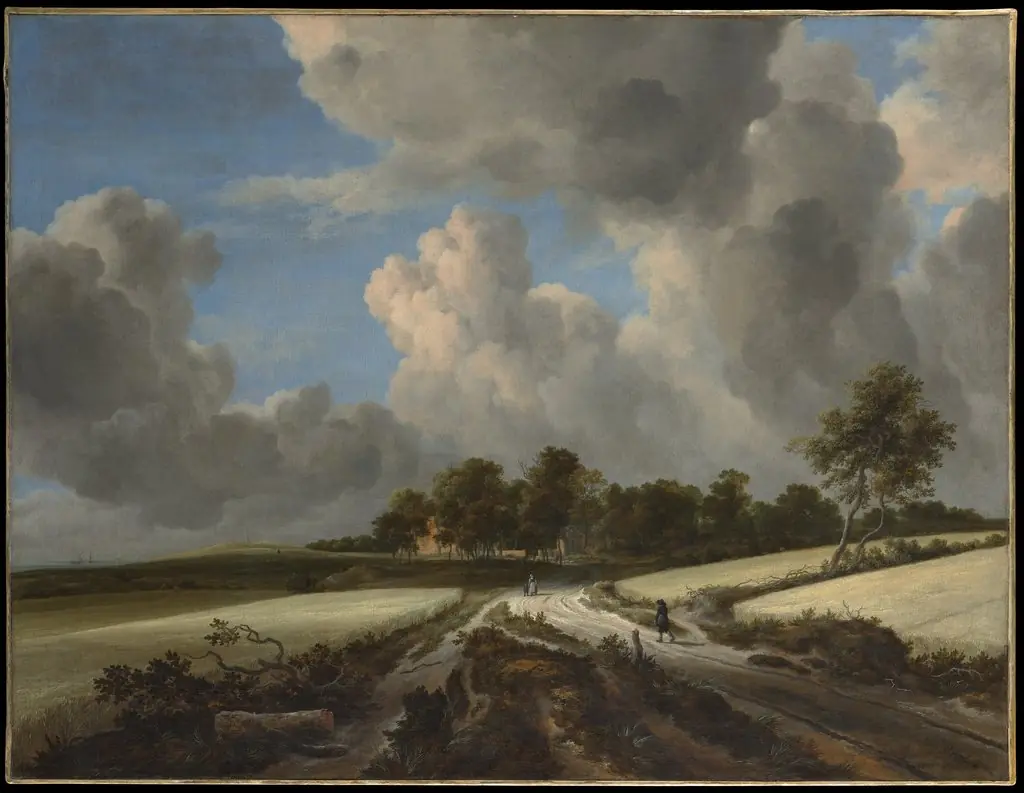
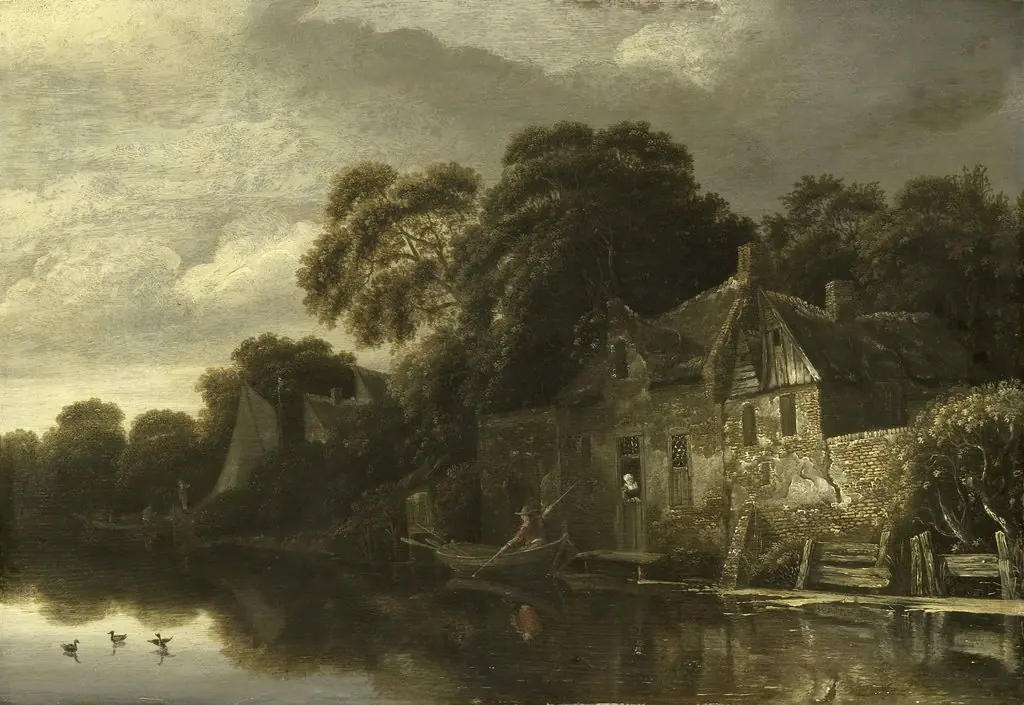
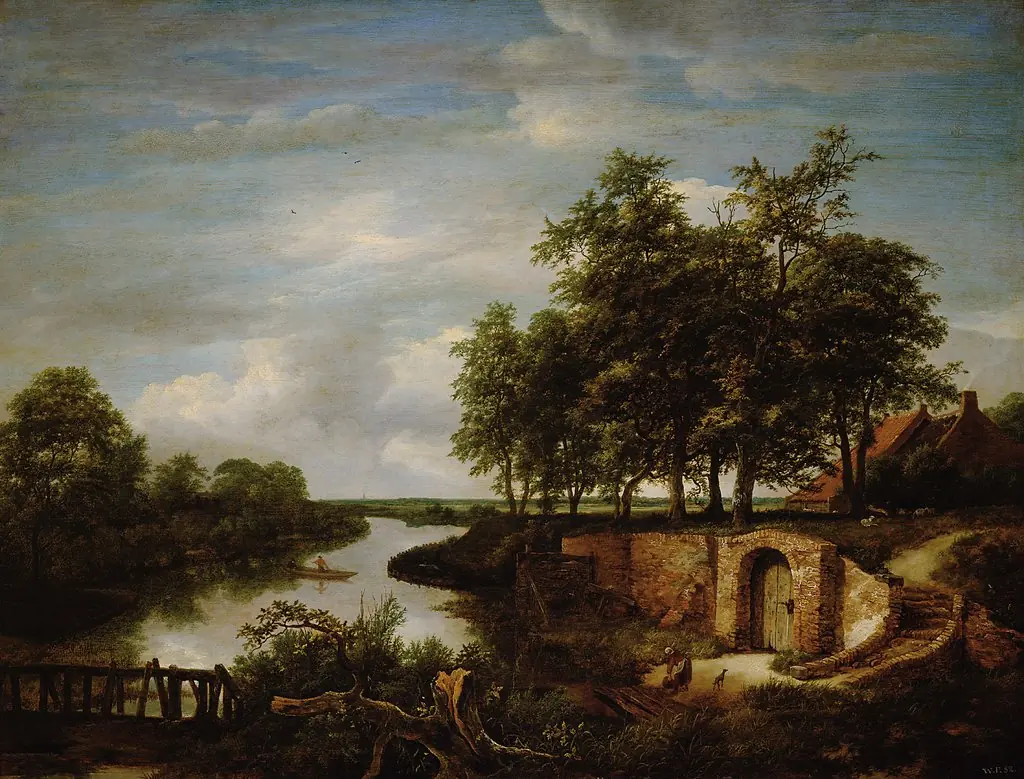
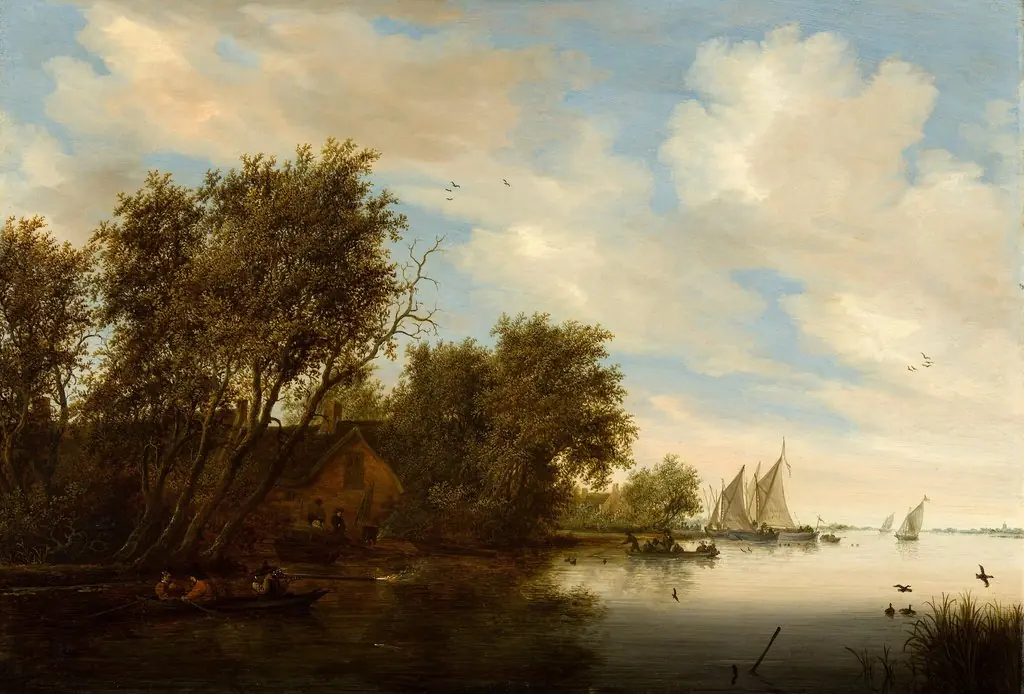
Painted in 1640, this oil landscape by Jacob van Ruisdael depicts a quiet rural scene along a riverbank. The composition centers on a modest farmhouse with a thatched roof and a single chimney, accompanied by a stacked hayrick. Trees and undergrowth frame the setting, while a calm stretch of water mirrors the overcast sky. A solitary figure in a boat, poised with a pole, suggests quiet human activity amid the stillness.
Subject & Meaning
The painting presents an unidealized view of agricultural life in the Dutch countryside. The hayrick and farmhouse imply seasonal labor and rural economy, while the empty boat and solitary figure evoke solitude rather than bustling activity. The subdued sky and muted tones reinforce a mood of quiet contemplation, reflecting a broader 17th-century Dutch interest in the dignity of everyday landscapes.
Technique & Style
Ruisdael employed layered oil glazes to achieve depth in the sky and water, allowing subtle shifts in light and atmosphere. Thick, textured brushwork defines the foliage and thatch, while finer strokes render the reflections on the river. The palette is restrained—gray, ochre, and earth tones—yet the interplay of light and shadow creates a sense of volume and spatial recession without dramatic contrast.
History & Provenance
The painting entered the collection of the Detroit Institute of Arts in the 20th century, though its earlier ownership history remains undocumented. It is one of many landscape works by Ruisdael from his early period, produced during his formative years in Haarlem. Its preservation and attribution have remained consistent, with no significant alterations or restorations reported.
Context
Created during the Dutch Golden Age, the painting aligns with a cultural shift toward secular, local scenery as subjects worthy of artistic attention. Unlike Italianate idealized landscapes, Ruisdael’s work grounds itself in observed reality—local farms, weather, and topography. This emphasis on the ordinary reflected broader societal values of modesty, industry, and connection to the land.
Legacy
Ruisdael’s approach influenced later generations of landscape painters, both in the Netherlands and beyond. His attention to atmospheric conditions and naturalistic detail helped define the Northern European landscape tradition. While not widely exhibited, this work remains a representative example of his early style and the quiet realism that characterized his contribution to 17th-century art.
Own this work as a print
Artist & collection
Artist
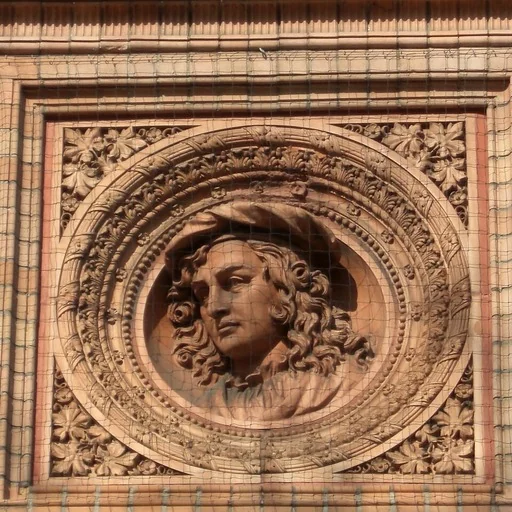
Jacob Isaackszoon van Ruisdael was a Dutch painter, draughtsman, and etcher. He is generally considered the pre-eminent landscape painter of the Dutch Golden Age, a period of great wealth and cultural achievement when…