Artwork
Dutch Landscape
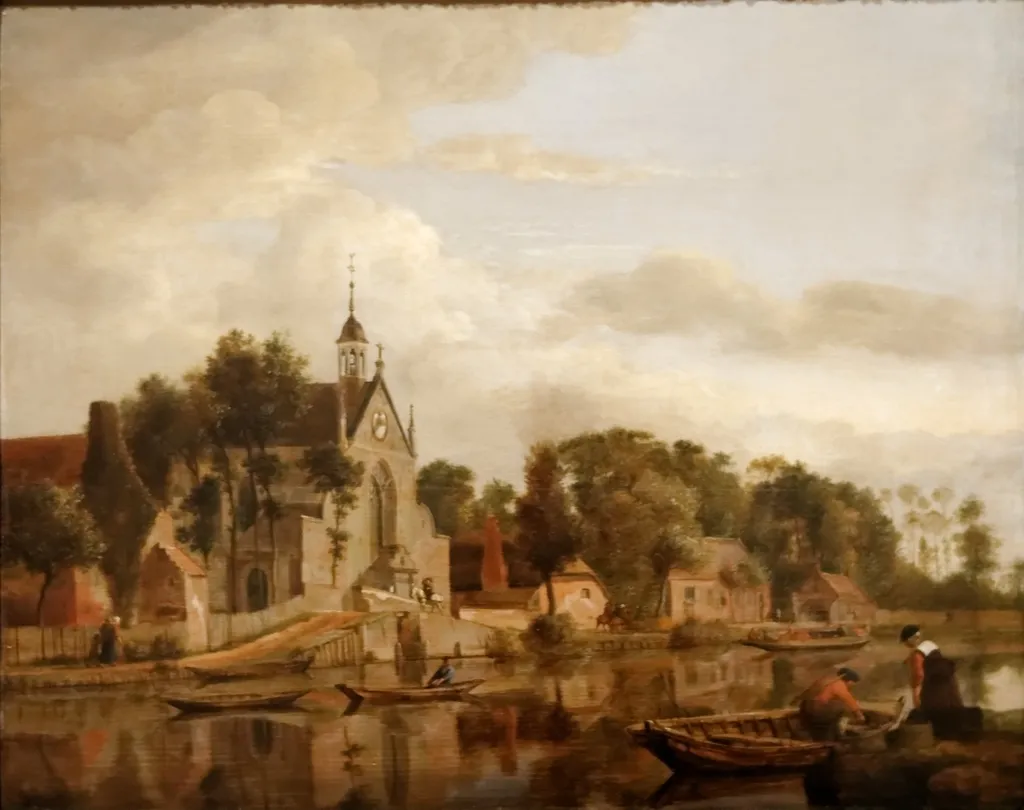
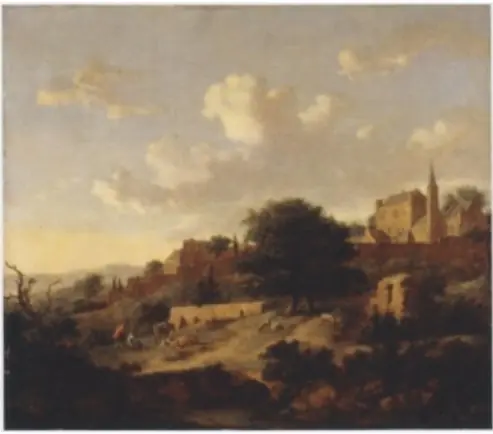
Dutch Landscape is an oil painting by the Dutch Golden Age artist Jan van der Heyden. It dates from 1670 and is held in the collection of the Calouste Gulbenkian Museum.
About this work
Overview
Jan van der Heyden’s oil painting dated 1670 presents a quiet Dutch countryside scene. Central to the composition is a modest church, flanked by a calm waterway where a longboat drifts. Two figures—a man and a woman—are positioned near the shore, while a third individual appears near the church, all under a muted, cloud‑filled sky.
Subject & Meaning
The work captures everyday life in a 17th‑century Dutch setting, emphasizing the harmony between architecture, water, and human activity. The inclusion of the church suggests communal or spiritual focal points, while the figures engaged in a simple task convey a sense of ordinary labor within a tranquil environment.
Technique & Style
Executed in oil, the painting demonstrates van der Heyden’s precise handling of light and texture. Subtle gradations in the cloudy sky and reflective water surface create depth, while the careful rendering of architectural detail reflects the artist’s Baroque‑era focus on realism and atmospheric perspective.
History & Provenance
Created during the Dutch Golden Age, the canvas now belongs to the Calouste Gulbenkian Museum’s collection. Its acquisition history traces back to the museum’s efforts to assemble representative works of Dutch Baroque landscape painting.
Artist & collection
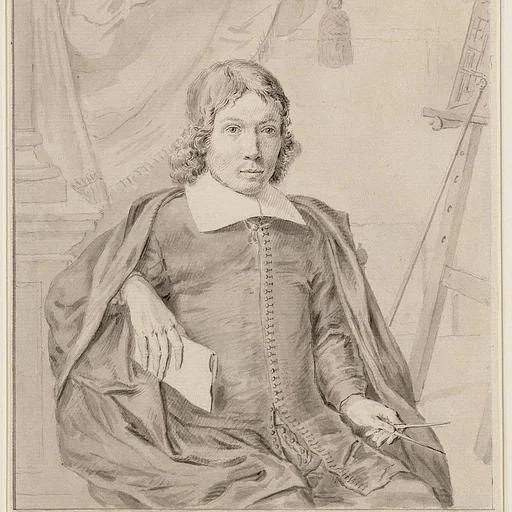
Artist
Jan van der Heyden (5 March 1637, Gorinchem – 28 March 1712, Amsterdam) was a Dutch Baroque-era painter, glass painter, draughtsman and printmaker.

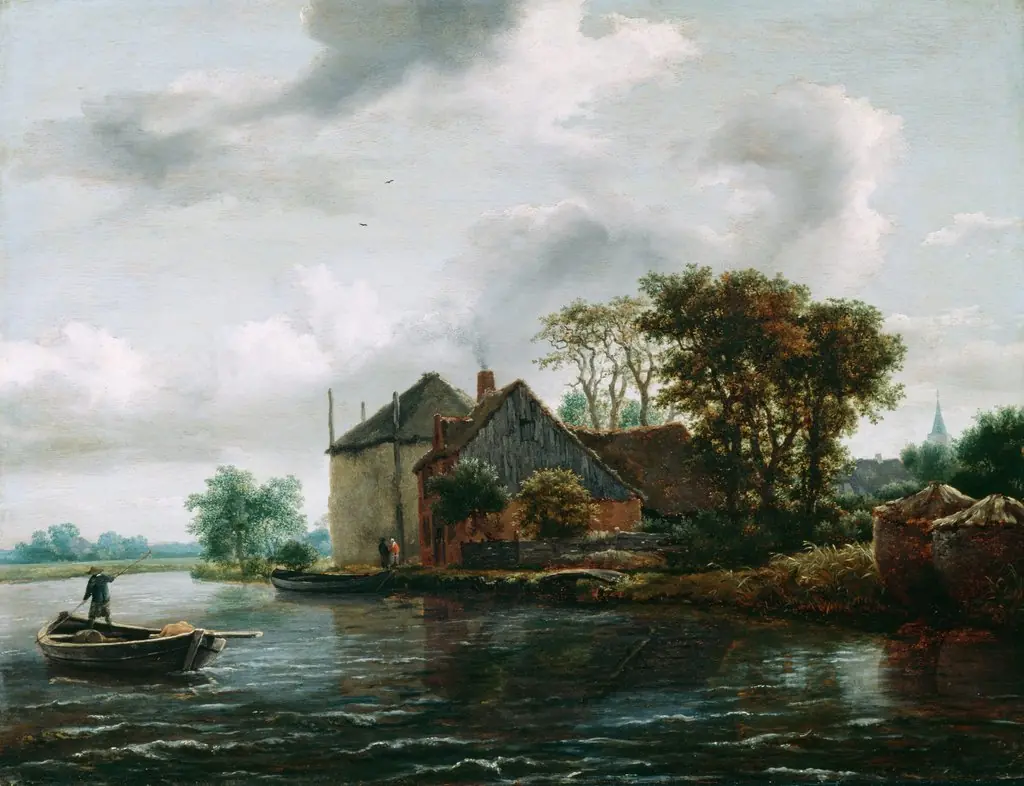 Farm and Hayrick on a River
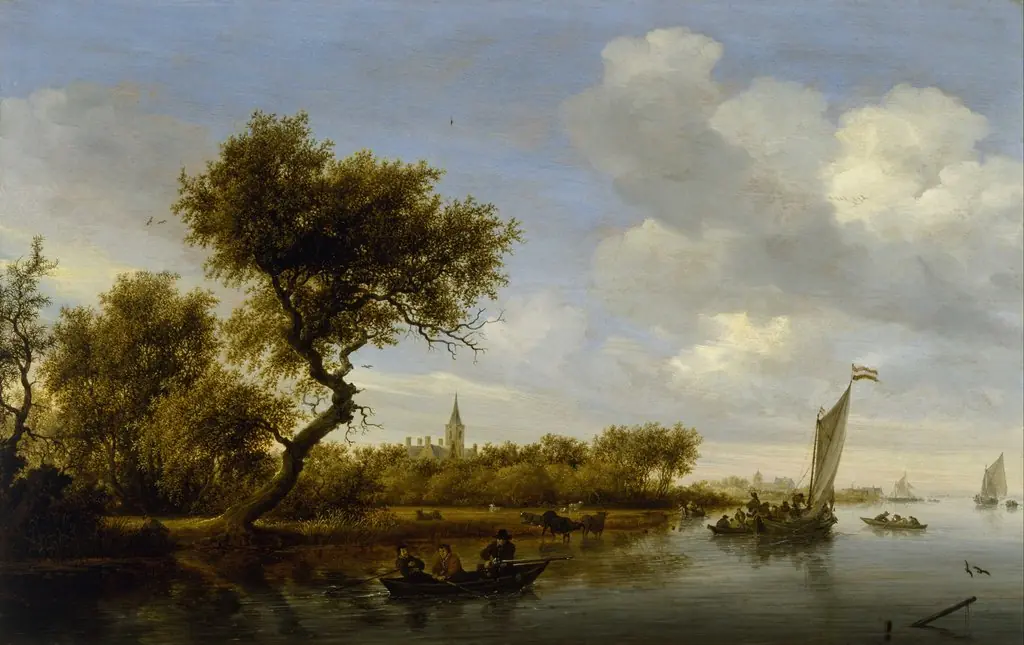 River Landscape with a Church in the Distance
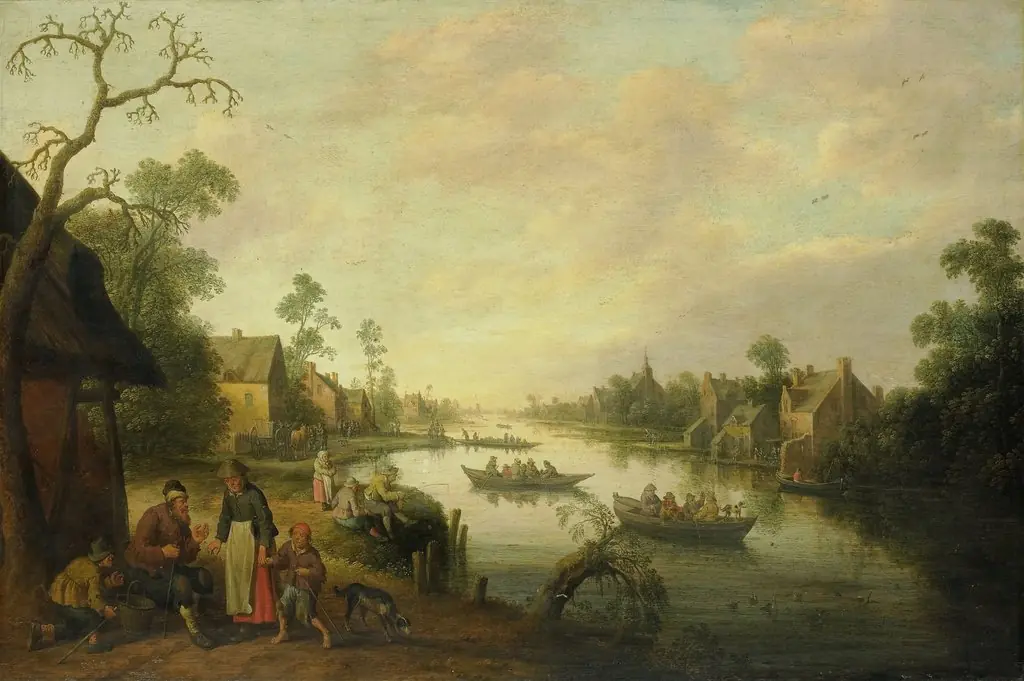 River view
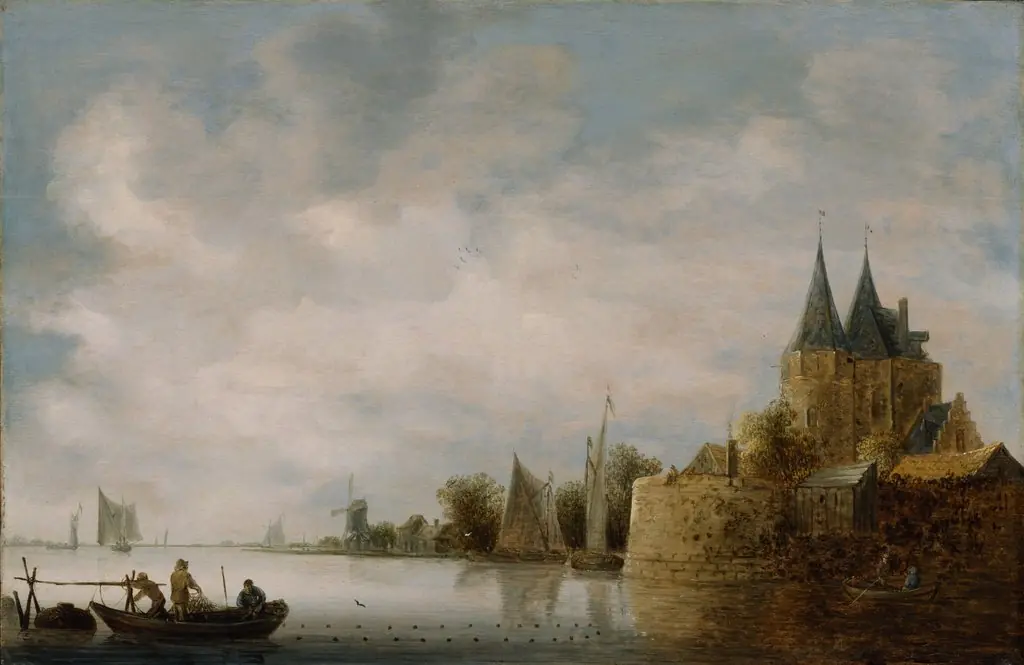 View of the North Port at Hoorn
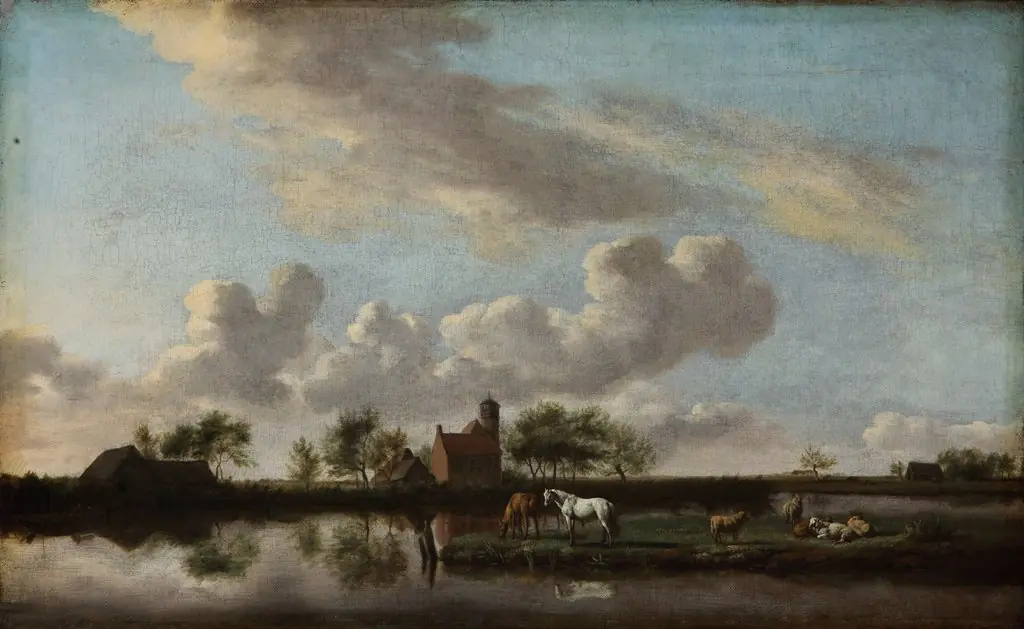 A Flat Canal Landscape
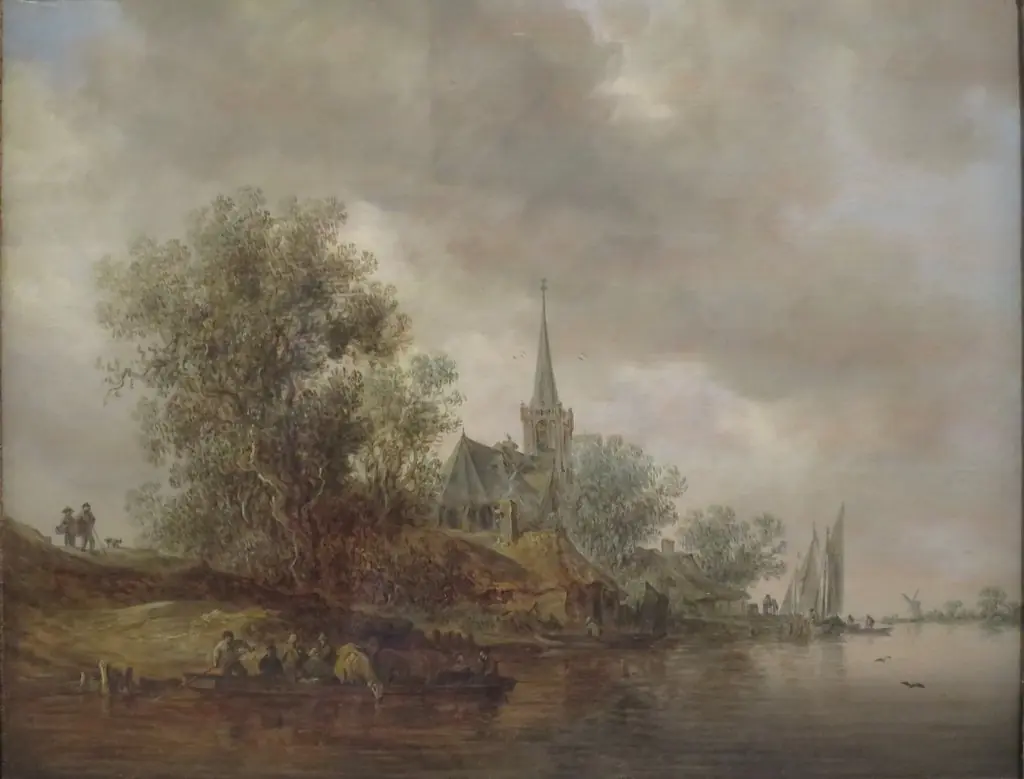 River Landscape with a Village Church
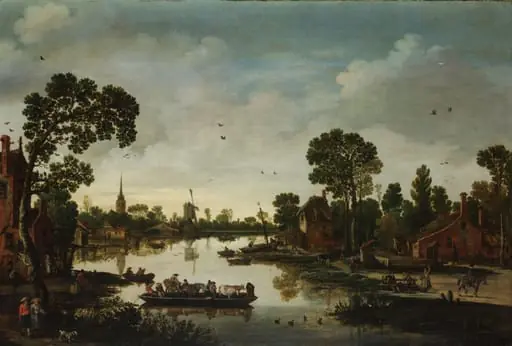 Het ponteveer
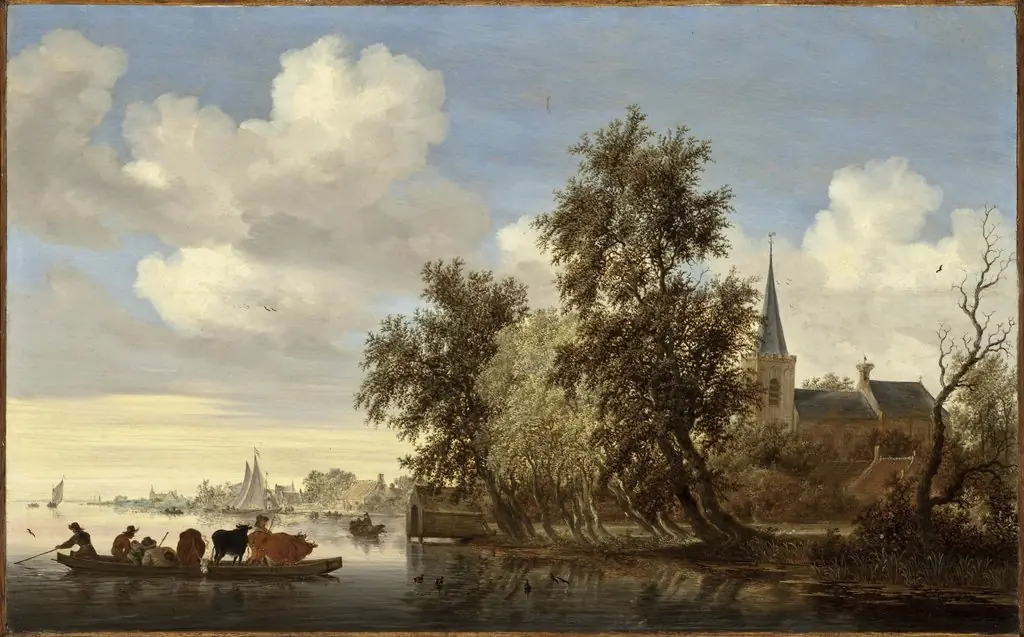 River Landscape with a Ferry
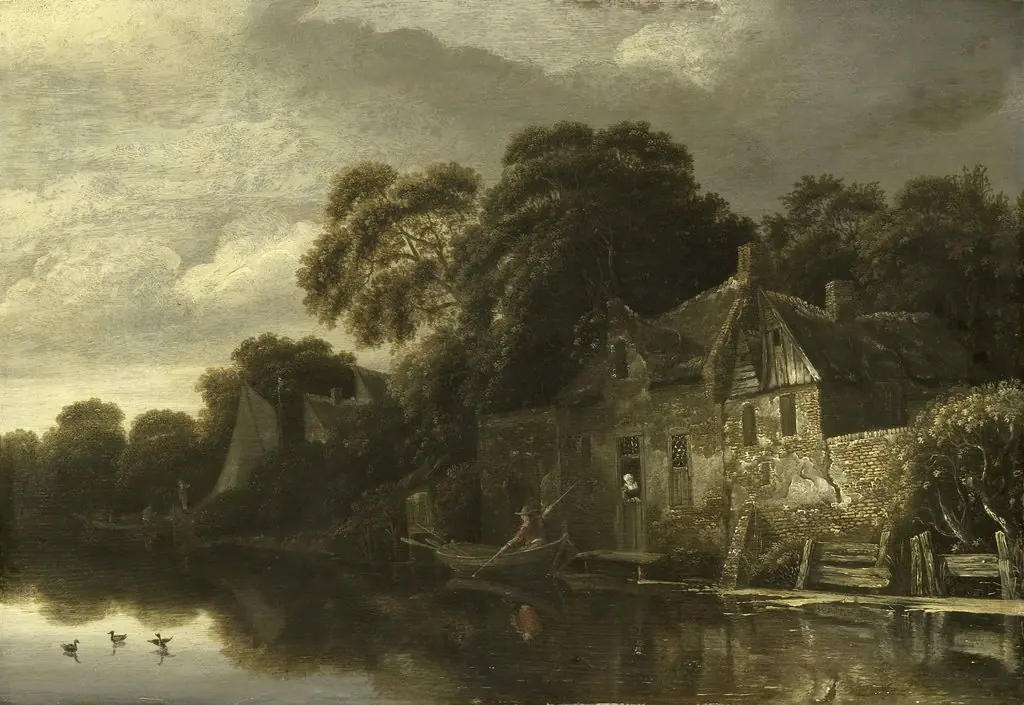 Old country cottage on the water
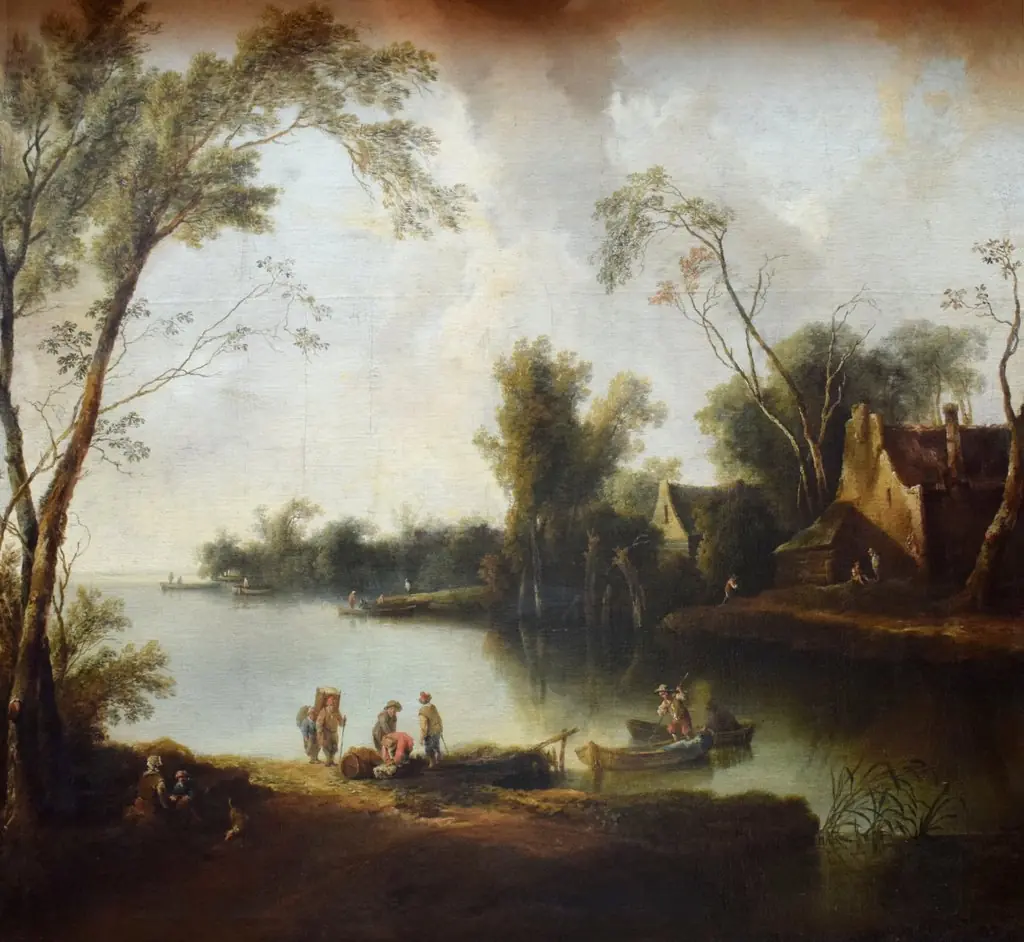 Riverside Landscape
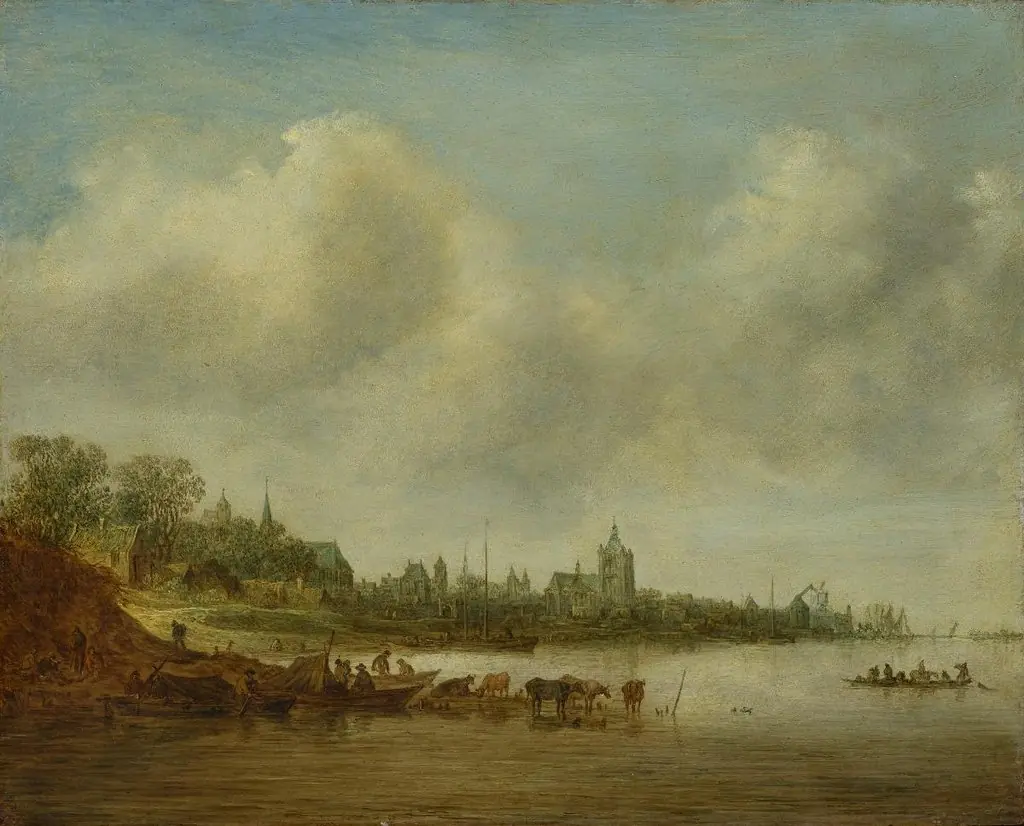 Blick über den Rhein auf Arnheim
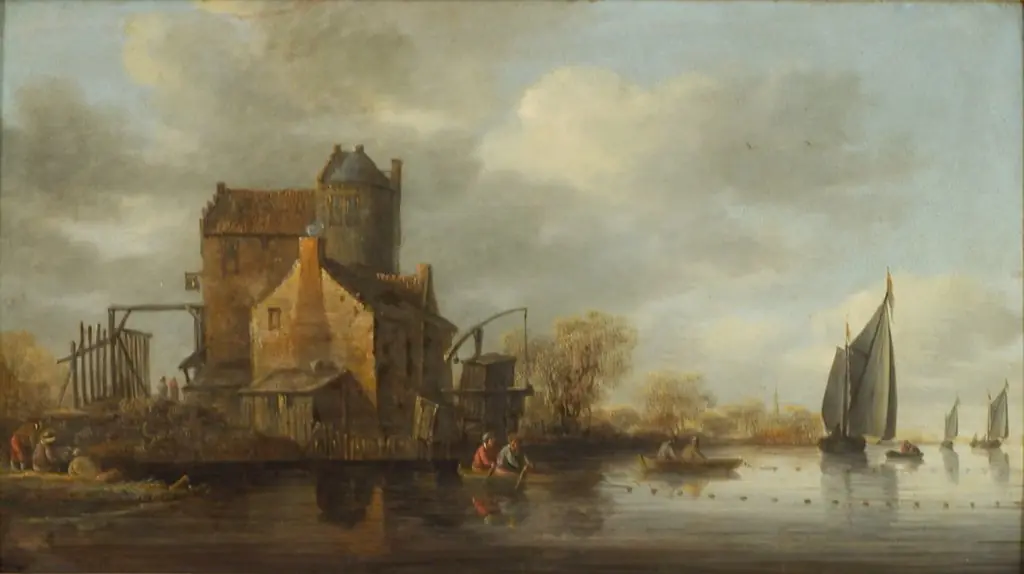 Dutch River View