Artwork
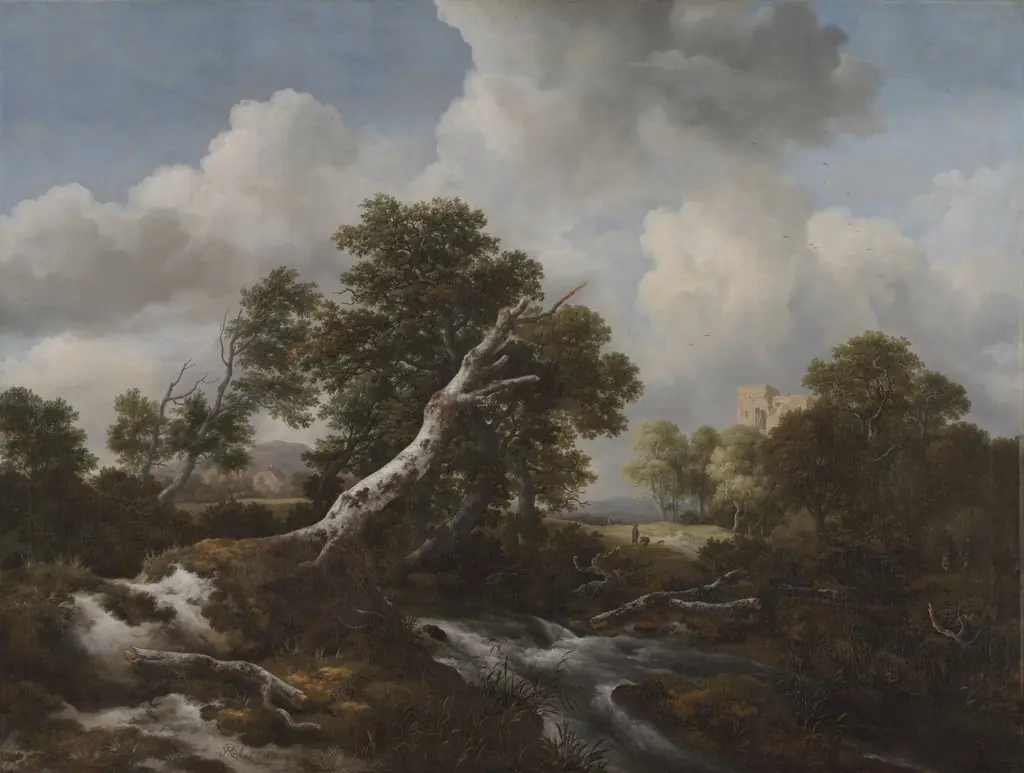
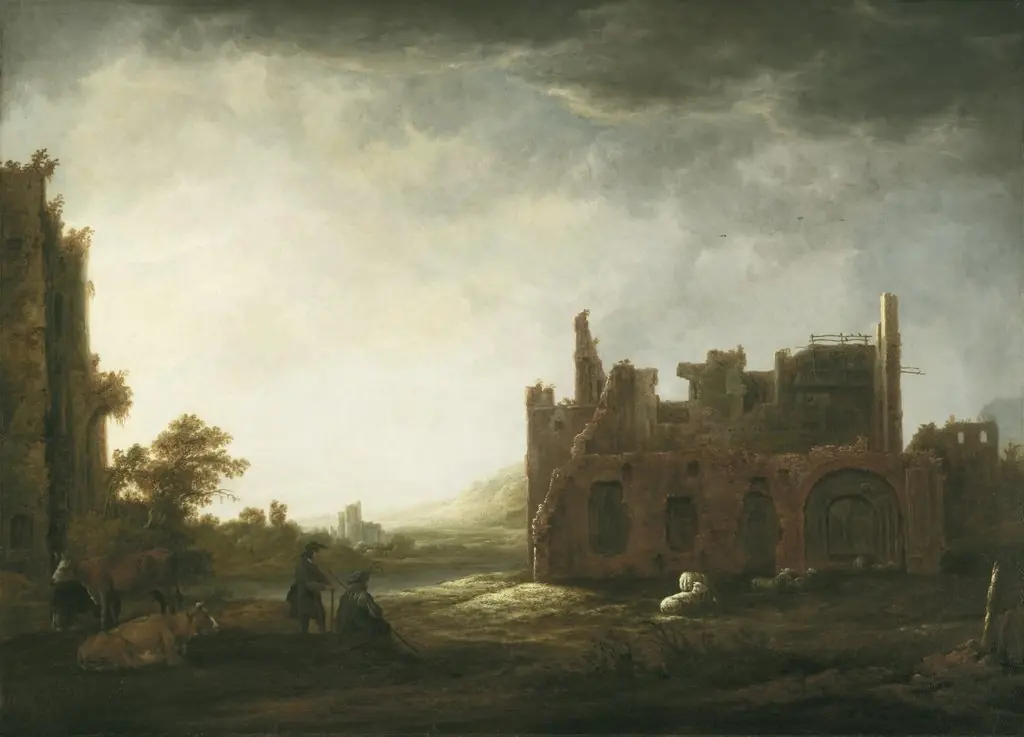
Landscape with ruins
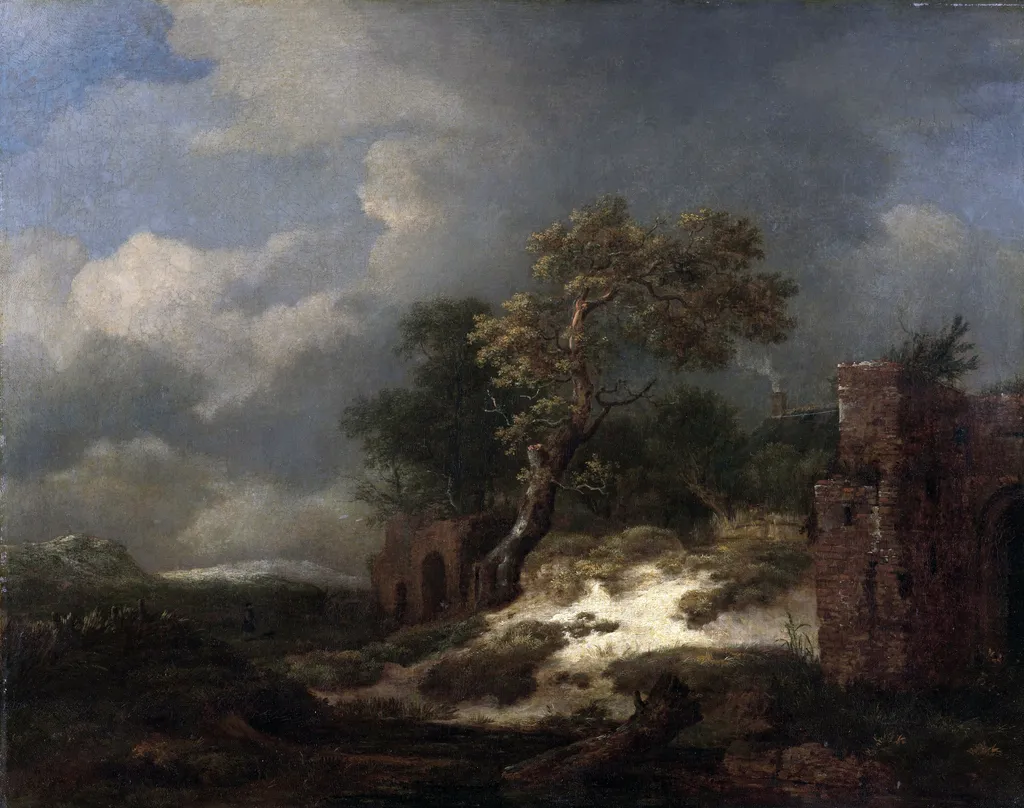
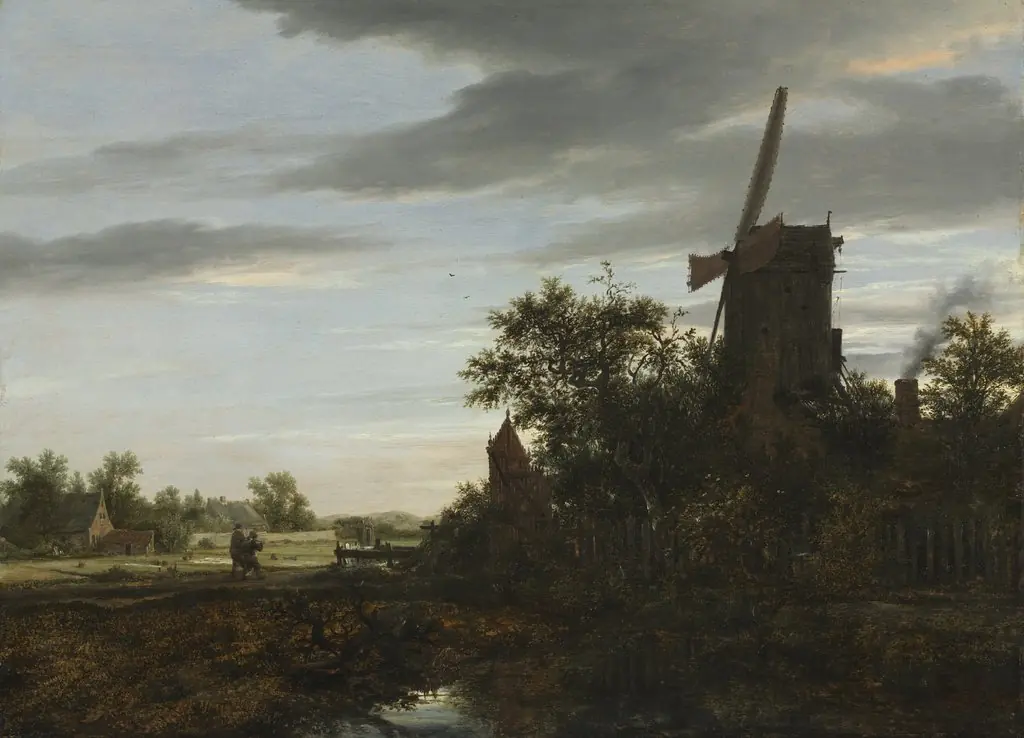
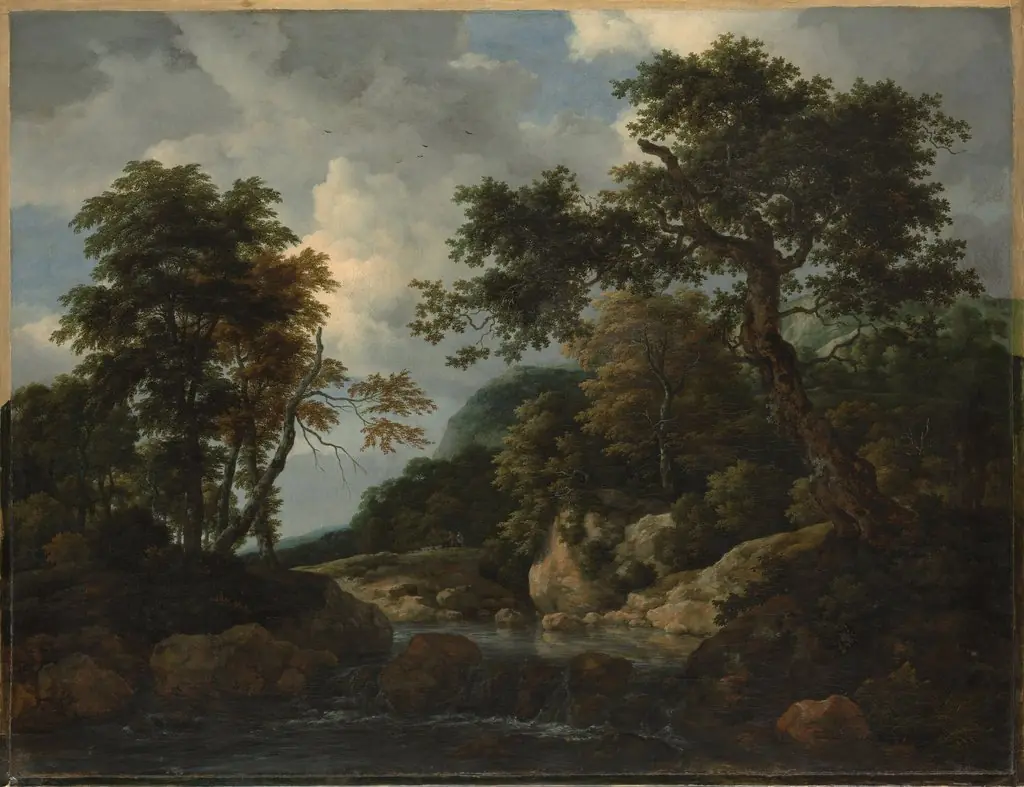
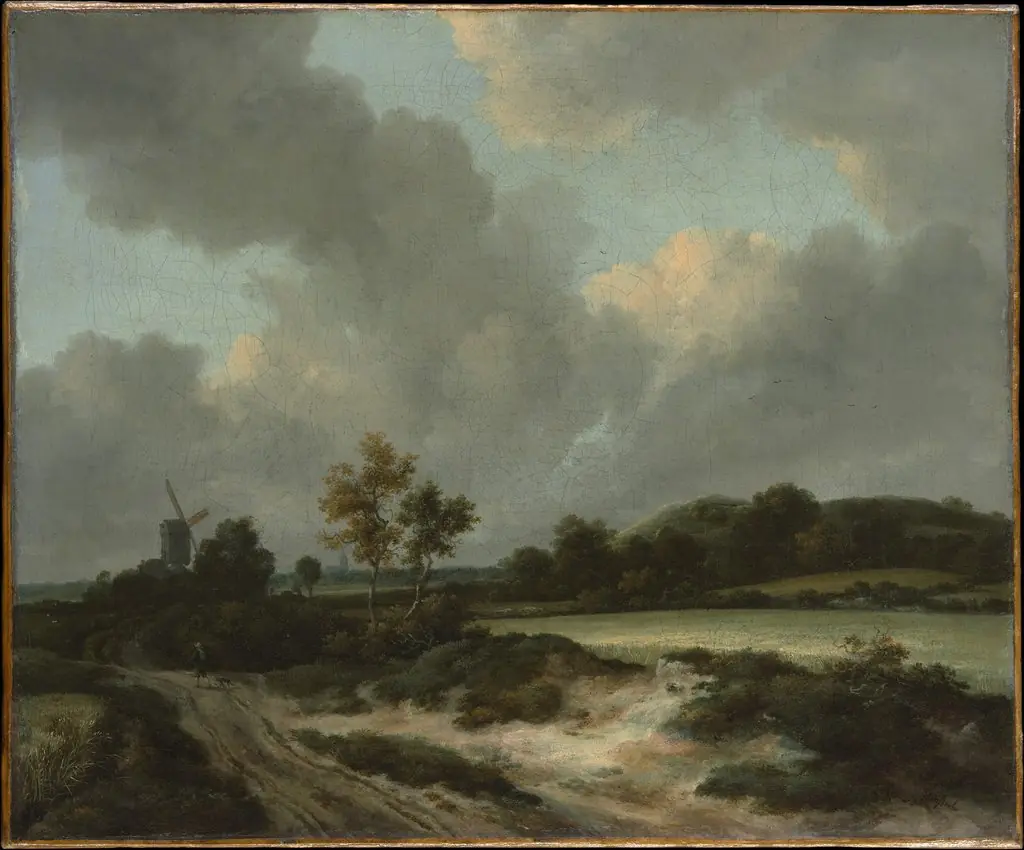
Landscape with ruins is an oil painting by the Dutch Golden Age artist Jacob van Ruisdael. It is held in the collection of the Rijksmuseum.
About this work
Overview
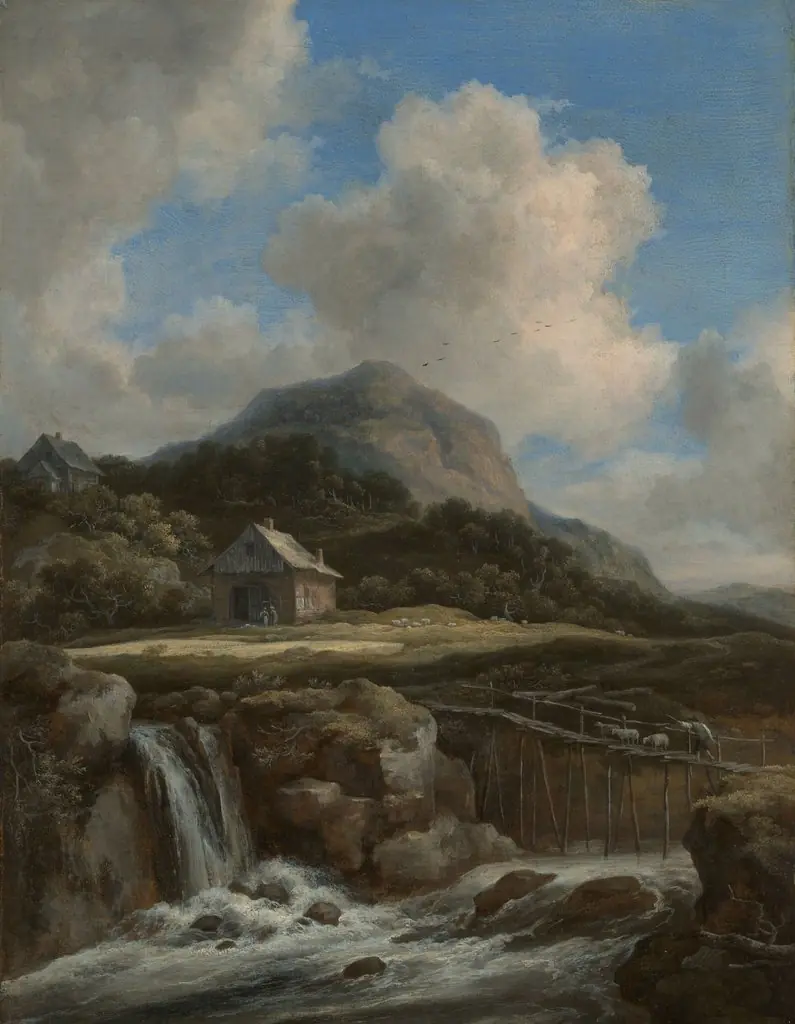
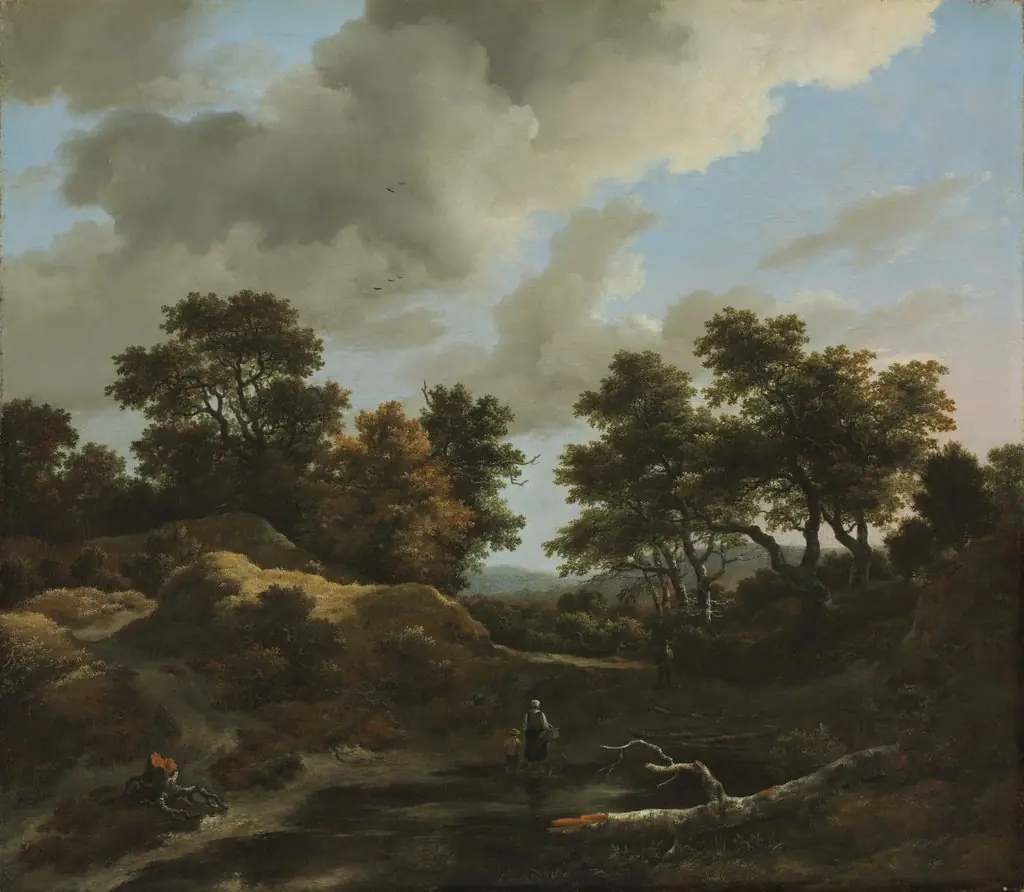
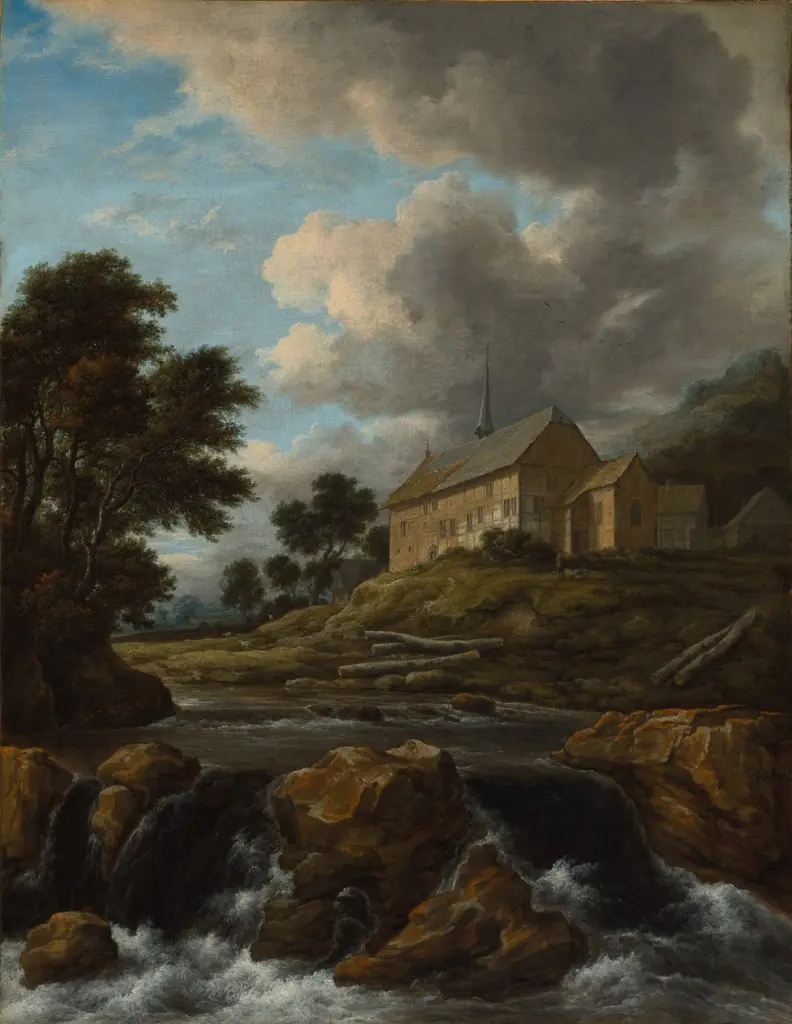
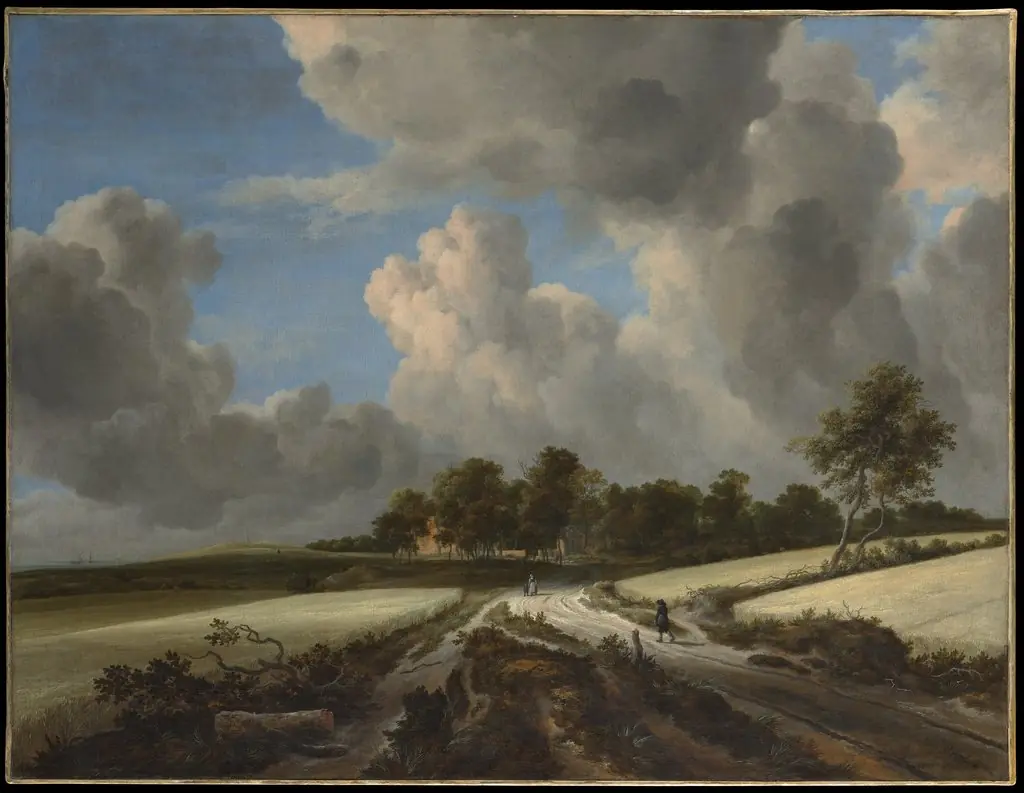
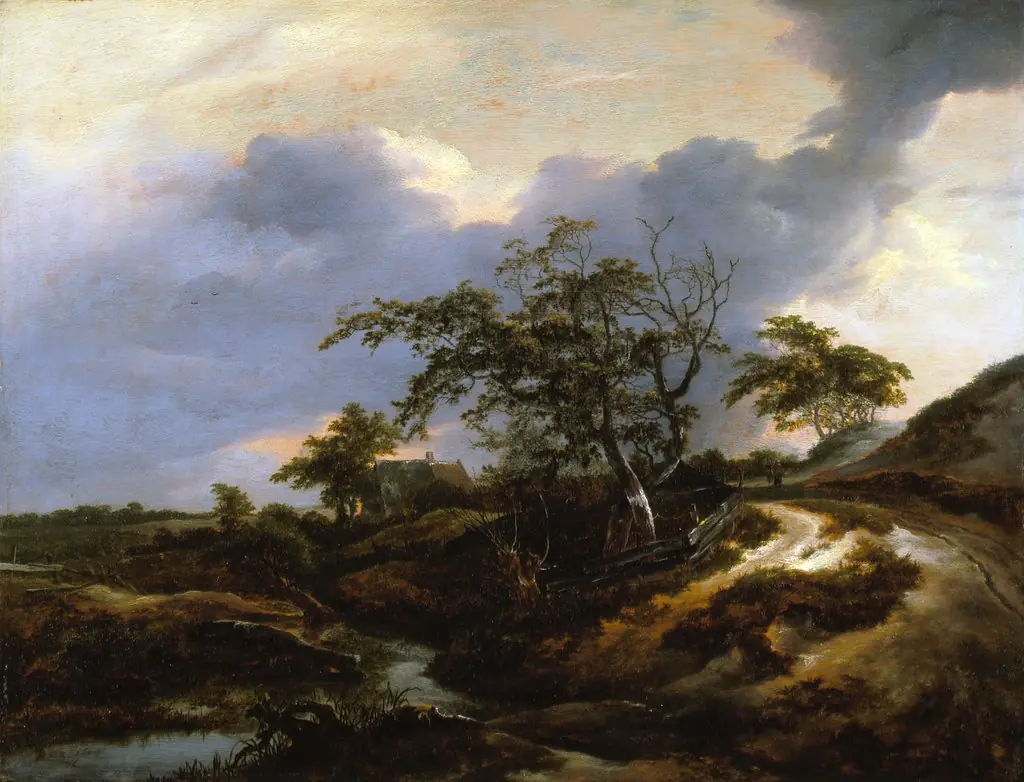
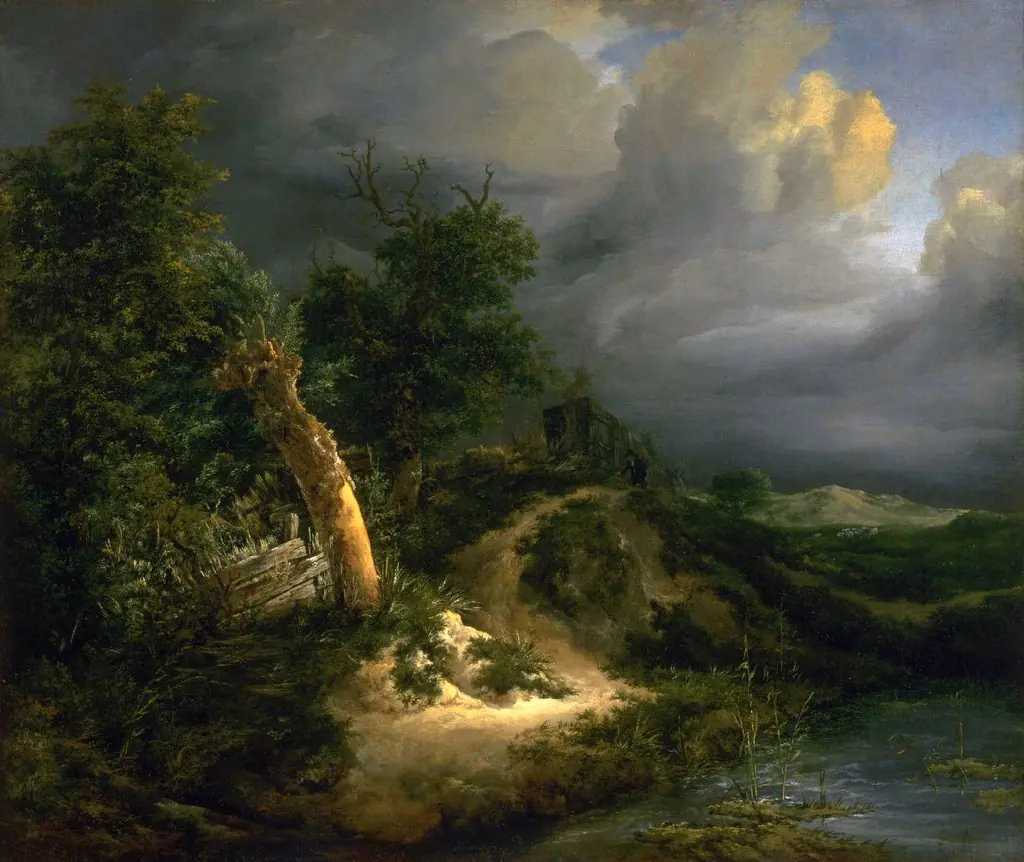
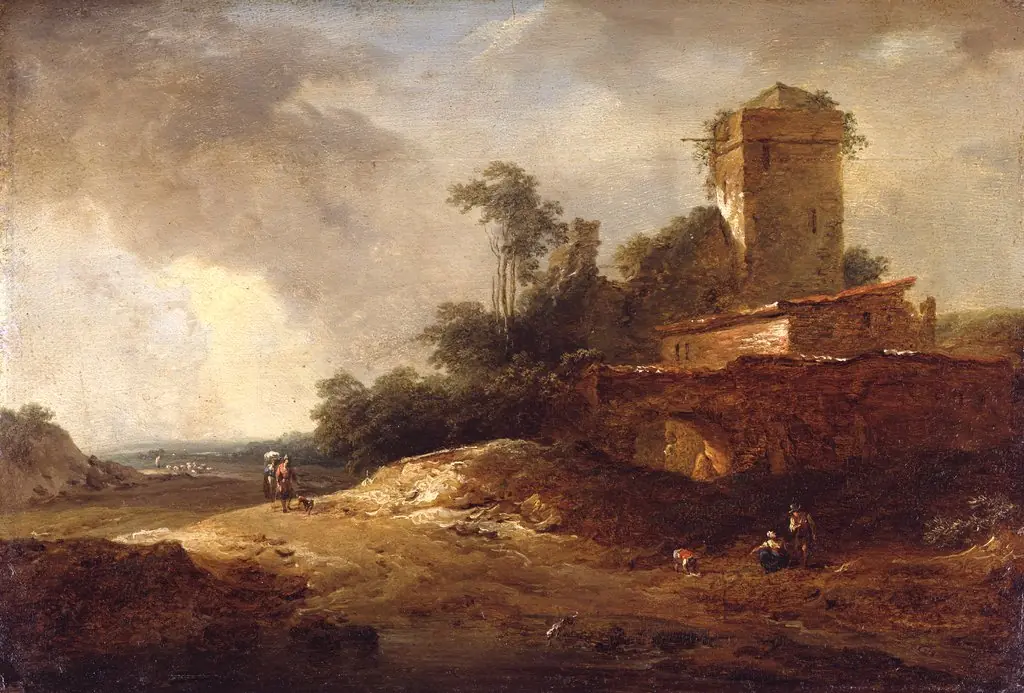
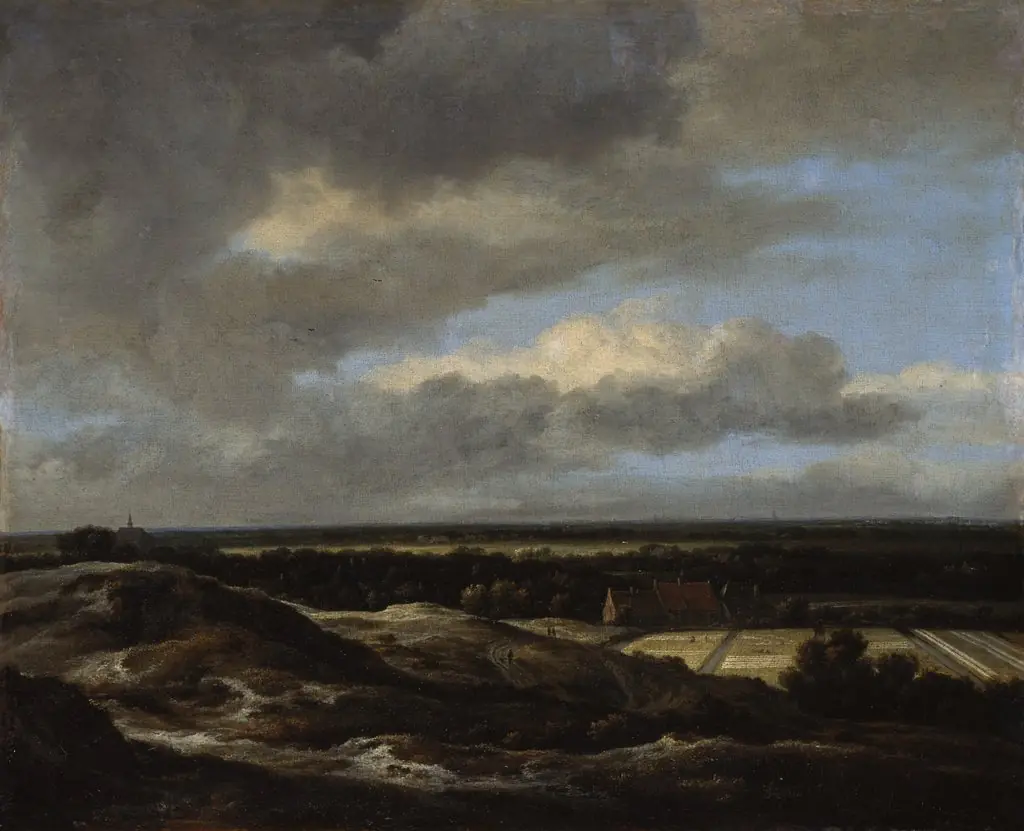
Jacob van Ruisdael’s 1692 oil painting, titled Landscape with Ruins, presents a somber countryside scene dominated by a dilapidated brick structure. The composition is set beneath a heavy, turbulent sky, where intermittent shafts of light illuminate the ground and the crumbling walls, creating a contrast between darkness and brief illumination.
Subject & Meaning
The work depicts an abandoned building, partially concealed by overgrown trees and a misty atmosphere, suggesting themes of decay and the passage of time. The juxtaposition of the ruined architecture against the natural elements invites reflection on humanity’s fleeting presence within the enduring landscape.
Technique & Style
Ruisdael employs a pronounced impasto technique, applying thick layers of paint that give the foliage, clouds, and stone a tactile, almost sculptural quality. His brushwork varies from vigorous, swirling strokes in the sky to more controlled, textured applications on the ruins, enhancing the sense of depth and atmospheric tension.
History & Provenance
Created in the late seventeenth century, the painting entered the collection of the Rijksmuseum, where it remains on display. Its acquisition reflects the museum’s focus on Dutch Golden Age masters and contributes to the broader understanding of Ruisdael’s landscape oeuvre.
Own this work as a print
Artist & collection
Artist
Jacob Isaackszoon van Ruisdael was a Dutch painter, draughtsman, and etcher. He is generally considered the pre-eminent landscape painter of the Dutch Golden Age, a period of great wealth and cultural achievement when…