Artwork
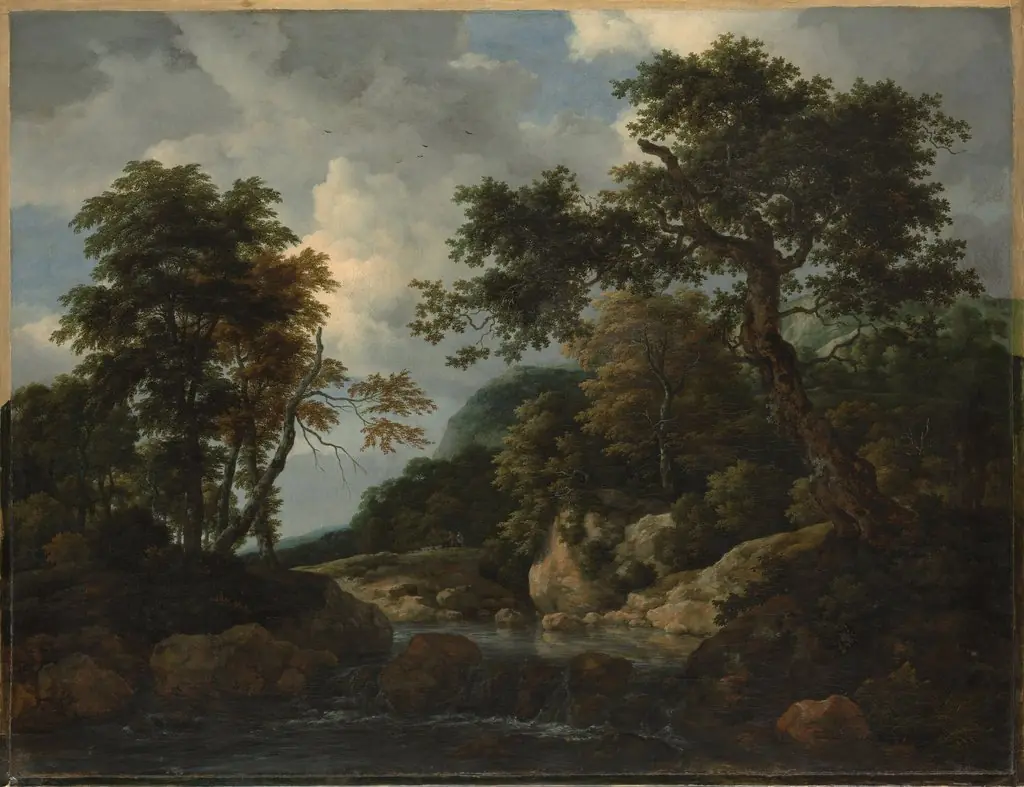
Three Great Trees in a Mountainous Landscape with a River
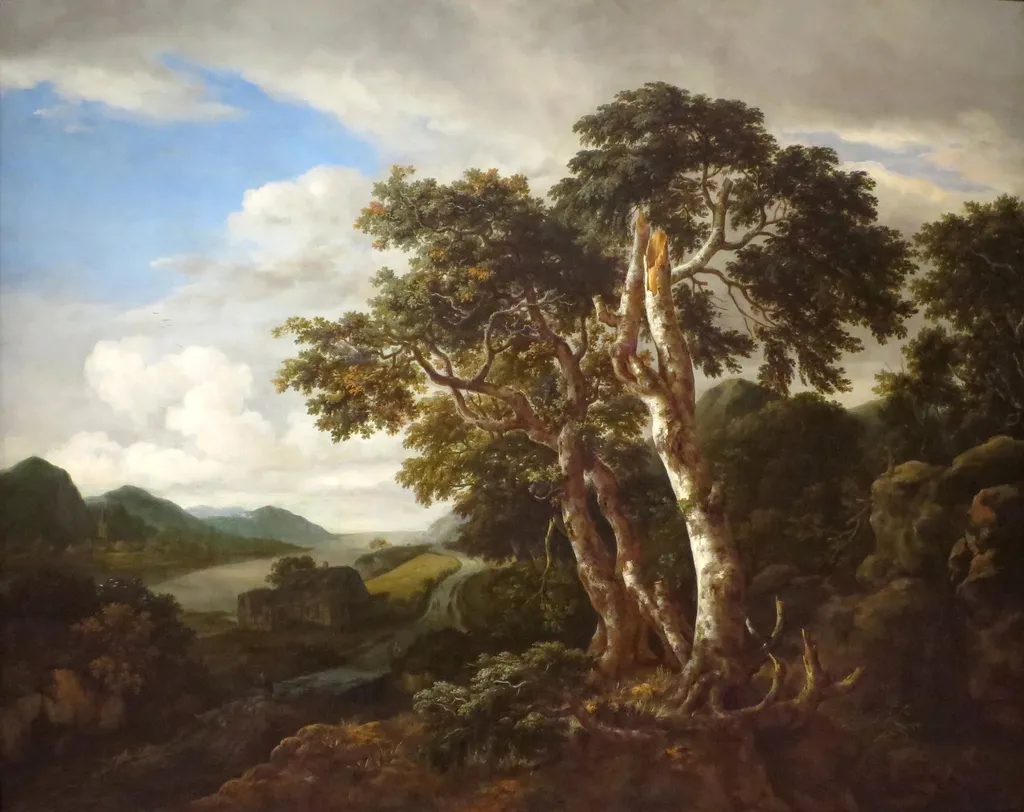
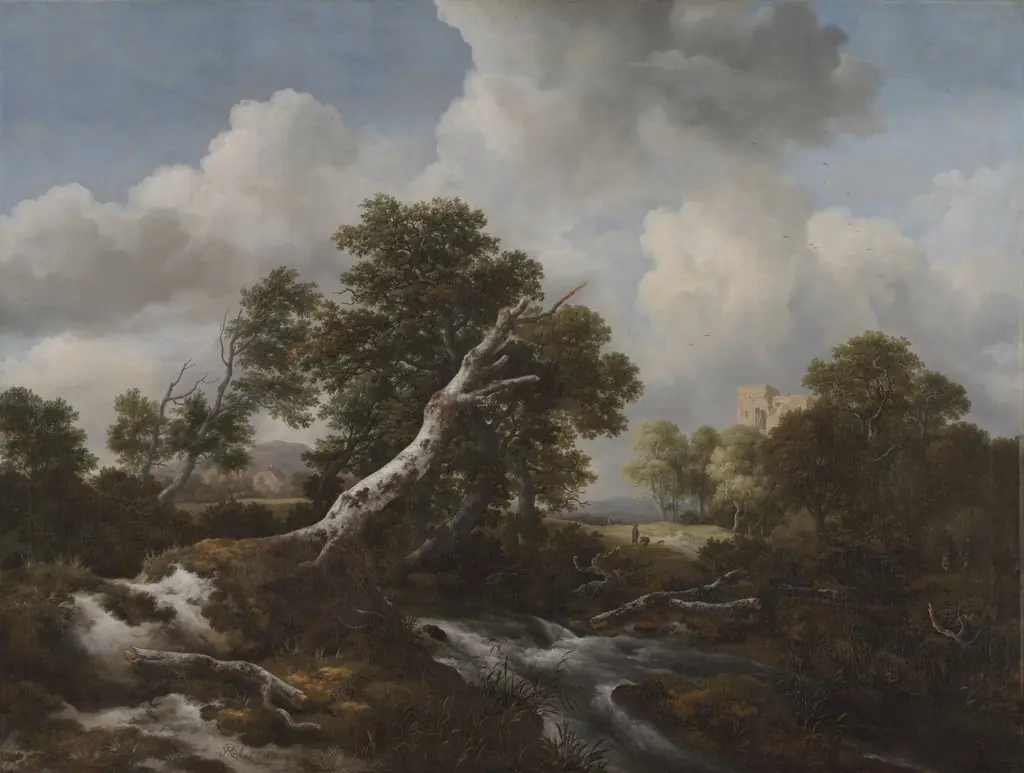
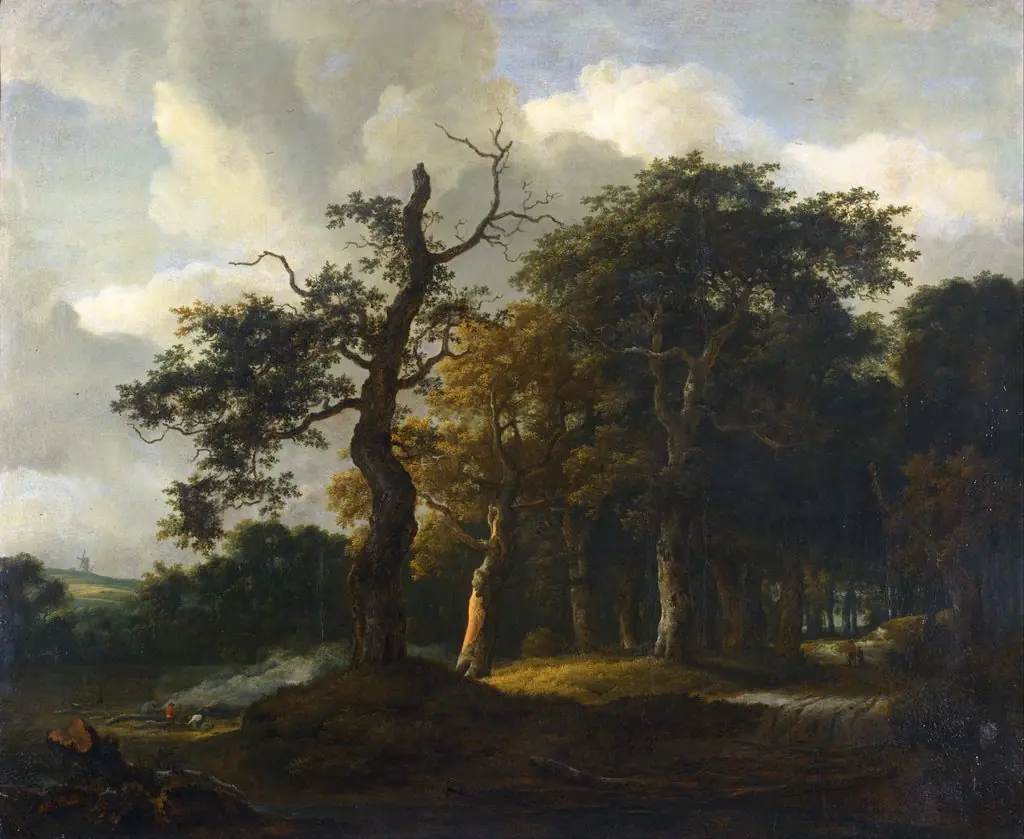
Three Great Trees in a Mountainous Landscape with a River is an oil painting by the Dutch Golden Age artist Jacob van Ruisdael. It dates from 1660 and is held in the collection of the Norton Simon Museum.
About this work
Overview
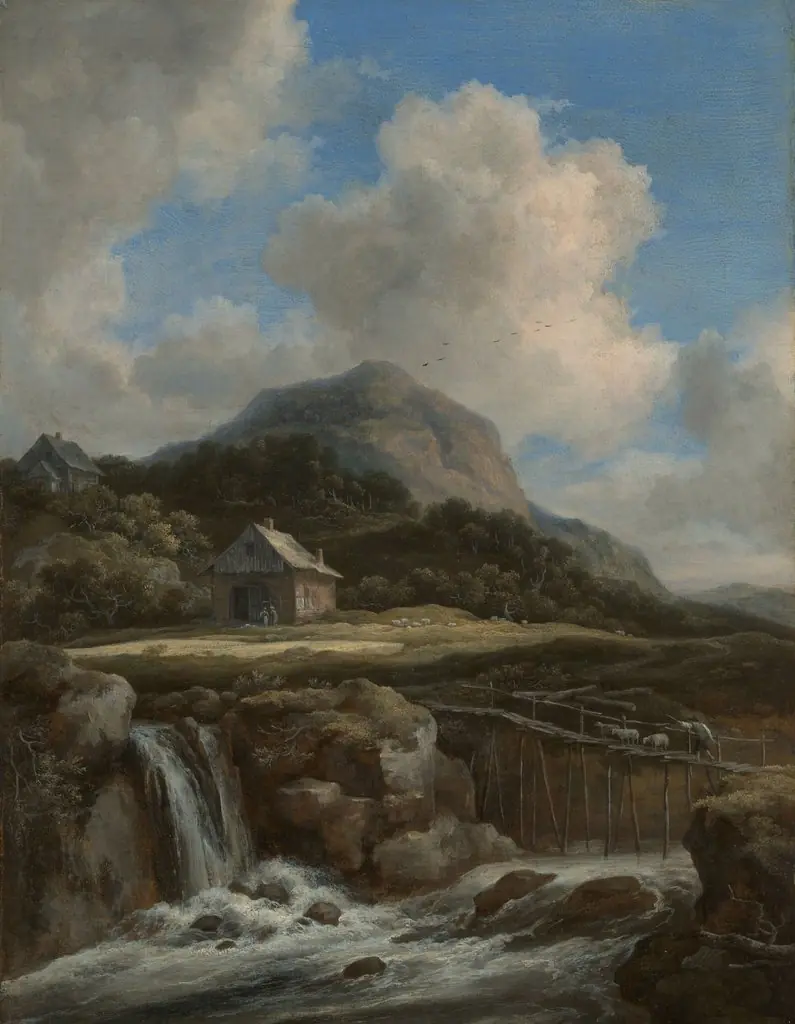
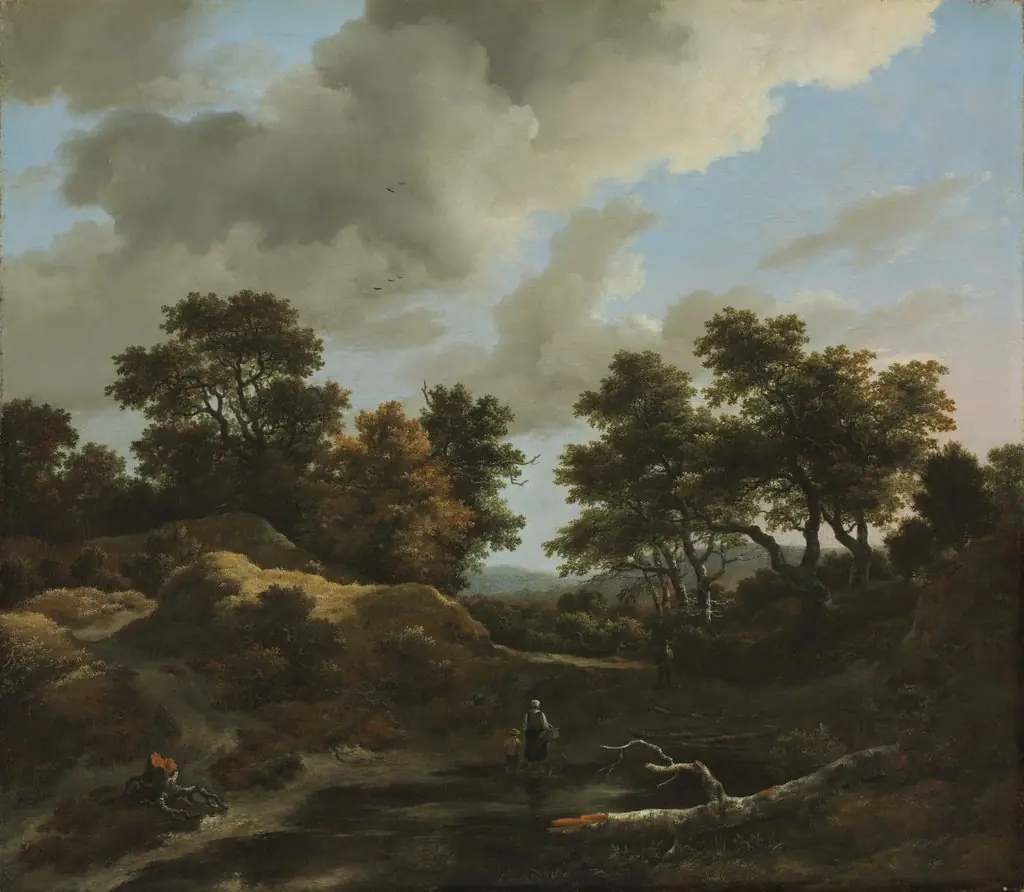
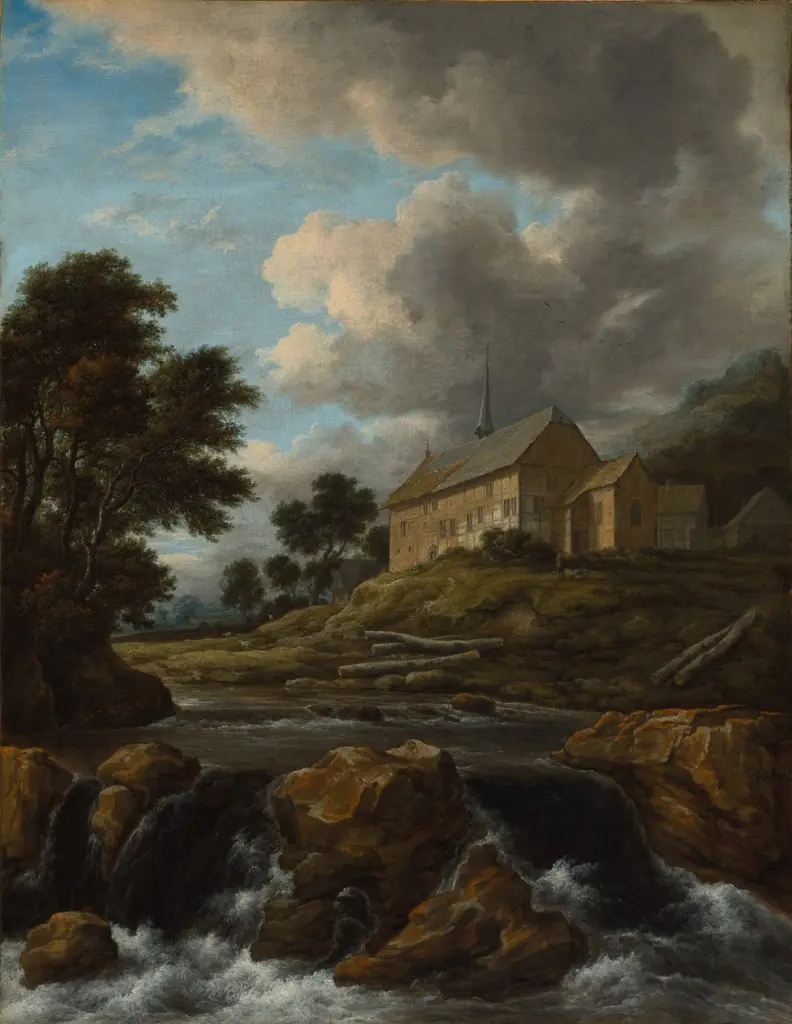
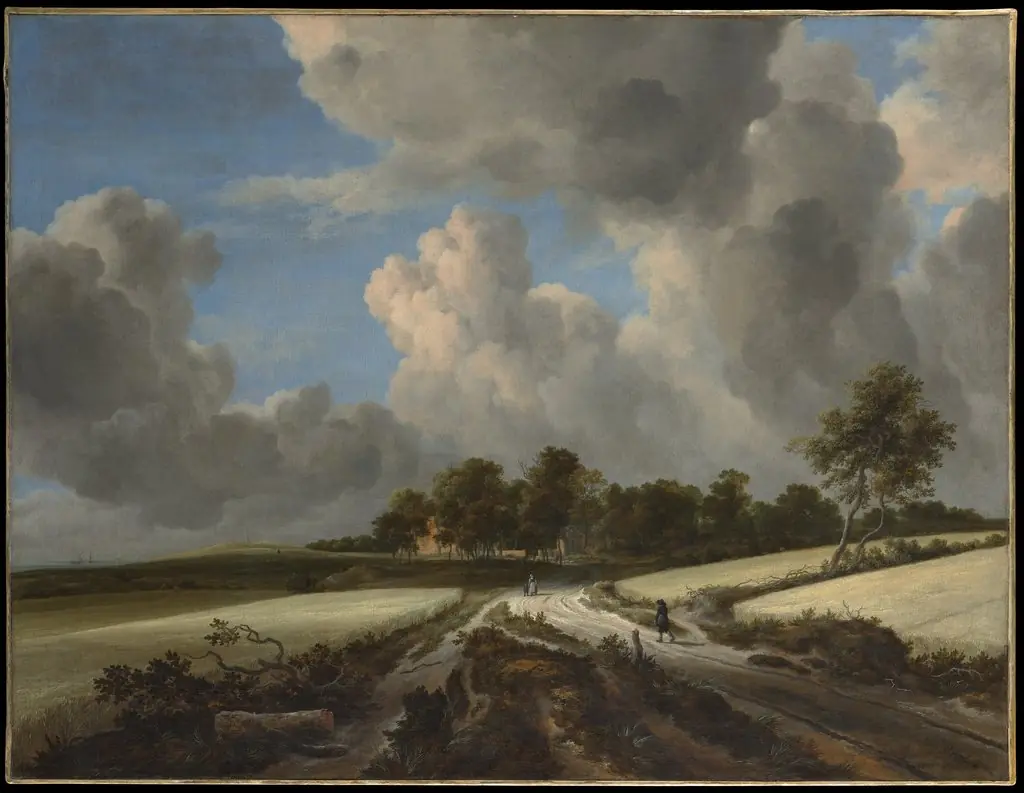
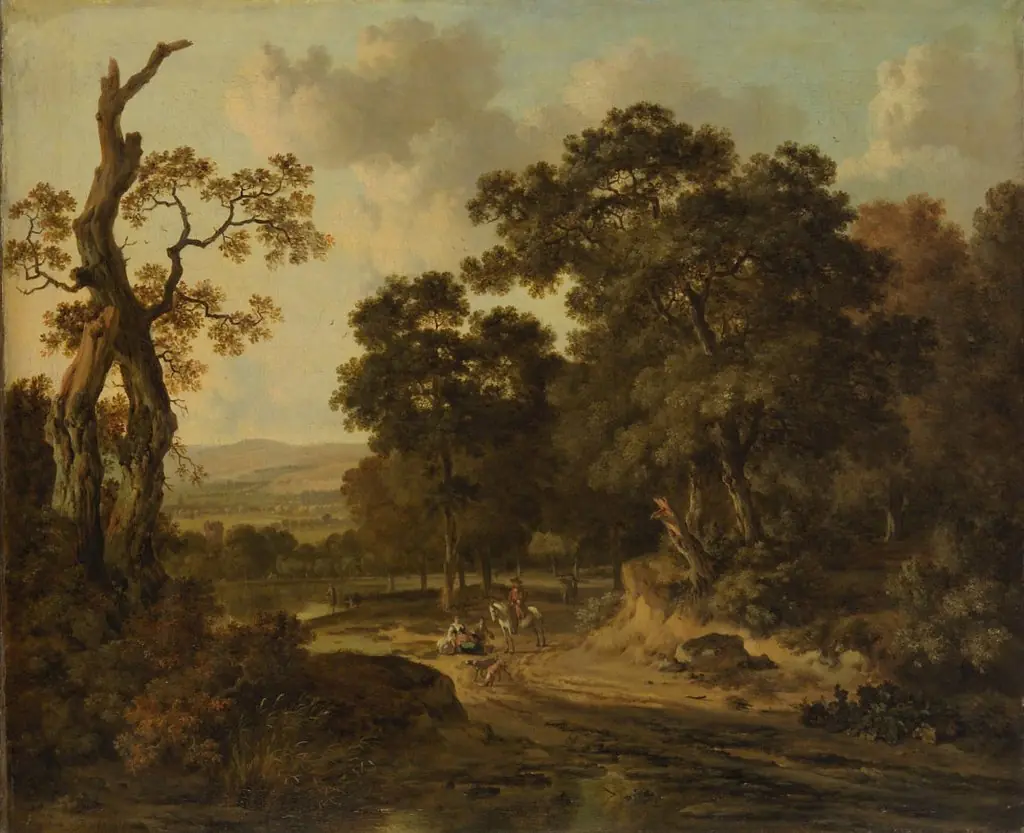
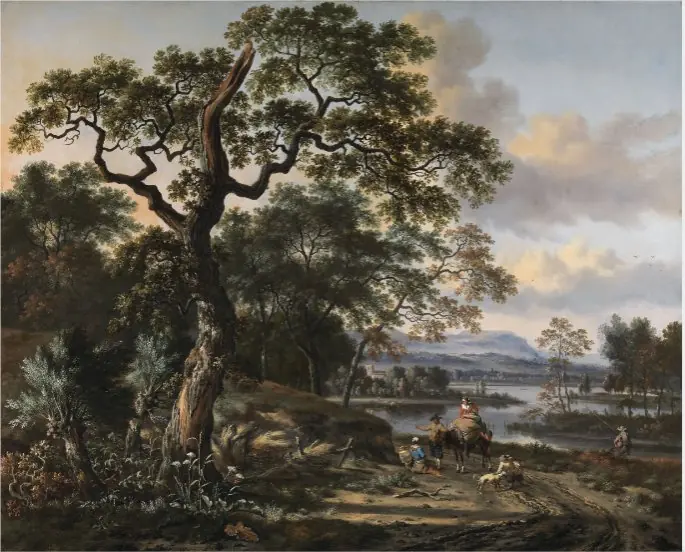
Painted in 1660, this oil landscape by Jacob van Ruisdael presents a sweeping view of nature dominated by three towering trees in the foreground.
Painted in 1660, this oil landscape by Jacob van Ruisdael presents a sweeping view of nature dominated by three towering trees in the foreground. Set against a distant range of mountains and a winding river, the composition balances vertical forms with horizontal planes. The scene conveys a quiet grandeur, rooted in close observation of the Dutch countryside’s topography and atmospheric conditions.
Subject & Meaning
The three large trees serve as both structural anchors and symbolic elements, suggesting endurance and the passage of time. Their varied postures—some upright, others twisted—hint at resilience amid natural forces. The river, meandering through the valley, implies continuity, while the distant peaks evoke the sublime scale of the earth. The painting invites contemplation rather than narrative, emphasizing nature’s quiet authority.
Technique & Style
Ruisdael employs layered brushwork to render the bark and foliage of the trees with meticulous texture, contrasting with the hazy, blended tones of the mountains. Chiaroscuro is used subtly to model form and guide the eye toward the central trunks. The sky, partially obscured by cloud, casts diffused light that enhances the depth of the scene, while the river reflects ambient hues, reinforcing the painting’s atmospheric cohesion.
History & Provenance
The painting entered the Norton Simon Museum’s collection in the 20th century, having passed through several private European holdings since its creation. Its attribution to Ruisdael has remained consistent, supported by stylistic analysis and documentary records from the Dutch Golden Age. It has been exhibited in major surveys of 17th-century Dutch landscape painting, though rarely reproduced in popular media.
Context
Created during the height of Dutch landscape painting, this work reflects a cultural shift toward valuing nature as worthy of serious artistic attention. Unlike idealized Italianate scenes, Ruisdael’s approach was grounded in local topography and meteorological observation. His compositions often conveyed moral or spiritual undertones, aligning with Protestant sensibilities that saw nature as a reflection of divine order.
Legacy
Ruisdael’s treatment of trees and atmosphere influenced later generations of landscape artists, including those of the Romantic era. His ability to merge precise detail with emotional resonance set a standard for naturalistic representation. While not widely known to the general public, the painting remains a touchstone in academic studies of Dutch realism and the evolution of landscape as an independent genre.
Own this work as a print
Artist & collection
Artist
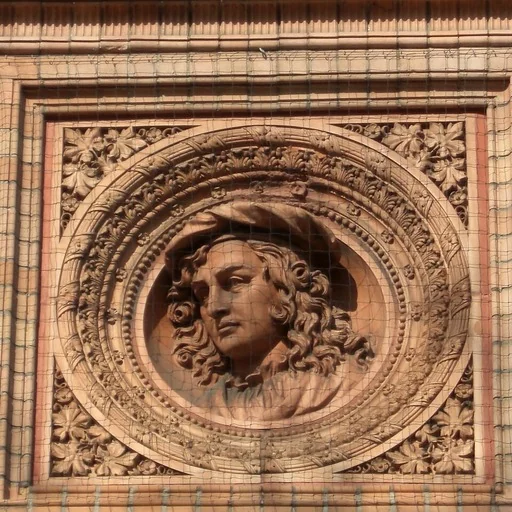
Jacob Isaackszoon van Ruisdael was a Dutch painter, draughtsman, and etcher. He is generally considered the pre-eminent landscape painter of the Dutch Golden Age, a period of great wealth and cultural achievement when…