Artwork
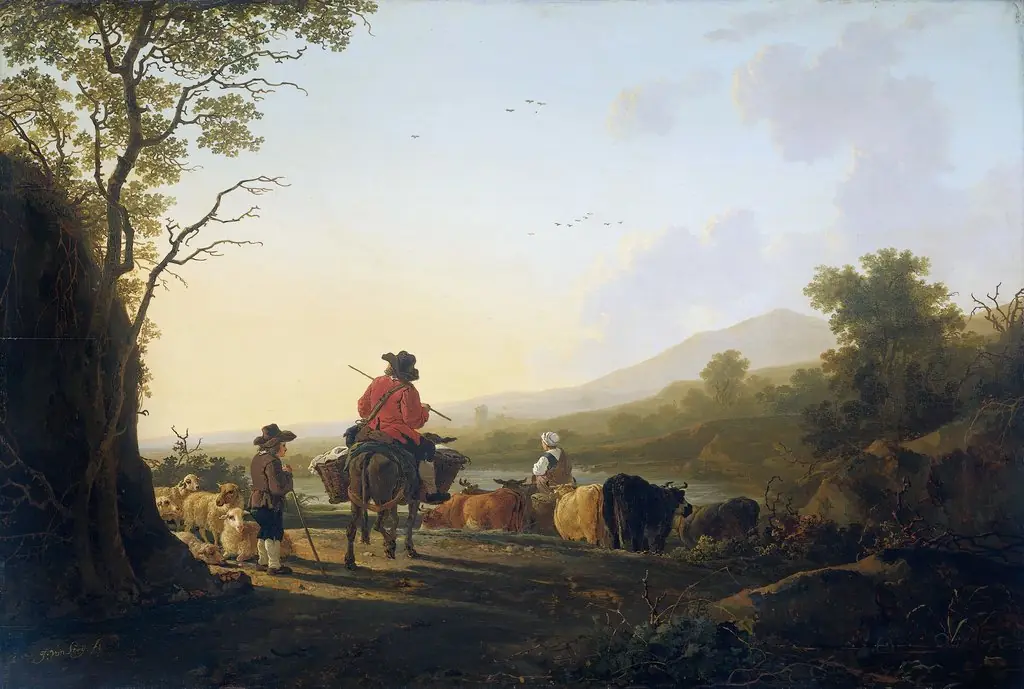
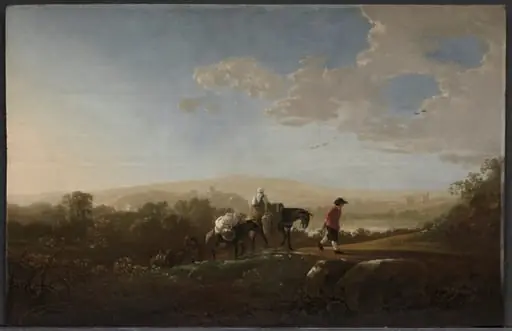
Landscape with Cattle Driver and Shepherd
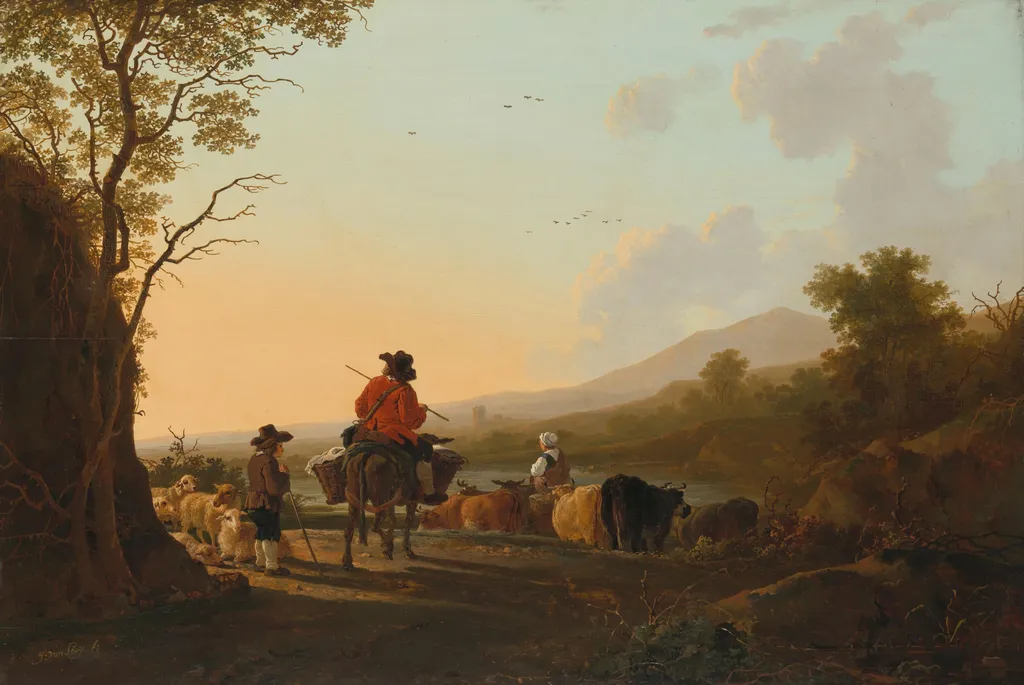
Landscape with Cattle Driver and Shepherd is an unspecified painting by the Rococo painting artist Jacob van Strij. It dates from 1780 and is held in the collection of the Rijksmuseum.
About this work
Overview
This painting belongs to a wave of 18th-century Dutch landscapes that emulate the compositional tone of Aelbert Cuyp, a 17th-century master of pastoral scenes.
This painting belongs to a wave of 18th-century Dutch landscapes that emulate the compositional tone of Aelbert Cuyp, a 17th-century master of pastoral scenes. Though executed long after Cuyp’s death, the work reflects his enduring influence, particularly among collectors and artists in the Netherlands and England. The artist, likely from Dordrecht, adapted Cuyp’s quiet rural motifs while introducing heightened chromatic elements absent in the original style.
Subject & Meaning
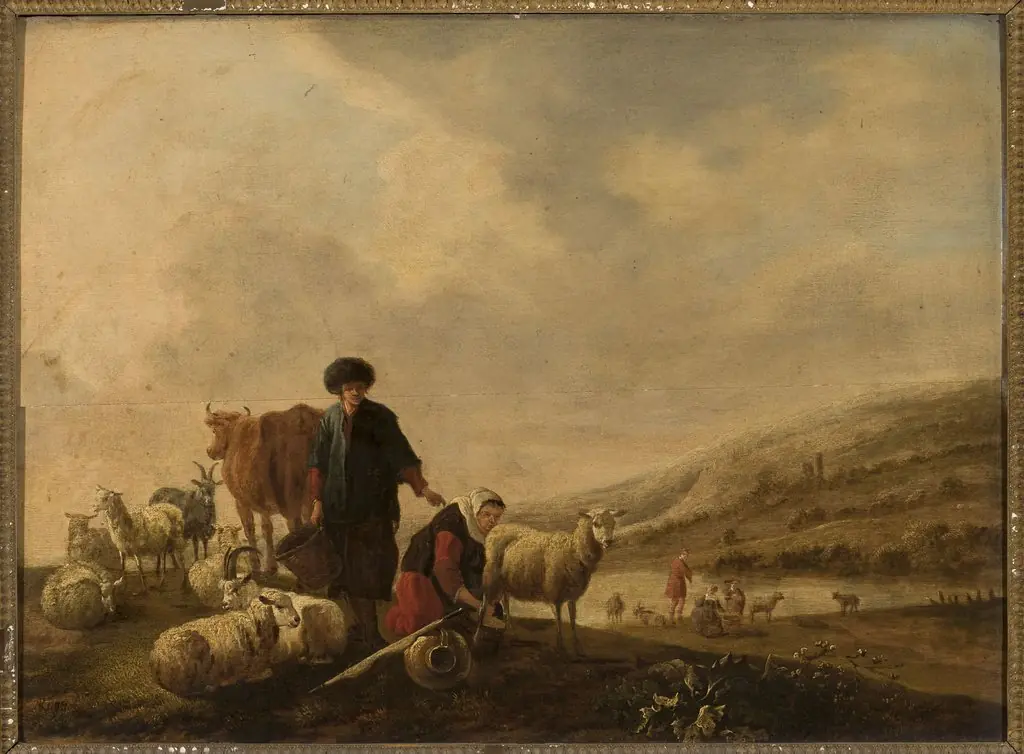
The scene depicts a tranquil riverbank where cattle graze near two figures: one standing, the other seated beneath a tree. These figures, a cattle driver and a shepherd, anchor the landscape in daily rural life without dramatizing it. The composition emphasizes stillness and harmony between humans, animals, and nature, reflecting an idealized vision of pastoral order rather than narrative action.
Technique & Style
The artist employs a luminous, golden sky that contrasts with Cuyp’s more subdued atmospheric tones. Brushwork remains deliberate but softer, with richer pigments used to define foliage and water. The color palette leans warmer than typical Dutch landscapes of the period, suggesting a deliberate embellishment to appeal to contemporary tastes while retaining the compositional balance characteristic of Cuyp’s tradition.
History & Provenance
The painting’s origins trace to Dordrecht, a city associated with both Cuyp and his later followers. Its creation coincides with a period when artists revisited 17th-century models to meet demand from aristocratic collectors, especially in England. While its early ownership is unrecorded, its stylistic lineage places it within a well-documented circle of regional painters who sustained Cuyp’s legacy through reinterpretation.
Context
In the late 1700s, Dutch landscape painting experienced renewed interest as collectors sought works evoking national heritage. Artists like the painter of this piece responded by reworking earlier styles, blending Cuyp’s serene compositions with brighter, more decorative elements. This trend reflects a broader cultural nostalgia, where historical forms were adapted to suit evolving aesthetic preferences without abandoning traditional subjects.
Legacy
Though not attributed to Cuyp himself, the painting exemplifies how his visual language persisted beyond his lifetime. It stands as evidence of a regional artistic lineage that valued continuity over innovation, preserving the quiet dignity of Dutch pastoral life through generations. Such works remain important for understanding how artistic influence operates across time, not through replication, but through thoughtful adaptation.
Own this work as a print
Artist & collection
Artist
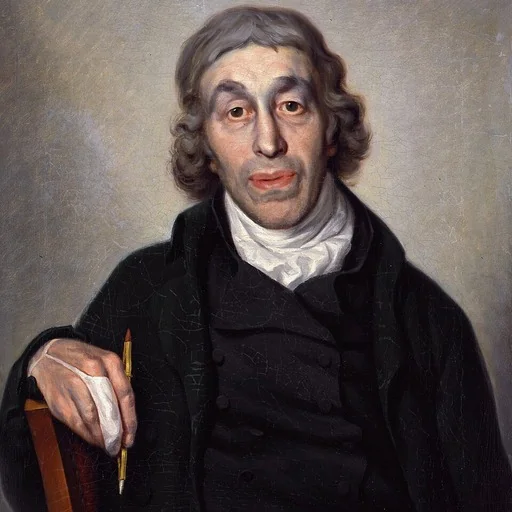
Jacob van Strij (2 October 1756 – 4 February 1815) was a Dutch painter, printmaker, and draftsman who was mainly interested in landscape painting, including mountain landscapes, winter landscapes and marines.

 The Three Droves
 Landscape with Herdsmen
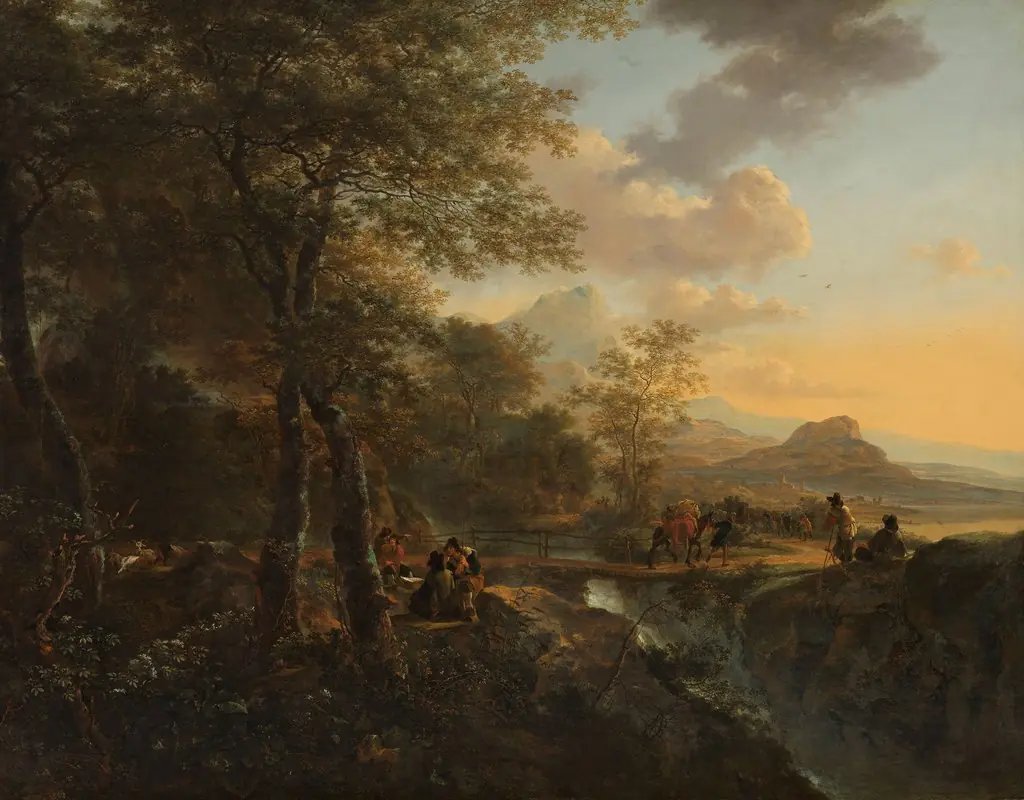 Italian Landscape with a Draughtsman
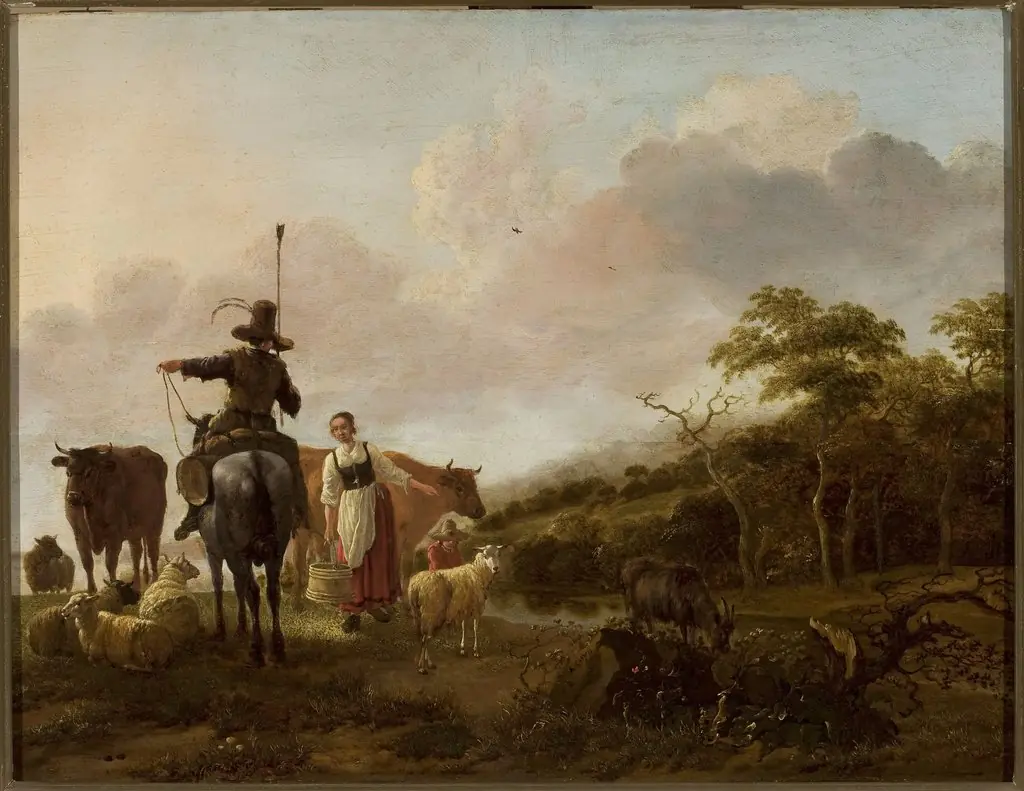 Pastoral landscape
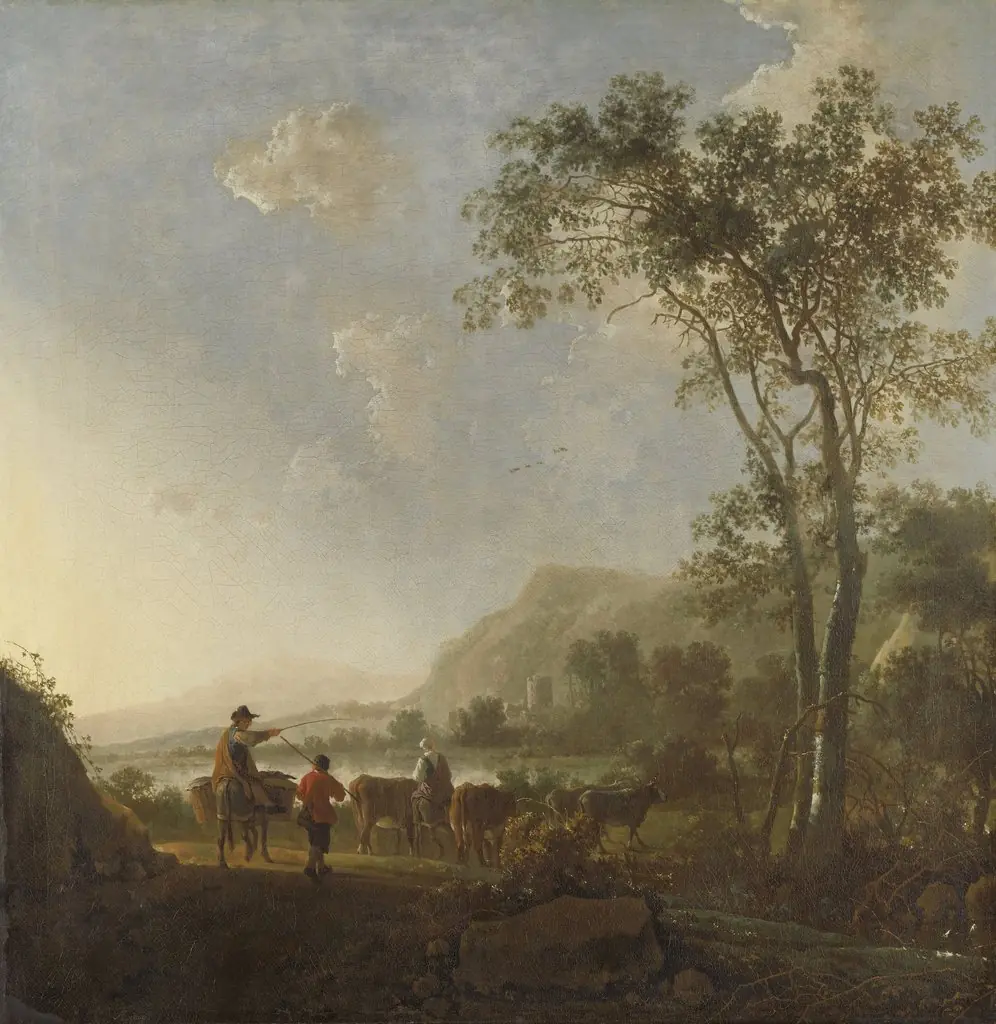 Landscape with herdsman and cattle
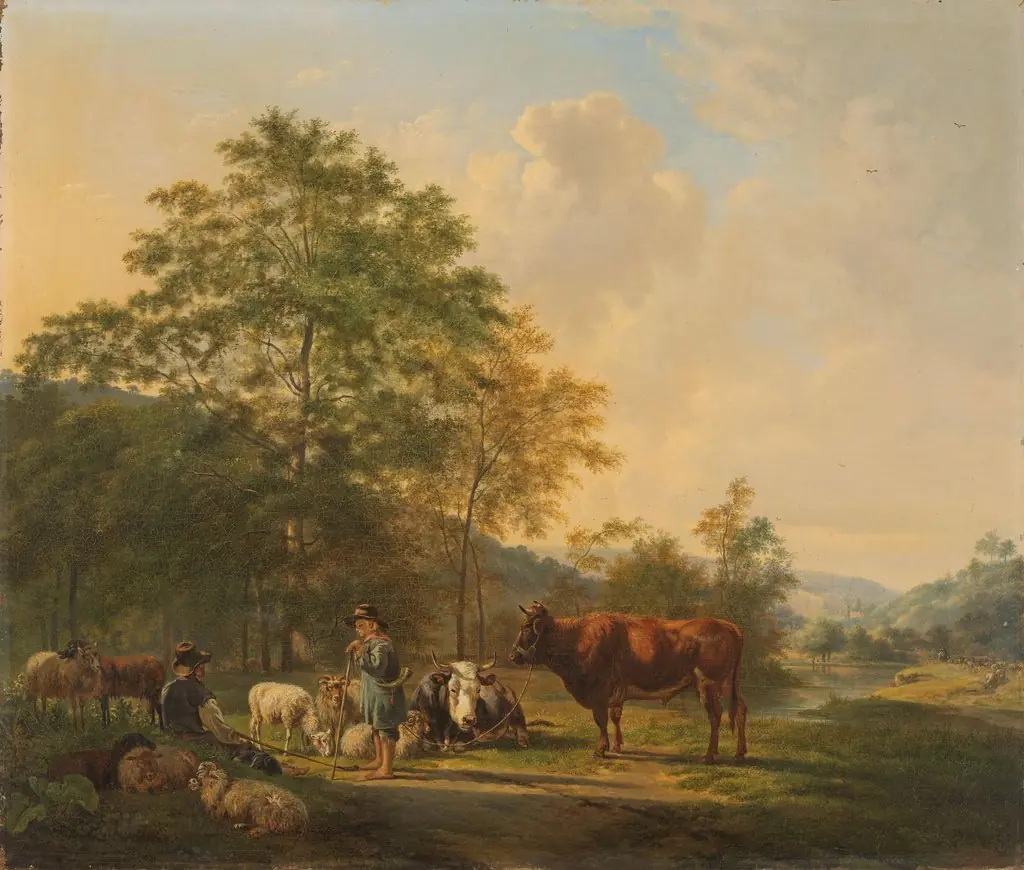 Hilly Landscape with Shepherd, Drover and Cattle
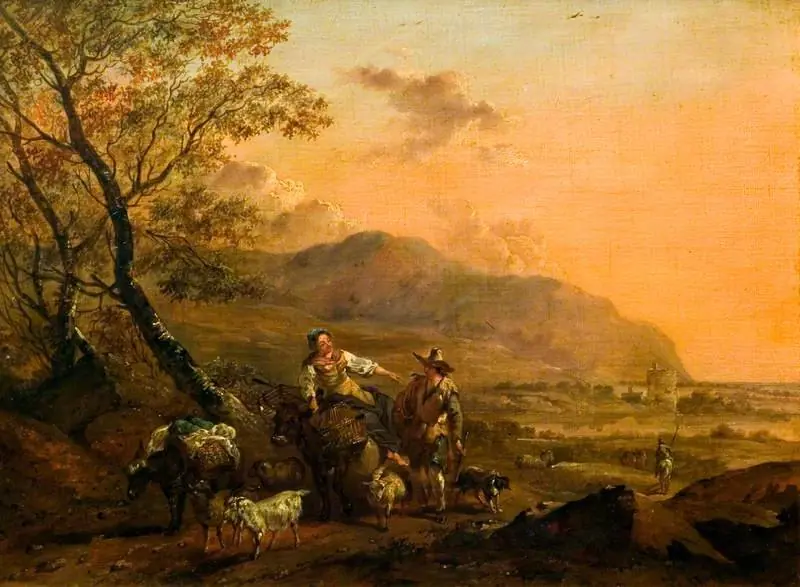 Landscape with Figures
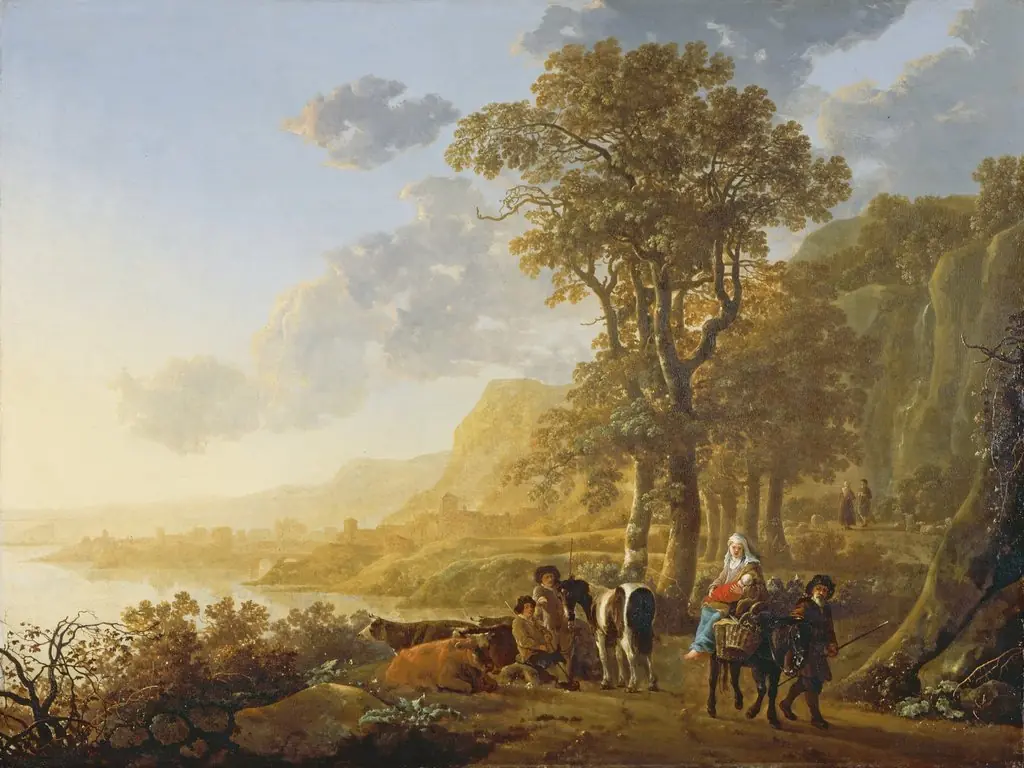 The Flight into Egypt
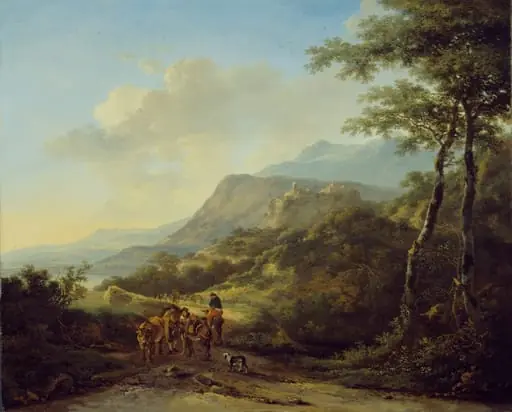 Italian Landscape with Travelers
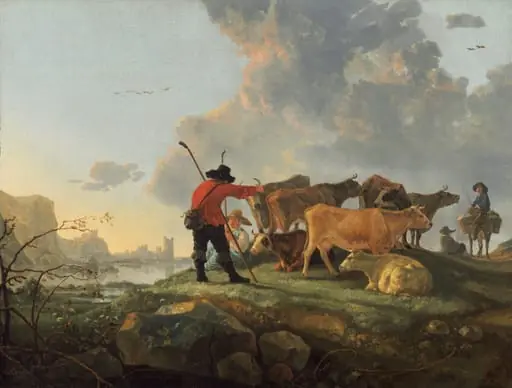 Herdsmen Tending Cattle
 Travelers in Hilly Countryside