Artwork
Virgin of the Porziuncola
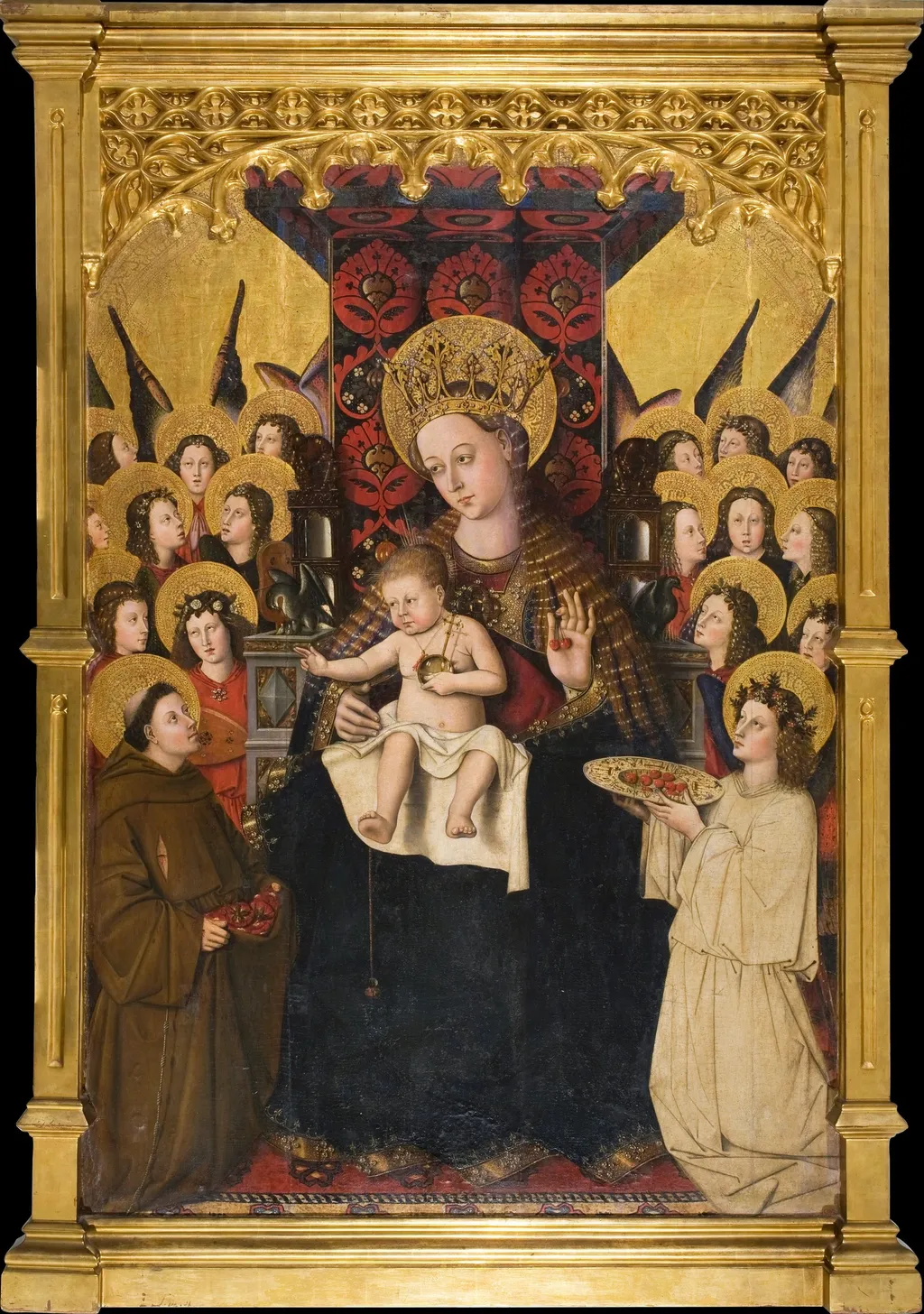
Virgin of the Porziuncola is an unspecified painting by the Early Renaissance artist Jacomart. It dates from 1450 and is held in the collection of the Museu Nacional d'Art de Catalunya.
About this work
Overview
Jacomart's *Virgin of the Porziuncola*, created circa 1450, is a religious painting from the early Renaissance. It is now part of the collection at the Museu Nacional d'Art de Catalunya.
Subject & Meaning
The painting depicts the Virgin Mary with the infant Jesus, surrounded by a group of haloed figures. Mary wears a dark robe and a golden crown, while Jesus is in a white cloth. Accompanying figures hold devotional objects like rosaries, underscoring the scene's religious significance.
Technique & Style
Set against a rich, patterned red and gold backdrop, the work features intricate details and textures, conveying a sense of grandeur and reverence through its meticulous execution.
History & Provenance
Attributed to Jacomart (Jaume Baçó), a Valencia-born painter who worked under Alfonso V of Aragon in Naples and Rome, the painting reflects 15th-century artistic exchanges between Italy and Spain.
Context
Jacomart's career, marked by documented travels and commissions, embodies the broader cultural and artistic dialogues between the Spanish and Italian Renaissance circles of his time.
Legacy
While specific lasting impacts of *Virgin of the Porziuncola* on subsequent art are not prominently documented, it remains a notable example of early Renaissance religious art, reflecting the stylistic and thematic fusions of its era.
Artist & collection
Artist
Jaume Baçó, also spelled Baco or Jacomart (c. 1410–1461), was a Spanish painter from Valencia. Most of his life is scarcely documented. He worked in his native city until 1442, when he was called to Naples by Alfonso V…

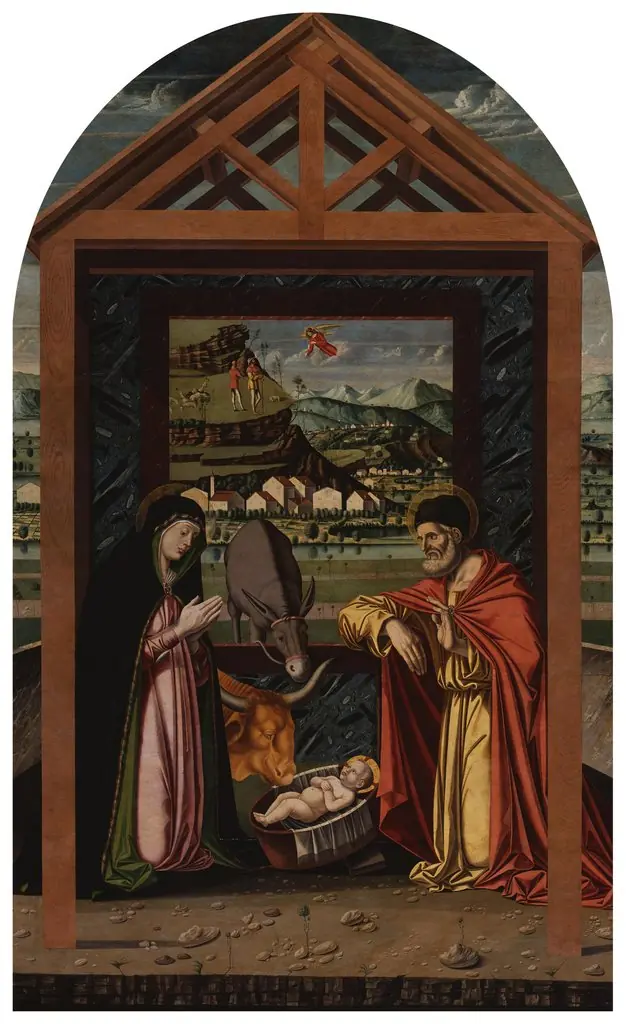
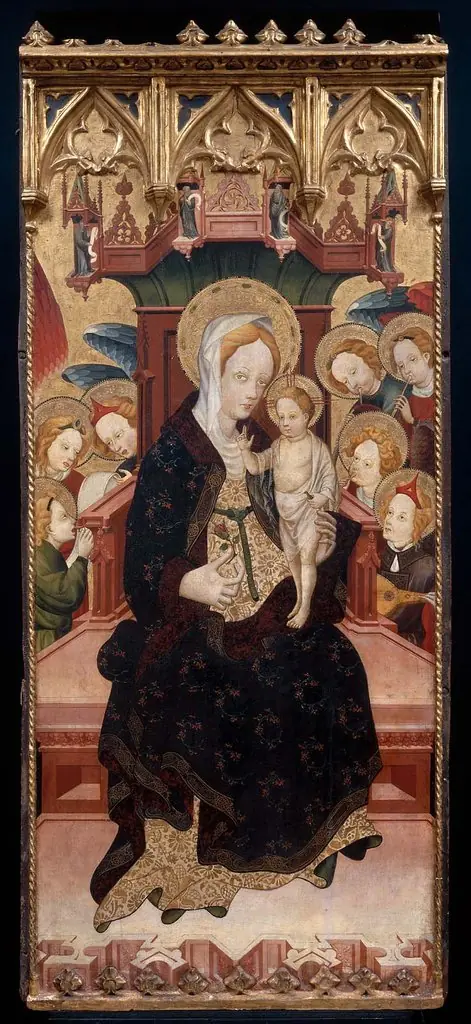 Virgin and Child Enthroned
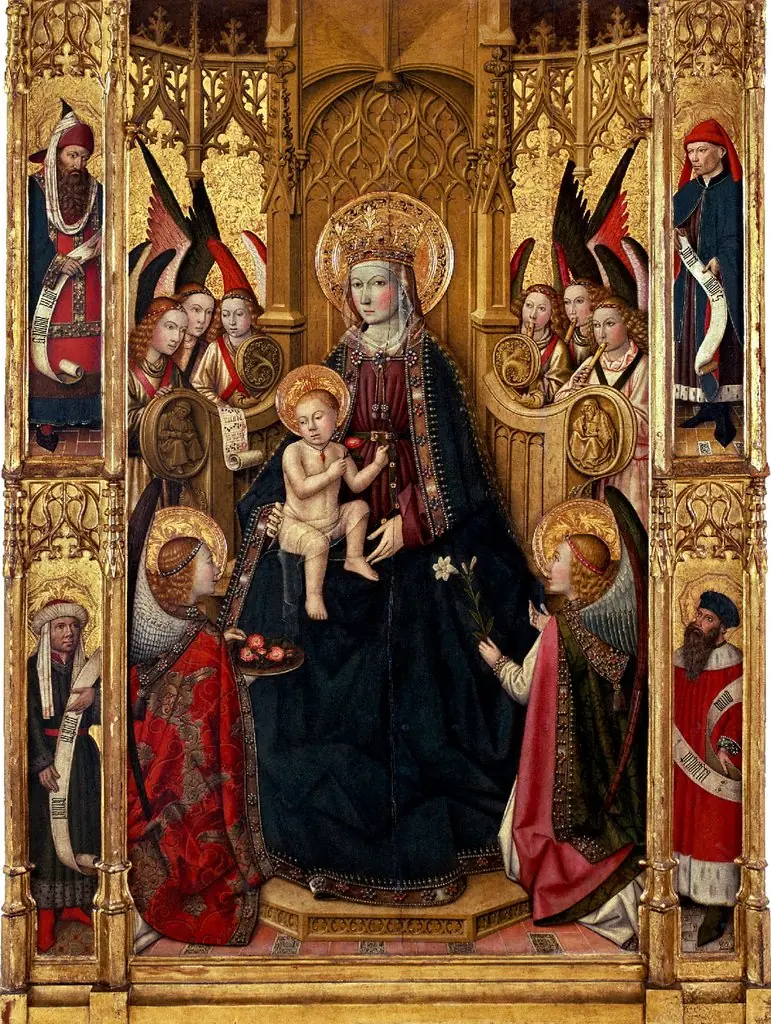 Madonna with child
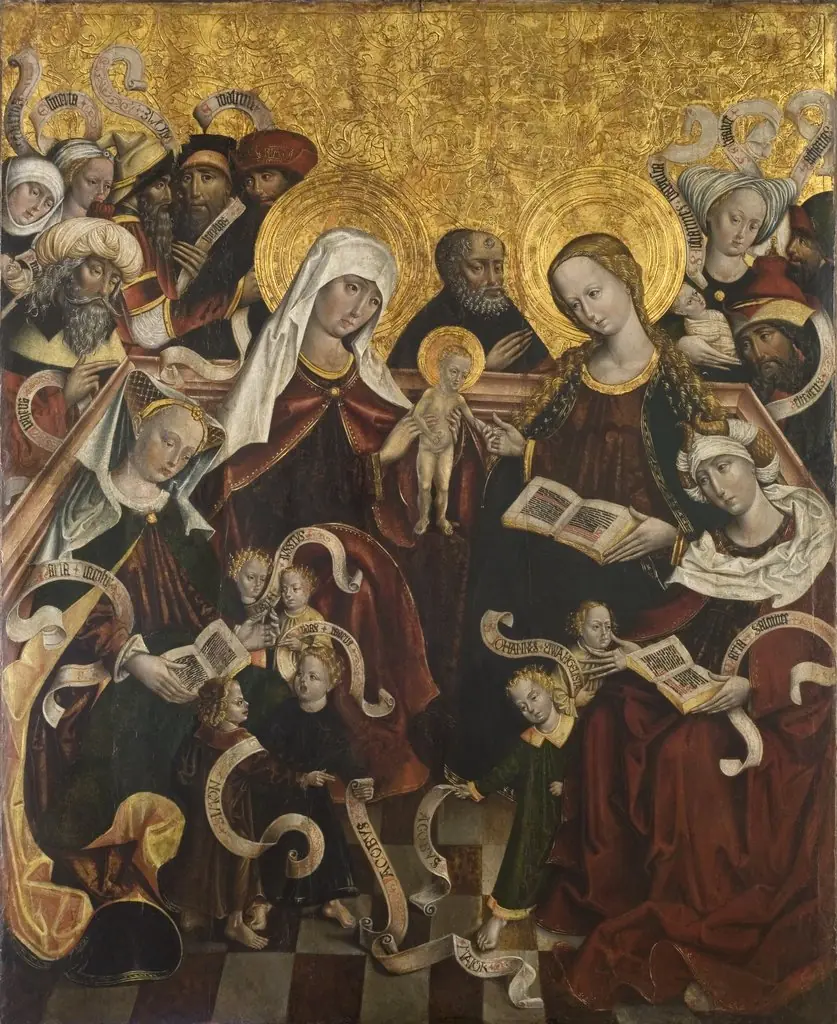 Family of the Virgin Mary, from Ołpiny
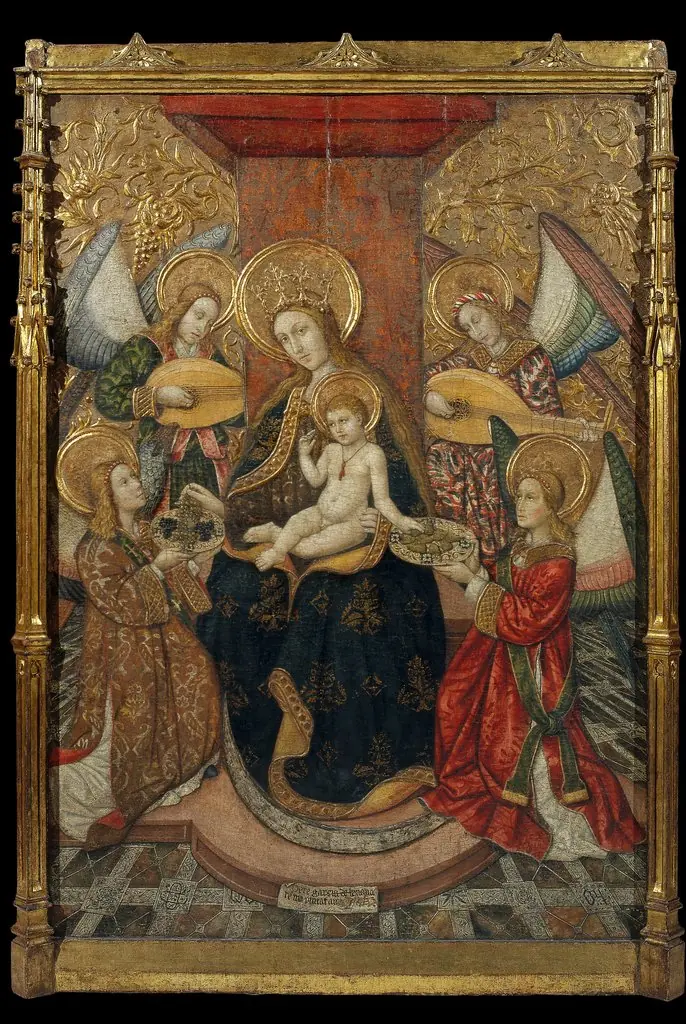 Virgin and Angels
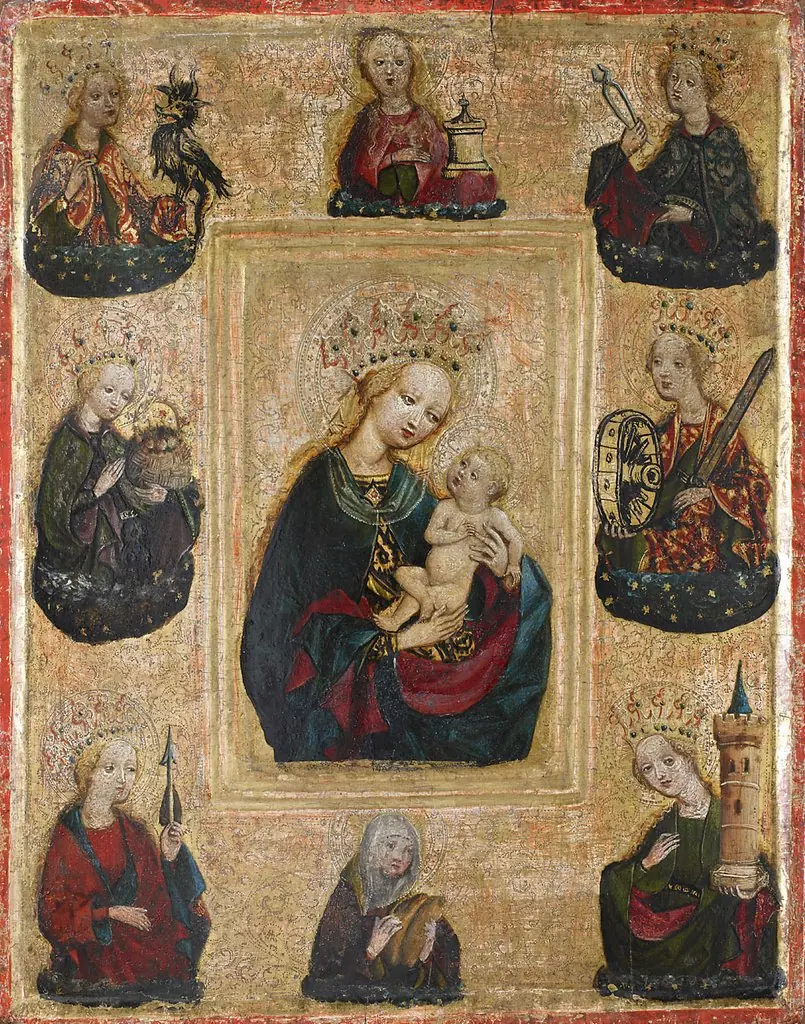 Maria mit Kind
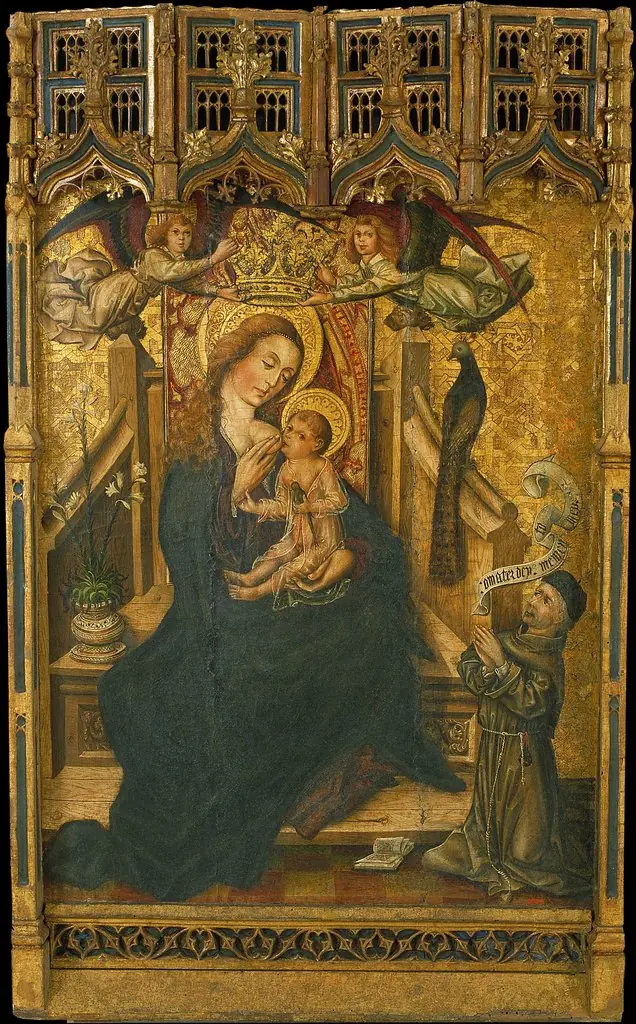 Virgin Suckling the Child with Donor
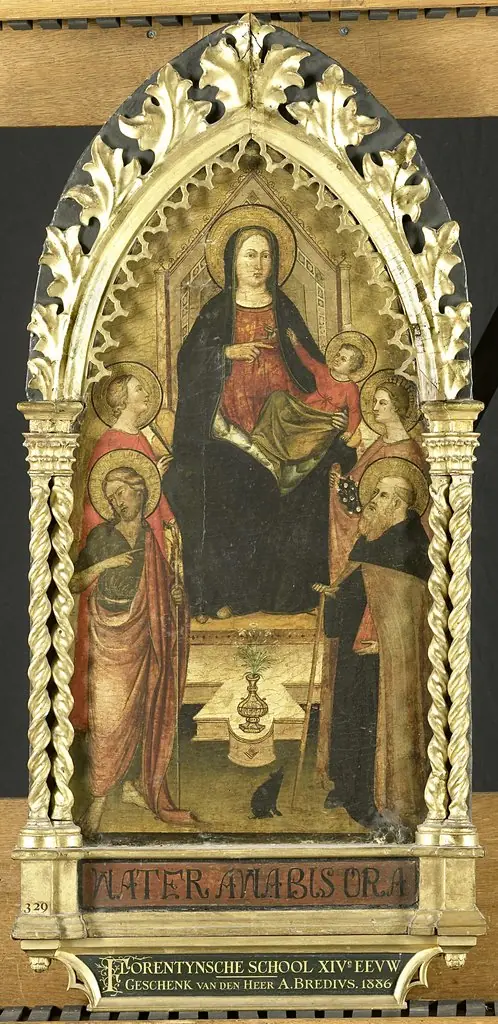 Virgin and Child Enthroned with Four Saints, Saints John the Baptist, Antony Abbot, Elizabeth of Hungary, a female saint
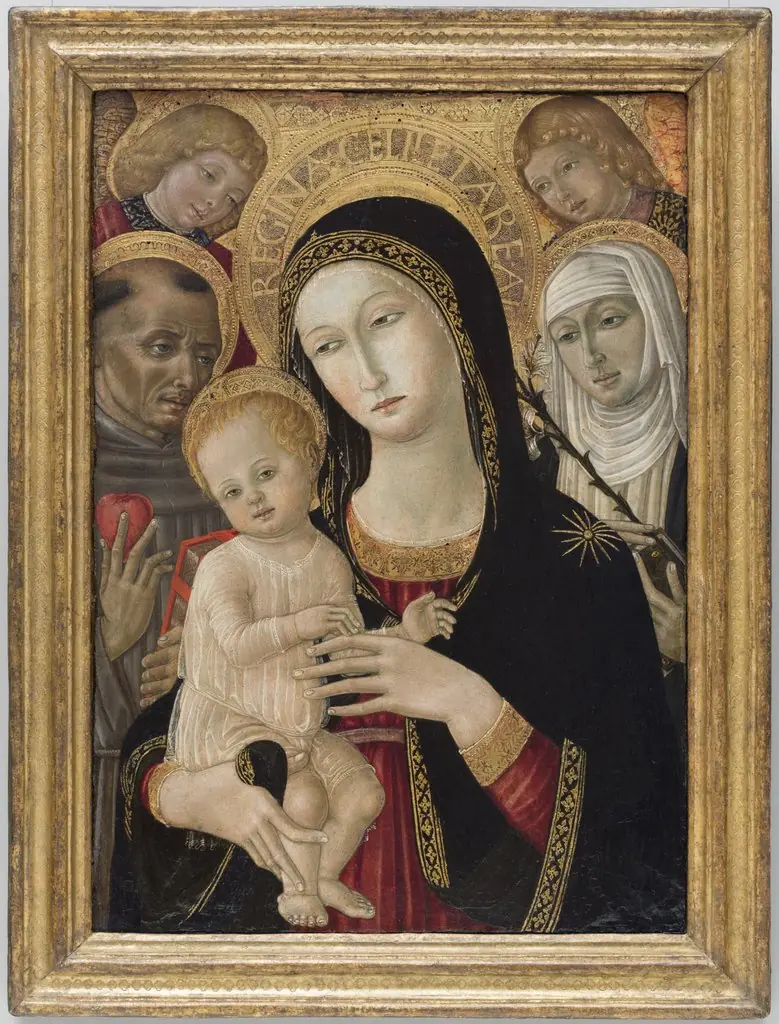 Madonna and Child with St. Catherine of Siena, Saint Anthony of Padua and Angels
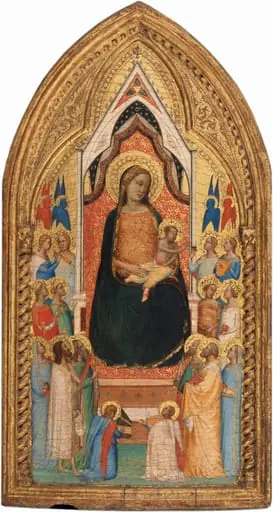 Madonna and Child with Saints and Angels
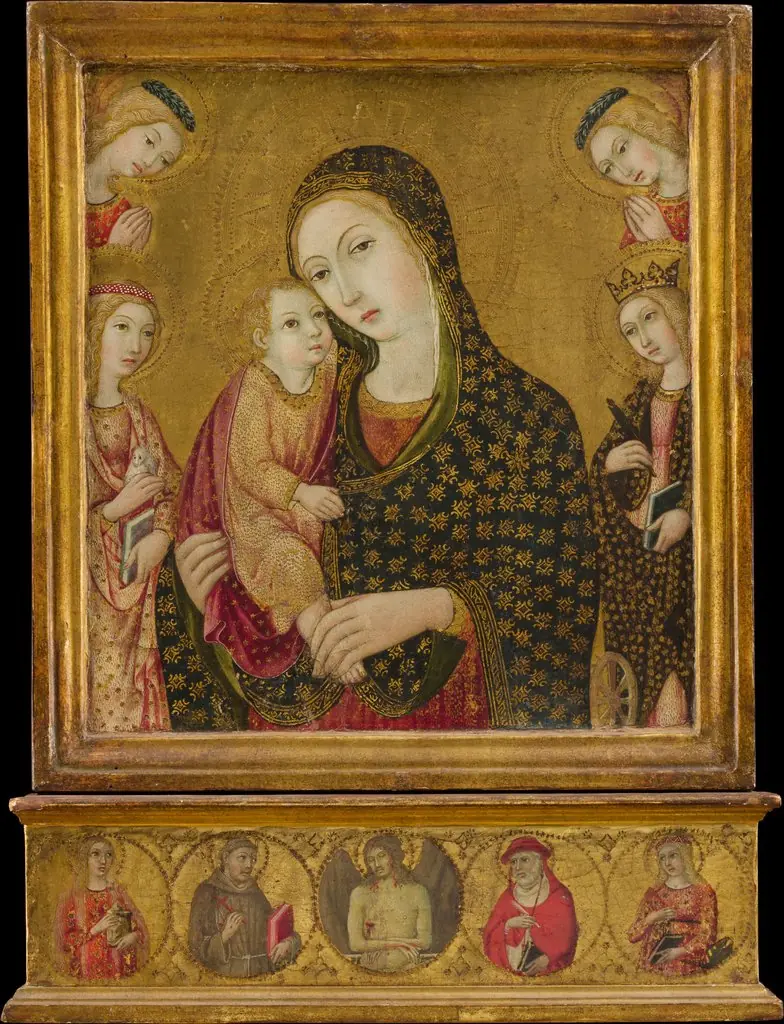 Madonna and Child with the Dead Christ, Saints Agnes and Catherine of Alexandria, and Two Angels