Artwork
Virgin and Angels
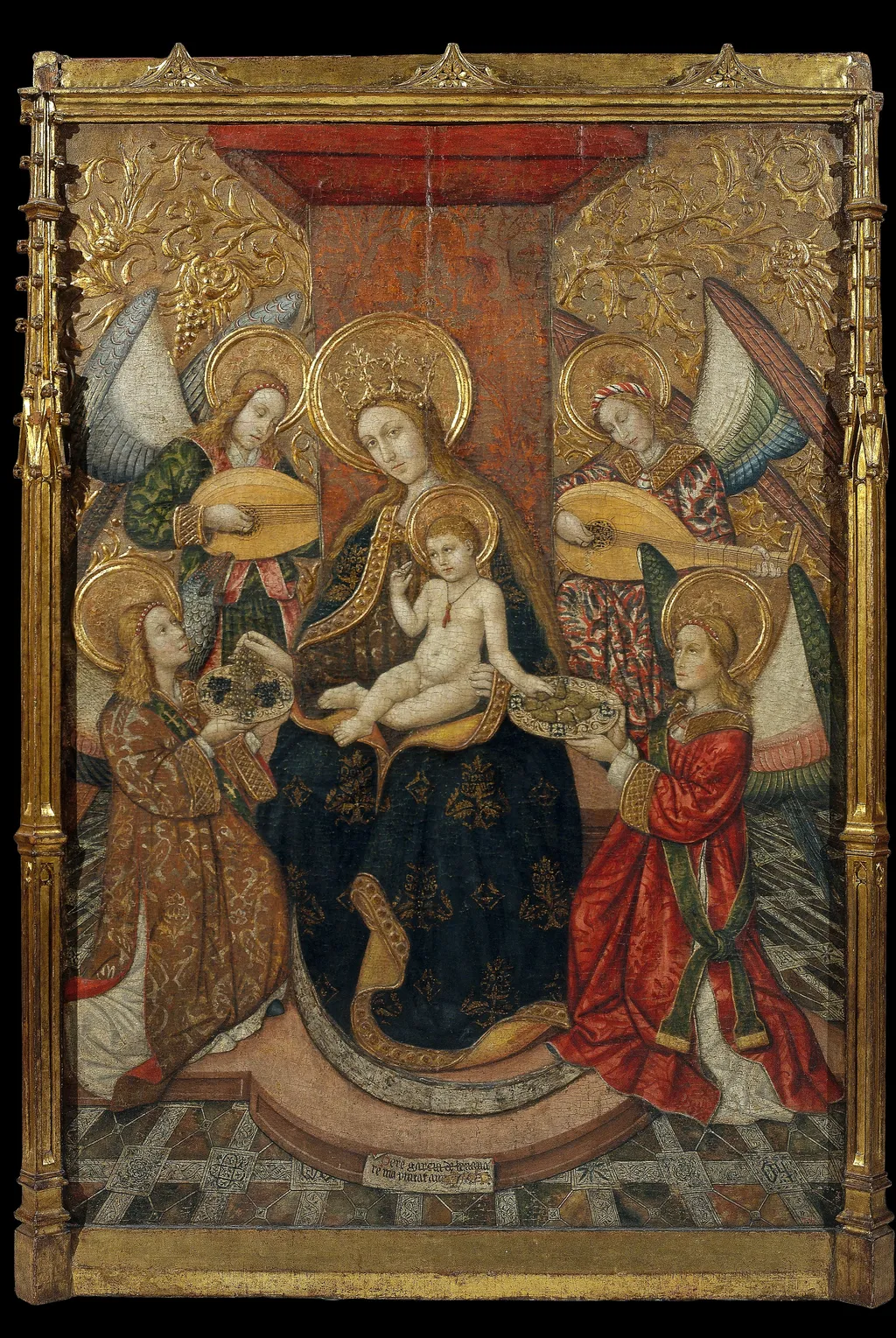
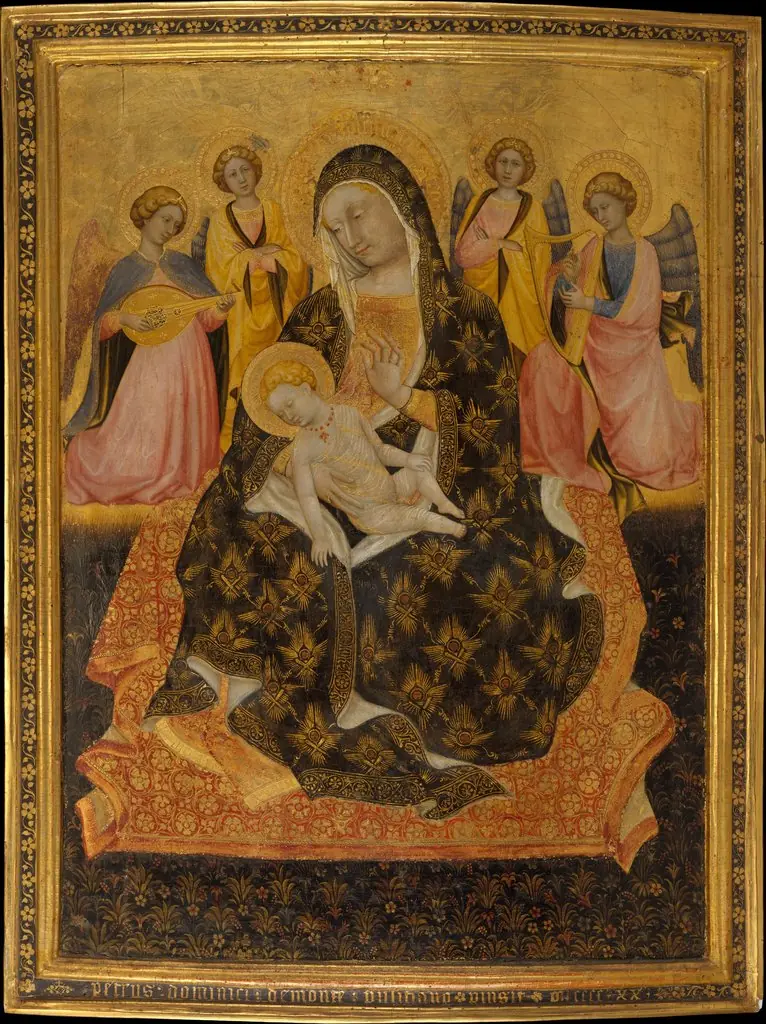
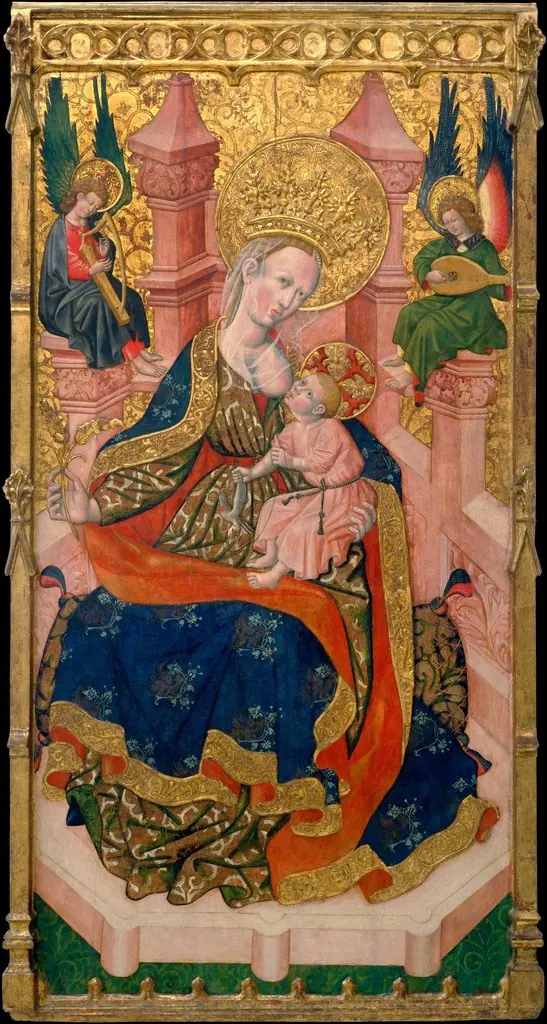
Virgin and Angels is an unspecified painting by the Early Renaissance artist Pedro García de Benavarre. It dates from 1470 and is held in the collection of the Museu Nacional d'Art de Catalunya.
About this work
Overview
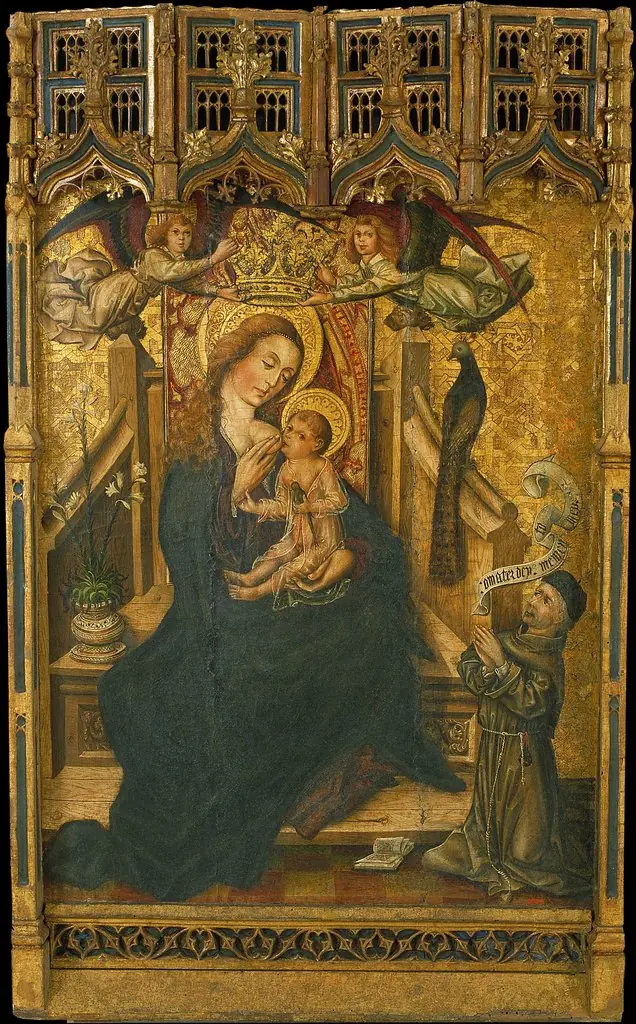
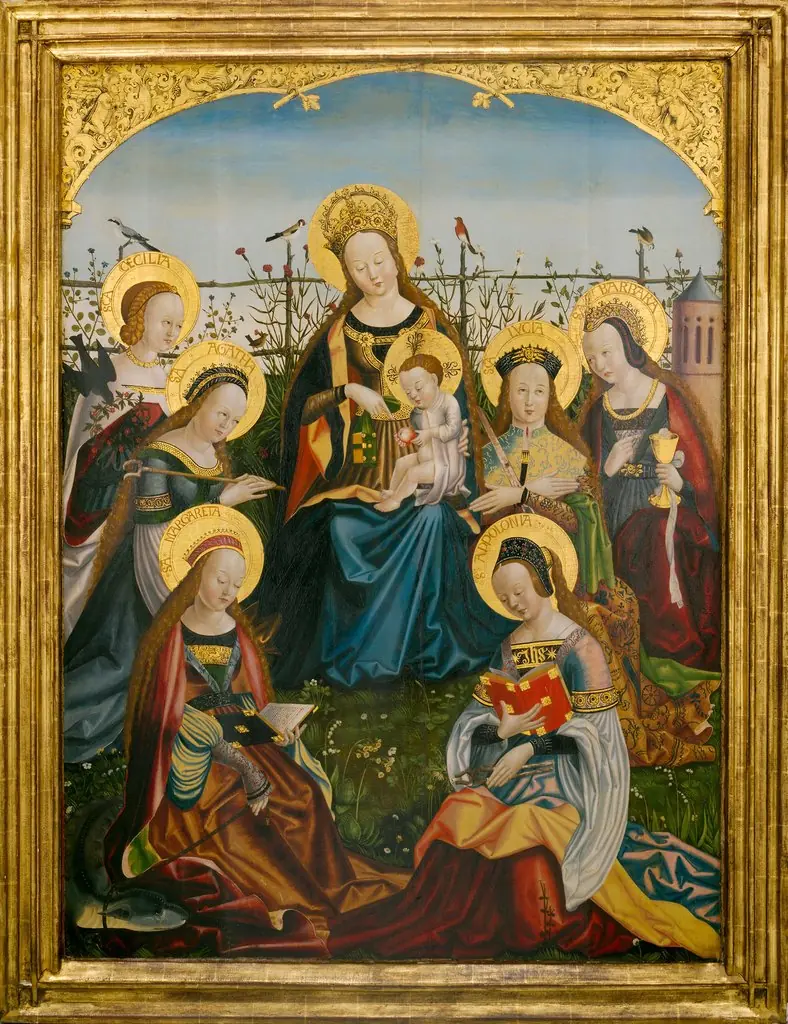
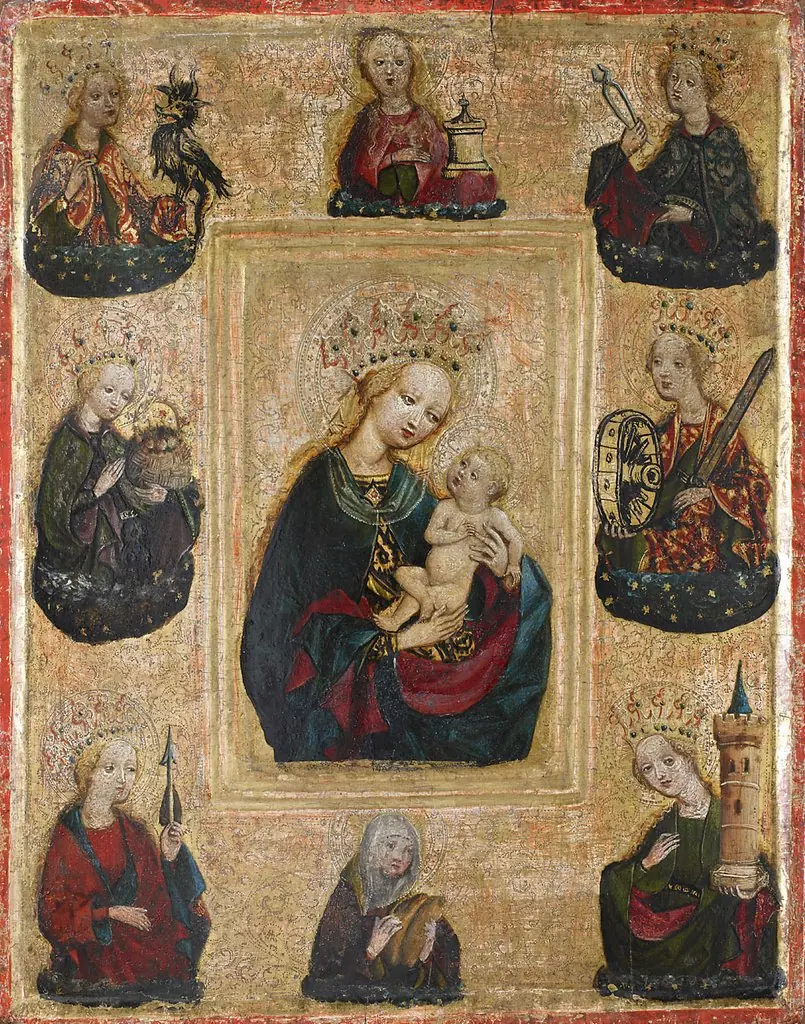
Pedro García de Benavarre’s panel, dated to 1470, presents a devotional image of the Virgin Mary seated with the infant Christ on her lap. The figures are encircled by a group of angels, each holding musical instruments or fruit-bearing dishes. The composition rests on a vivid red ground and is bordered by a gilded frame, emphasizing the work’s liturgical function.
Subject & Meaning
The central figure is the Theotokos, the Mother of God, portrayed in a solemn pose that underscores her role as intercessor. The surrounding angels, rendered in varied hues, contribute to a celestial atmosphere, while the inclusion of fruit and music alludes to themes of abundance, harmony, and heavenly praise within the Christian iconographic tradition.
Technique & Style
Executed in tempera on panel, the painting displays a careful modulation of light and shadow that hints at early chiaroscuro practices. The artist’s attention to textile detail—particularly the dark blue mantle embroidered with gold—demonstrates a refined handling of surface texture, while the balanced arrangement of figures creates a harmonious visual rhythm.
History & Provenance
Created in the late Gothic period of the Iberian Peninsula, the work entered the collection of the Museu Nacional d'Art de Catalunya, where it remains on display. Its provenance prior to museum acquisition is not extensively documented, but the painting’s stylistic traits align it with regional devotional commissions of the late 15th century.
Context
The piece reflects the devotional climate of 15th‑century Catalonia, where Marian veneration was central to both public worship and private chapels. The inclusion of musical angels mirrors contemporary liturgical practices, while the rich coloration and gilded framing correspond to the period’s aesthetic preferences for opulent, spiritually resonant artworks.
Artist & collection
Artist
This painter made big, detailed religious scenes in oil on wood during the 1400s.