Artwork
Madonna in der Glorie
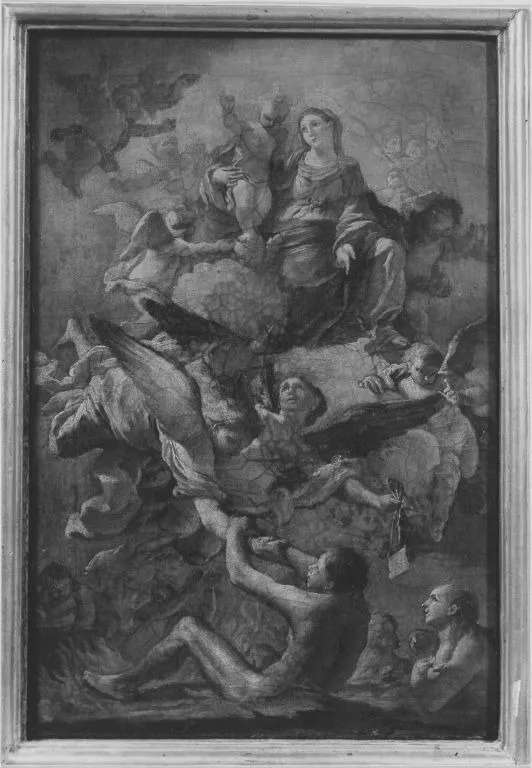
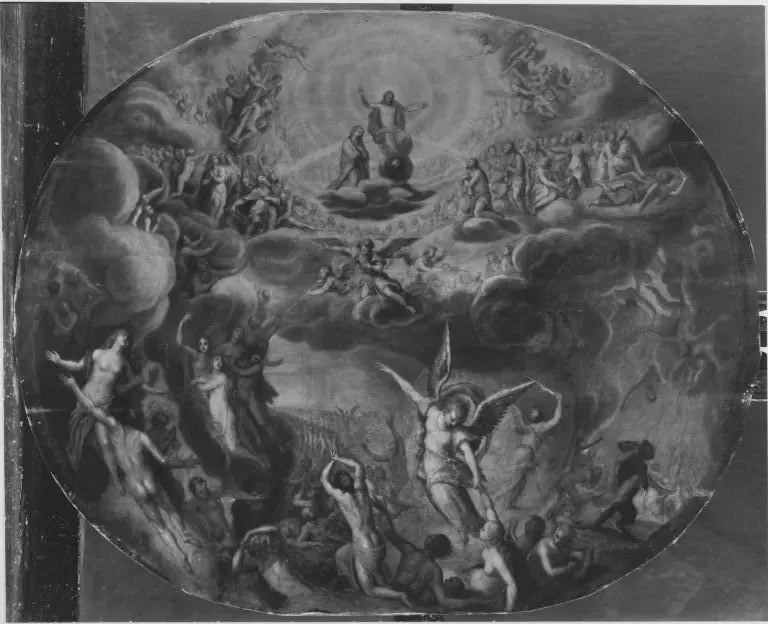
Madonna in der Glorie is an unspecified painting by the Rococo painting artist Jacopo Cestaro. It dates from 1763 and is held in the collection of the Bavarian State Painting Collections.
About this work
Overview
Created in 1763, the work titled *Madonna in der Glorie* is a religious canvas by the Italian painter Jacopo Cestaro. It is part of the collection of Munich’s Alte Pinakothek, where it is displayed among other 18th‑century devotional images. The painting presents a serene female figure elevated above a tumultuous scene, embodying a contrast between celestial calm and earthly turmoil.
Subject & Meaning
The juxtaposition of her tranquil expression with the distress of the lower figures invites contemplation of divine intercession amid human suffering.
At the composition’s centre, a woman in a flowing robe hovers above a chaotic tableau of figures entangled in ropes and rocks. She cradles a small child in one arm and gazes downward, suggesting a protective, perhaps maternal, role over the struggling group below. The juxtaposition of her tranquil expression with the distress of the lower figures invites contemplation of divine intercession amid human suffering.
Technique & Style
Cestaro employs a pronounced chiaroscuro, using deep shadows and bright highlights to model forms and convey movement. The dark, swirling clouds overhead intensify the sense of drama, while the luminous skin of the central figure stands out against the tenebrous background. This handling of light and shade creates a dynamic tension that guides the viewer’s eye from the heavenly realm to the earthly conflict.
History & Provenance
The painting entered the Alte Pinakothek’s holdings in the 19th century, becoming part of the museum’s extensive Baroque and Rococo collection. Its attribution to Jacopo Cestaro, an artist active in the mid‑1700s, is supported by stylistic analysis and archival records linking the work to his workshop in the Veneto region.
Context
*Madonna in der Glorie* reflects the Counter‑Reformation’s emphasis on visual narratives that underscore the protective role of the Virgin Mary. The dramatic composition aligns with the period’s penchant for theatrical religious scenes, while the use of chiaroscuro connects it to broader European trends influenced by Caravaggio’s legacy.
Artist & collection

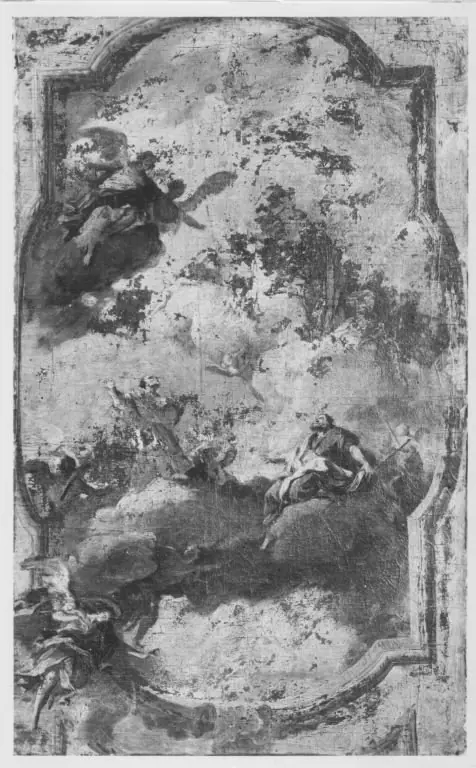 Entwurf für Deckenbild
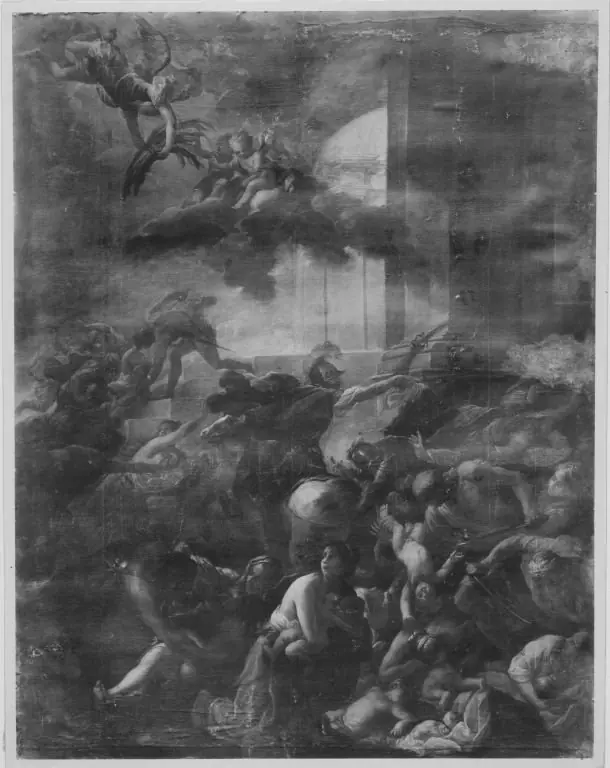 Bethlehemitischer Kindermord
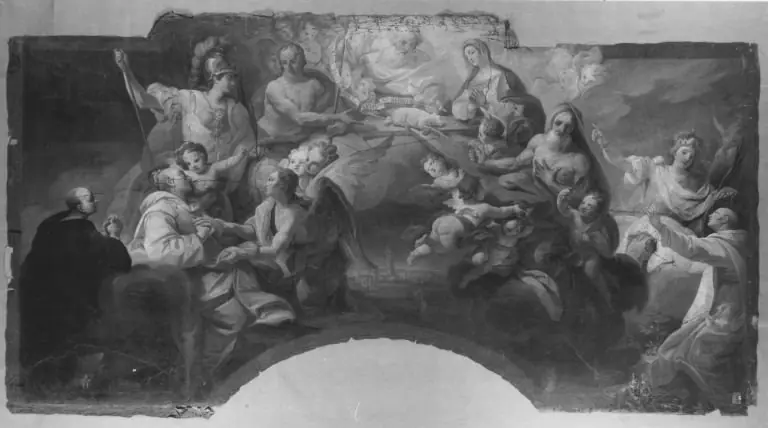 Verherrlichung des Lammes
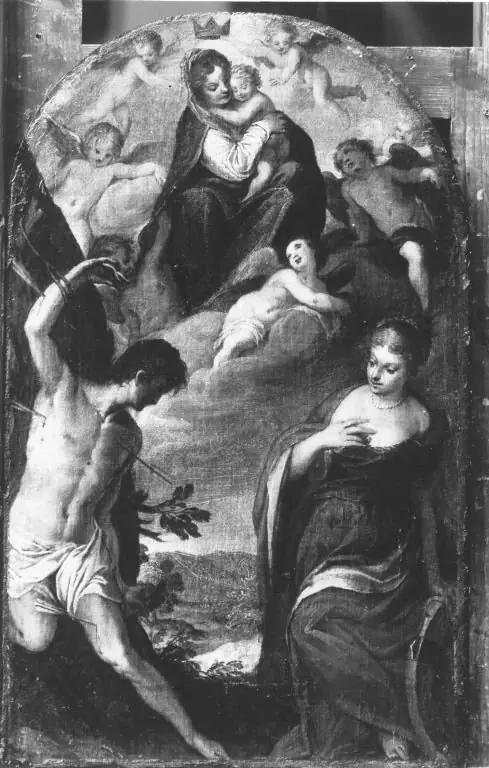 Maria mit Kind und den hll. Sebastian und Katharina (zugeschrieben)
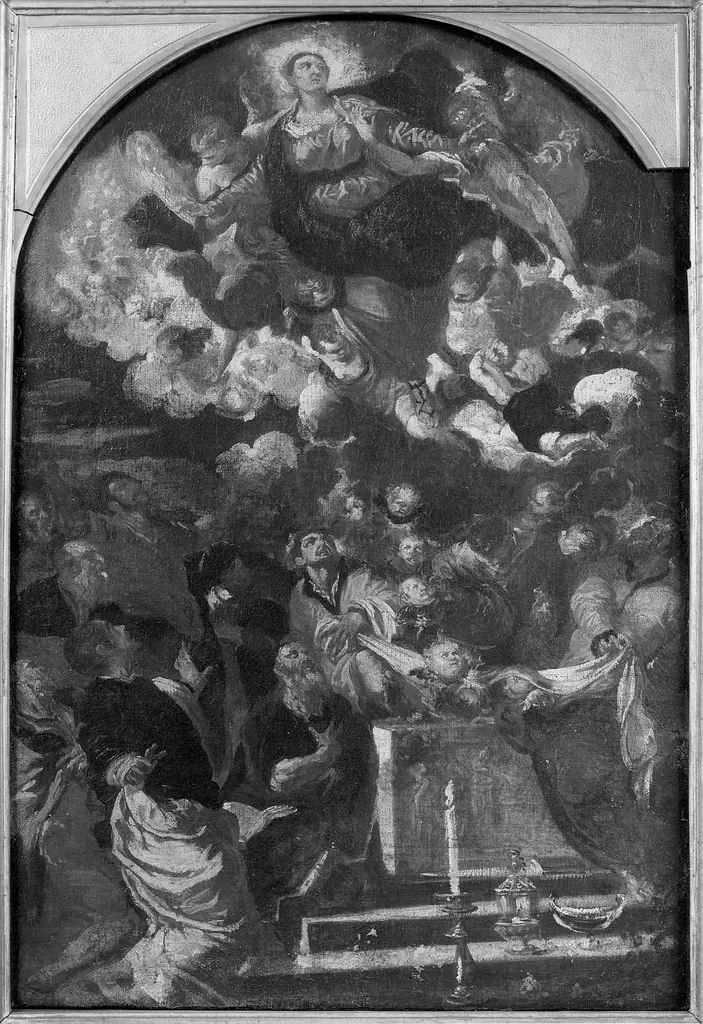 The Assumption of the Virgin
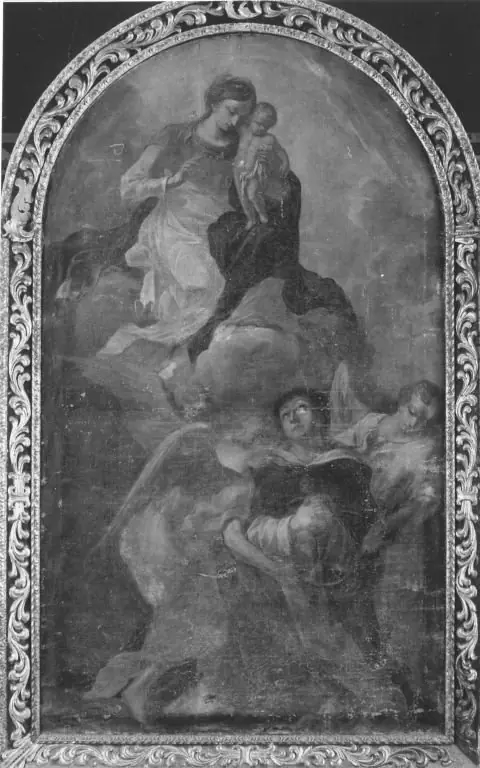 Schutzengelbild (?)
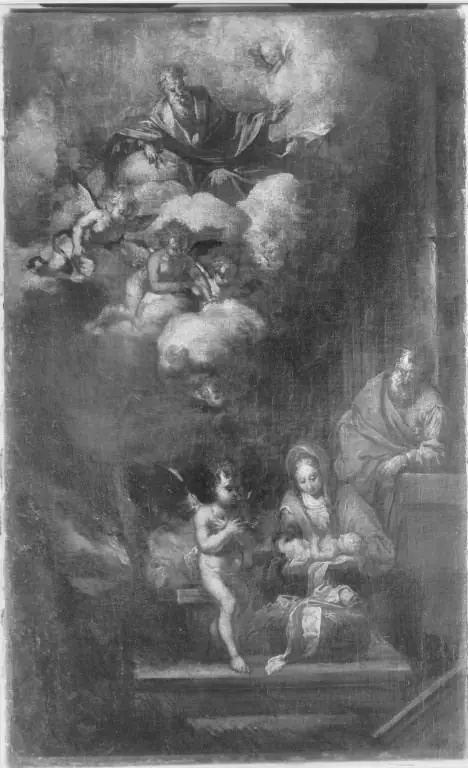 Geburt Christi (Art des)
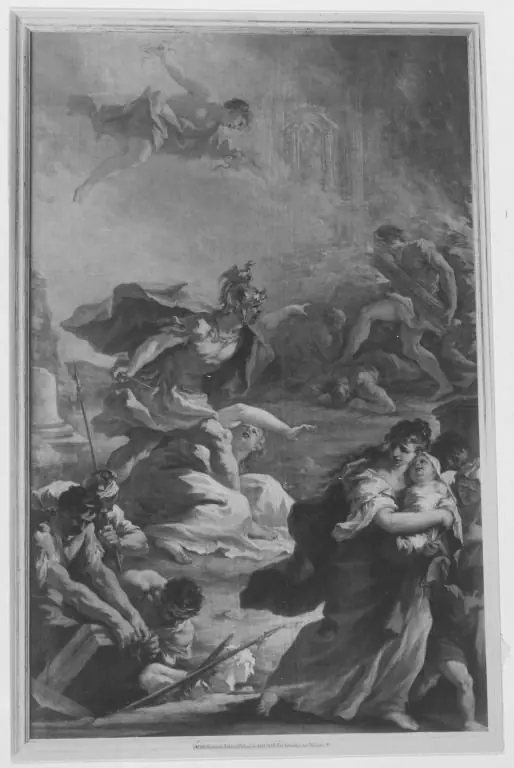 Die Schrecken des Krieges
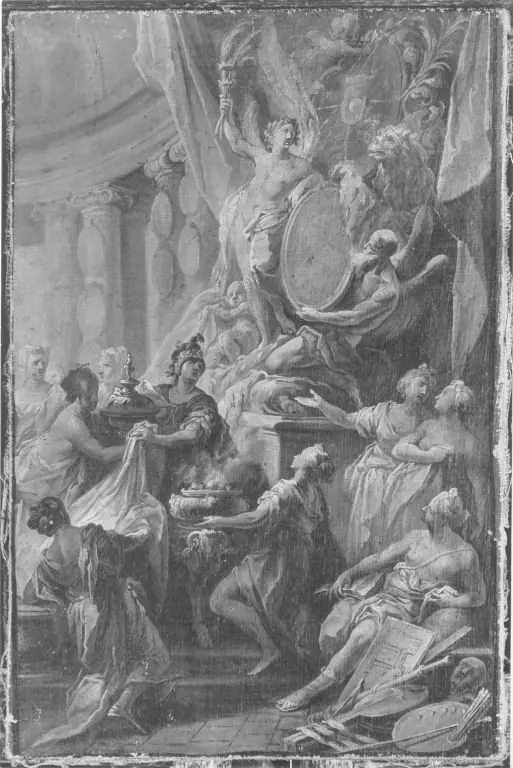 Huldigung an Kurfürst Maximilian III. Joseph von Bayern
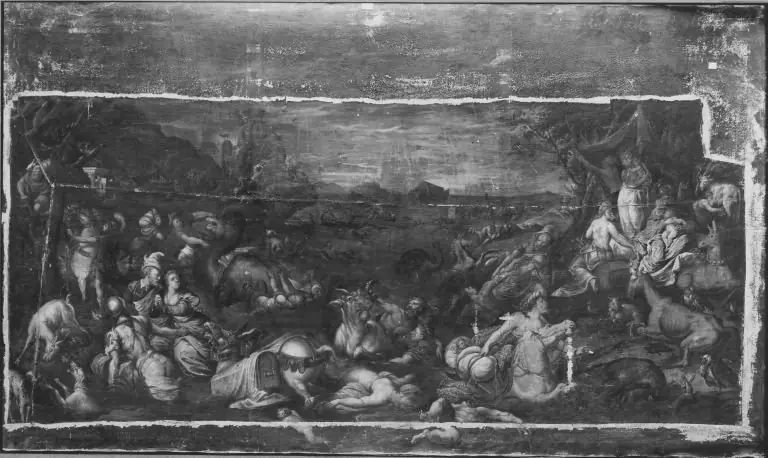 Die Sintflut (zugeschrieben)
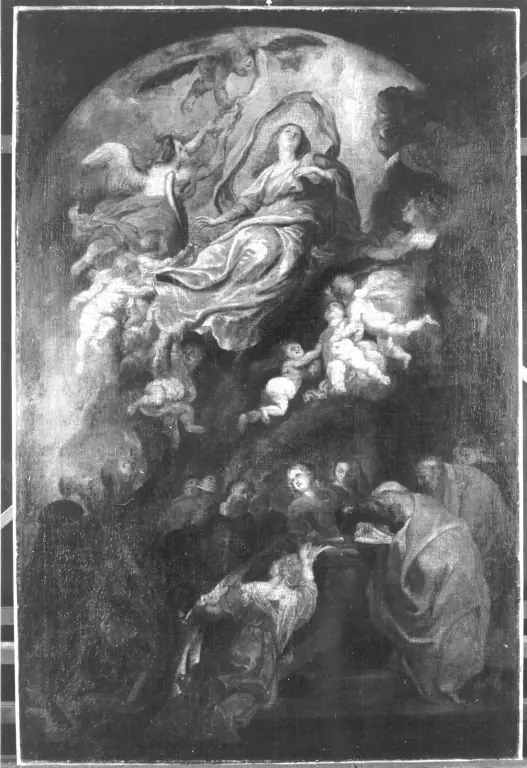 Himmelfahrt Mariae (Kopie nach)
 Jüngstes Gericht (Kopie nach)