Artwork
Julius Caesar's assassination
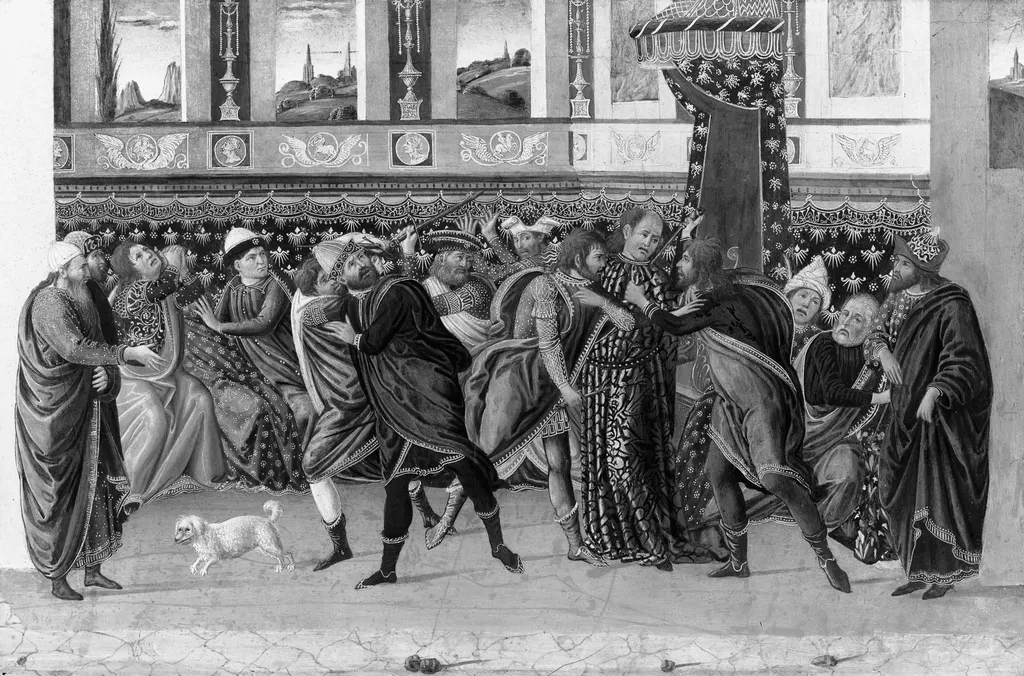
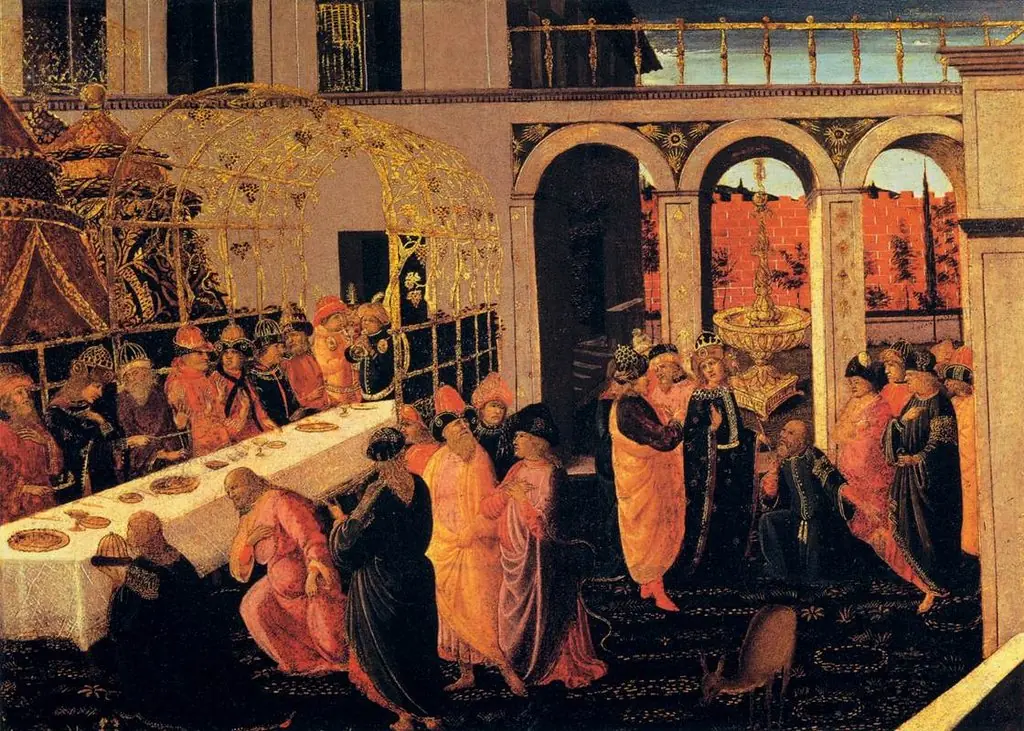
Julius Caesar's assassination is a paint painting by the Early Renaissance artist Jacopo da Sellaio. It dates from 1490 and is held in the collection of the Gemäldegalerie Berlin. Painted around 1490 by Jacopo del Sellaio, this tempera work depicts the murder of Julius Caesar.
About this work
Overview
Painted around 1490 by Jacopo del Sellaio, this tempera work depicts the murder of Julius Caesar.
Painted around 1490 by Jacopo del Sellaio, this tempera work depicts the murder of Julius Caesar. Del Sellaio, born Jacopo di Arcangelo in Florence in the early 1440s, was trained in the workshop of Fra Filippo Lippi and absorbed stylistic traits from contemporaries like Botticelli and Ghirlandaio. The painting reflects the early Renaissance interest in classical history and narrative clarity, executed with the precision typical of Florentine panel painting of the period.
Subject & Meaning
The scene captures the moment of Caesar’s assassination in the Senate, surrounded by senators wielding daggers. The composition emphasizes the betrayal by trusted allies, with figures clustered around the fallen leader. The focus on political violence and moral collapse reflects Renaissance fascination with the fragility of power and the consequences of ambition, drawing from historical accounts rather than myth.
Technique & Style
Executed in tempera on panel, the painting displays the refined linear detail and controlled color palette characteristic of late 15th-century Florence. Figures are arranged with spatial awareness, though perspective remains somewhat flat, consistent with transitional early Renaissance conventions. Drapery and facial expressions are rendered with delicate precision, echoing the influence of Botticelli and Filippino Lippi.
History & Provenance
The painting entered the collection of the Gemäldegalerie in Berlin, where it remains today. Its early history is not fully documented, but its style and technique align with Florentine workshop production of the 1480s–1490s. It was likely commissioned by a private patron interested in classical themes, common among educated elites in Renaissance Italy.
Context
During the late 15th century, Florentine artists frequently turned to Roman history for moral and political allegories. Caesar’s murder, a symbol of republican virtue and tyranny, resonated in a city wary of autocratic rule. Del Sellaio’s work fits within a broader trend of humanist-inspired historical painting, where classical narratives served as vehicles for civic reflection.
Legacy
Though not widely reproduced or celebrated in later centuries, the painting stands as a modest example of how early Renaissance artists engaged with classical antiquity. It preserves a moment when historical storytelling in art was being refined through technical discipline and narrative restraint, reflecting the intellectual currents of its time.
Own this work as a print
Artist & collection

Artist
Jacopo del Sellaio (1441/42–1493) was an Italian painter of the early Renaissance, active in his native Florence.