Artwork
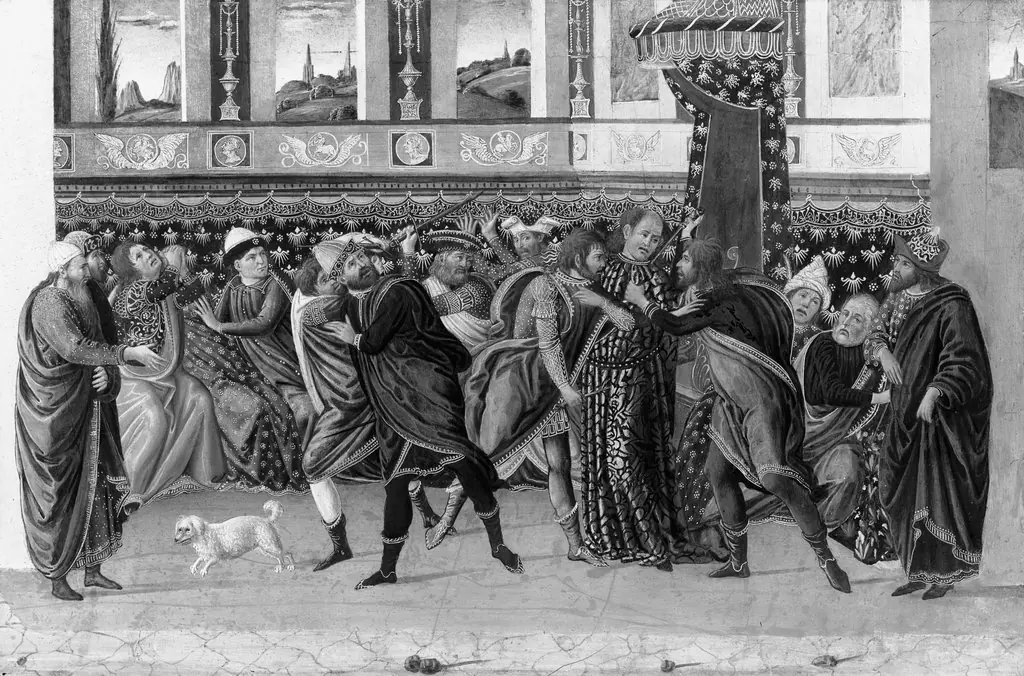
The Abduction of Helen and her Companions
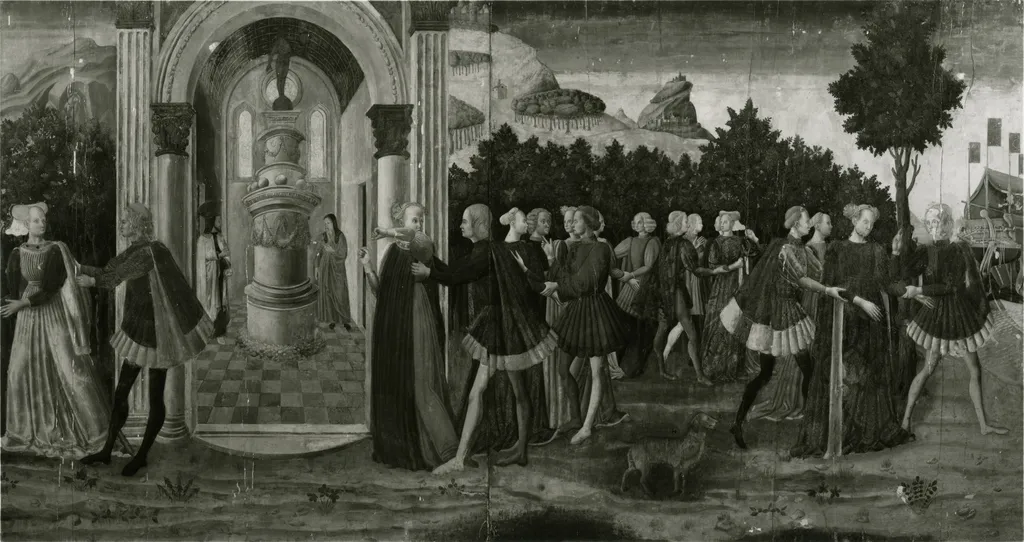
The Abduction of Helen and her Companions is an oil painting by the Northern Renaissance artist Master of the Stories of Helen. It dates from 1450 and is held in the collection of the Walters Art Museum.
About this work
Overview
This oil painting, attributed to the anonymous artist known as the Master of the Stories of Helen, dates to around 1450. It portrays a moment of violent capture from Greek myth, rendered with the visual language of early Renaissance Italy. The work is currently in the collection of the Walters Art Museum, where it remains a rare example of narrative painting from a little-documented hand.
Subject & Meaning
The narrative draws from classical legend, but its emphasis on physical struggle reflects contemporary moral and social anxieties about power and consent.
The scene illustrates the abduction of Helen of Troy, a pivotal event preceding the Trojan War. She is shown surrounded by men who seize her and her attendants, their gestures conveying force and urgency. The resistance of the women—bodies twisted, arms raised—heightens the emotional stakes. The narrative draws from classical legend, but its emphasis on physical struggle reflects contemporary moral and social anxieties about power and consent.
Technique & Style
The painter employs chiaroscuro to sharpen the drama, casting figures in stark contrasts of light and shadow. Robes are rendered with fluid brushwork, while the men’s garments show more rigid folds, distinguishing social roles. Subtle impasto adds texture to skin and fabric, and glazes deepen the shadows. The muted background, faintly suggesting architecture or distant land, keeps focus on the central confrontation.
History & Provenance
The painting’s early ownership is undocumented. It entered the Walters Art Museum in the early 20th century as part of Henry Walters’ collection, acquired from European sources. Attribution to the Master of the Stories of Helen emerged from stylistic comparisons with other surviving panels depicting Helen’s legend, though no signed or dated works by this hand are known.
Context
Created during a period when Italian city-states revived classical themes for secular and devotional art, this work aligns with a trend of mythological storytelling in private collections. Unlike grand public frescoes, such panels were likely displayed in domestic settings, serving as both decoration and moral commentary on virtue, violence, and fate.
Legacy
The painting contributes to the understanding of early Renaissance narrative painting beyond major artists. Its survival offers insight into how lesser-known workshops interpreted classical myths with emotional intensity. Though not widely reproduced, it remains a key reference for scholars studying the transmission of myth in 15th-century visual culture.
Artist & collection
Artist
Master of the Stories of Helen
Fifteen years in the mid-1400s, an Italian painter—we still call him the Master of the Stories of Helen—specialized in three scenes of Troy’s fabled queen.

 Das Eselswunder des hl. Antonius
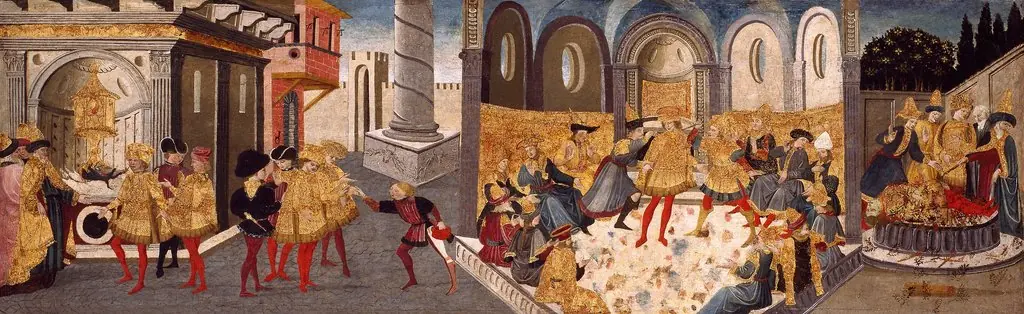 The Assassination and Funeral of Julius Caesar
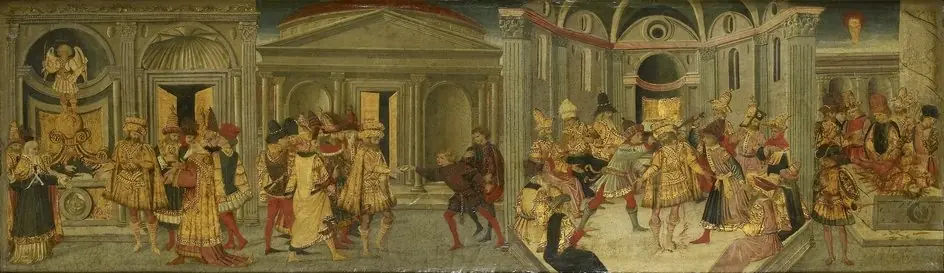 The Assassination and Funeral of Julius Caesar
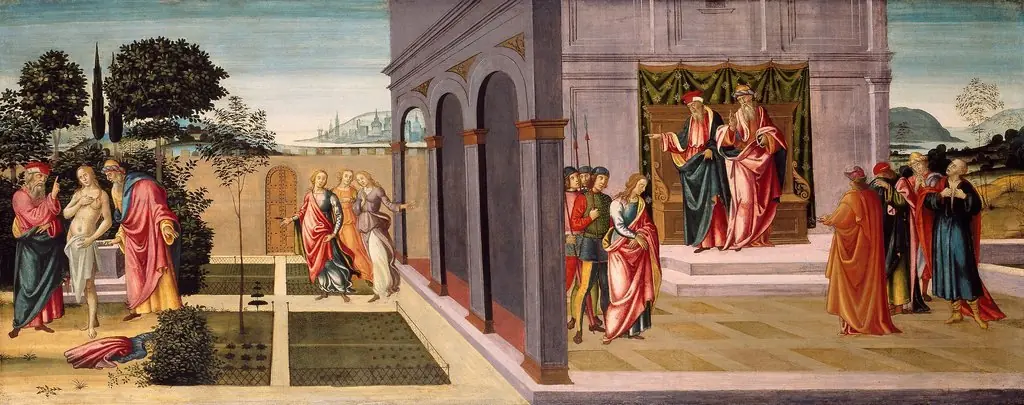 Susanna and the Elders in the Garden, and the Trial of Susanna before the Elders
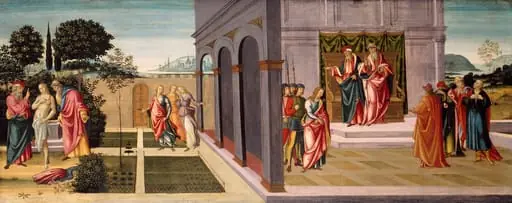 Susanna and the Elders in the Garden, and the Trial of Susanna before the Elders
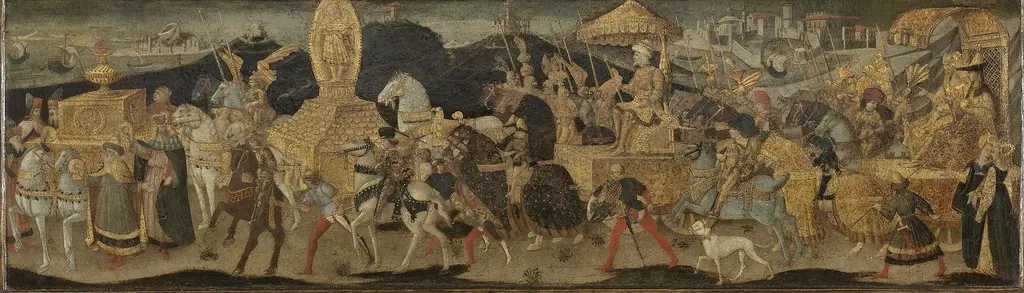 Darius Marching to the Battle of Issus
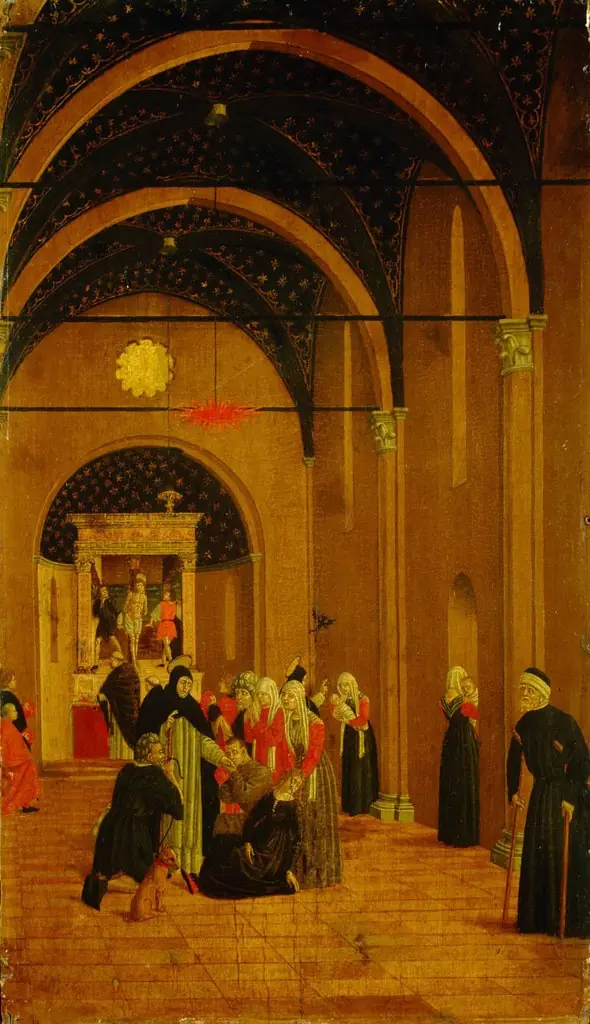 Szene aus dem Leben des Hl. Vinzenz Ferrer: Kranke werden durch den Segen des Heiligen geheilt
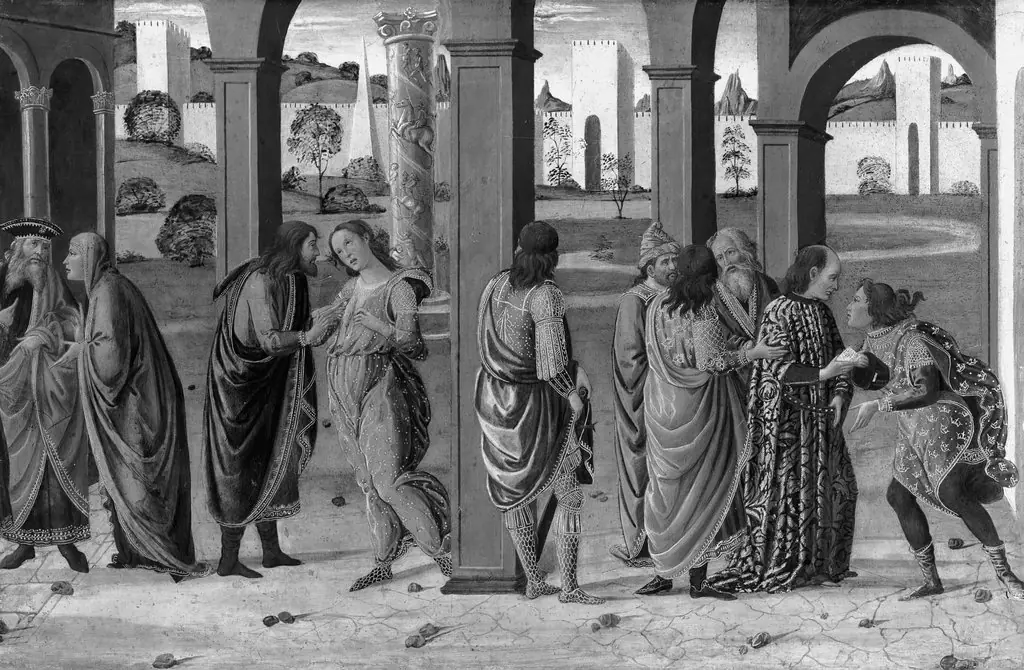 Julius Caesar before his assassination
 The Assassination and Funeral of Julius Caesar
 Julius Caesar's assassination