Artwork
The Meeting of the Young Christ and the Young St. John
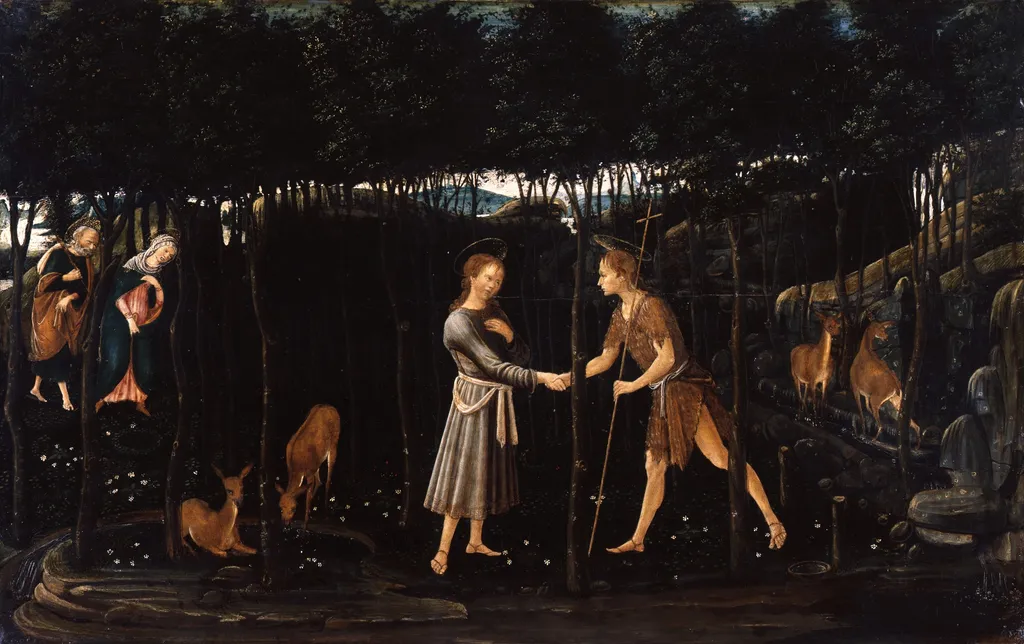
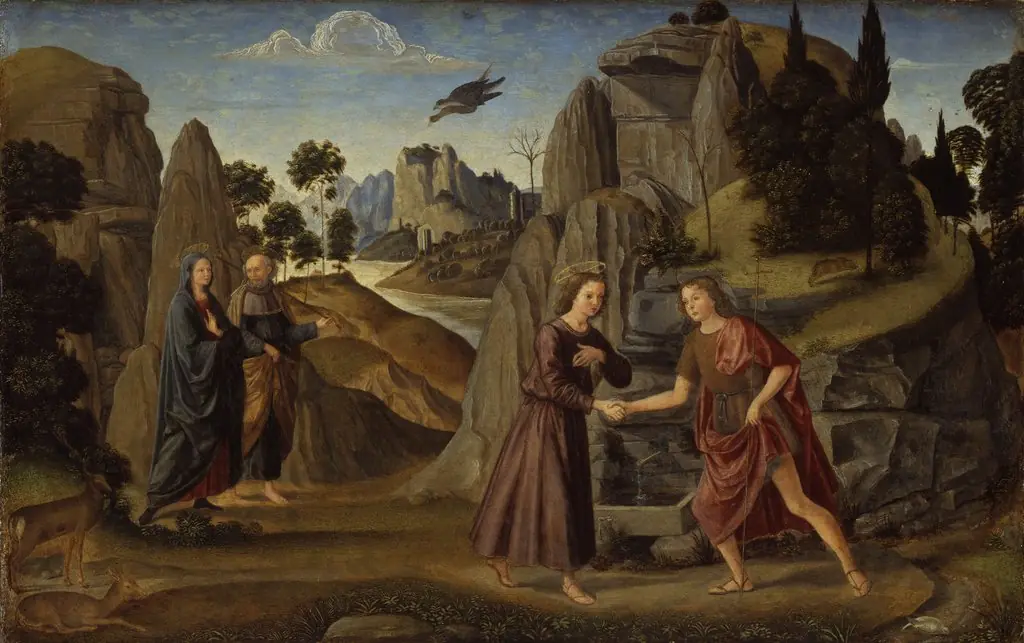
The Meeting of the Young Christ and the Young St. John is a paint painting by the Early Renaissance artist Jacopo da Sellaio. It dates from 1475 and is held in the collection of the Gemäldegalerie Berlin.
About this work
Overview
Painted around 1475 by Jacopo del Sellaio, this work depicts a quiet encounter between the infant Jesus and the young John the Baptist in a wooded landscape.
Painted around 1475 by Jacopo del Sellaio, this work depicts a quiet encounter between the infant Jesus and the young John the Baptist in a wooded landscape. Executed in tempera or oil on panel, it reflects the devotional painting traditions of mid-Renaissance Florence. The piece is part of the collection at the Gemäldegalerie in Berlin, where it remains a modest but carefully composed example of late 15th-century religious imagery.
Subject & Meaning
The scene illustrates a traditional apocryphal moment when the two holy children meet in the wilderness, foreshadowing their future roles. Christ, dressed in a richly colored garment, is greeted by John, who wears a simple woolen tunic, symbolizing his future ascetic life. The presence of a deer and two women—possibly Mary and Elizabeth—adds layers of biblical allusion, reinforcing themes of divine recognition and natural harmony.
Technique & Style
Sellaio’s technique shows the influence of Florentine masters like Botticelli and Ghirlandaio, with delicate line work and soft modeling of forms. The figures are arranged with quiet symmetry, their gestures restrained. The background is rendered in muted tones, enhancing the intimacy of the foreground. The use of atmospheric perspective and fine detail in foliage reflects the period’s growing interest in naturalism, though without full spatial depth.
History & Provenance
The painting was likely commissioned for private devotion, common among Florentine patricians in the late 15th century. It entered the Gemäldegalerie Berlin’s collection in the 19th century, possibly through the acquisition of German collectors who sought Italian Renaissance works. Its attribution to Sellaio has been consistently supported by stylistic analysis and archival records linking him to Florentine workshops of the period.
Context
In 1470s Florence, religious imagery often blended scriptural narrative with humanist ideals, emphasizing emotional restraint and moral clarity. Sellaio, trained in the circle of Filippo Lippi, operated within a network of artists refining narrative clarity through refined draftsmanship. This painting aligns with contemporaneous devotional panels that favored intimate, contemplative scenes over grand altarpieces, catering to private spiritual practice.
Legacy
Though not widely known today, Sellaio’s work exemplifies the transitional phase between early and high Renaissance styles in Florence. His careful handling of figure composition and natural detail influenced lesser-known contemporaries and preserved the devotional tone of the period. The painting remains a quiet testament to the role of private piety in shaping Renaissance art beyond major commissions.
Own this work as a print
Artist & collection
Artist
Jacopo del Sellaio (1441/42–1493) was an Italian painter of the early Renaissance, active in his native Florence.

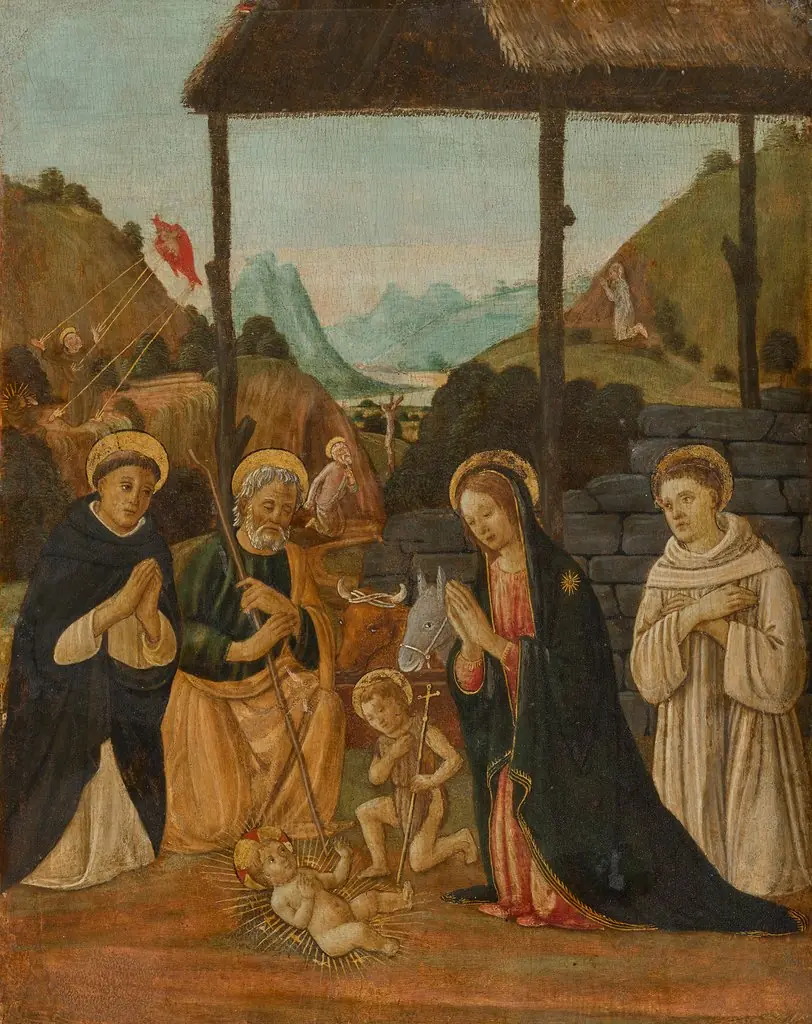
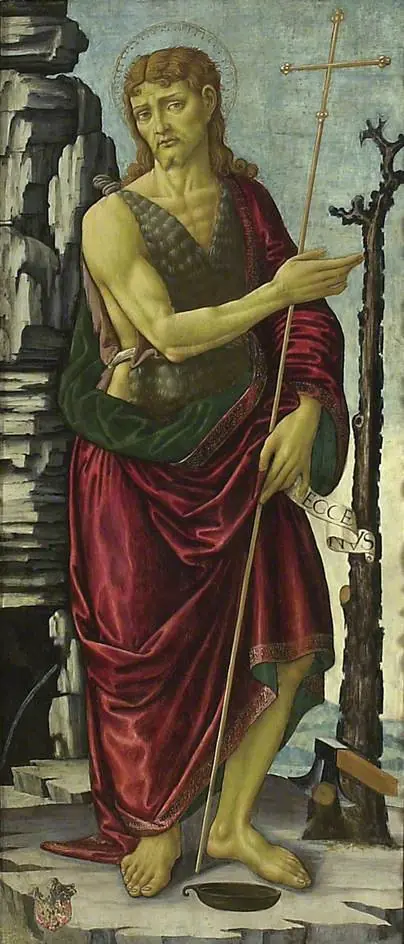
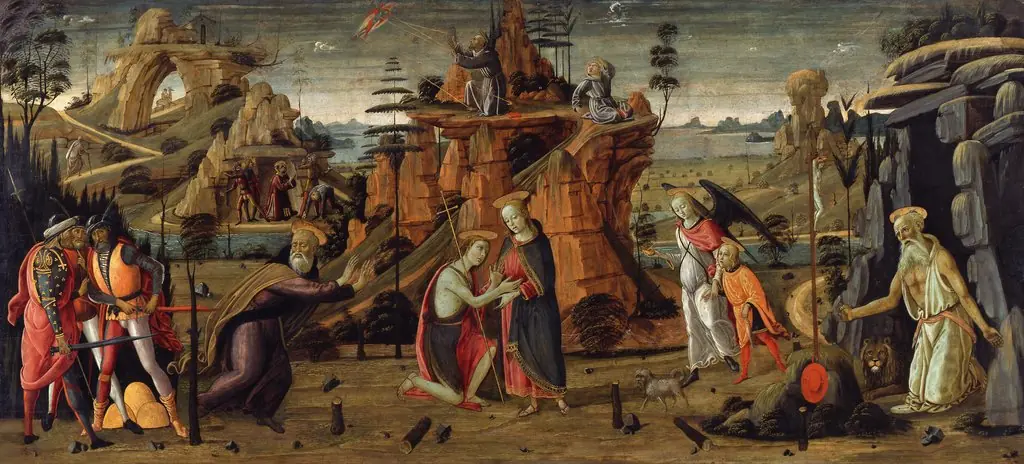 Landscape with biblical scenes and scenes from the legends of saints
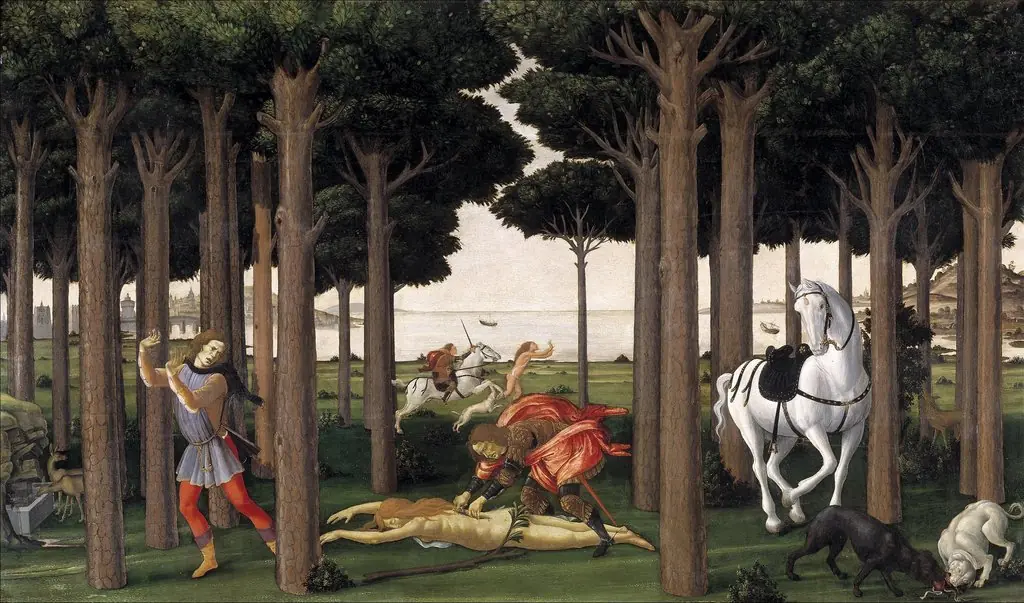 The Story of Nastagio Degli Onesti, part two
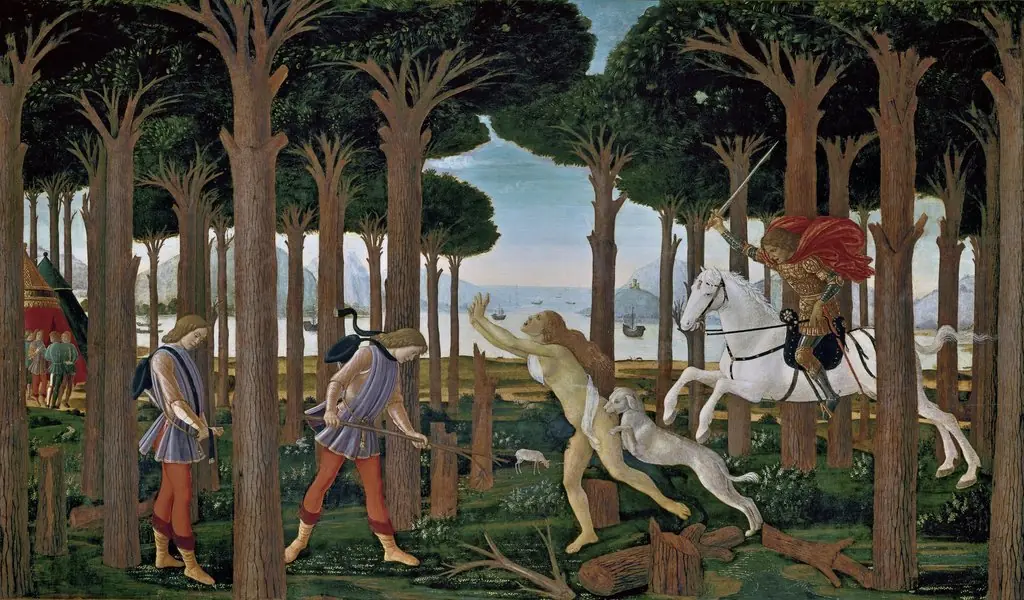 The Story of Nastagio Degli Onesti, part one
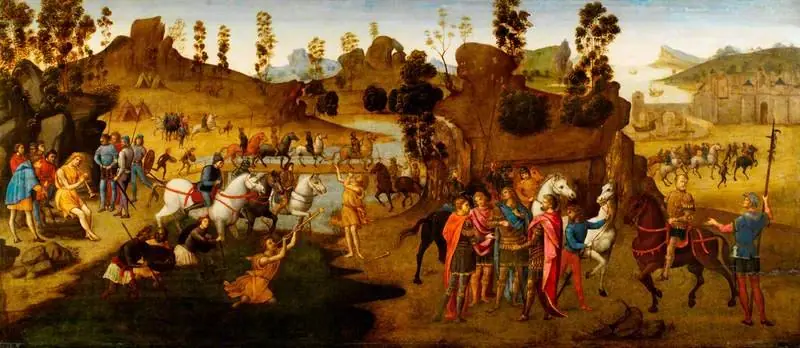 Julius Caesar and the Crossing of the Rubicon (scene from the story of Alexander the Great)
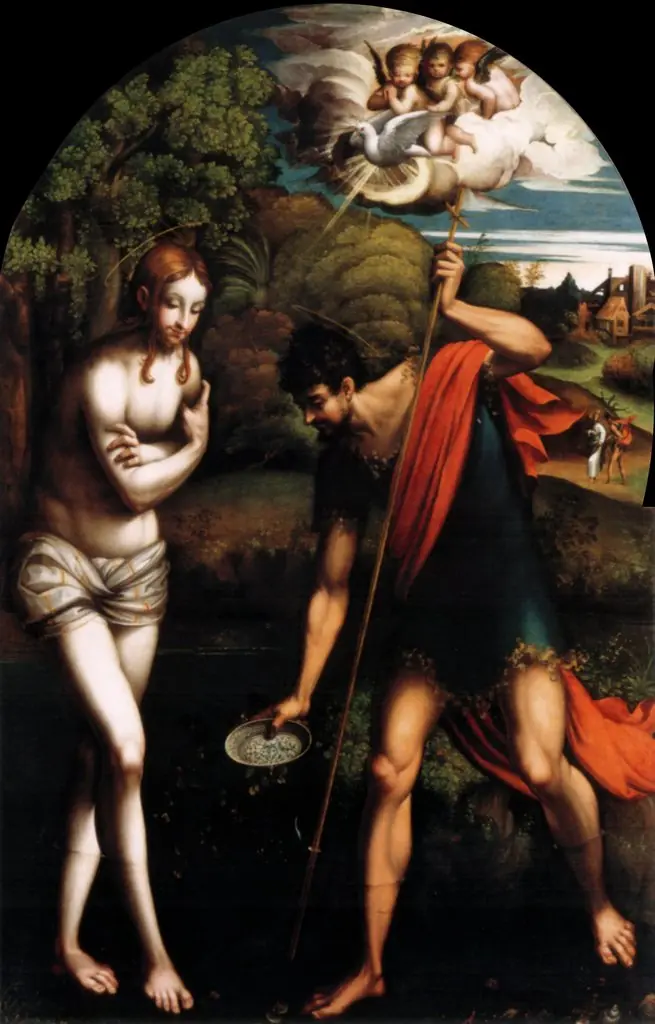 Baptism of Christ
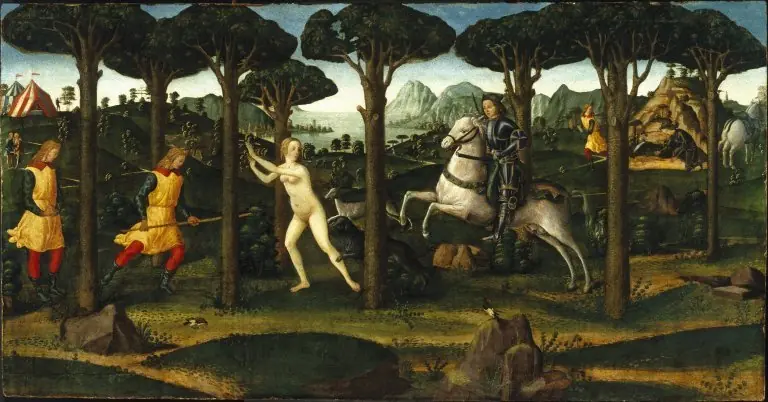 Forest Scene from the Tale of Nastagio degli Onesti, in Boccaccio's "Decameron"
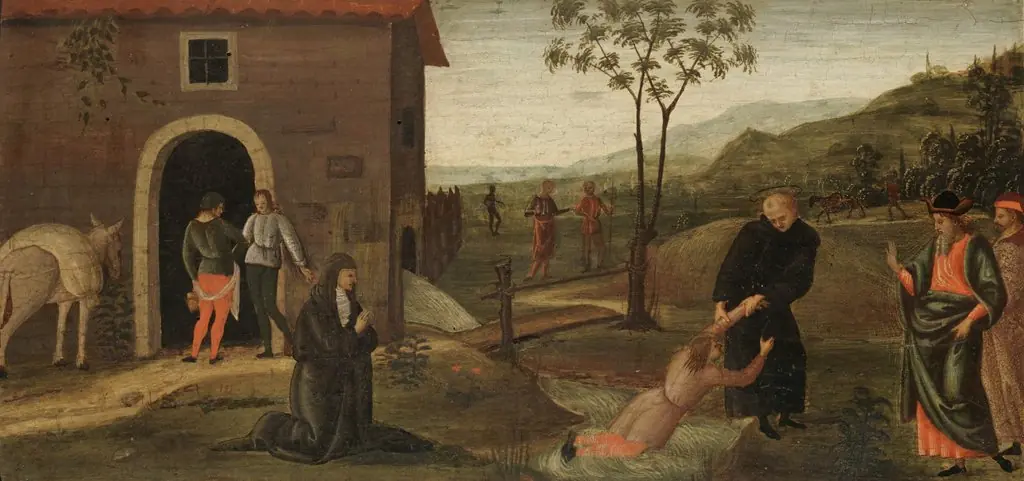 Saint Nicholas of Tolentino Rescuing a Boy from Drowning
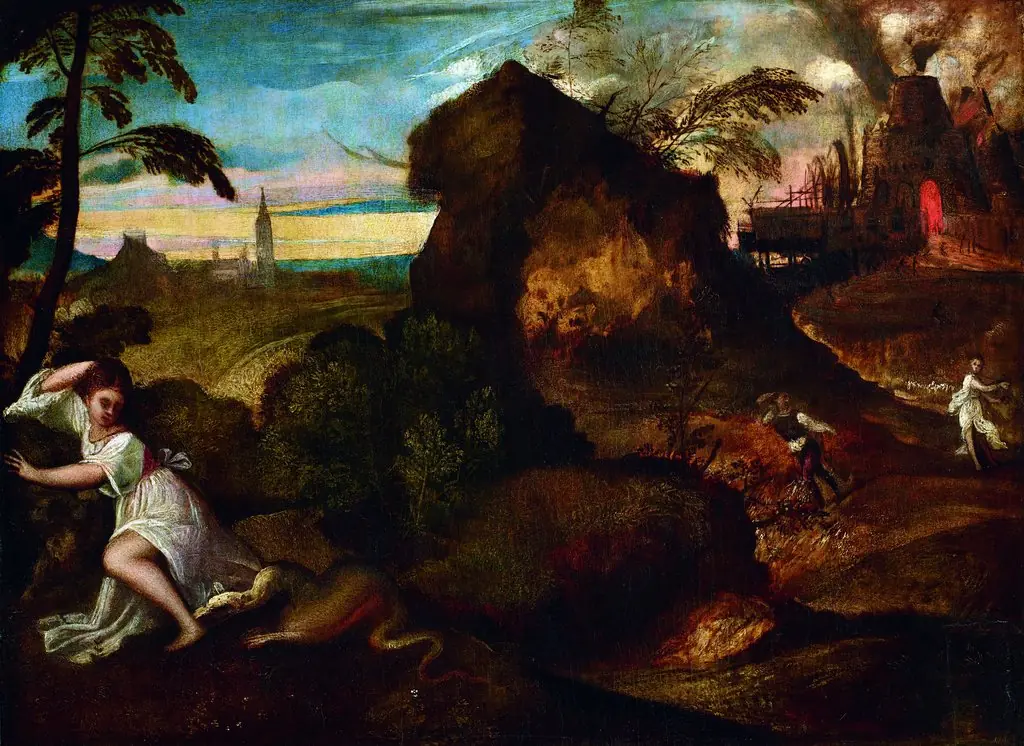 Orpheus and Eurydice
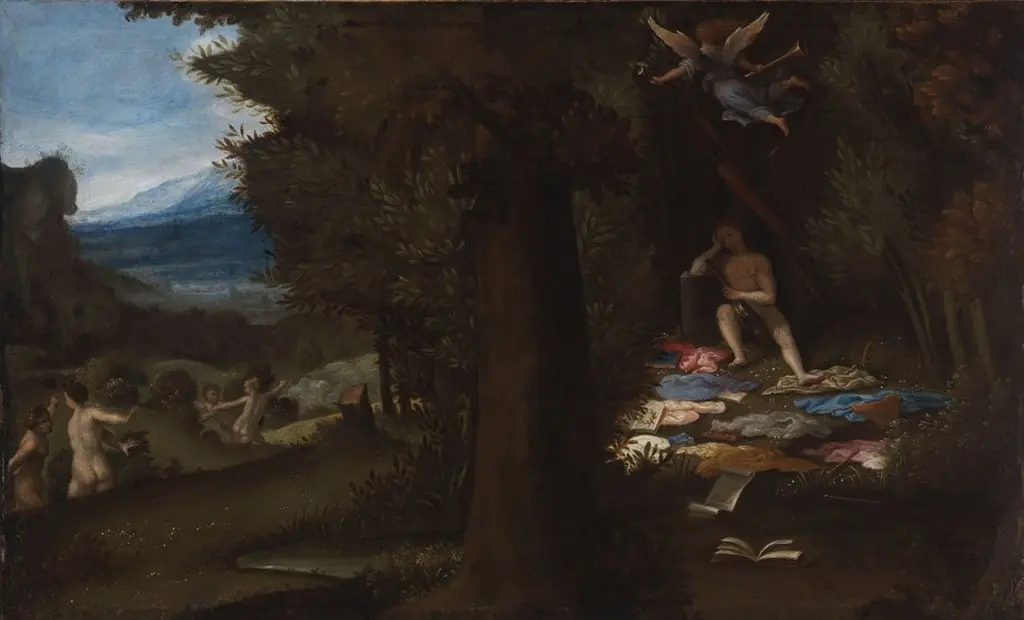 Sleeping Apollo and the Muses with Fame
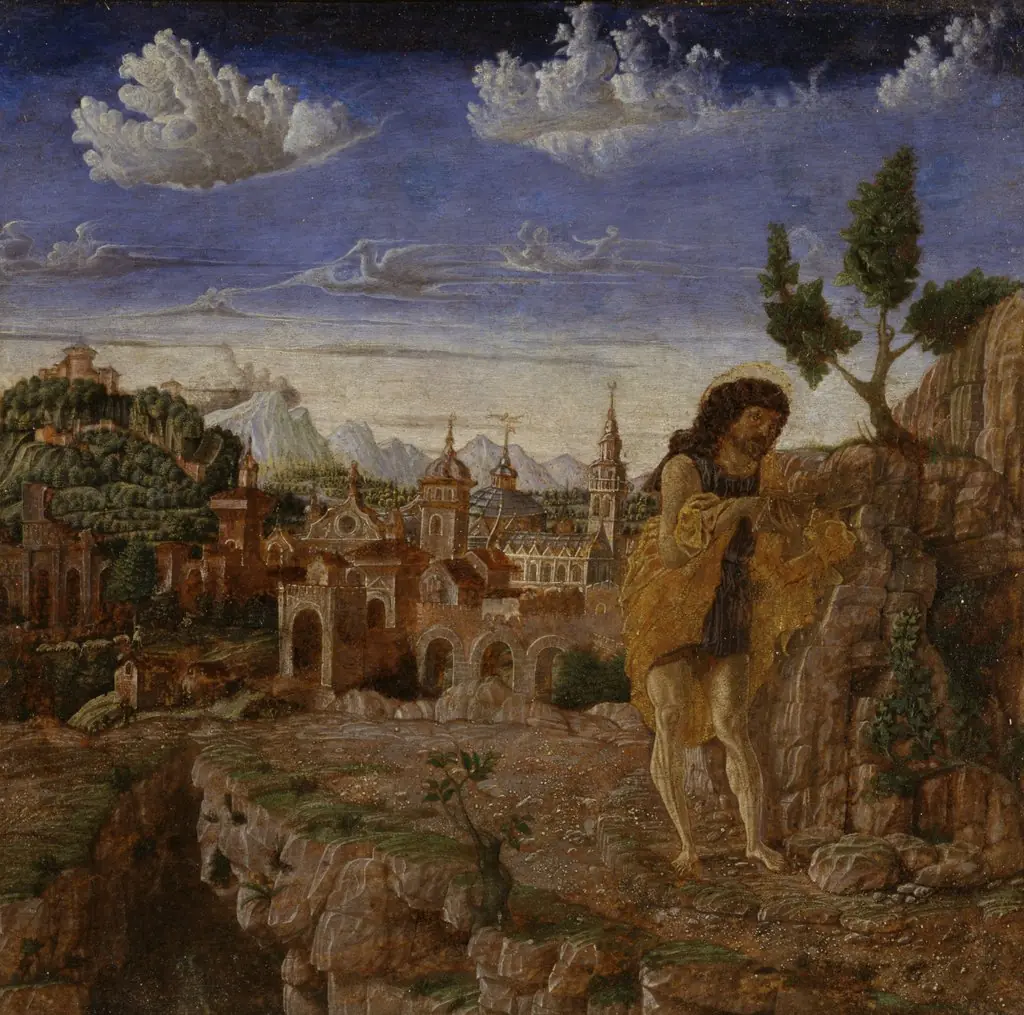 Saint John the Baptist in a Landscape
 Saint Jerome Reading
 The Meeting of the Young Christ and the Young St. John