Artwork
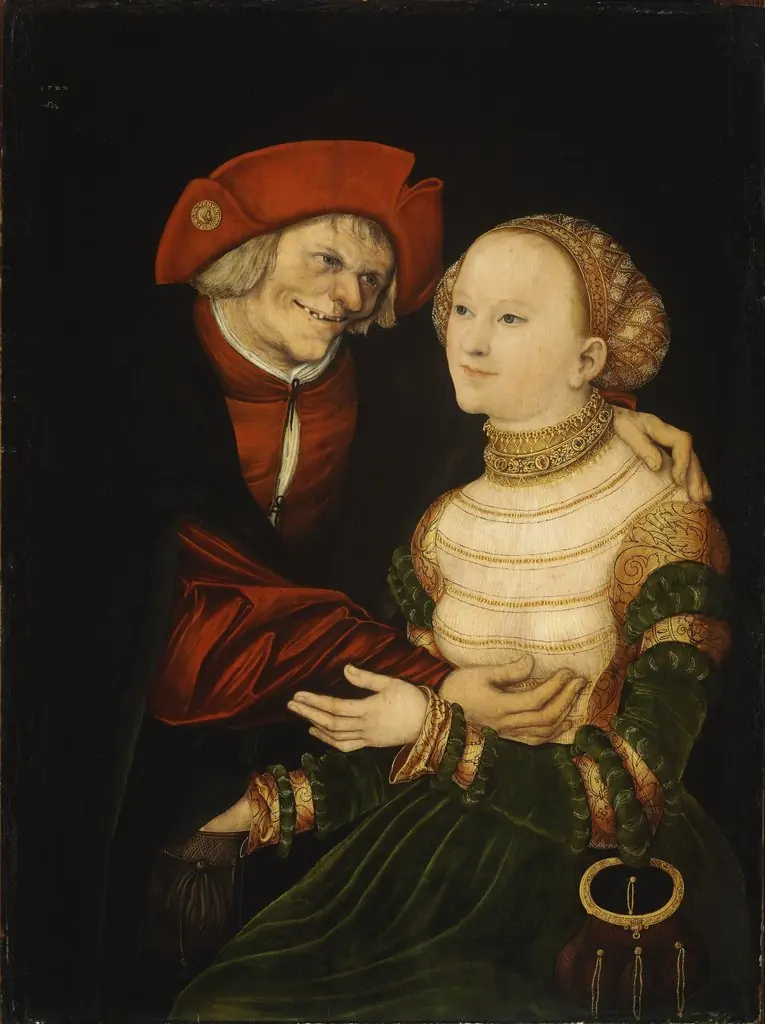
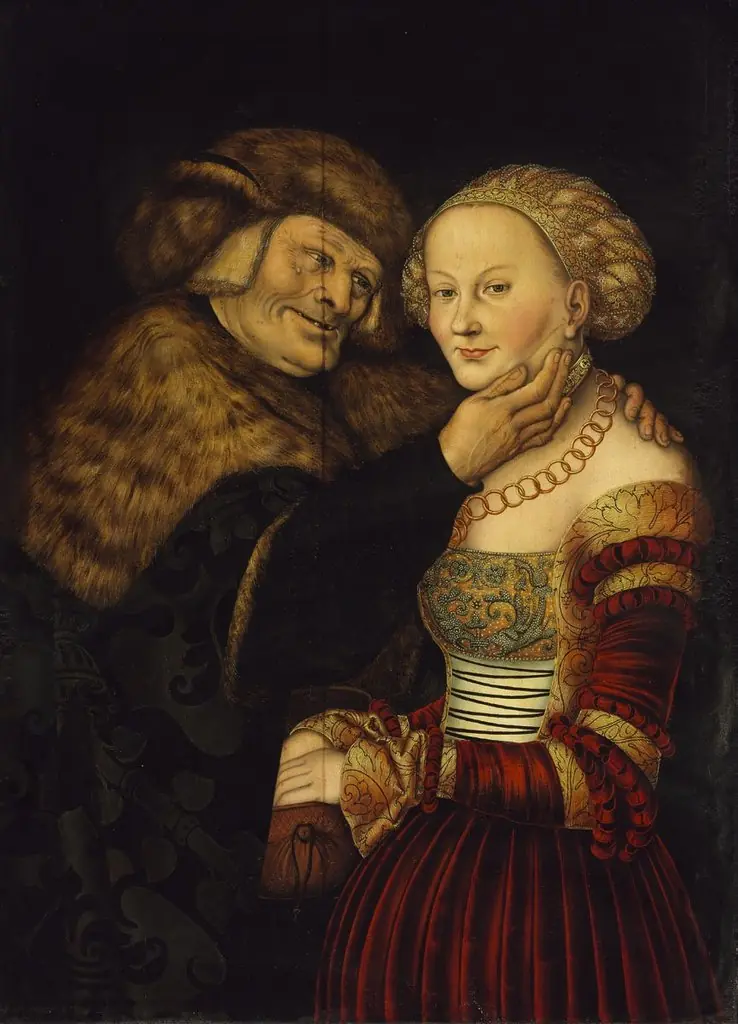
An Old Man and a Young Woman (The Nymph Agapes and Her Old Husband)
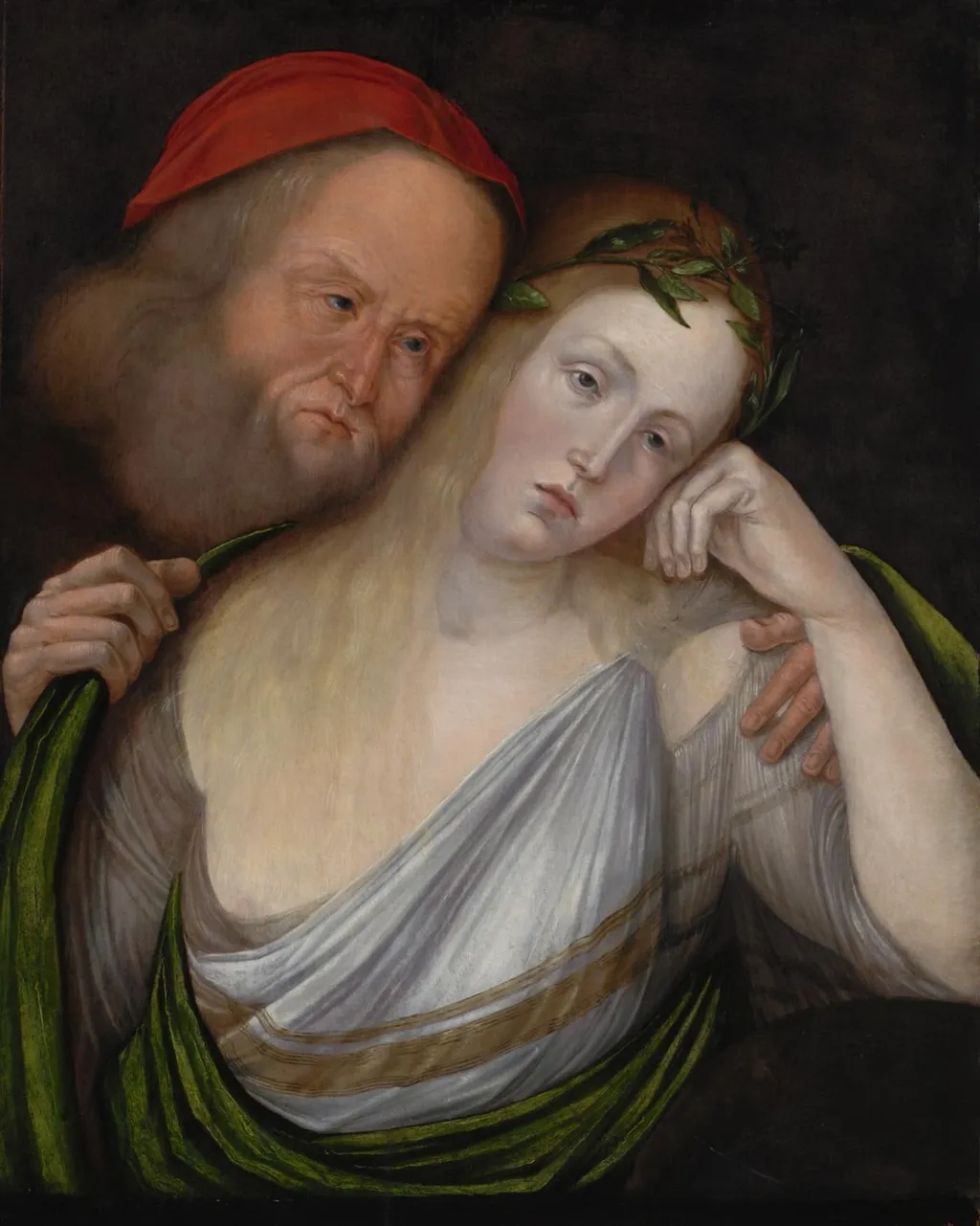
An Old Man and a Young Woman (The Nymph Agapes and Her Old Husband) is an oil painting by the Northern Renaissance artist Jacopo de' Barbari. It dates from 1503 and is held in the collection of the Philadelphia Museum of Art.
About this work
Overview
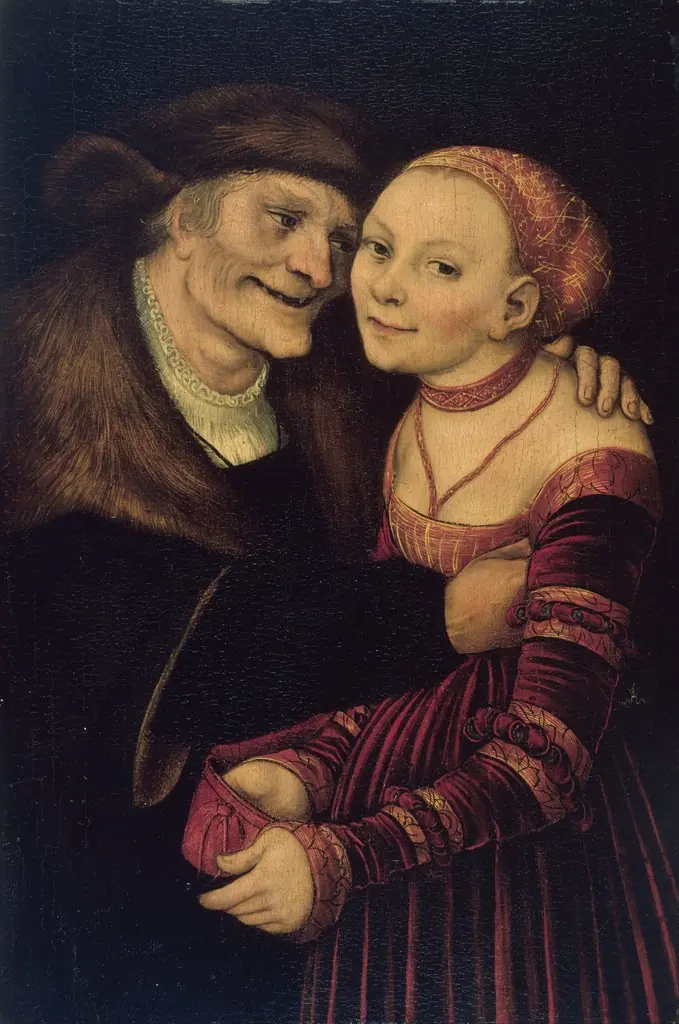
Jacopo de' Barbari created the oil painting *An Old Man and a Young Woman (The Nymph Agapes and Her Old Husband)* in 1503. Executed during his early years in Germany after leaving Venice, the work belongs to the Northern Renaissance and is now held by the Philadelphia Museum of Art.
Subject & Meaning
The composition shows an elderly man with a white beard and a youthful woman in an intimate pose. The man, dressed in a red cap and green mantle, rests his right hand on the woman's shoulder while his left hand holds the cloak. The woman, crowned with a green wreath and wearing a white dress trimmed with gold, touches her cheek with her right hand and also grasps the mantle.
Technique & Style
De' Barbari employs a dark ground that isolates the figures, allowing chiaroscuro to model flesh and fabric with pronounced contrast. The handling of oil paint gives a subtle sense of volume, while the careful rendering of textures anticipates his later experiments with trompe‑l'œil.
History & Provenance
After its execution in 1503, the painting entered private collections before being acquired by the Philadelphia Museum of Art, where it remains on display. It is one of the few surviving painted works attributed to de' Barbari, whose oeuvre is otherwise dominated by prints and drawings.
Context
The work reflects de' Barbari’s transition from Venetian coloristic traditions to the more austere, light‑focused approach of the Germanic north. Its subject—an aged male figure alongside a youthful female—echoes allegorical motifs common in Renaissance art, suggesting themes of love, fidelity, or the passage of time.
Artist & collection
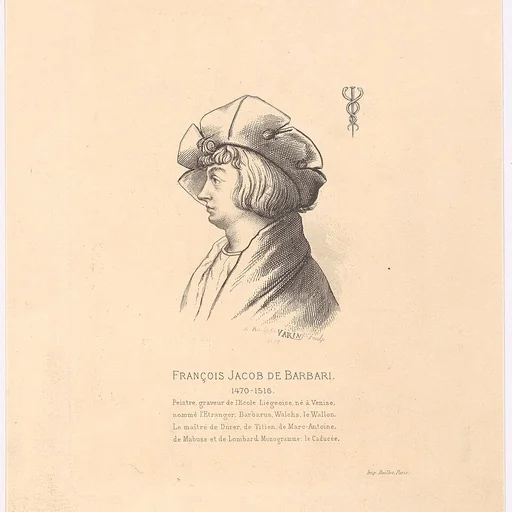
Artist
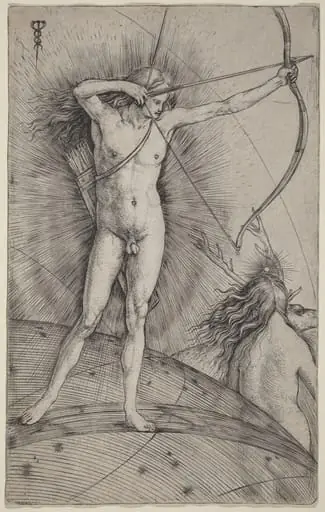
Jacopo de' Barbari, sometimes known or referred to as de'Barbari, de Barberi, de Barbari, Barbaro, Barberino, Barbarigo or Barberigo (c.

![View of Venice [lower right block], by Jacopo de' Barbari](https://artifactworldgallery.com/img/jacopo-de-barbari--view-of-venice-lower-right-block--371460ae957995b9-w320.webp)