Artwork
Crucifixion (copy)
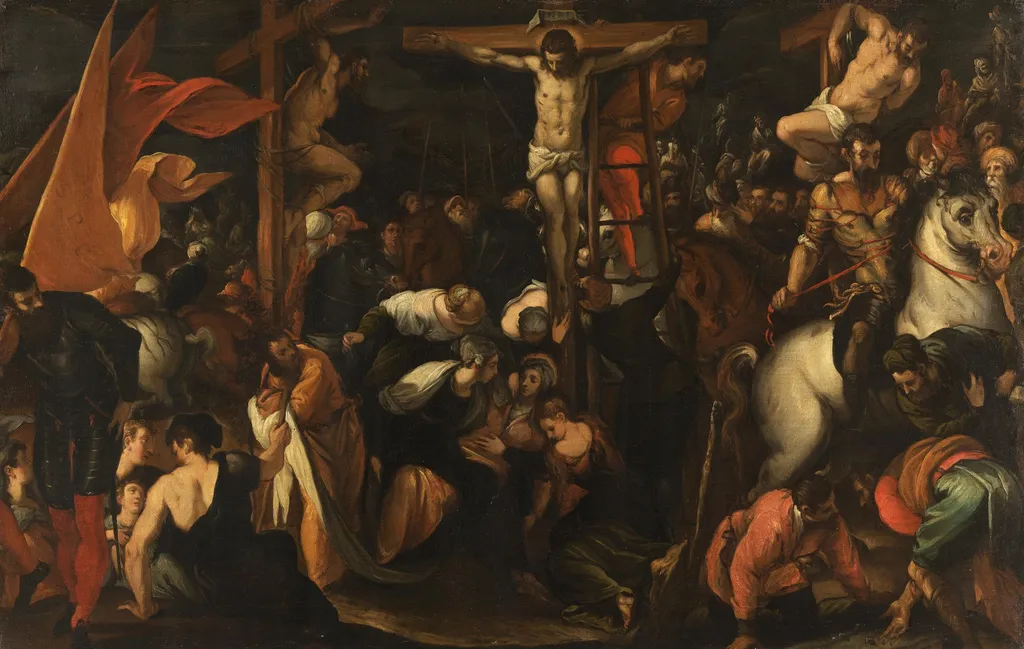
Crucifixion (copy) is an unspecified painting by the Mannerist artist Jacopo Tintoretto. It dates from 1566 and is held in the collection of the Bavarian State Painting Collections.
About this work
Overview
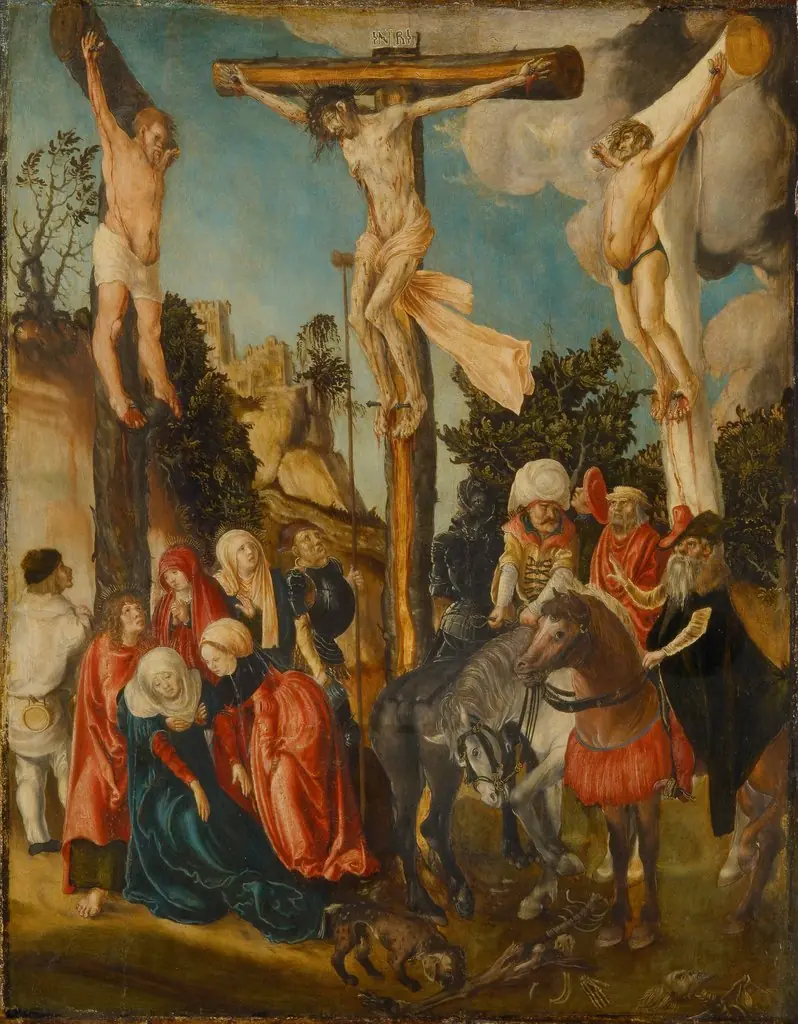
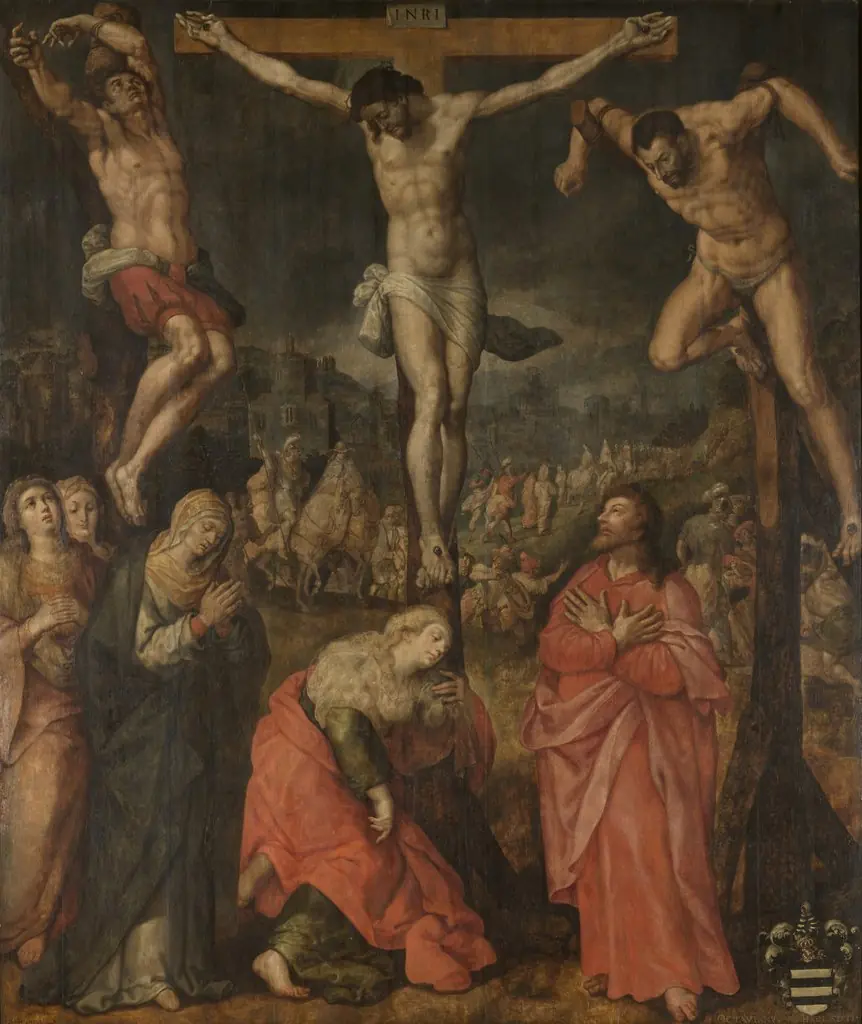
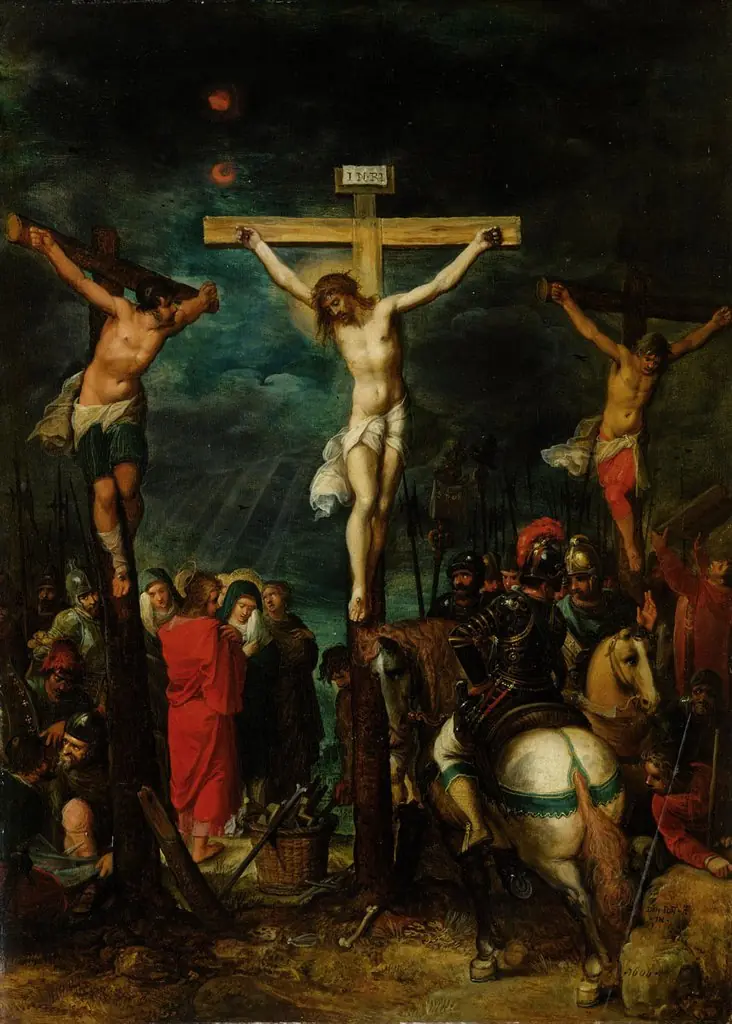
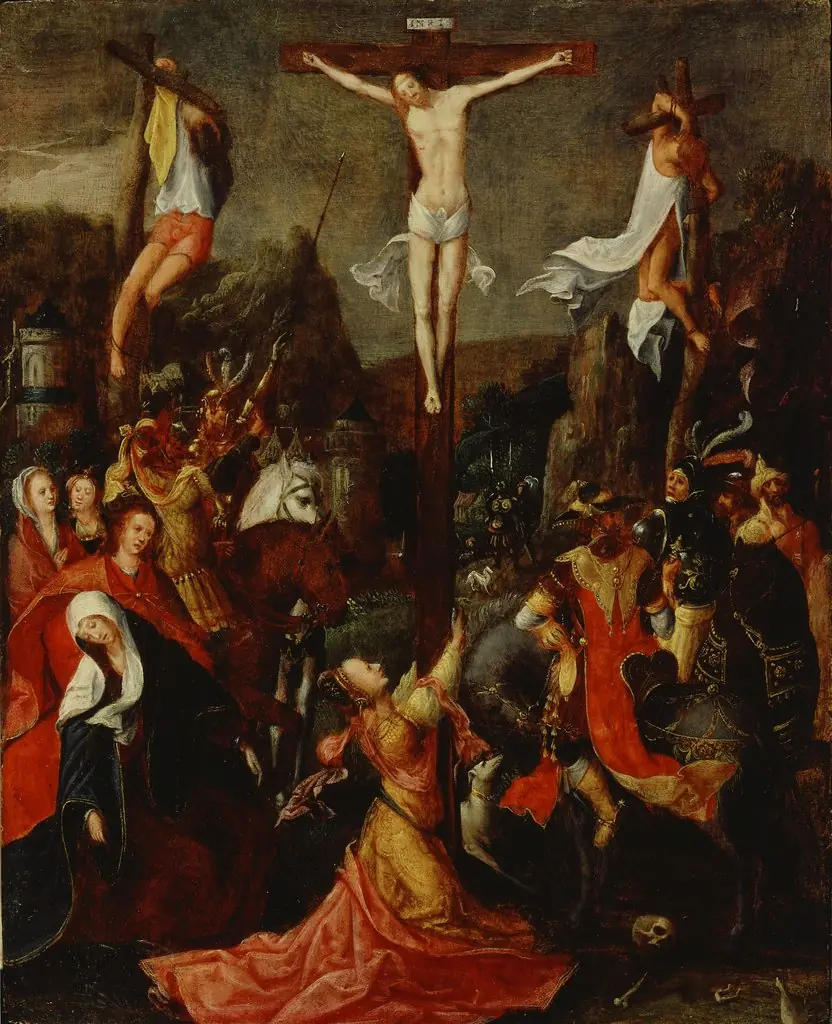
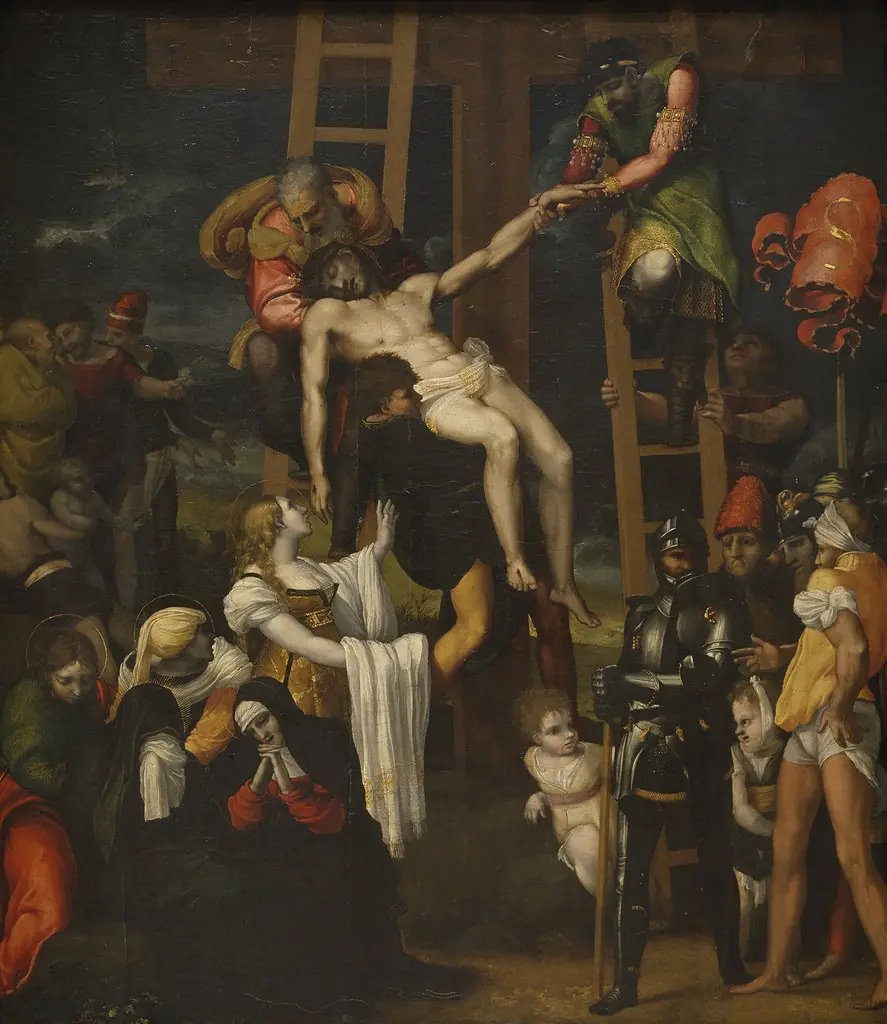
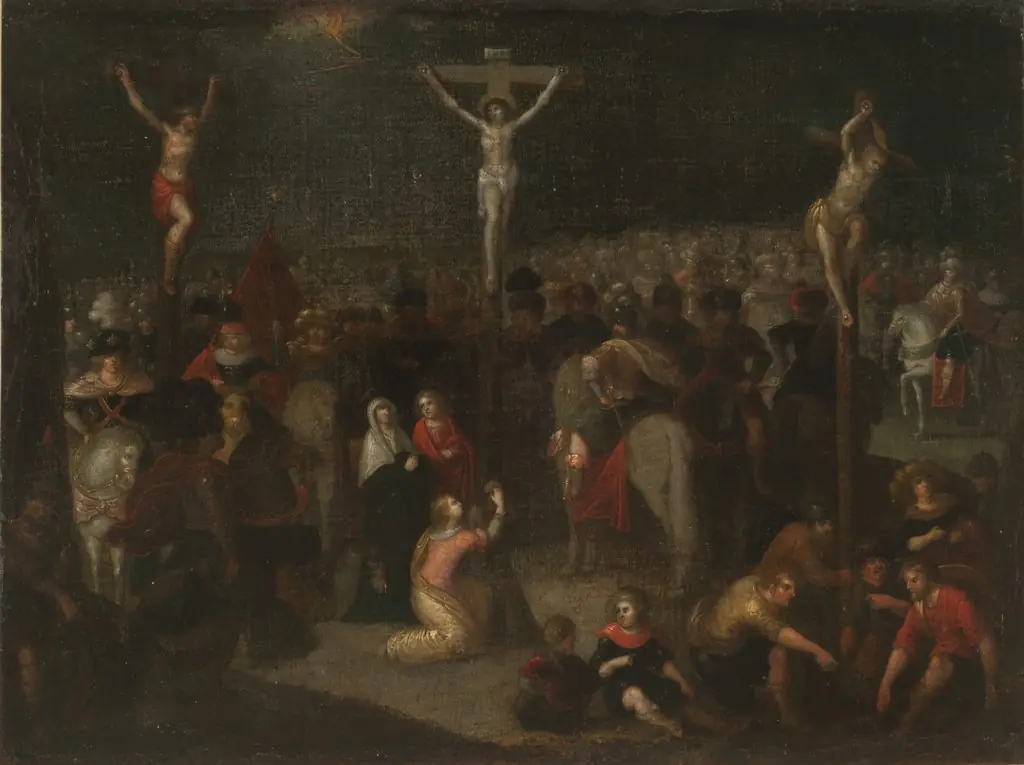
Jacopo Tintoretto’s *Crucifixion*, executed around 1566, presents the biblical scene of Christ on the cross amid a densely populated foreground. The work belongs to the Venetian Mannerist tradition and is part of the Alte Pinakothek’s holdings. Its composition gathers numerous figures—onlookers, soldiers, and riders—around the central crucified figure, creating a sense of movement and tension.
Subject & Meaning
The surrounding crowd, rendered in varied postures of kneeling, standing, and mounted, conveys the emotional turmoil and chaotic response to the event.
The painting centers on the moment of Christ’s crucifixion, emphasizing his luminous skin against surrounding darkness. The surrounding crowd, rendered in varied postures of kneeling, standing, and mounted, conveys the emotional turmoil and chaotic response to the event. The contrast of light and shadow highlights the spiritual focus on the suffering savior while the surrounding drama reflects human reaction.
Technique & Style
Tintorettos rapid brushwork and bold compositional choices are evident in the work’s dramatic perspective and muscular, twisted bodies. The artist employs chiaroscuro to model the central figure, allowing the illuminated flesh to emerge from deep shadows. The palette is dominated by somber tones punctuated by vivid reds and oranges in clothing and a flag, reinforcing the Mannerist taste for heightened drama.
History & Provenance
Created in the mid‑sixteenth century, the canvas entered the collection of the Alte Pinakothek, where it remains on display. Its attribution to Tintoretto aligns with the artist’s reputation as a leading Venetian painter of the late Renaissance, known for his energetic execution and the moniker “il Furioso” reflecting his vigorous style.
Context
The work reflects the broader Mannerist shift away from High Renaissance balance toward exaggerated poses and complex spatial arrangements. In Venice, Tintoretto’s contemporaries were exploring similar dramatic lighting and dynamic groupings, situating this crucifixion within a period of artistic experimentation that emphasized emotional intensity over classical harmony.
Own this work as a print
Artist & collection
Artist
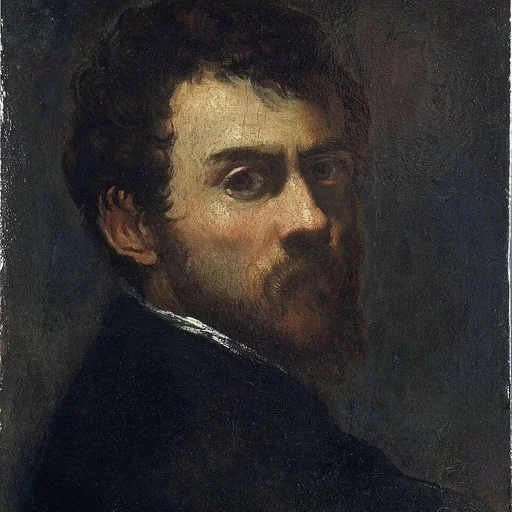
Jacopo Robusti (late September or early October 1518 – 31 May 1594), best known as Tintoretto ( TIN-tə-RET-oh; Italian: ; Venetian: ), was an Italian Renaissance painter of the Venetian school.