Artwork
Crucifixion
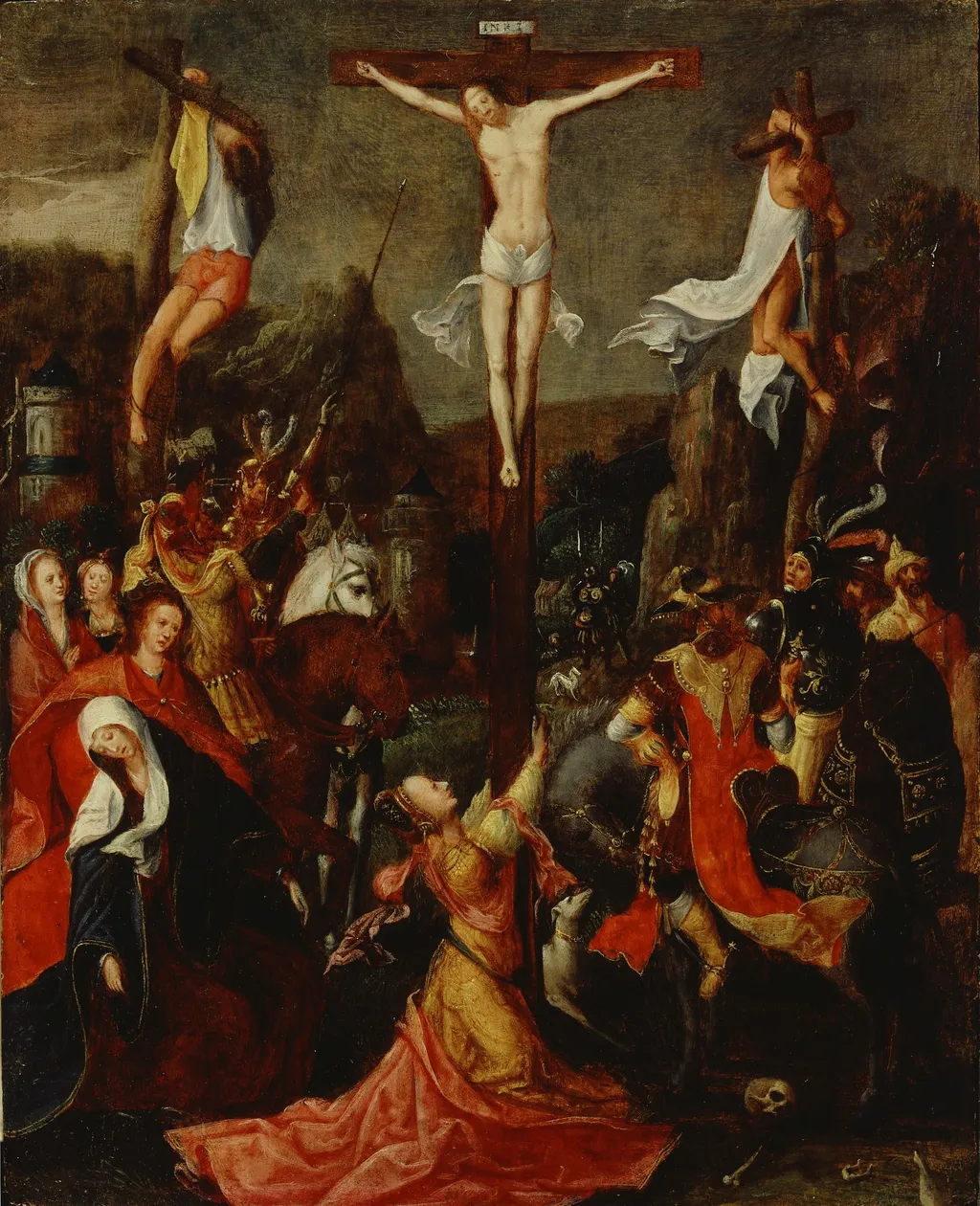
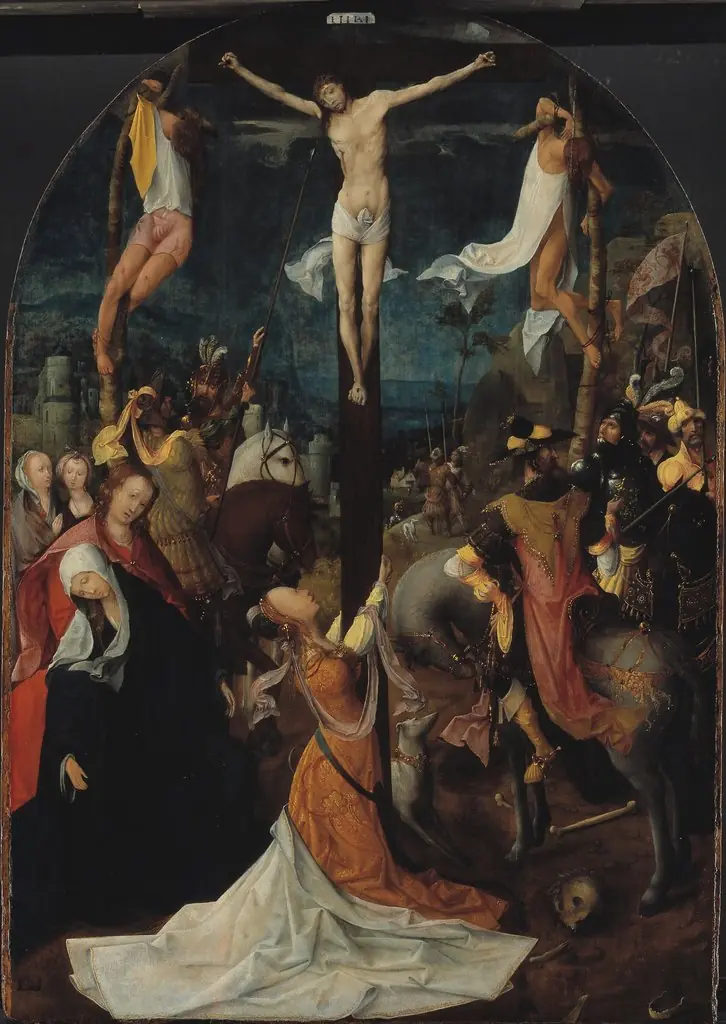
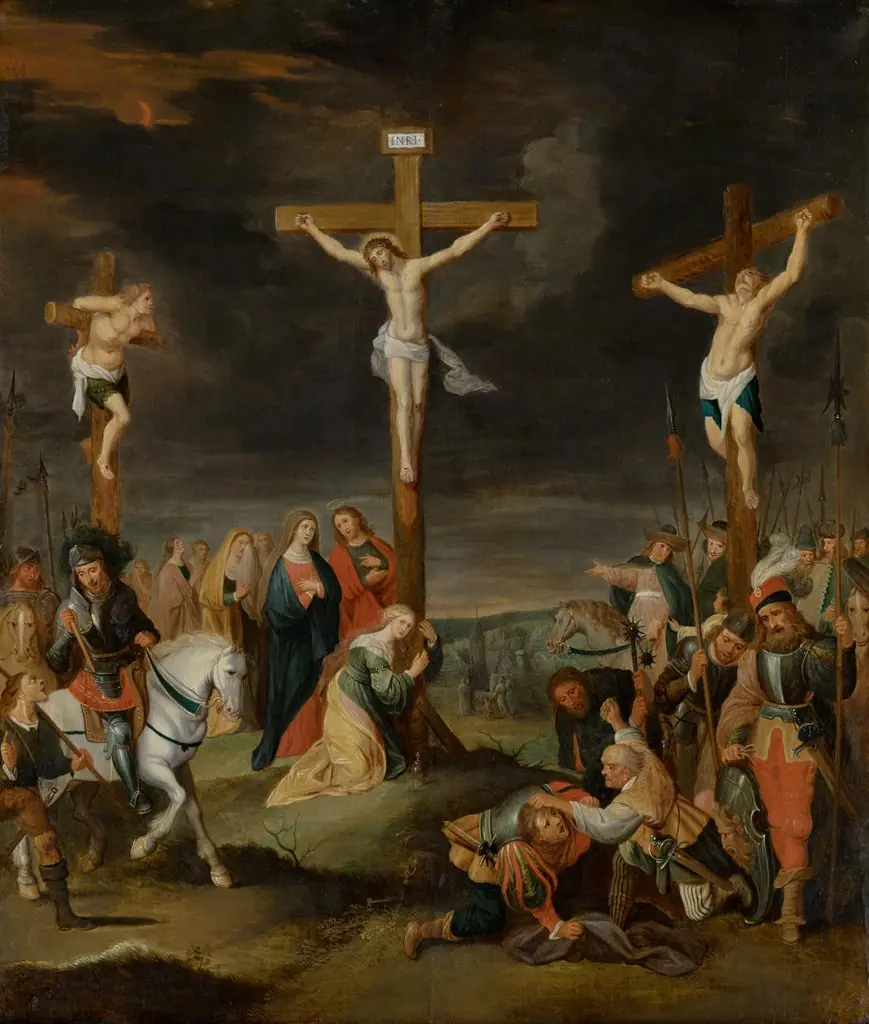
Crucifixion is an oil painting by the Mannerist artist Unknown. It dates from 1520 and is held in the collection of the Detroit Institute of Arts.
About this work
Overview
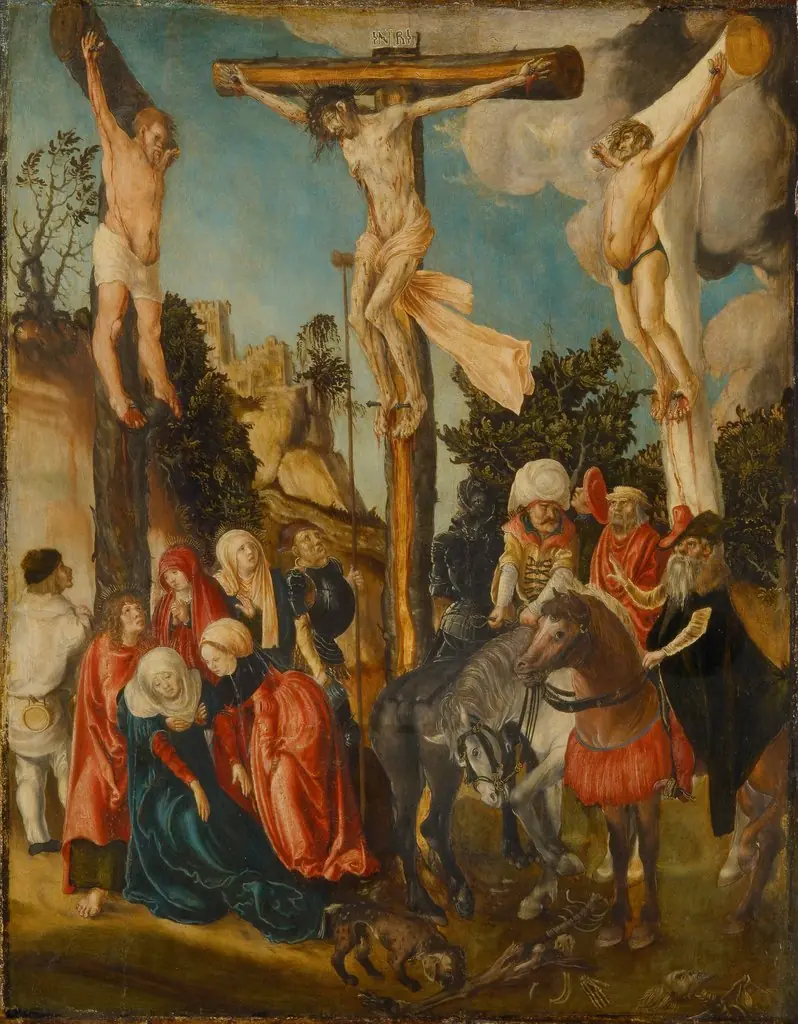
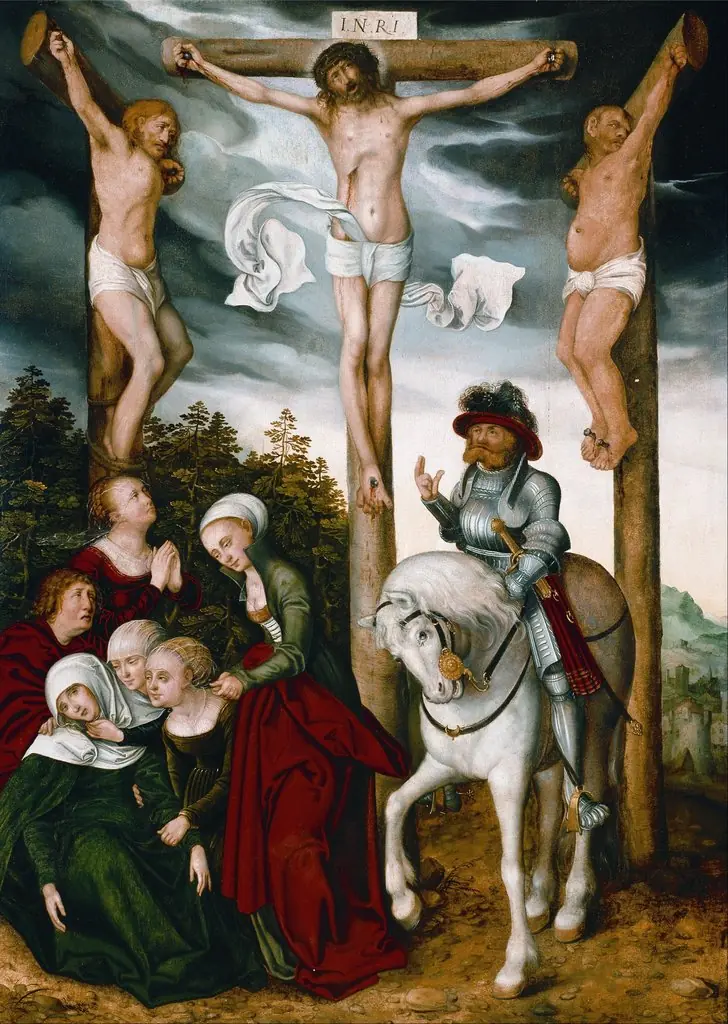
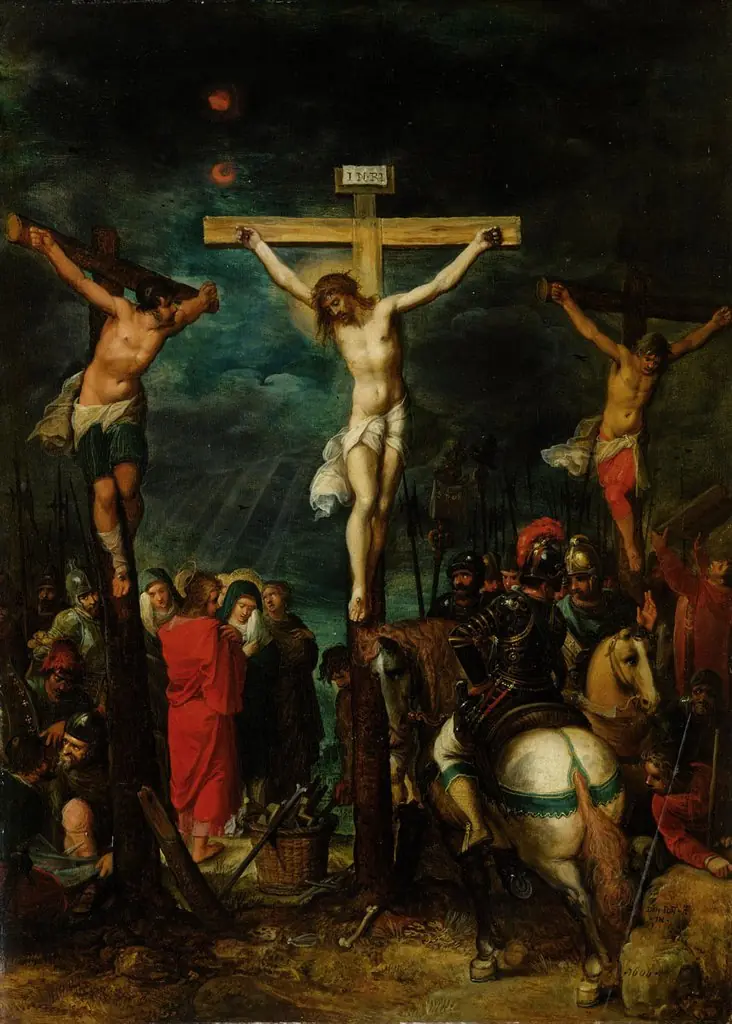
A gathering of onlookers, both mounted and on foot, occupies the foreground, their elaborate attire and armor contrasting with the dark, foreboding backdrop.
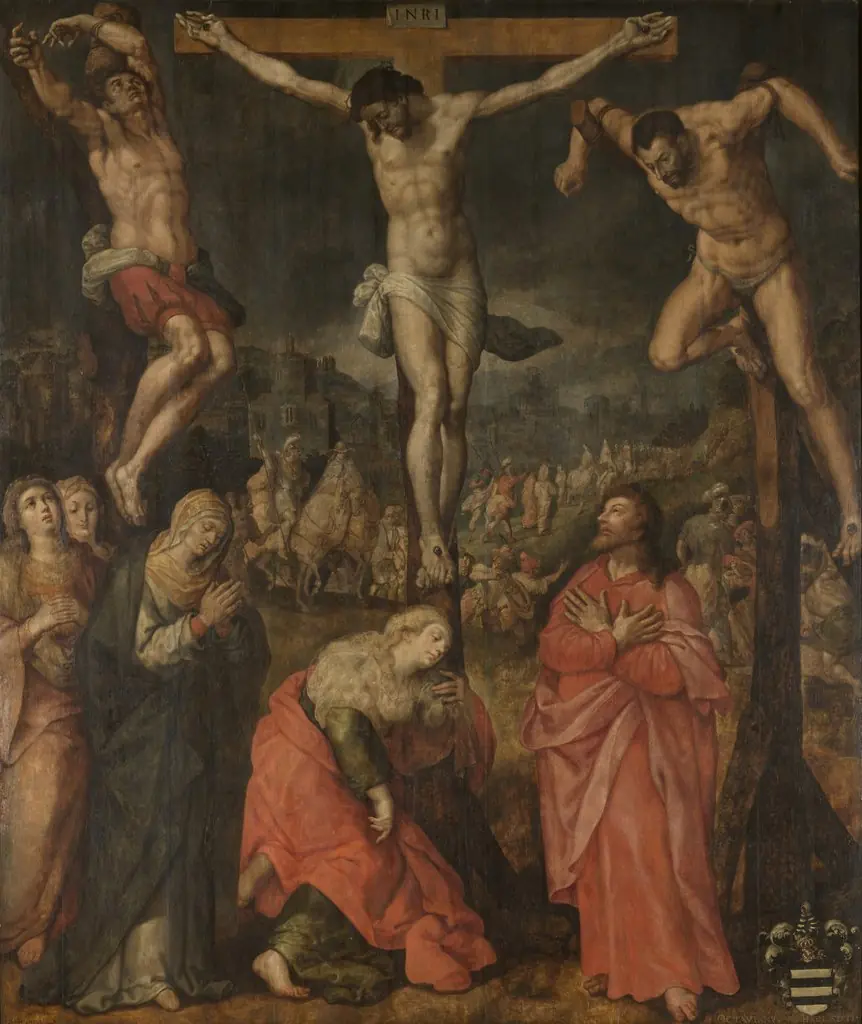
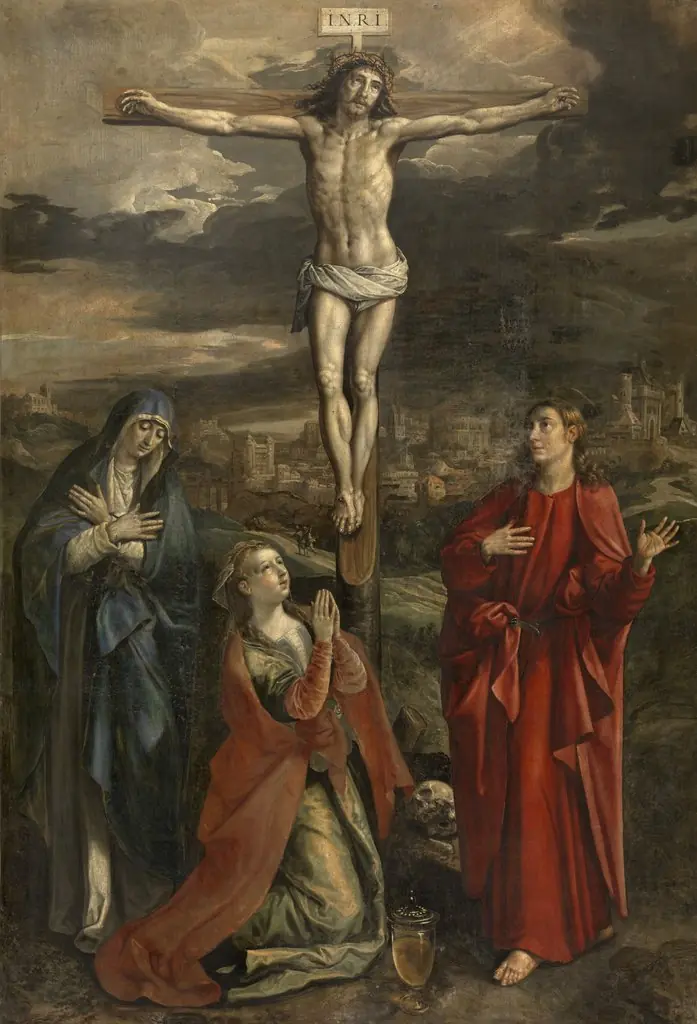
The oil painting presents the Crucifixion, centering on the figure of Jesus Christ nailed to a prominent cross. He is depicted nude except for a white cloth around his waist, flanked by two additional crucified individuals on separate crosses. A gathering of onlookers, both mounted and on foot, occupies the foreground, their elaborate attire and armor contrasting with the dark, foreboding backdrop.
Subject & Meaning
The work captures the pivotal moment of Christ’s execution, emphasizing his central role amid surrounding victims. The presence of richly dressed spectators, including armored figures, suggests a narrative of societal and political observers bearing witness to the event, underscoring themes of sacrifice, judgment, and the tension between divine suffering and worldly authority.
Technique & Style
Rendered in oil, the composition employs stark chiaroscuro to heighten drama, with a deep, ominous background that isolates the illuminated crosses. The artist uses a limited palette, allowing the white cloth and the vivid colors of the onlookers’ garments to stand out, while the muscular rendering of the bodies conveys physical strain and emotional intensity.
Context
Although specific provenance is not provided, the painting aligns with a long tradition of Western religious art that dramatizes the Crucifixion. Its inclusion of contemporary armor and elaborate dress may reflect the artist’s intent to situate the biblical scene within a recognizable historical or cultural framework, inviting viewers to contemplate its relevance across eras.
Artist & collection

 Domestic Scene
 Giacomo and Cardinal Marco, investing Andrea, Abbot of San Zeno, with his Benefice
 The Nymph of Fontainebleau
 Portrait of a Woman
 Madonna and Child with Saints in the Enclosed Garden
 Venus and Minerva
 Family Group of Four on Sofa
 Wall painting from Room H of the Villa of P. Fannius Synistor at Boscoreale