Artwork
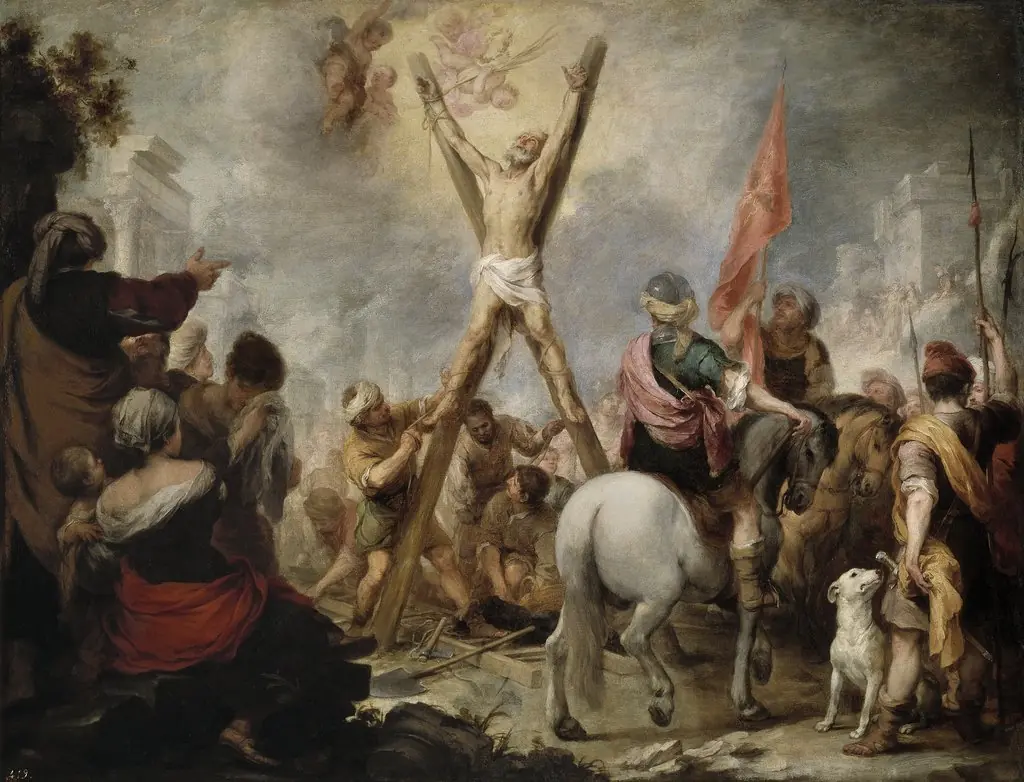
The Crucifixion of St. Andrew
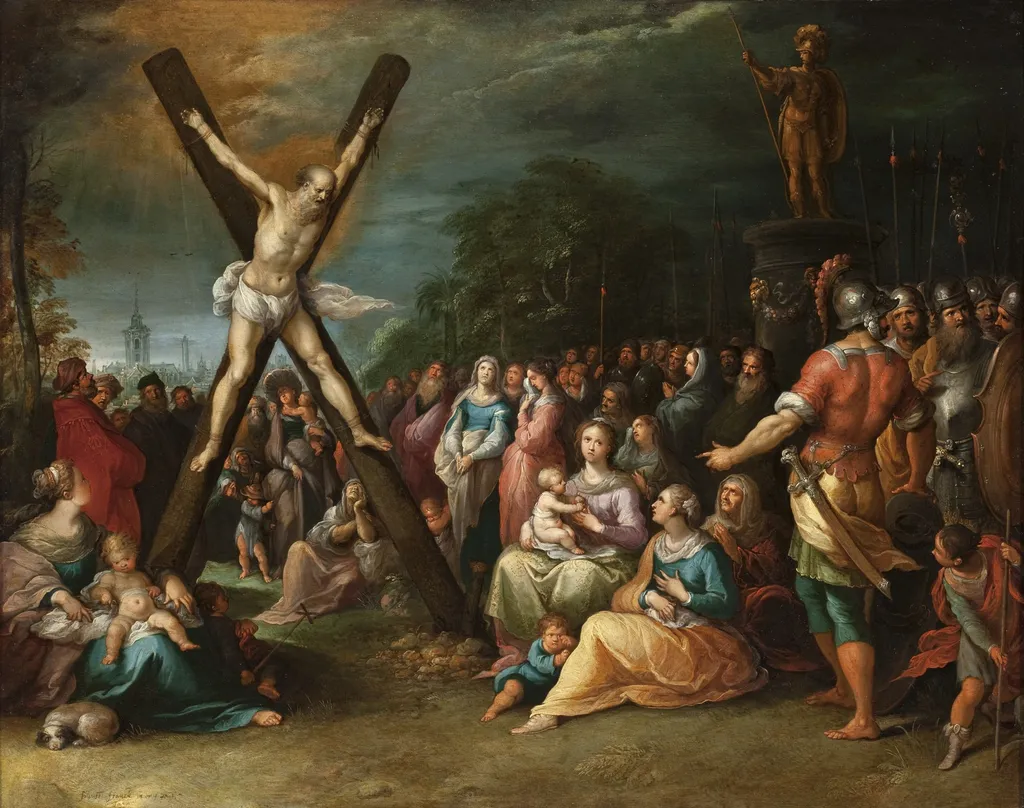
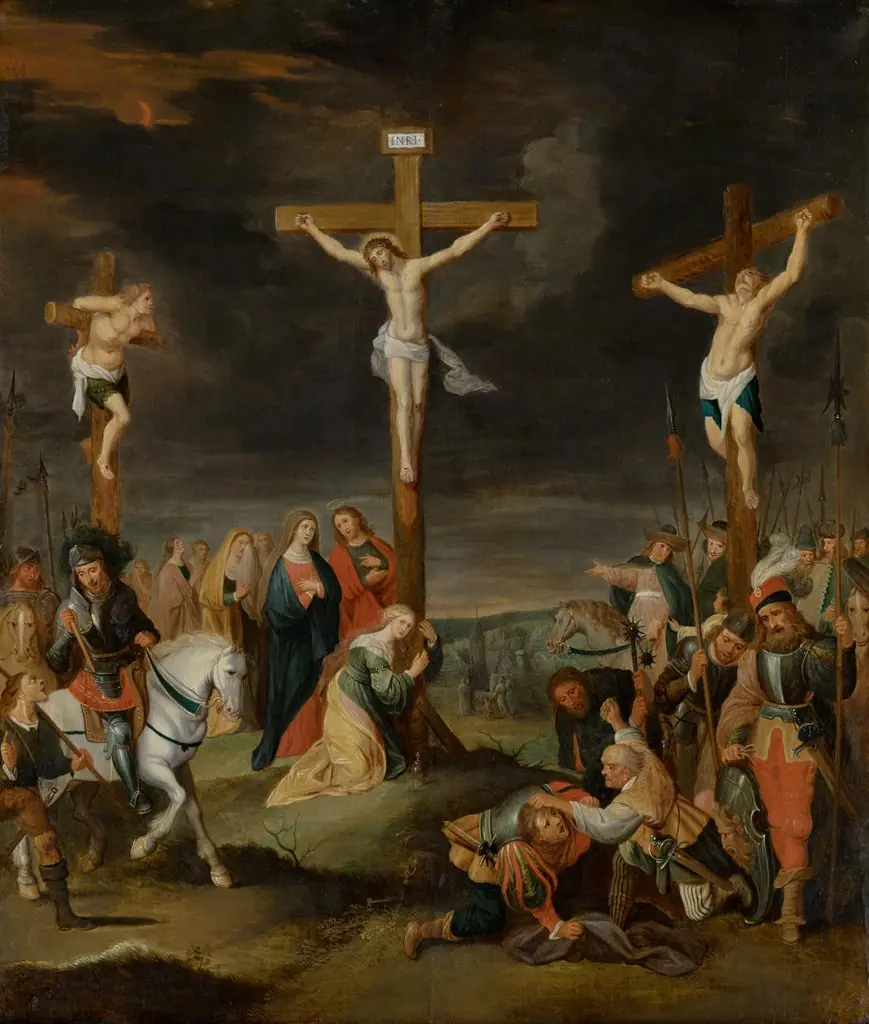
The Crucifixion of St. Andrew is an unspecified painting by the Flemish Baroque painting artist Frans Francken the Younger. It dates from 1620 and is held in the collection of the Los Angeles County Museum of Art.
About this work
Overview
Francken, based in Antwerp, was known for his detailed compositions and frequent collaborations with specialists in landscape and figure painting.
Painted in 1620 by Frans Francken the Younger, this work belongs to the Flemish Baroque tradition and illustrates the martyrdom of Saint Andrew. Francken, based in Antwerp, was known for his detailed compositions and frequent collaborations with specialists in landscape and figure painting. The piece was likely intended for private devotion or a religious setting, reflecting the era’s emphasis on emotional intensity and narrative clarity in sacred subjects.
Subject & Meaning
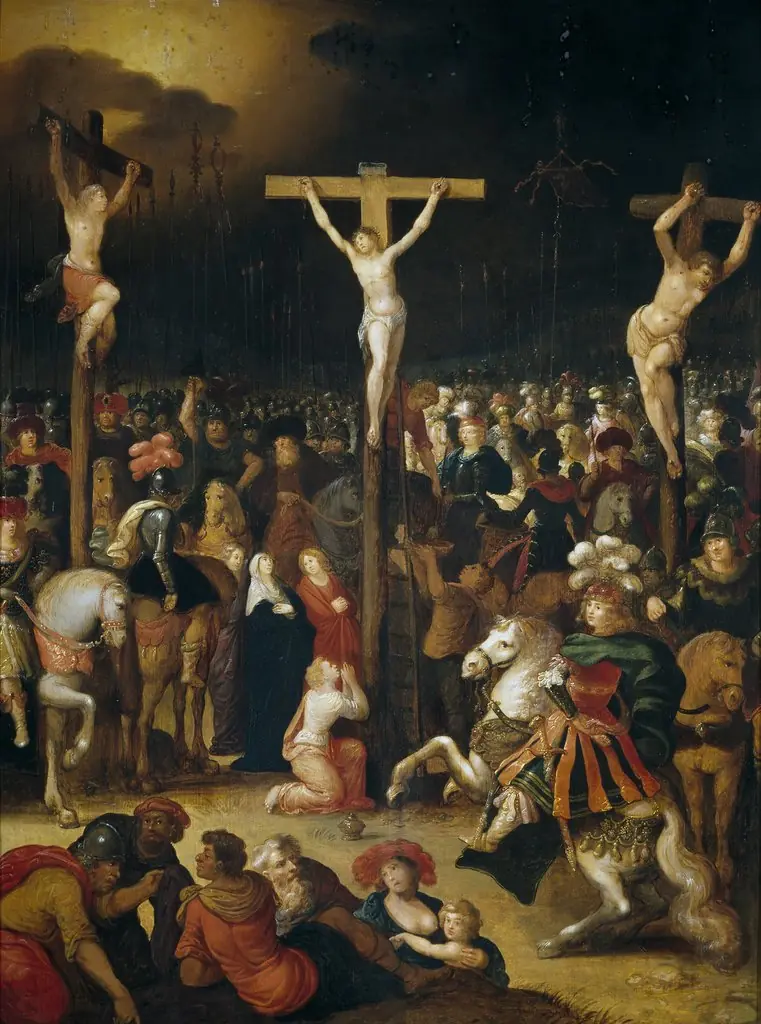
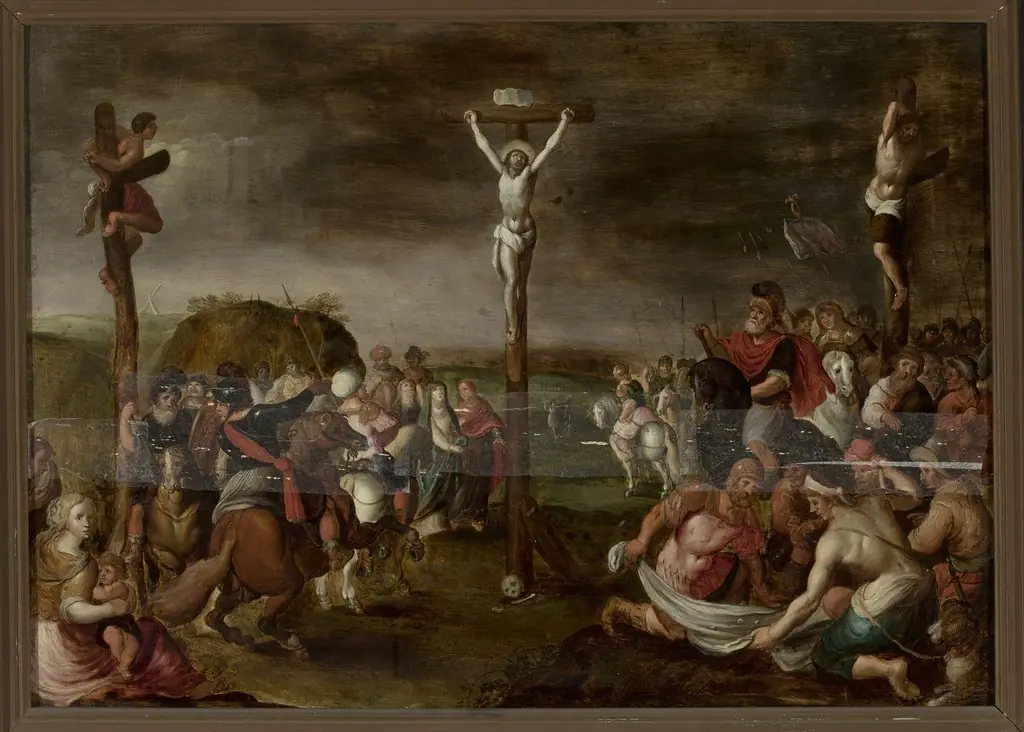
The painting portrays Saint Andrew’s execution on an X-shaped cross, a traditional symbol of his martyrdom. According to legend, he requested this form of crucifixion, deeming himself unworthy to die as Christ did. The surrounding crowd, composed of varied ages and social types, underscores the public nature of his death and invites contemplation of faith, sacrifice, and divine endurance.
Technique & Style
Francken employs precise brushwork and rich tonal contrasts to render the figures and setting with clarity. The figures are arranged in a shallow stage-like space, enhancing the theatricality of the scene. Background elements—trees, distant architecture—are rendered with subtle atmospheric perspective, grounding the drama in a tangible world while maintaining focus on the central figure’s suffering.
History & Provenance
The painting entered the collection of the Los Angeles County Museum of Art in the 20th century, though its earlier ownership history remains undocumented. It was likely commissioned by a private patron or religious institution in the Southern Netherlands, where Francken’s output was widely circulated. Its survival into modern times reflects its enduring appeal within devotional art circles.
Context
Created during the Counter-Reformation, the work aligns with Catholic efforts to reinforce spiritual devotion through vivid religious imagery. Francken’s style, blending meticulous detail with emotional gravity, responded to the Church’s call for art that moved the faithful. His frequent collaborations with landscape artists reflect a broader Antwerp practice of dividing labor to achieve compositional richness.
Legacy
While Francken’s reputation has fluctuated over time, his works remain important examples of early 17th-century Flemish religious painting. This piece contributes to understanding how martyrdom scenes were visualized for private and public audiences, preserving a visual language that linked biblical narrative with contemporary moral and theological concerns.
Own this work as a print
Artist & collection
Artist
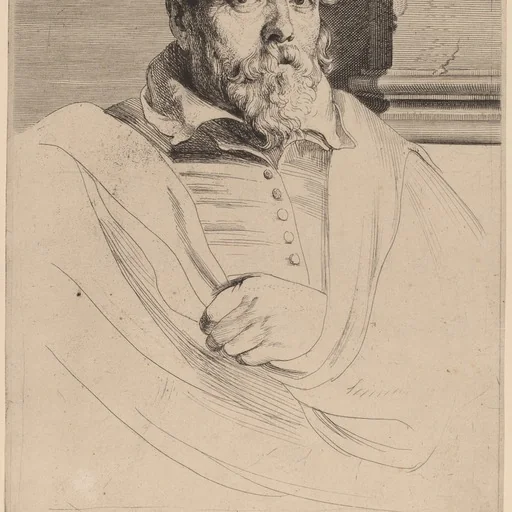
Frans Francken the Younger (1581, Antwerp – 6 May 1642, Antwerp) was a Flemish painter and the best-known and most prolific member of the large Francken family of artists.