Artwork
Christ Presented to the People
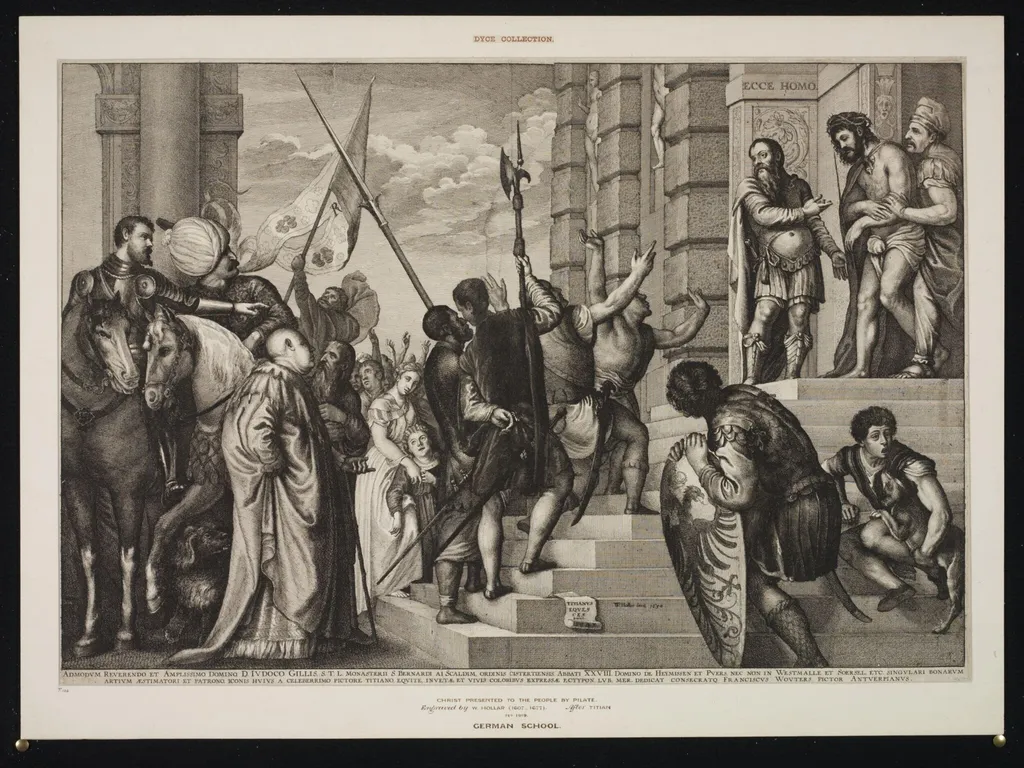
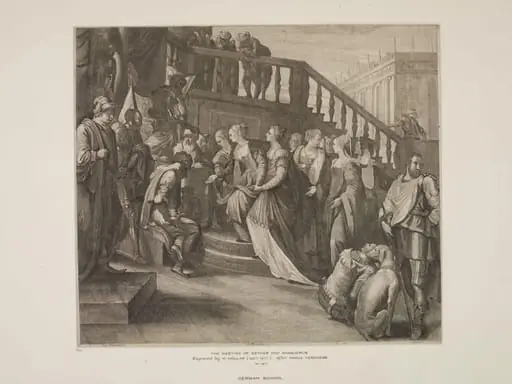
Christ Presented to the People is a print by Wenceslaus Hollar. It dates from 1650 and is held in the collection of the Victoria and Albert Museum.
About this work
Overview
This 1650 ink print by Wenceslaus Hollar reproduces a composition originally by Titian, depicting the moment Pilate presents Jesus to the crowd. Rendered on paper with fine linear detail, the scene captures a tense public spectacle. Hollar’s technique emphasizes dramatic contrasts, guiding the viewer’s eye through the disorder of the gathering with precision and restraint.
Subject & Meaning
Figures surround the central figure, some hostile, others passive.
The scene illustrates the biblical episode from the Gospel of John, in which Pontius Pilate presents Jesus to the people of Jerusalem, offering him as a candidate for release. Figures surround the central figure, some hostile, others passive. The kneeling man with a box may represent a devotee or a symbolic offering, while the statues above suggest the presence of pagan deities, contrasting with the Christian narrative below.
Technique & Style
Hollar employed fine, controlled lines and strong chiaroscuro to define forms and spatial depth. The interplay of light and shadow isolates key figures against the shadowed crowd and crumbling architecture. His meticulous engraving style, typical of 17th-century printmaking, enhances clarity without embellishment, prioritizing narrative legibility over ornamental flourish.
History & Provenance
Created in 1650 during Hollar’s time in England, the print reflects his engagement with Italian Renaissance compositions, likely sourced from engravings or paintings circulating among collectors. Hollar, a Bohemian artist active across Europe, often reproduced works by major painters for wider dissemination, making this print part of a broader tradition of reproductive printmaking in early modern Europe.
Context
In mid-17th-century Europe, religious imagery remained central to visual culture despite political and theological upheavals. Hollar’s print responds to a demand for accessible devotional images, particularly among Protestant audiences who valued textual clarity and moral narrative over elaborate iconography. The inclusion of classical statuary subtly references the cultural tension between pagan antiquity and Christian authority.
Legacy
Hollar’s print contributed to the circulation of Titian’s compositional ideas beyond oil painting, influencing later engravers and illustrators of biblical scenes. Its restrained aesthetic and focus on narrative structure exemplify the role of printmaking in shaping public visual literacy during a period of religious and artistic transition in Europe.
Artist & collection
Artist
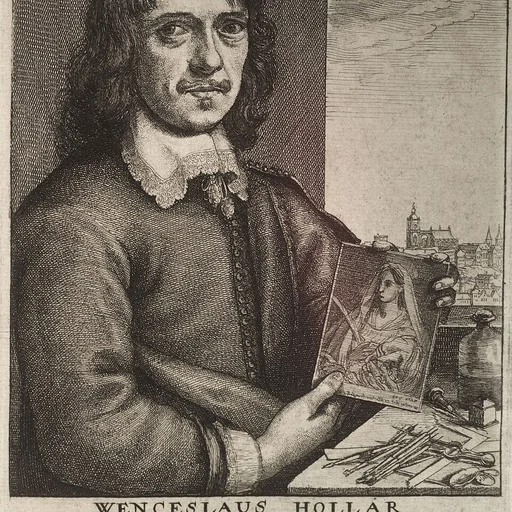
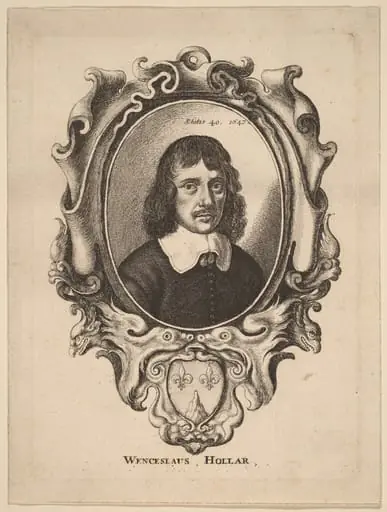
Wenceslaus Hollar (Czech: Václav Hollar (Czech pronunciation: ), German: Wenzel Hollar; 23 July 1607 – 25 March 1677) was a Czech engraver, etcher and painter.


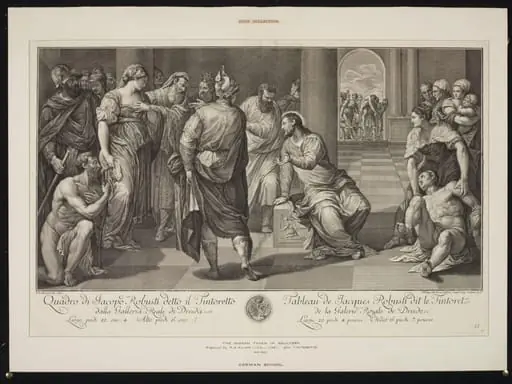 The Woman taken in Adultery
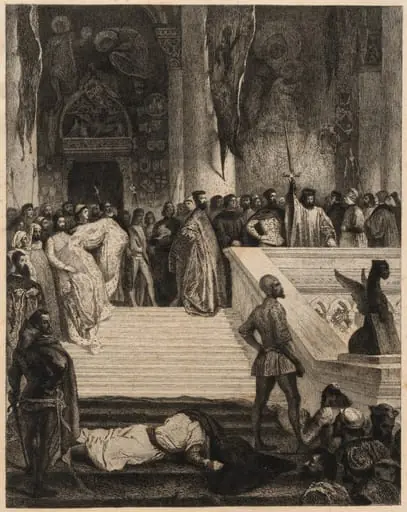 The Death of Doge Marino Faliero
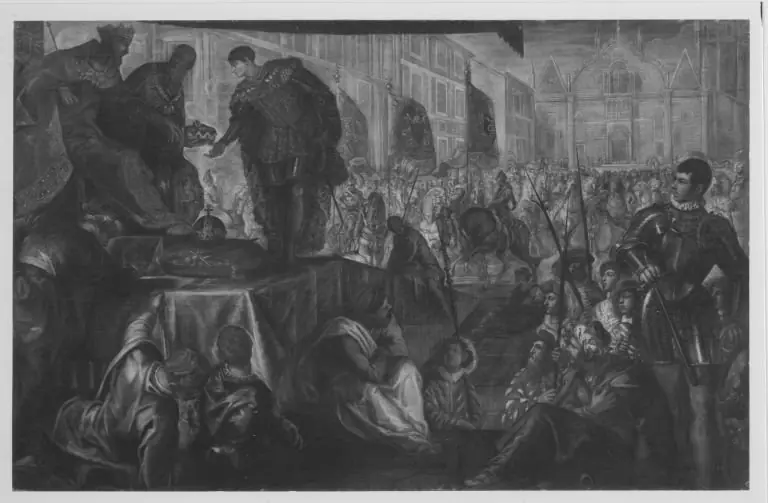 Gonzaga cycle
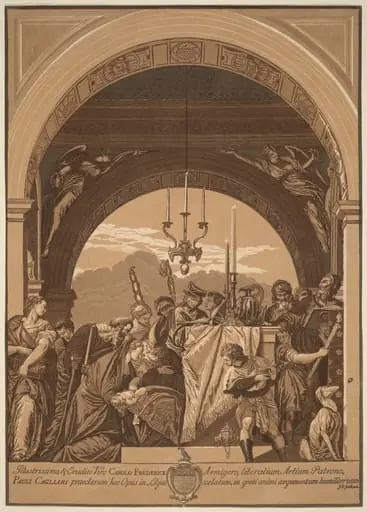 The Presentation in the Temple
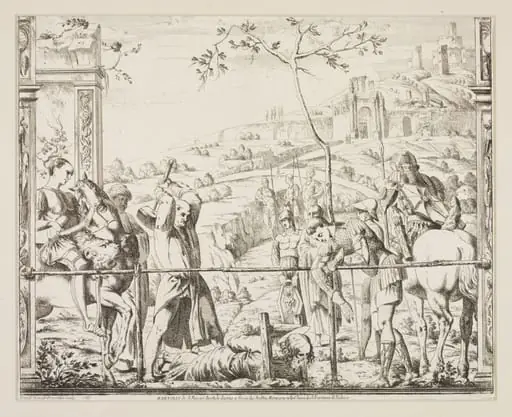 The Martyrdom of St. James and St. Christopher
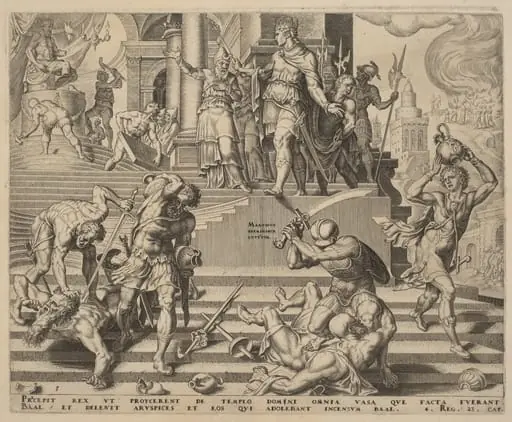 The Destruction of the Temple of Baal and the Slaughter of His Priests
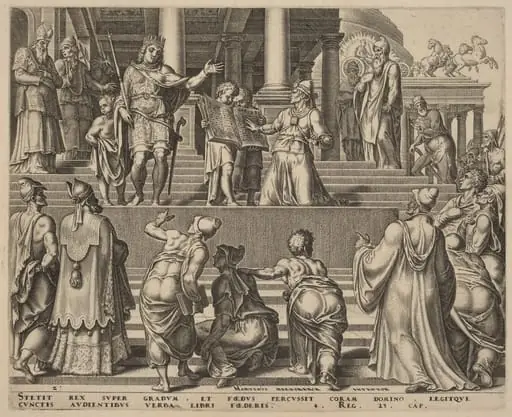 The Book of the Law Read before the People
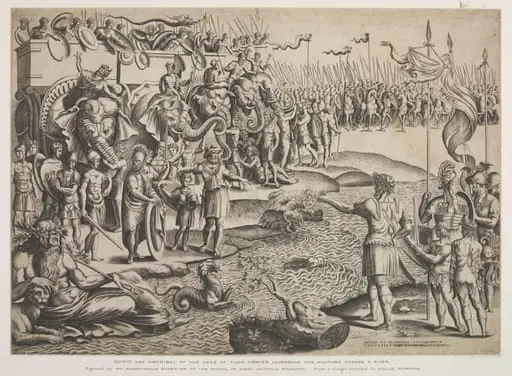 Untitled
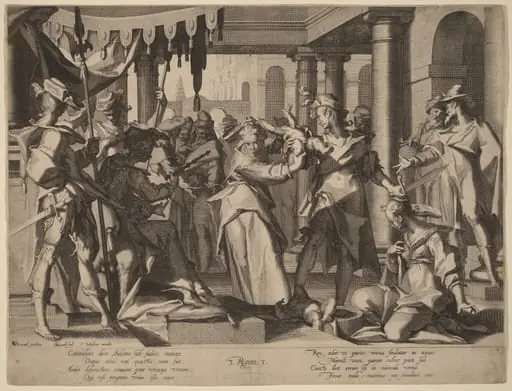 The Judgment of Solomon
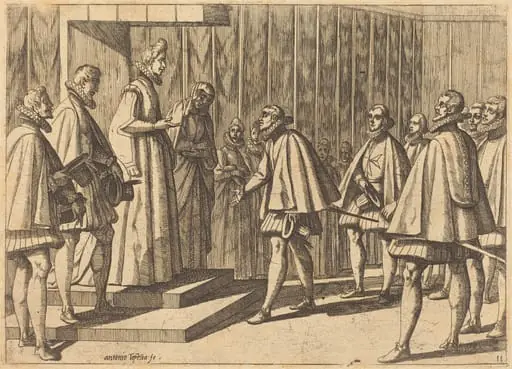 Italian Prince before Margaret of Austria
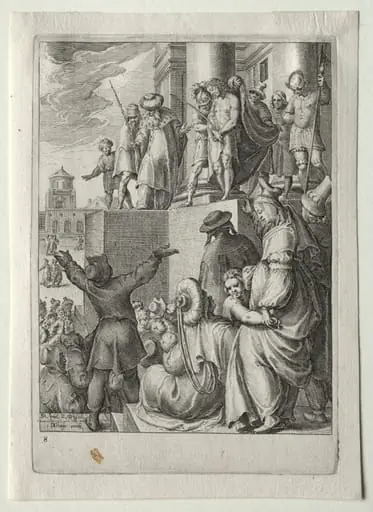 Passion Set: Ecce Homo
 The Meeting of Esther and Ahasuerus