Artwork
The Beggars: Malingerer
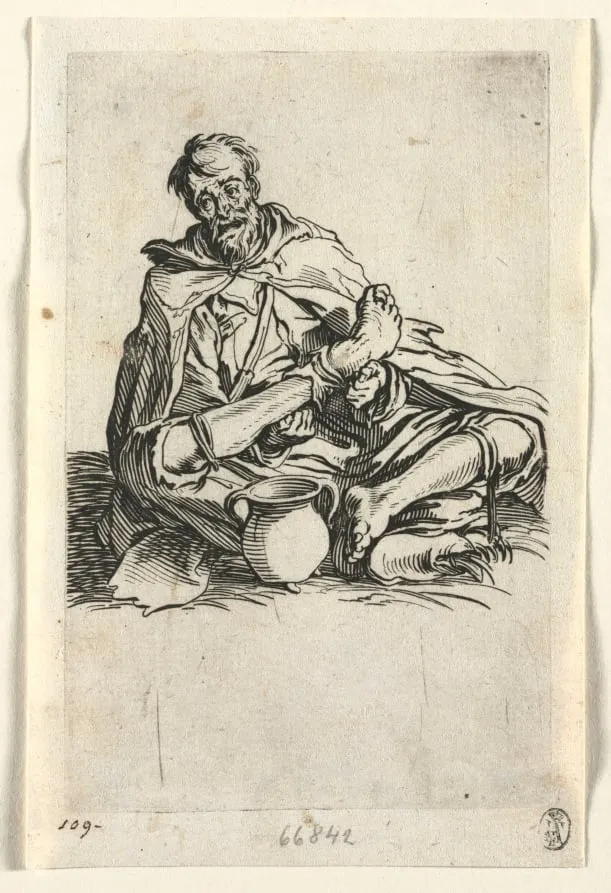
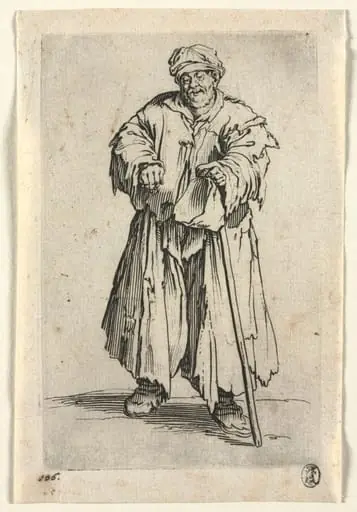
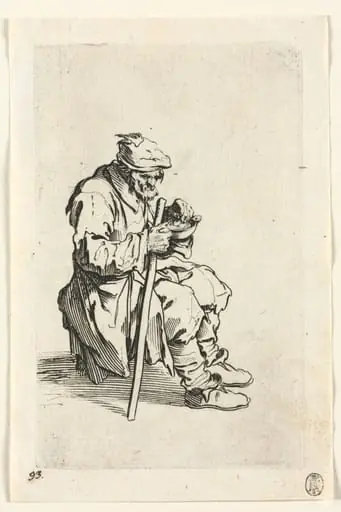
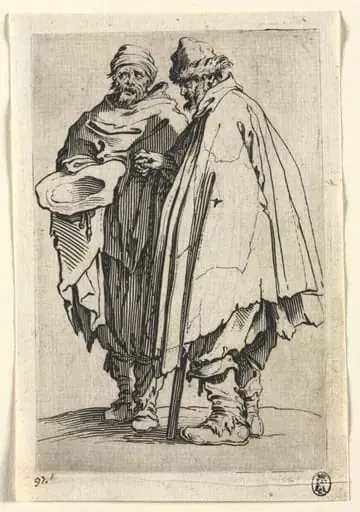
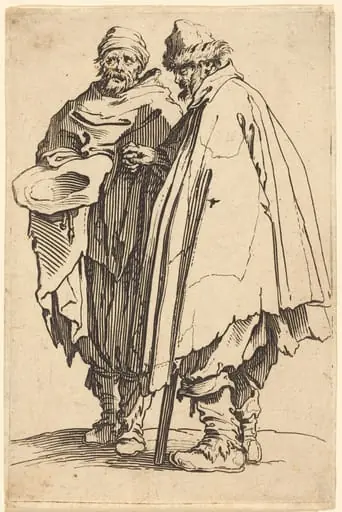
The Beggars: Malingerer is a print by the Baroque artist Jacques Callot. It dates from 1623 and is held in the collection of the Cleveland Museum of Art.
About this work
Overview
Jacques Callot’s print The Beggars: Malingerer, executed around 1623, depicts a solitary figure seated on the ground. The work is part of the collection of the Cleveland Museum of Art. Rendered in black ink on a light‑toned paper, the image combines line work with faint pencil underdrawing, giving it a restrained yet expressive quality.
Subject & Meaning
The composition centers on a man in modest attire—a long‑sleeved shirt, a draped cloak, and a head covering—who sits with his legs bent and feet turned to the right. He grasps his own ankle with his right hand while his left hand holds his right wrist, suggesting a pose of self‑inflicted discomfort or feigned infirmity, a common motif in depictions of beggars.
Technique & Style
Callot employs precise, fluid ink lines to outline the figure, while subtle shading creates a sense of volume. The presence of pencil marks beneath the ink indicates a preparatory stage, typical of his meticulous approach. The overall aesthetic reflects the Baroque interest in drama and the human condition, yet the execution remains restrained, emphasizing line over ornament.
History & Provenance
Created in the early 1620s, The Beggars: Malingerer belongs to Callot’s series of prints portraying the lower classes. The piece entered the Cleveland Museum of Art’s holdings through acquisition in the 20th century, where it has been catalogued as an example of the artist’s social commentary and technical skill.
Artist & collection
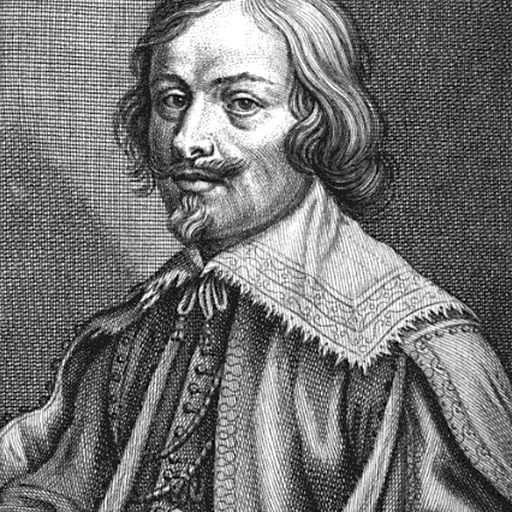
Artist
Jacques Callot was a baroque printmaker and draftsman from the Duchy of Lorraine.

 Holy Family at supper
 Restoration of the Aqueduct at Pisa
 Restoration of the Aqueduct at Pisa
 Square in Paris with Many Figures
 Square in Paris with Many Figures
 Horsemen Attacked by Robbers
 HOW WILL A COVERED PART BE CORRECTED?HOW WIKA A COVERED HEART DEED CORRECTED?
![Christ Walking on the Water [second plate], by Jacques Callot](https://artifactworldgallery.com/img/jacques-callot--christ-walking-on-the-water-second-plate--2069f3bfe4cb2126-w320.webp) Christ Walking on the Water [second plate]
Christ Walking on the Water [second plate]