Artwork
Blind Beggar and Companion
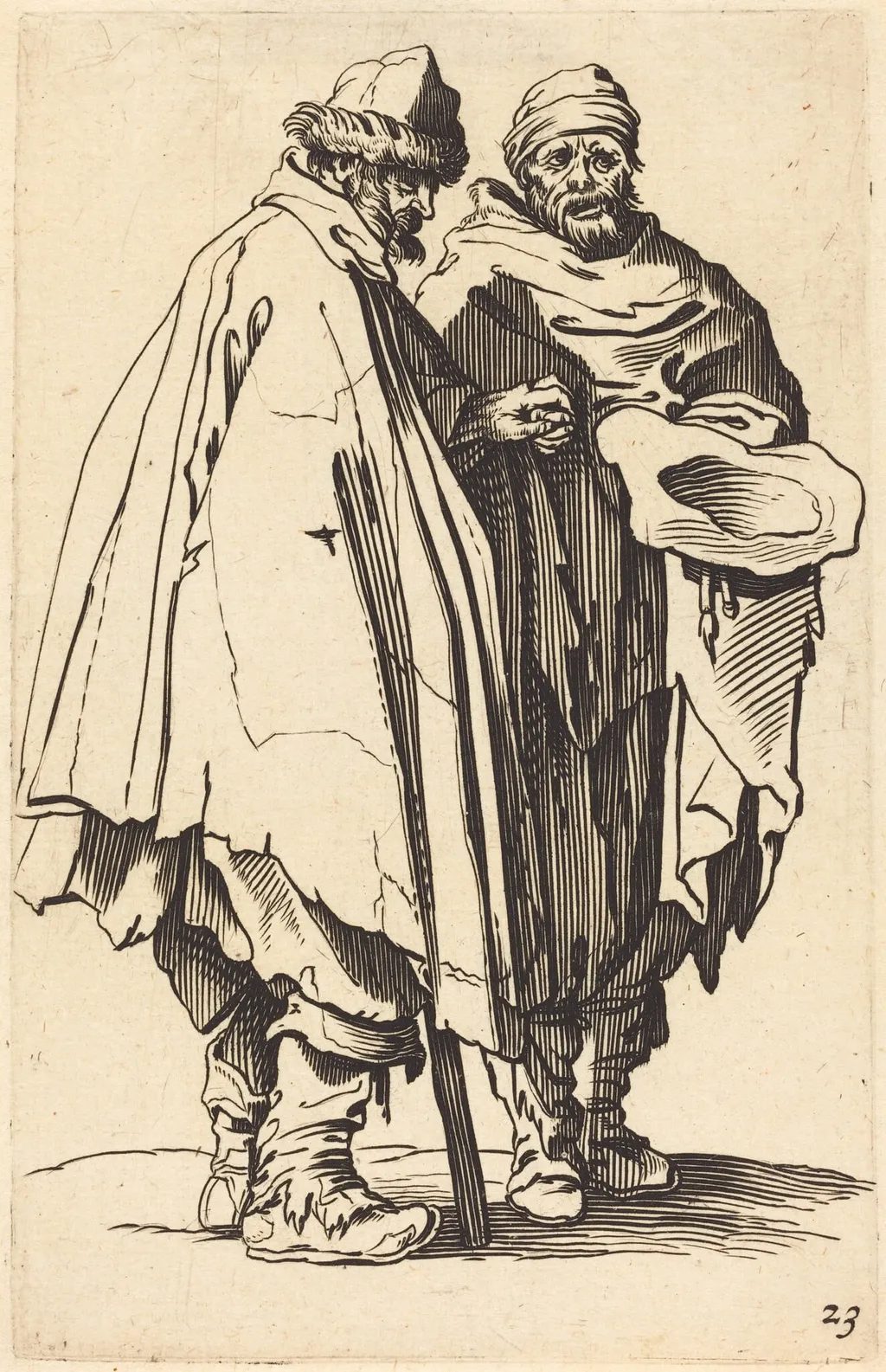
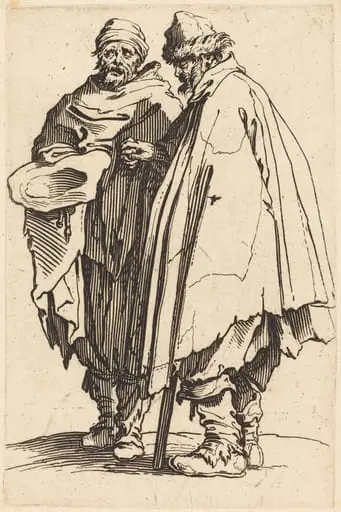
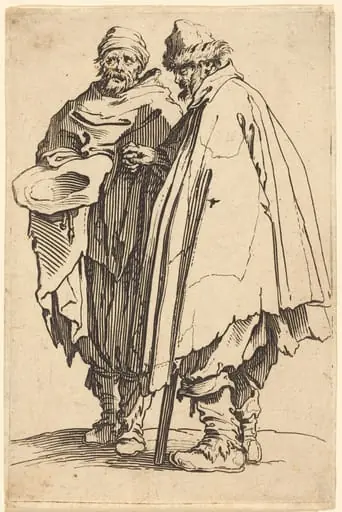
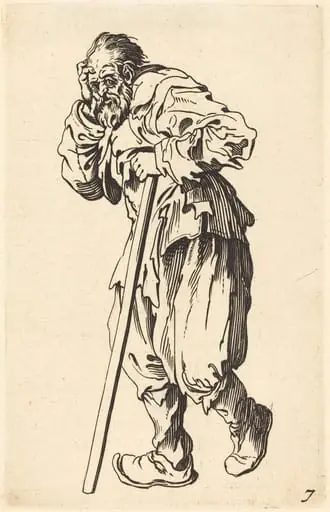
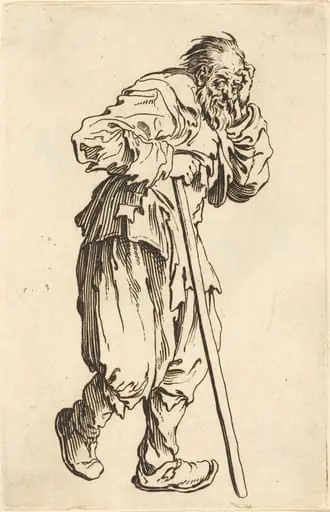
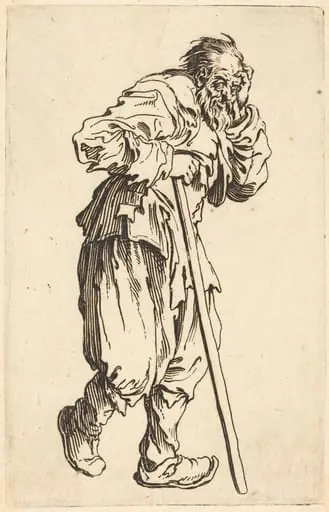
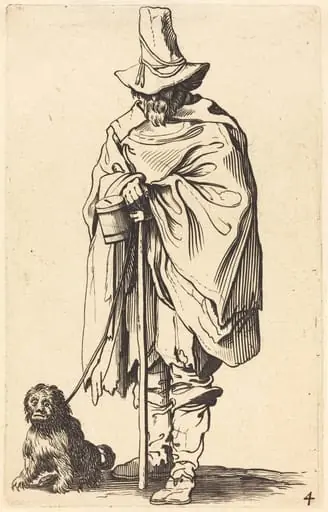
Blind Beggar and Companion is an ink print by the Baroque artist French 17th Century. It dates from 1622 and is held in the collection of the National Gallery of Art. This etching portrays two beggars standing side by side, rendered in monochrome on laid paper.
About this work
Overview
The artist uses bold, incised lines and subtle tonal contrasts to model form and texture, creating a sense of quiet presence without overt drama.
This etching portrays two beggars standing side by side, rendered in monochrome on laid paper. The figures are depicted with restrained detail, their postures and attire suggesting a life of hardship. The artist uses bold, incised lines and subtle tonal contrasts to model form and texture, creating a sense of quiet presence without overt drama. The composition avoids theatricality, focusing instead on the stillness and dignity of the subjects.
Subject & Meaning
The two figures—one holding a staff, the other a cloth—represent marginalized individuals, likely itinerant laborers or disabled beggars. Their beards and worn clothing reflect common visual codes for poverty in early modern Europe. Rather than evoking pity, the image invites contemplation: their expressions are unreadable, their gaze averted, suggesting inner resilience rather than despair. The pairing implies companionship as a form of survival.
Technique & Style
Executed as an etching, the work relies on the precision of acid-bitten lines to define form and shadow. The artist employs hatching and cross-hatching to build depth, particularly in the folds of cloaks and the texture of beards. The lack of color and minimal background focus the viewer’s attention on the figures’ physicality. The style aligns with Baroque printmaking traditions, prioritizing emotional gravity over ornamental flourish.
History & Provenance
The print’s origin is not definitively recorded, but its stylistic features suggest it was produced in the Netherlands or Northern Europe during the 17th century. It likely circulated among collectors interested in genre scenes of everyday life. Its survival on laid paper, a common medium for prints of the period, indicates it was not a rare or commissioned work, but part of a broader market for socially observant imagery.
Context
In 17th-century Europe, depictions of beggars were increasingly common in print culture, reflecting both humanitarian interest and moral commentary. While some artists portrayed poverty with sentimentality, this work avoids caricature. Its restrained tone aligns with a growing trend among Northern European artists to treat lower-class subjects with psychological nuance, influenced by humanist values and the rise of secular observation.
Legacy
This etching contributes to a quiet tradition of socially aware printmaking that influenced later realist artists. Its emphasis on dignity over spectacle prefigures 19th-century depictions of laborers and the poor. Though not widely known today, it remains a modest example of how print media democratized visual narratives, offering viewers access to the lives of those often excluded from grand historical or religious art.
Own this work as a print
Artist & collection

Artist
Seventeenth-century French printmakers turned ink into story. Their tools were burin and acid, paper their stage. Look at the Beggar Woman with Rosary (1622), etched on laid paper, her hands folded around faith, or The…