Artwork
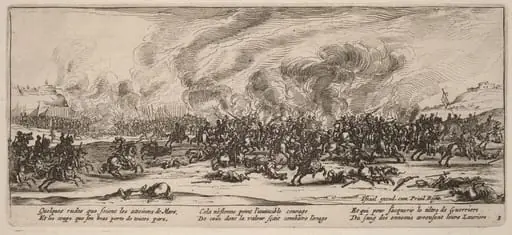
The Large Miseries of War: The Battle
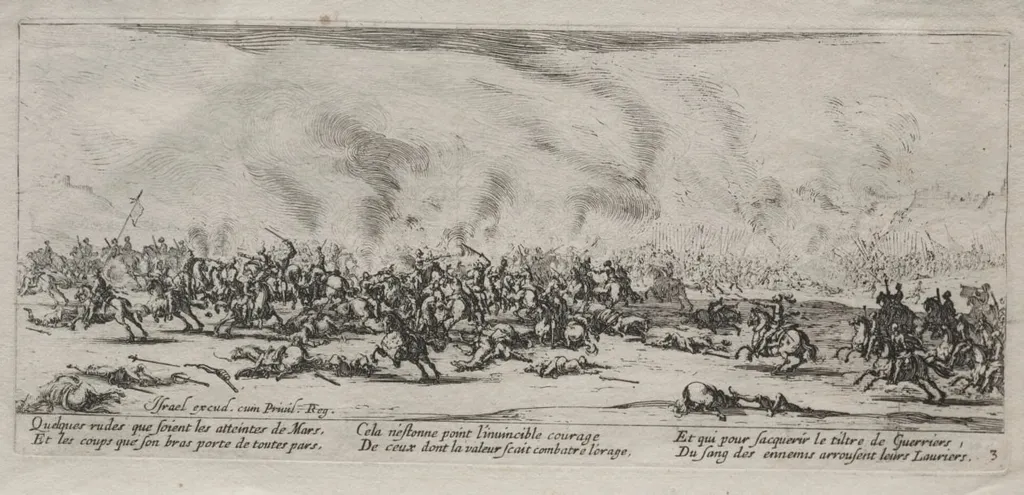
The Large Miseries of War: The Battle is a print by the Baroque artist Jacques Callot. It dates from 1633 and is held in the collection of the Cleveland Museum of Art.
About this work
Overview
The Large Miseries of War: The Battle is a print created by French artist Jacques Callot in 1633. Executed as a history painting, the work depicts a tumultuous battlefield populated by soldiers and horses. It is part of the collection of the Cleveland Museum of Art, where it is displayed as an example of early 17th‑century war imagery.
Subject & Meaning
The composition presents a chaotic clash, emphasizing the disorder and human cost of armed conflict. By focusing on the crowded melee and the presence of both infantry and cavalry, the image conveys the pervasive violence of war, reflecting the broader devastation experienced across Europe during the Thirty Years’ War.
Technique & Style
Although Callot is chiefly remembered for his intricate etchings, this work demonstrates his ability to translate that precision into a larger printed format. The fine line work and careful shading create a sense of depth and movement, while the dense arrangement of figures showcases his characteristic attention to detail.
History & Provenance
Executed in 1633, the print was likely informed by Callot’s own observations of contemporary military campaigns. It entered the Cleveland Museum of Art’s holdings in the 20th century, where it remains a key piece for studying the artist’s engagement with war themes and his contribution to the development of printmaking as a narrative medium.
Artist & collection
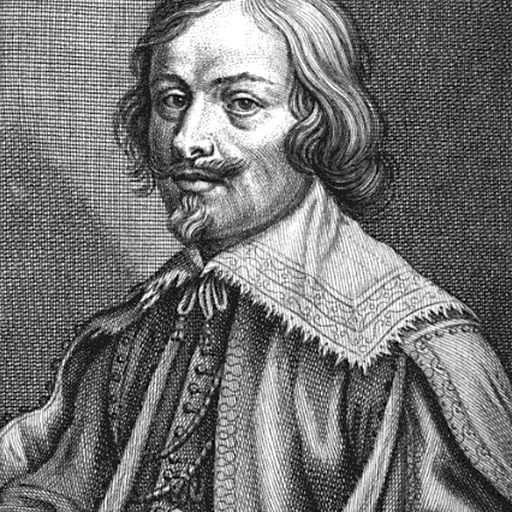
Artist
Jacques Callot was a baroque printmaker and draftsman from the Duchy of Lorraine.

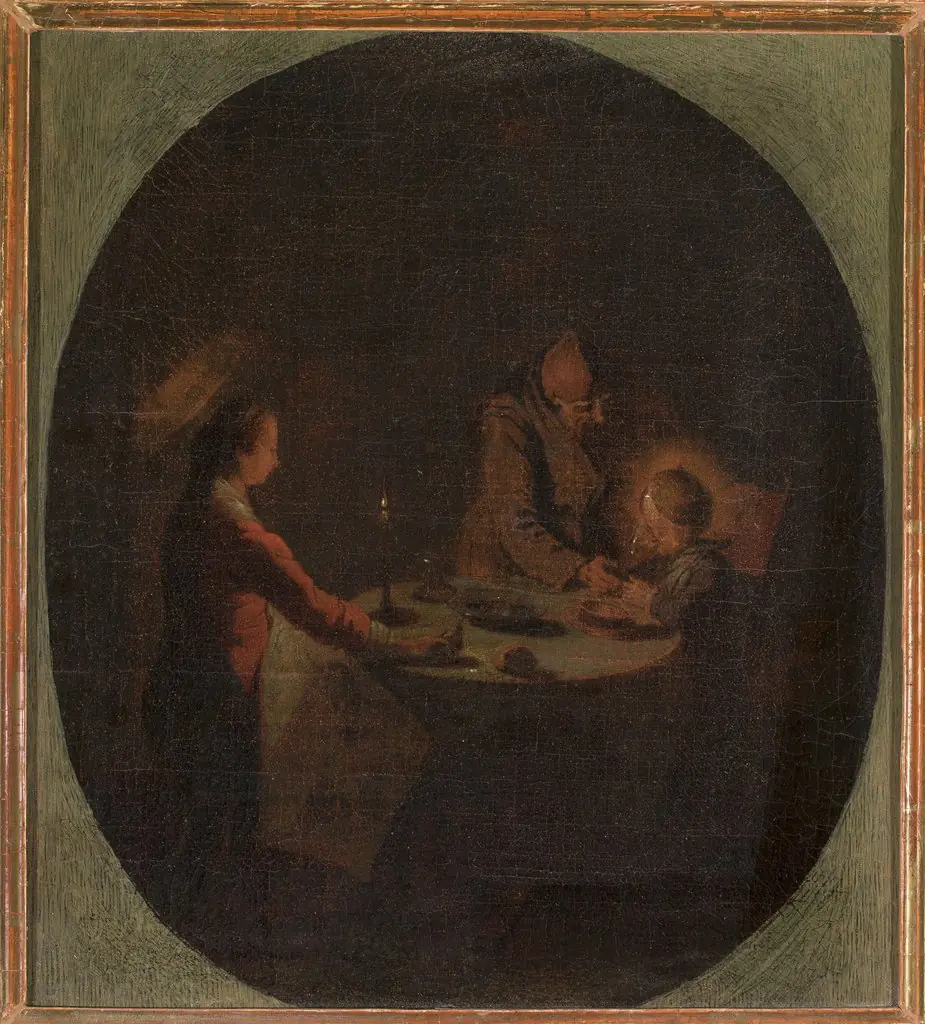 Holy Family at supper
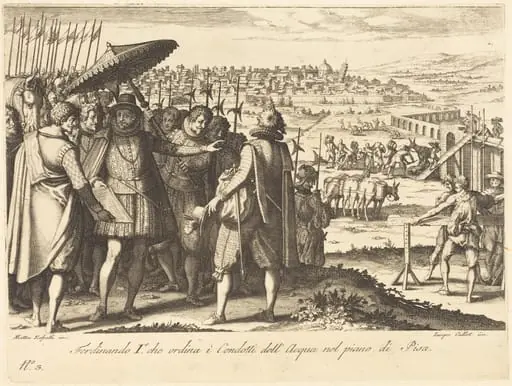 Restoration of the Aqueduct at Pisa
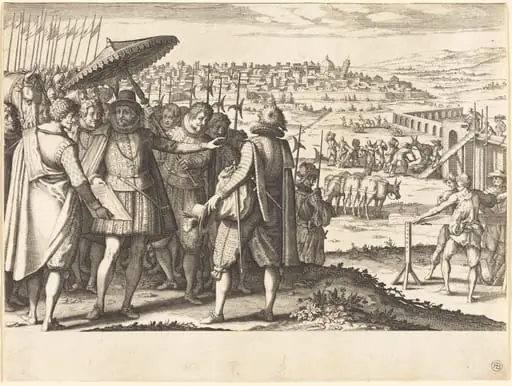 Restoration of the Aqueduct at Pisa
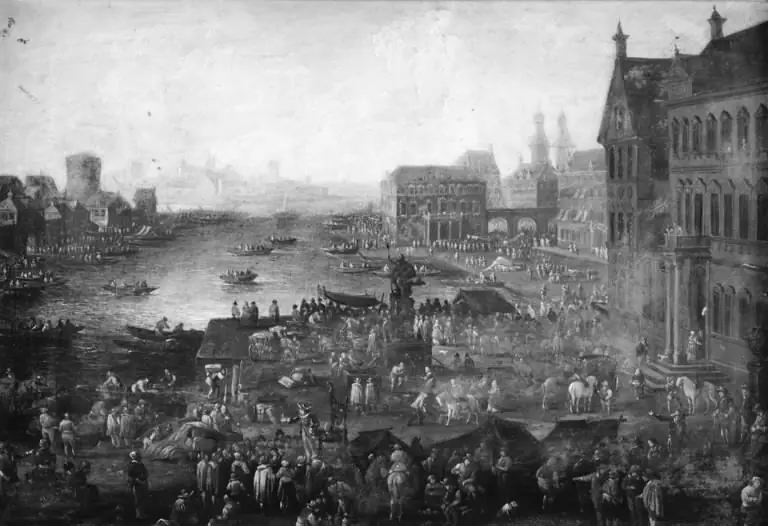 Square in Paris with Many Figures
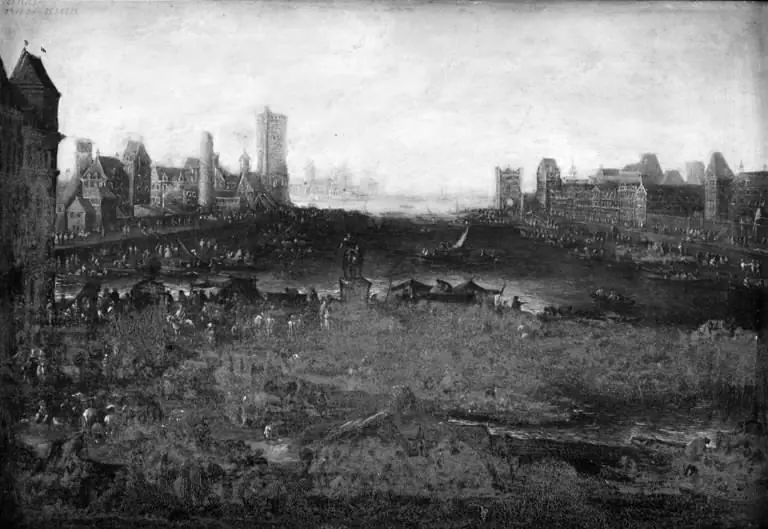 Square in Paris with Many Figures
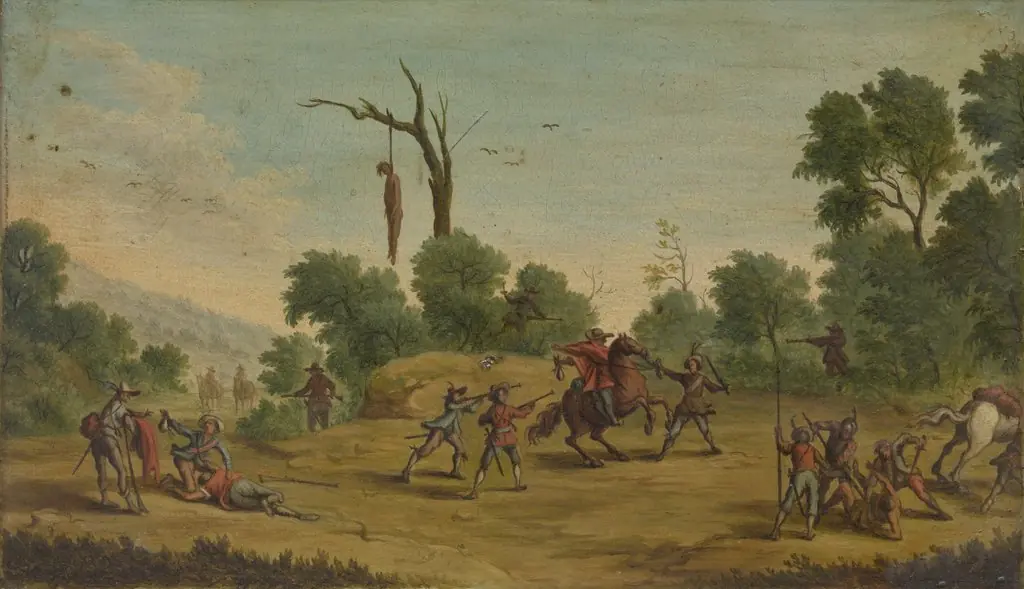 Horsemen Attacked by Robbers
 HOW WILL A COVERED PART BE CORRECTED?HOW WIKA A COVERED HEART DEED CORRECTED?
![Christ Walking on the Water [second plate], by Jacques Callot](https://artifactworldgallery.com/img/jacques-callot--christ-walking-on-the-water-second-plate--2069f3bfe4cb2126-w320.webp) Christ Walking on the Water [second plate]
Christ Walking on the Water [second plate]
 The Battle
 The Large Miseries of War: Burning at the Stake
 The Battle
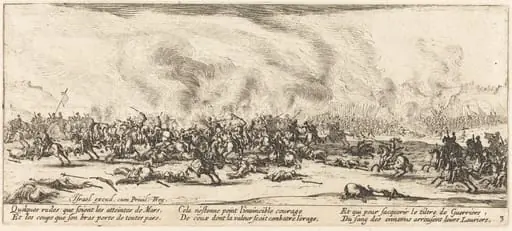
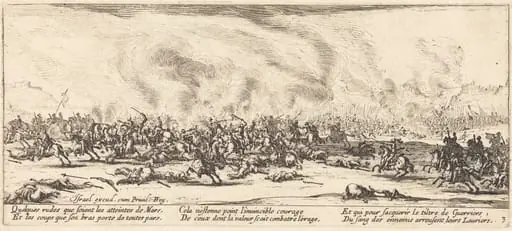 The Battle
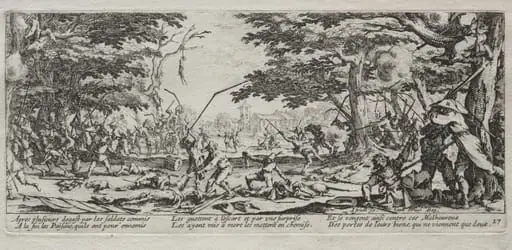 The Large Miseries of War: Peasant's Revenge
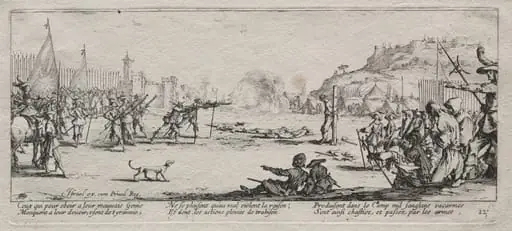 The Large Miseries of War: The Firing Squad
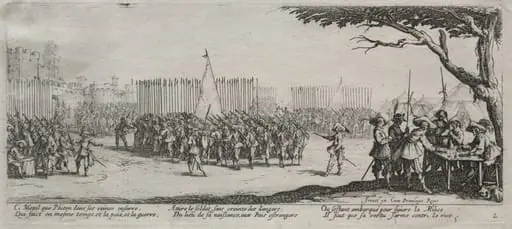 The Large Miseries of War: Enrollment of the Troops
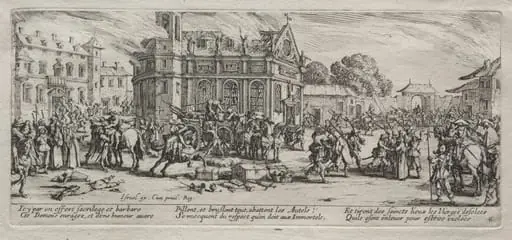 The Large Miseries of War: Devastation of a Monastery
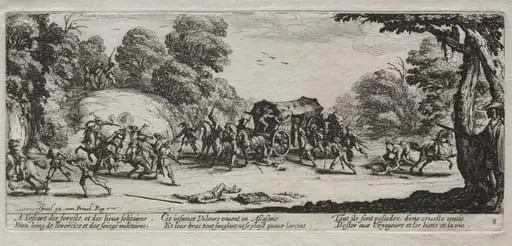 The Large Miseries of War: Highway Robbery