Artwork
The Large Miseries of War: The Firing Squad
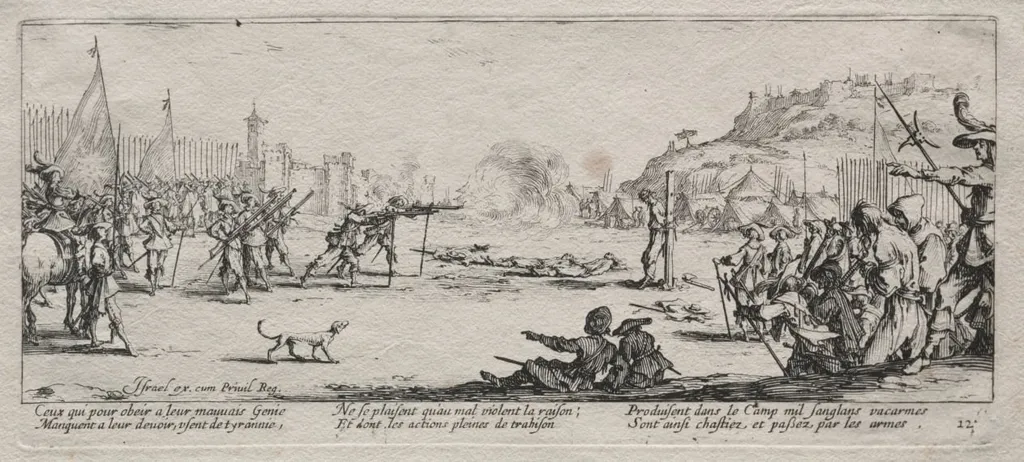
The Large Miseries of War: The Firing Squad is a print by the Baroque artist Jacques Callot. It dates from 1633 and is held in the collection of the Cleveland Museum of Art.
About this work
Overview
The Large Miseries of War: The Firing Squad is an etching by Jacques Callot, dated to 1633, currently part of The Cleveland Museum of Art's collection. This work depicts a multifaceted war scene, conveying the chaos and brutality of conflict.
Subject & Meaning
The etching illustrates the harsh realities of war through three concurrent scenes: an advancing military unit, a firing squad executing prisoners by a river with others fleeing or drowning, and wounded/dead soldiers being tended to. Amidst the turmoil, a small, serene dog in the lower left offers a poignant contrast.
Technique & Style
Callot employed sharp, defined lines and pronounced contrasts to emphasize the horror and intensity of the war scene, characteristic of the expressive and emotionally charged narrative techniques associated with the Baroque period.
History & Provenance
Created in 1633, the etching is now housed at The Cleveland Museum of Art, though specific details of its provenance prior to its current ownership are not provided here.
Context
This work reflects the artist's response to the devastation of war, likely influenced by the Thirty Years' War (1618-1648), a period of widespread conflict in Europe. The piece critiques the brutality of military actions.
Legacy
The Large Miseries of War series, including The Firing Squad, is notable for its unromanticized depiction of war's atrocities, influencing later artists in their representations of conflict and its human toll.
Artist & collection
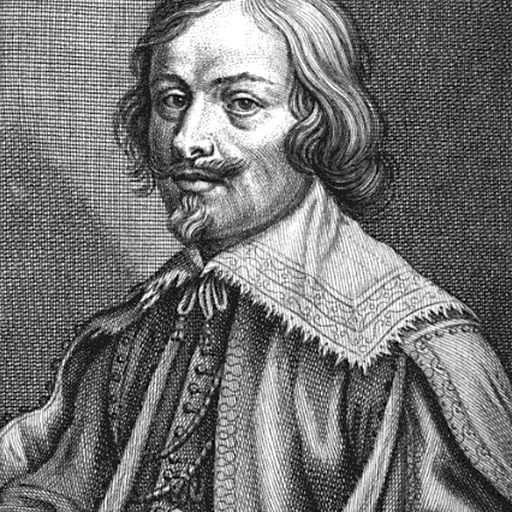
Artist
Jacques Callot was a baroque printmaker and draftsman from the Duchy of Lorraine.

 Holy Family at supper
 Restoration of the Aqueduct at Pisa
 Restoration of the Aqueduct at Pisa
 Square in Paris with Many Figures
 Square in Paris with Many Figures
 Horsemen Attacked by Robbers
 HOW WILL A COVERED PART BE CORRECTED?HOW WIKA A COVERED HEART DEED CORRECTED?
![Christ Walking on the Water [second plate], by Jacques Callot](https://artifactworldgallery.com/img/jacques-callot--christ-walking-on-the-water-second-plate--2069f3bfe4cb2126-w320.webp) Christ Walking on the Water [second plate]
Christ Walking on the Water [second plate]
 The Firing Squad
 The Firing Squad
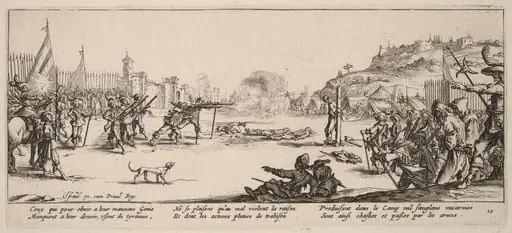 The Firing Squad
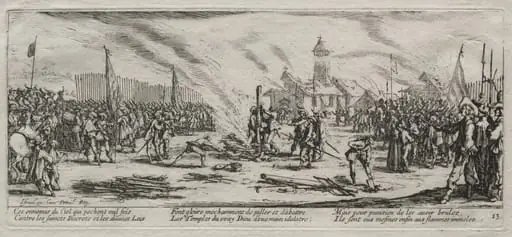 The Large Miseries of War: Burning at the Stake
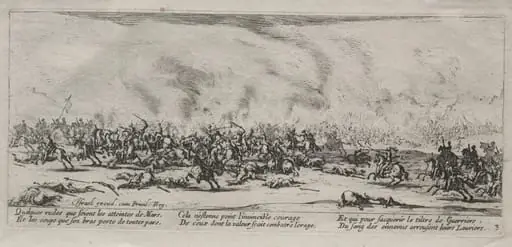 The Large Miseries of War: The Battle
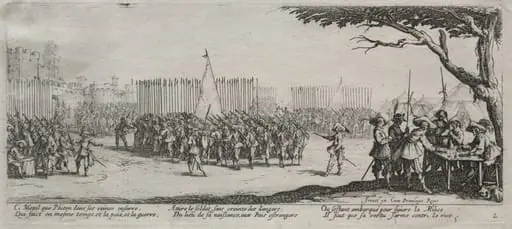 The Large Miseries of War: Enrollment of the Troops
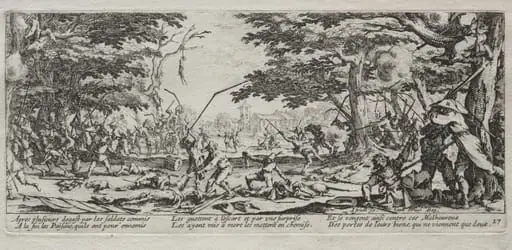 The Large Miseries of War: Peasant's Revenge
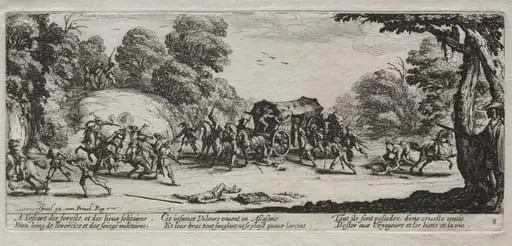 The Large Miseries of War: Highway Robbery
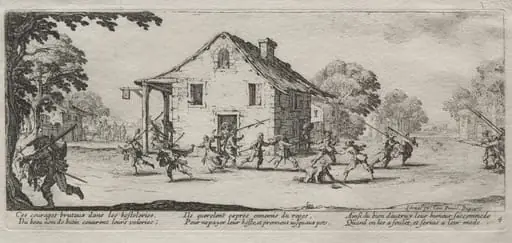 The Large Miseries of War: Marauding
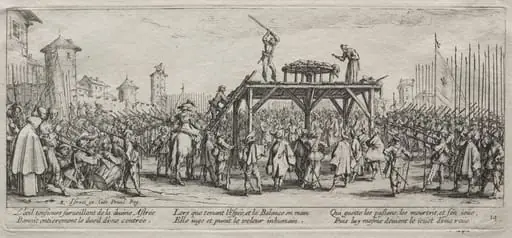 The Large Miseries of War: Execution on the Wheel
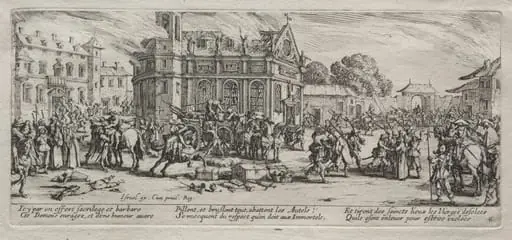 The Large Miseries of War: Devastation of a Monastery