Artwork
The Large Miseries of War: Peasant's Revenge
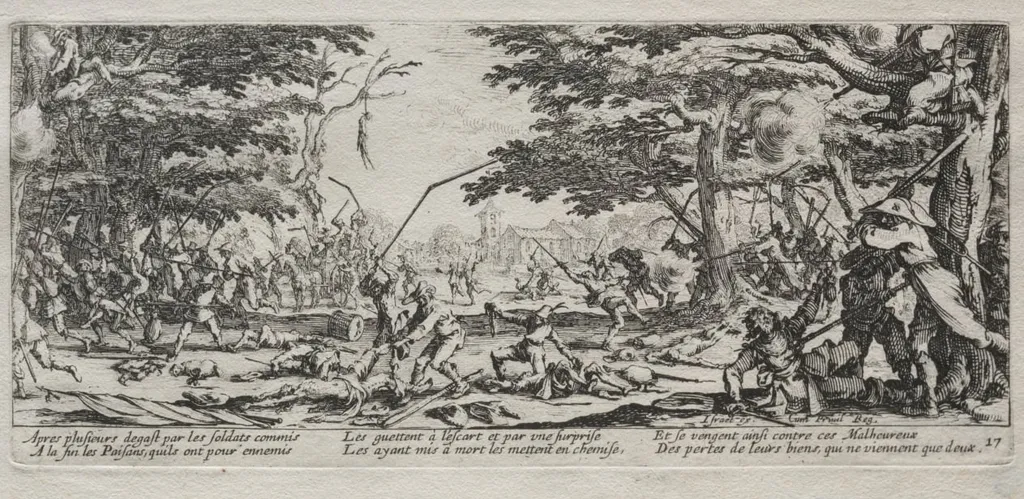
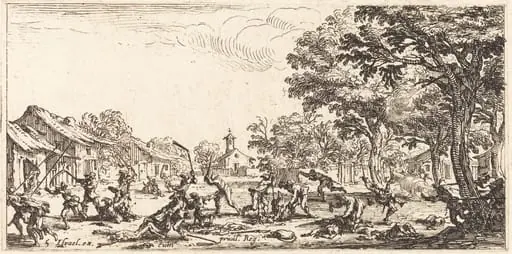
The Large Miseries of War: Peasant's Revenge is a print by the Baroque artist Jacques Callot. It dates from 1633 and is held in the collection of the Cleveland Museum of Art.
About this work
Overview
Created in 1633, The Large Miseries of War: Peasant's Revenge is an etching by Jacques Callot, not a painting as sometimes misstated.
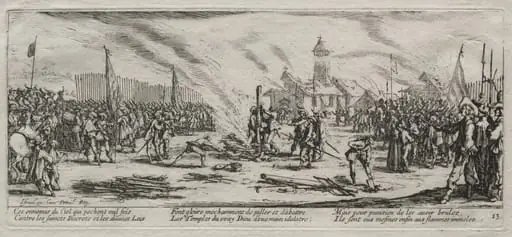
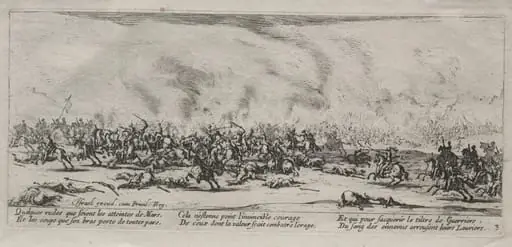
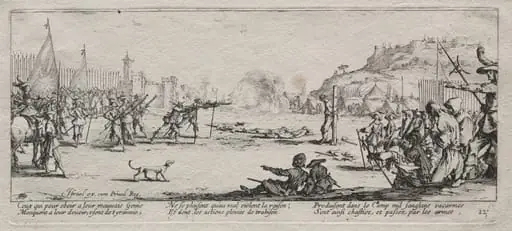
Created in 1633, The Large Miseries of War: Peasant's Revenge is an etching by Jacques Callot, not a painting as sometimes misstated. It belongs to a series of twenty-one prints depicting the brutality of the Thirty Years' War. The work is held in the collection of The Cleveland Museum of Art and exemplifies Callot’s mastery of fine-line etching to convey intense human suffering amid wartime chaos.
Subject & Meaning
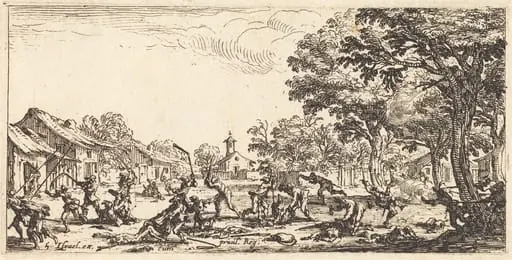
The scene portrays peasants rising in violent retribution against soldiers who have plundered their village. Figures are locked in chaotic struggle, homes burn in the background, and the composition reflects the collapse of order. Callot does not glorify violence but presents it as a grim consequence of war’s disruption, emphasizing the vulnerability of civilians caught in military conflict.
Technique & Style
Callot employed fine etching needles to achieve extraordinary detail, rendering individual faces, weapons, and architectural fragments with precision. His use of dense cross-hatching and controlled line weight creates depth and emotional weight. The composition is tightly packed, forcing the viewer to confront the disorder and suffering without visual respite.
History & Provenance
The print was produced as part of a larger series commissioned to document the horrors of the Thirty Years' War, a conflict that devastated Central Europe. Callot’s work circulated widely among collectors and military observers. The Cleveland Museum of Art acquired it in the 20th century, preserving it as a key example of early modern printmaking and war documentation.
Context
Made during the height of the Thirty Years' War, the print reflects widespread civilian trauma across the Holy Roman Empire. Callot, who witnessed troop movements in Lorraine, drew from direct observation rather than imagination. His series was among the first to depict war’s impact on non-combatants, challenging romanticized narratives of military heroism.
Legacy
Callot’s series influenced later artists, including Goya, who adopted similar themes of civilian suffering. The technical precision of his etchings set a standard for narrative printmaking. Today, the work is studied for its unflinching realism and its role in shaping early modern visual responses to war and its human cost.
Artist & collection
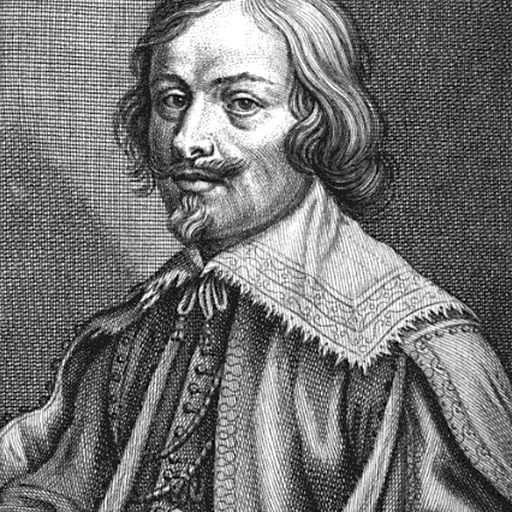
Artist
Jacques Callot was a baroque printmaker and draftsman from the Duchy of Lorraine.

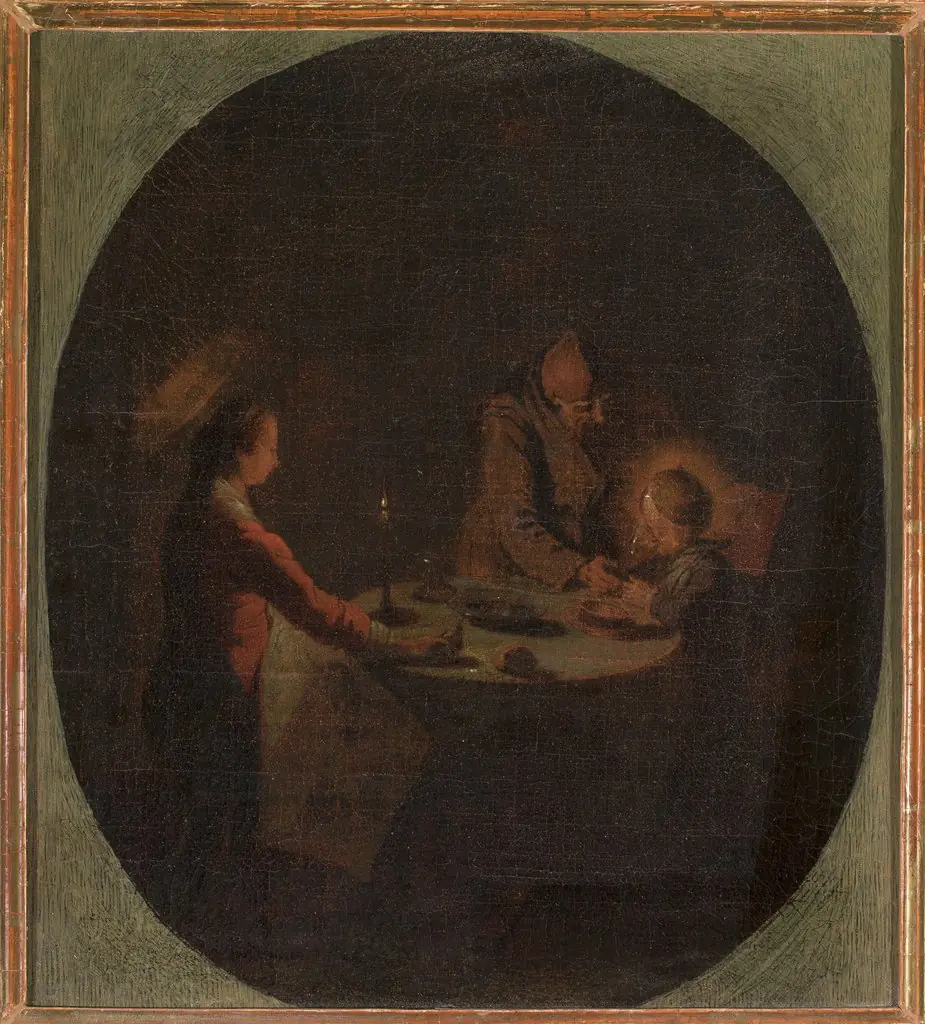 Holy Family at supper
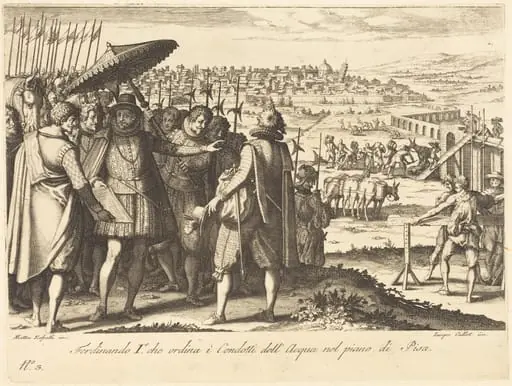 Restoration of the Aqueduct at Pisa
 Restoration of the Aqueduct at Pisa
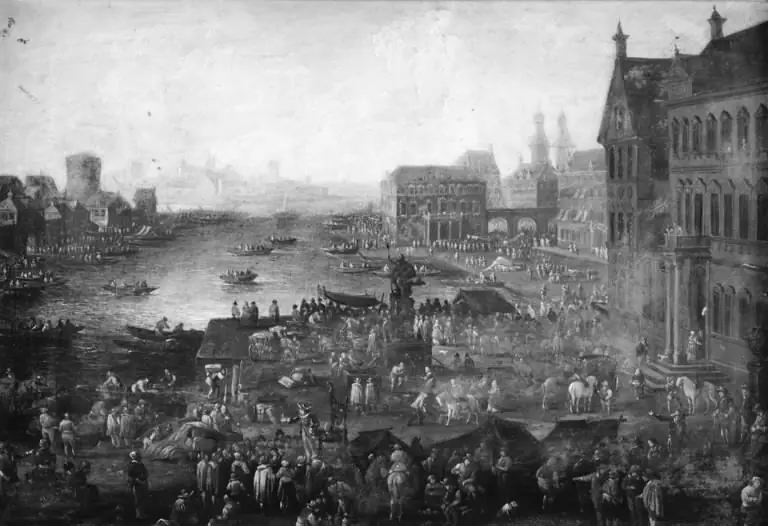 Square in Paris with Many Figures
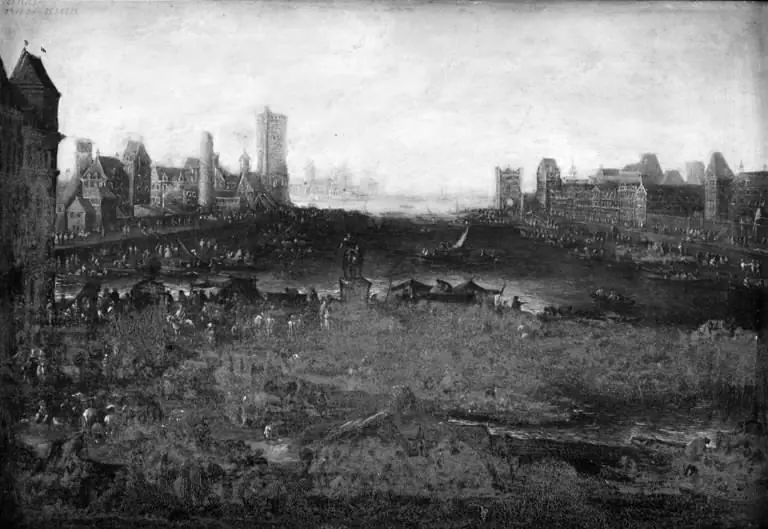 Square in Paris with Many Figures
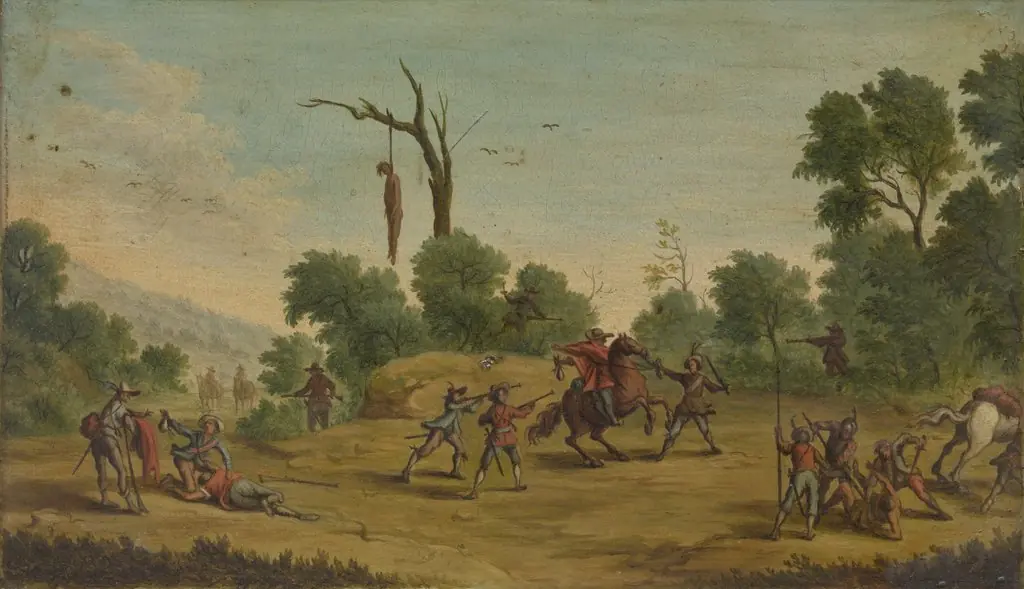 Horsemen Attacked by Robbers
 HOW WILL A COVERED PART BE CORRECTED?HOW WIKA A COVERED HEART DEED CORRECTED?
![Christ Walking on the Water [second plate], by Jacques Callot](https://artifactworldgallery.com/img/jacques-callot--christ-walking-on-the-water-second-plate--2069f3bfe4cb2126-w320.webp) Christ Walking on the Water [second plate]
Christ Walking on the Water [second plate]