Artwork
The Martyrdom of the Apostles: St. James the Less
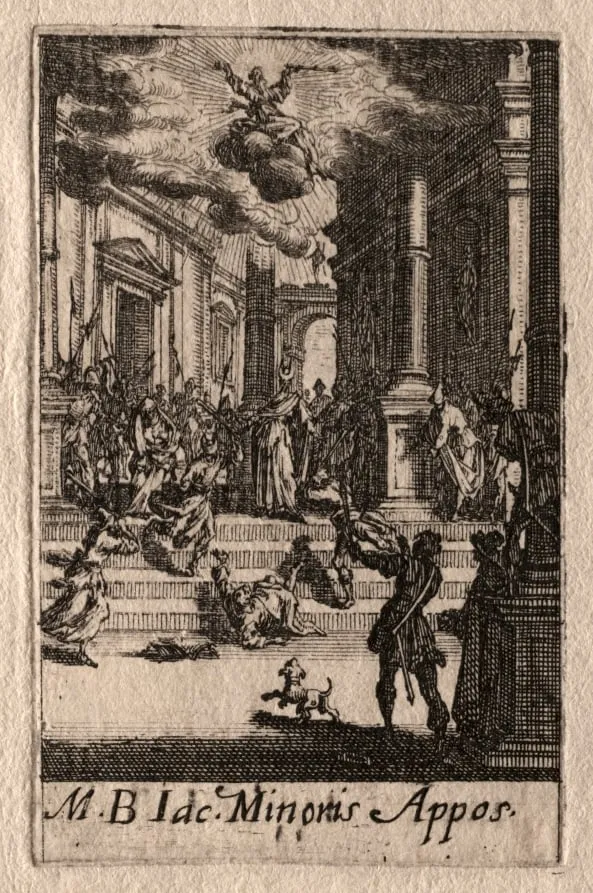
The Martyrdom of the Apostles: St. James the Less is a print by the Baroque artist Jacques Callot. It dates from 1632 and is held in the collection of the Cleveland Museum of Art.
About this work
Overview
Jacques Callot’s etching, The Martyrdom of the Apostles: St. James the Less, dates from around 1632 and is part of the collection of the Cleveland Museum of Art. The print presents a violent episode involving the apostle, arranged on a set of steps where figures are kneeling, fallen, or poised in alarm, while a spectral presence looms above.
Subject & Meaning
The composition centers on the martyrdom of St. James the Less, depicted amid a crowd of onlookers whose gestures convey fear and helplessness. A ghostly, illuminated figure descends from a storm‑filled sky, suggesting divine intervention or the saint’s soul ascending, while a soldier in armor and a dog on the ground add narrative details that heighten the sense of impending doom.
Technique & Style
Callot employs a stark chiaroscuro scheme, contrasting deep shadows with bright highlights to intensify the drama. The etching’s fine line work renders the textures of robes, armor, and the turbulent sky, while the use of strong tonal contrasts guides the viewer’s eye toward the central robed figure and the luminous apparition above.
History & Provenance
Created circa 1632, the print has remained in the public domain of European printmaking before entering the Cleveland Museum of Art’s holdings. The museum acquired the work as part of its broader collection of 17th‑century prints, preserving Callot’s contribution to the development of narrative etching in the Baroque period.
Artist & collection
Artist
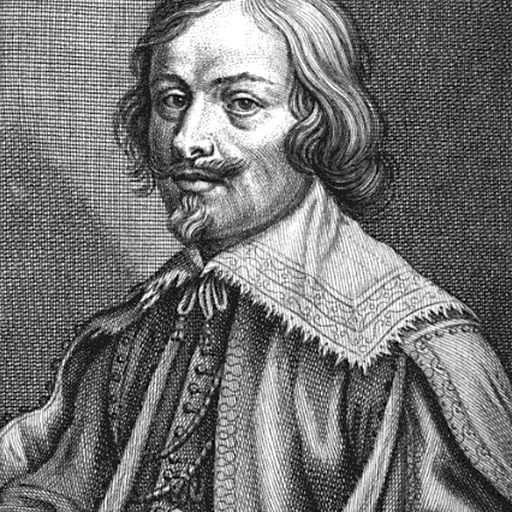
Jacques Callot was a baroque printmaker and draftsman from the Duchy of Lorraine.

 Holy Family at supper
 Restoration of the Aqueduct at Pisa
 Restoration of the Aqueduct at Pisa
 Square in Paris with Many Figures
 Square in Paris with Many Figures
 Horsemen Attacked by Robbers
 HOW WILL A COVERED PART BE CORRECTED?HOW WIKA A COVERED HEART DEED CORRECTED?
![Christ Walking on the Water [second plate], by Jacques Callot](https://artifactworldgallery.com/img/jacques-callot--christ-walking-on-the-water-second-plate--2069f3bfe4cb2126-w320.webp) Christ Walking on the Water [second plate]
Christ Walking on the Water [second plate]
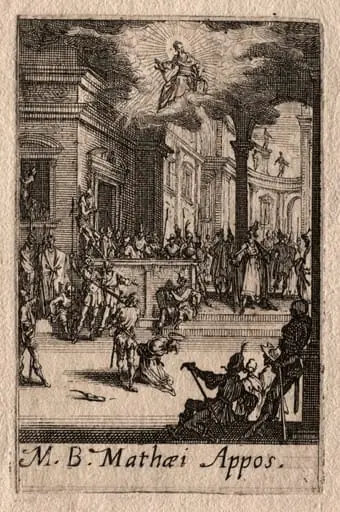 The Martyrdom of the Apostles: St. Matthew
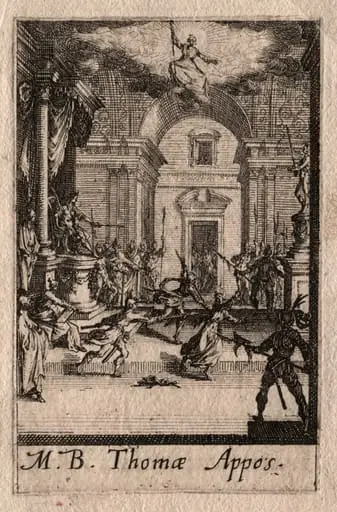 The Martyrdom of the Apostles: St. Thomas
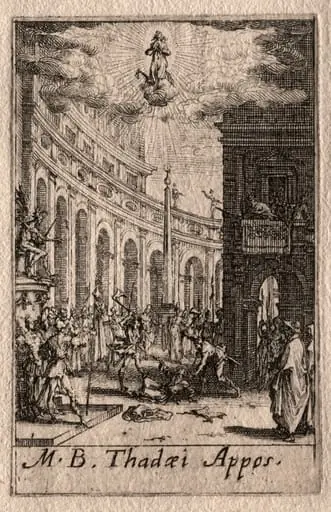 The Martyrdom of the Apostles: St. Thaddeus
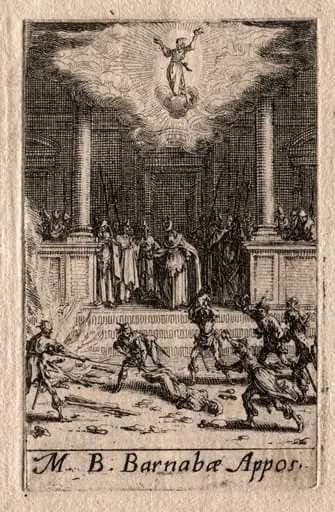 The Martyrdom of the Apostles: St. Barnabas
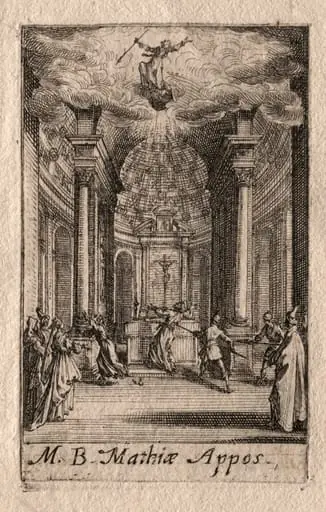 The Martyrdom of the Apostles: St. Matthias
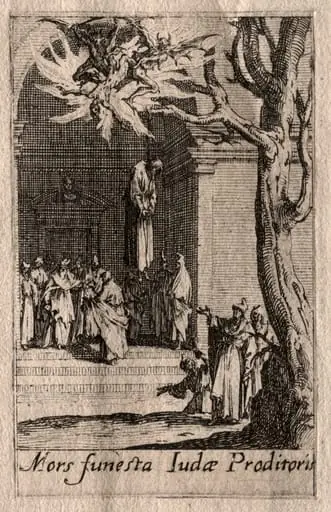 The Martyrdom of the Apostles: The Death of Judas
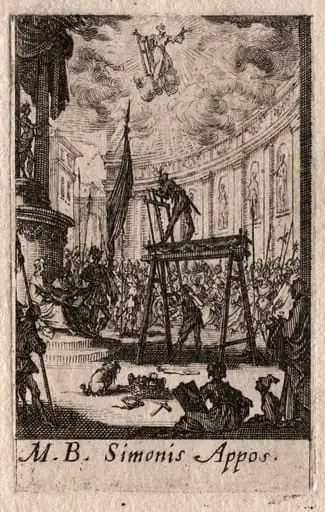 The Martyrdom of the Apostles: St. Simon
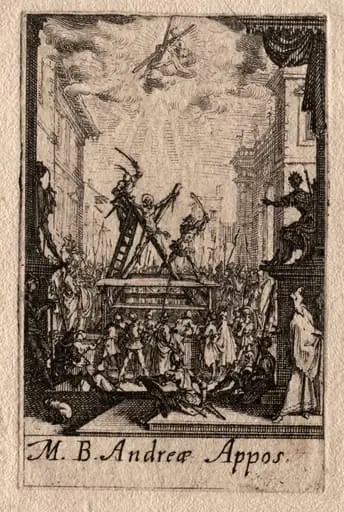 The Martyrdom of the Apostles: St. Andrew
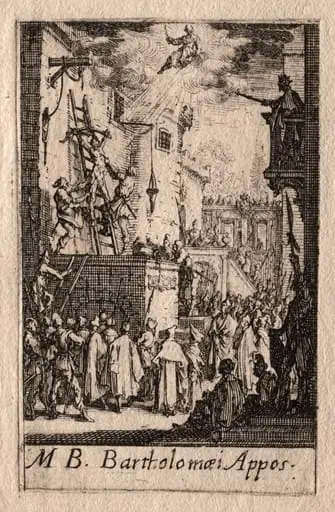 The Martyrdom of the Apostles: St. Bartholomew