Artwork
The Mysteries of the Passion: The Entombment
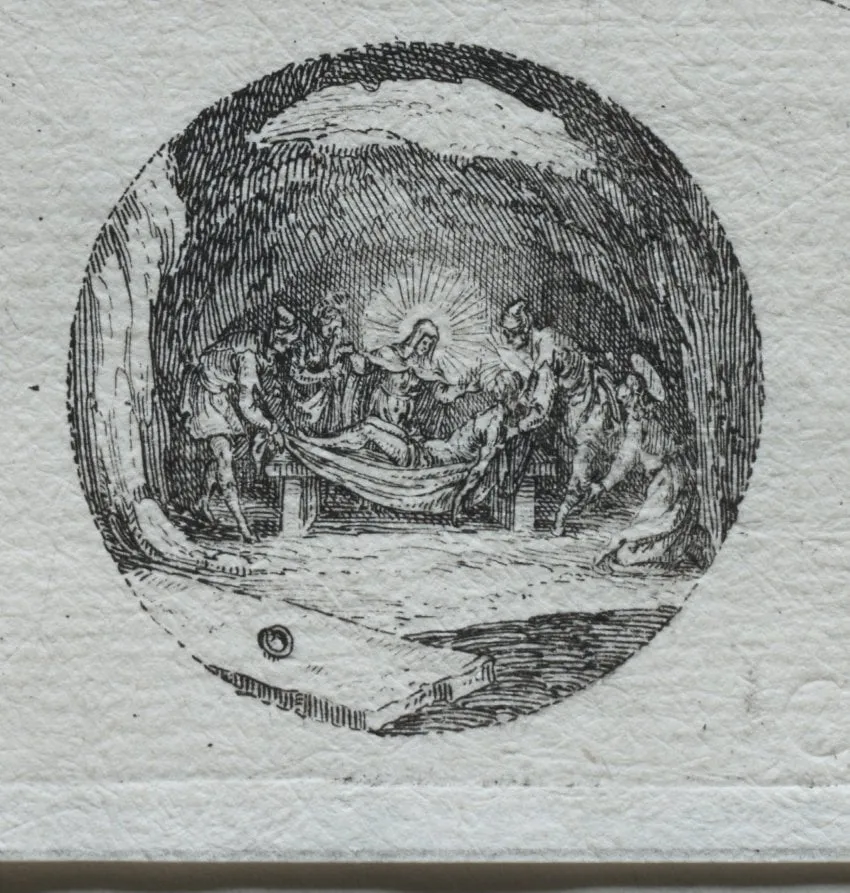
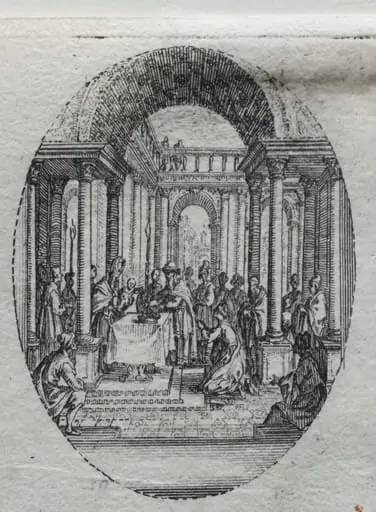
The Mysteries of the Passion: The Entombment is a print by the Baroque artist Jacques Callot. It dates from 1631 and is held in the collection of the Cleveland Museum of Art.
About this work
Overview
Created in 1631 by Jacques Callot, this print is part of a series illustrating scenes from the Passion of Christ. Rendered in etching, it depicts the moment Christ’s body is placed in a boat for burial, a rare variant of the traditional Entombment. The work is held in the collection of The Cleveland Museum of Art and exemplifies Callot’s mastery of fine-line technique and atmospheric depth.
Subject & Meaning
The scene portrays a quiet, nocturnal burial, diverging from conventional depictions by placing the body in a boat rather than a tomb. This setting evokes both the literal journey to the sepulcher and the symbolic passage from life to death. The figures, rendered with restrained emotion, suggest solemn ritual rather than overt grief, emphasizing contemplation over spectacle.
Technique & Style
Callot employed fine etching lines to achieve intricate detail and dramatic chiaroscuro. The lantern’s glow carves out a narrow zone of visibility against deep shadows, isolating the body and key figures while leaving the rest of the scene in near darkness. This controlled contrast heightens the sense of intimacy and mystery, characteristic of early Baroque printmaking.
History & Provenance
The print was produced during Callot’s mature period, following his return to Nancy after years in Italy. It was likely made as part of a devotional series intended for private contemplation. The Cleveland Museum of Art acquired the work in the 20th century, where it remains one of the most refined examples of his Passion cycle.
Context
In early 17th-century France, religious imagery remained central to artistic production despite growing secular trends. Callot’s series responded to Counter-Reformation demands for emotionally resonant sacred scenes, yet his focus on quietude and spatial ambiguity set his work apart from the more theatrical styles of his Italian contemporaries.
Legacy
Callot’s Entombment influenced later printmakers through its psychological restraint and technical precision. Its emphasis on atmosphere over narrative drama helped shift devotional imagery toward introspective modes. The print remains a touchstone for studies of Baroque printmaking and the intersection of religious symbolism with intimate visual storytelling.
Artist & collection

Artist
Jacques Callot was a baroque printmaker and draftsman from the Duchy of Lorraine.

 Holy Family at supper
 Restoration of the Aqueduct at Pisa
 Restoration of the Aqueduct at Pisa
 Square in Paris with Many Figures
 Square in Paris with Many Figures
 Horsemen Attacked by Robbers
 HOW WILL A COVERED PART BE CORRECTED?HOW WIKA A COVERED HEART DEED CORRECTED?
![Christ Walking on the Water [second plate], by Jacques Callot](https://artifactworldgallery.com/img/jacques-callot--christ-walking-on-the-water-second-plate--2069f3bfe4cb2126-w320.webp) Christ Walking on the Water [second plate]
Christ Walking on the Water [second plate]
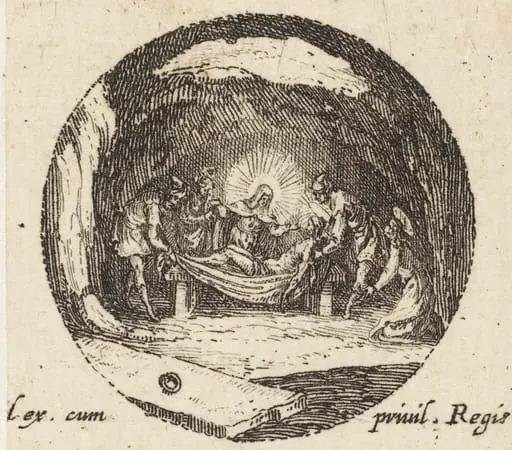 The Entombment
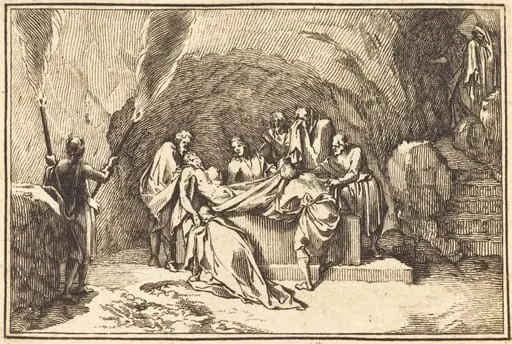 The Entombment
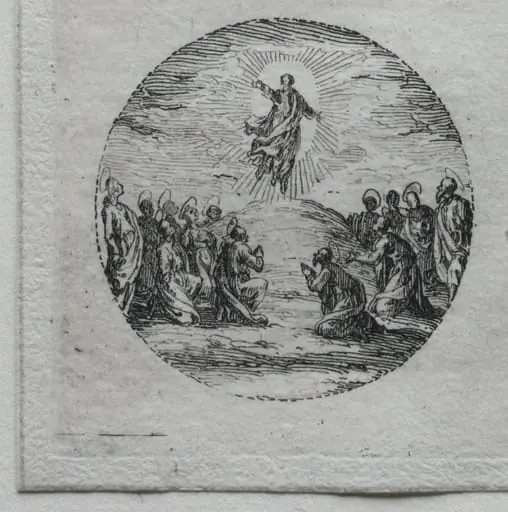 The Mysteries of the Passion: The Resurrection
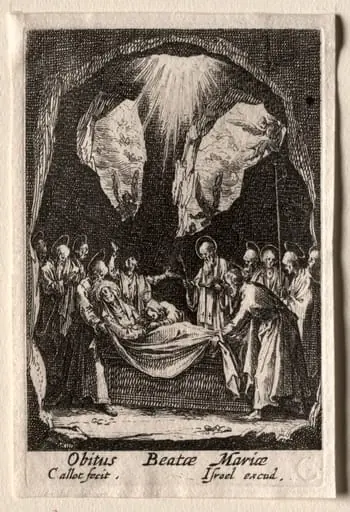 The Life of the Virgin: The Entombment of the Virgin
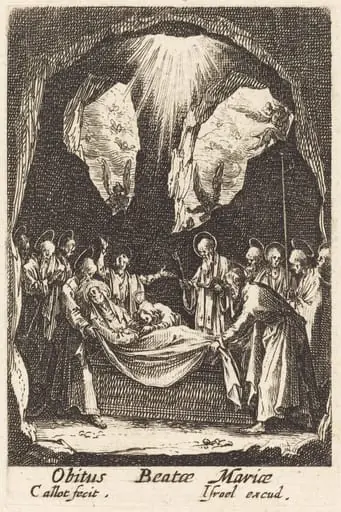 The Burial of the Virgin
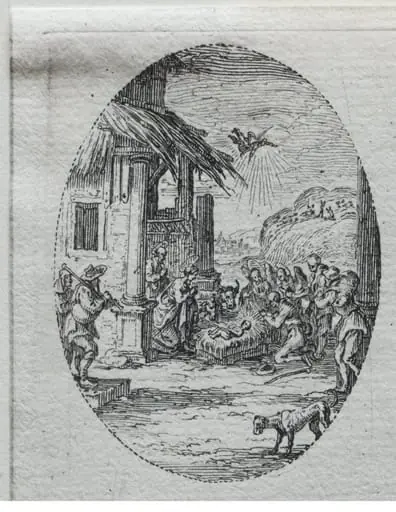 The Mysteries of the Passion: The Adoration of the Shepherds
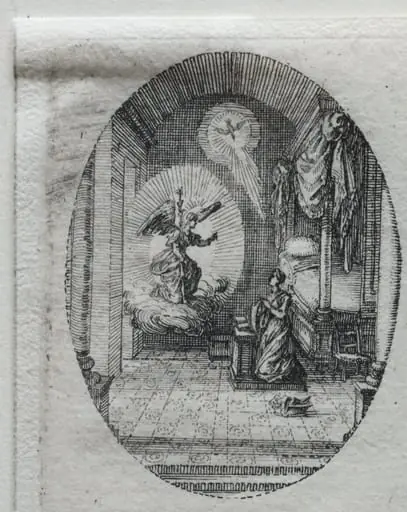 The Mysteries of the Passion: The Annunciation
 The Mysteries of the Passion: The Presentation in the Temple