Artwork
The Entombment
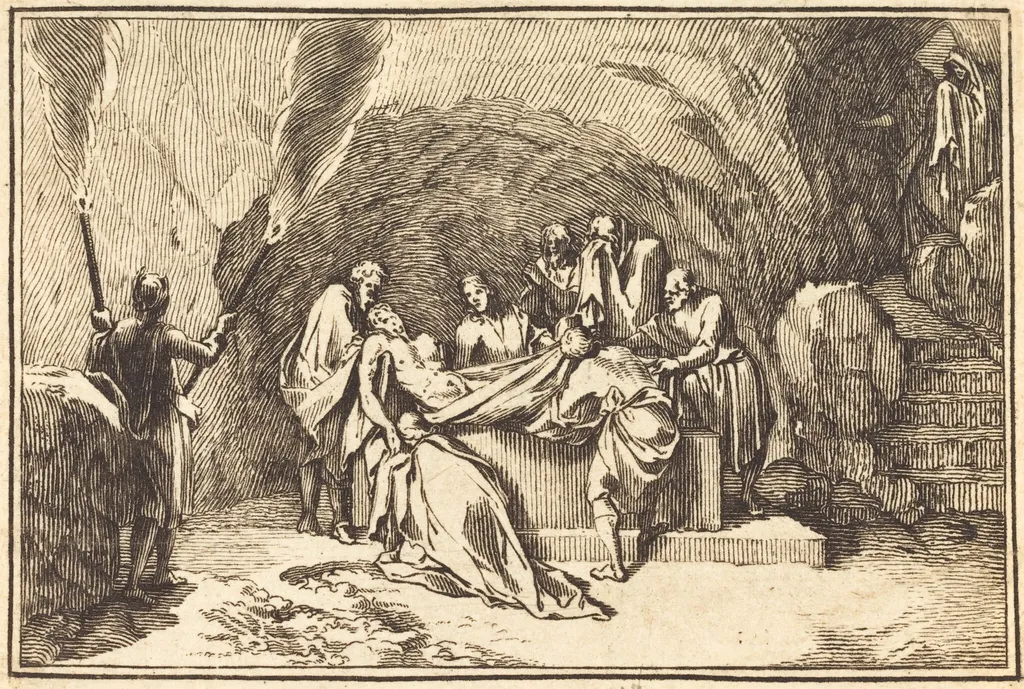
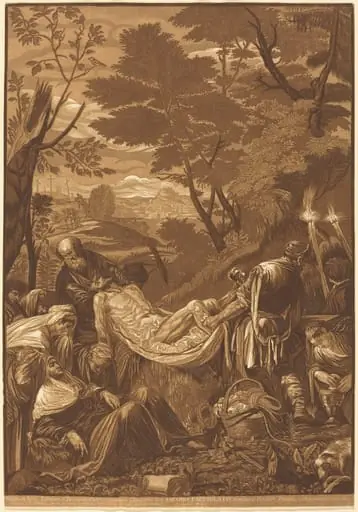
The Entombment is an ink print by the Baroque artist French 17th Century. It dates from 1650 and is held in the collection of the National Gallery of Art.
About this work
Overview
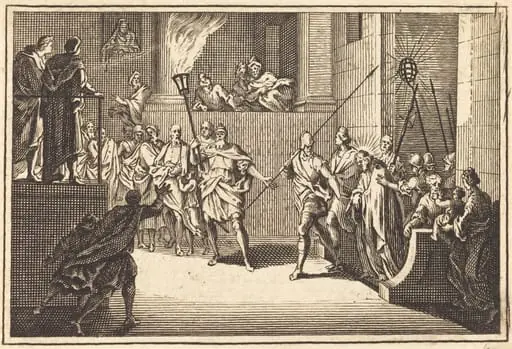
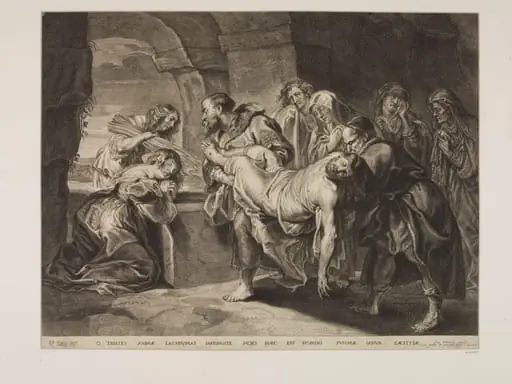
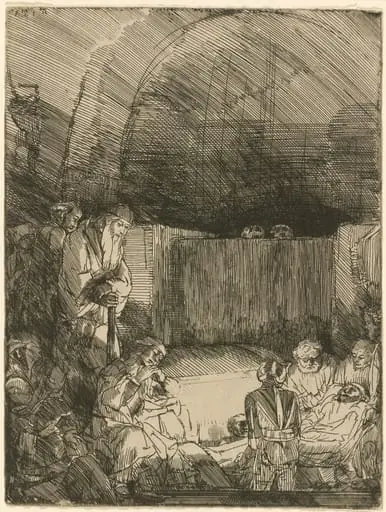
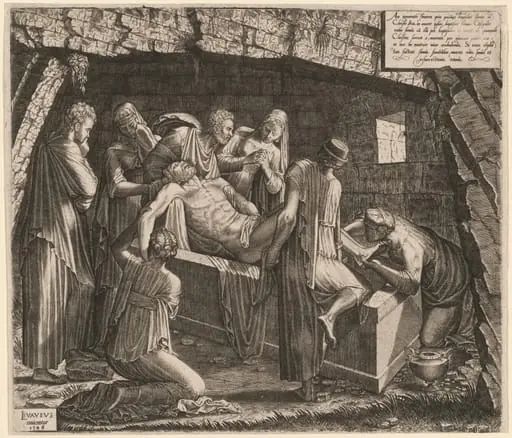
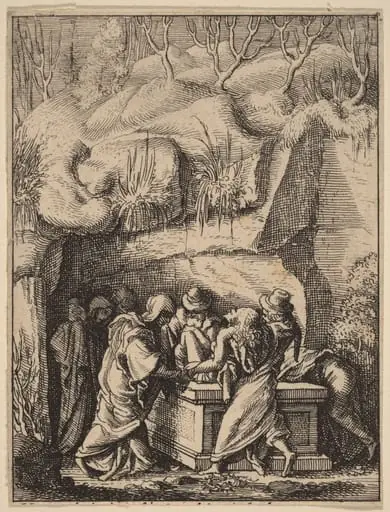
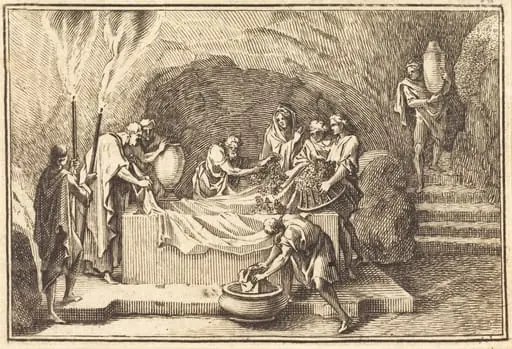
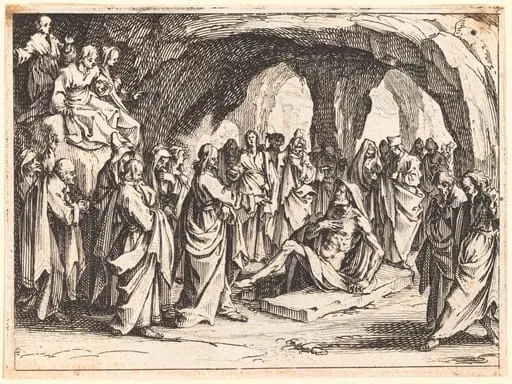
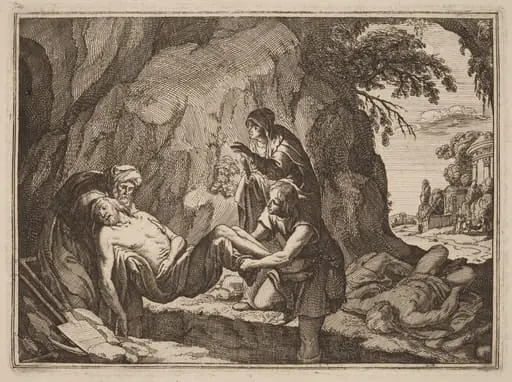
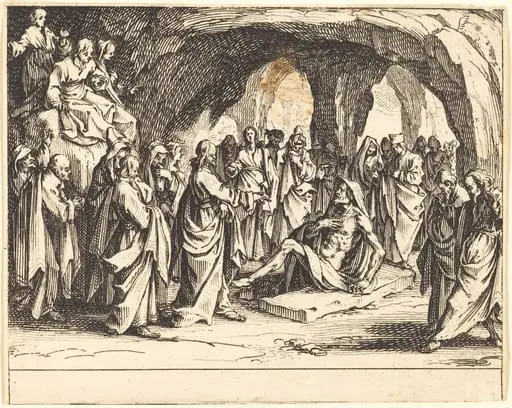
The work is an engraved print titled *The Entombment*. It depicts a solemn assembly gathered around a figure laid upon a cloth, with some participants standing, others kneeling, and a single individual holding a candle. The composition is rendered in stark contrasts of light and dark, creating a dramatic atmosphere that emphasizes the solemnity of the scene.
Subject & Meaning
The central figure appears to be a deceased individual, suggesting a funerary or burial rite. The surrounding figures, dressed in flowing robes, convey a range of gestures—from reverent kneeling to vigilant standing—implying communal mourning. The candle’s flame adds a symbolic element of hope or spiritual presence amid the darkness of the setting.
Technique & Style
The engraving relies on dense cross‑hatching to build shadow and depth, layering fine parallel lines that intersect to produce richer tones. Swirling line work and textured backgrounds enhance the sense of movement and emotional intensity, while the contrast between illuminated areas and deep black reinforces the dramatic mood of the composition.
History & Provenance
The print’s creation date and artist remain unspecified, but its technical execution aligns with the European printmaking traditions of the 17th‑18th centuries, when cross‑hatching and chiaroscuro were commonly employed to convey narrative drama in engraved works. Its provenance is not documented in the available information.
Artist & collection

Artist
Seventeenth-century French printmakers turned ink into story. Their tools were burin and acid, paper their stage. Look at the Beggar Woman with Rosary (1622), etched on laid paper, her hands folded around faith, or The…