Artwork
The Stopping Place: The Feast of the Bohemians
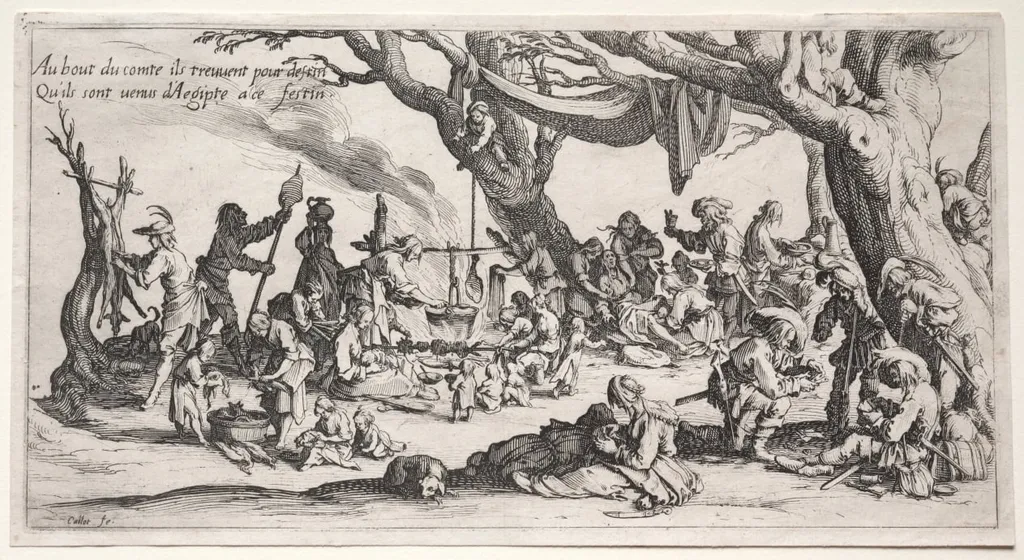
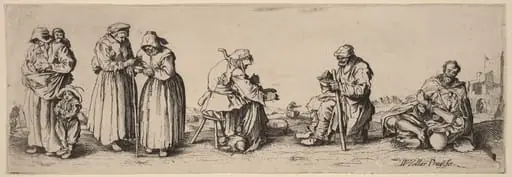
The Stopping Place: The Feast of the Bohemians is a print by the Baroque artist Jacques Callot. It dates from 1623 and is held in the collection of the Cleveland Museum of Art.
About this work
Overview
Jacques Callot’s print series, created in the 1620s, portrays a procession of itinerant figures known as Bohemians. The work unfolds across four plates that align like a continuous frieze, moving from a ragged caravan under a tree to scenes of pillage and a communal feast. The composition captures the stark reality of wandering performers and outcasts who populated early‑modern Europe.
Subject & Meaning
The images follow a group of emaciated travelers—men, women, and children—in tattered, exotic dress. They are shown resting, playing music, and later raiding a farm before sharing a meal. Accompanying captions comment on their role as fortune‑telling beggars, warning viewers of their deceptive promises and linking their journey to an imagined origin in Egypt.
Technique & Style
Callot employs his characteristic fine, precise line work to render the worn fabrics and weary expressions of the figures. The etching’s delicate hatching creates texture and depth, while the continuous lines across the plates reinforce the sense of a single, unfolding narrative. The style reflects his broader interest in documenting everyday life with meticulous observation.
History & Provenance
Produced during Callot’s productive period in the ducal courts of Tuscany and Lorraine, the series was likely inspired by his encounters with itinerant bands on his return to France. The prints have survived in several collections and are presently on display at the Cleveland Museum of Art, where they form part of the museum’s early‑modern European holdings.
Context
In the early seventeenth century, itinerant performers and marginalized groups were a common sight across Europe, often associated with superstition and social instability. Callot’s work records this phenomenon alongside his other subjects—festivals, theatrical scenes, religious narratives, and depictions of war—offering a comprehensive visual record of contemporary life.
Artist & collection
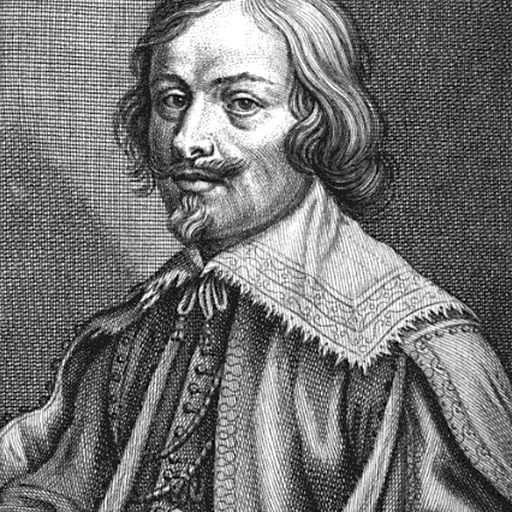
Artist
Jacques Callot was a baroque printmaker and draftsman from the Duchy of Lorraine.

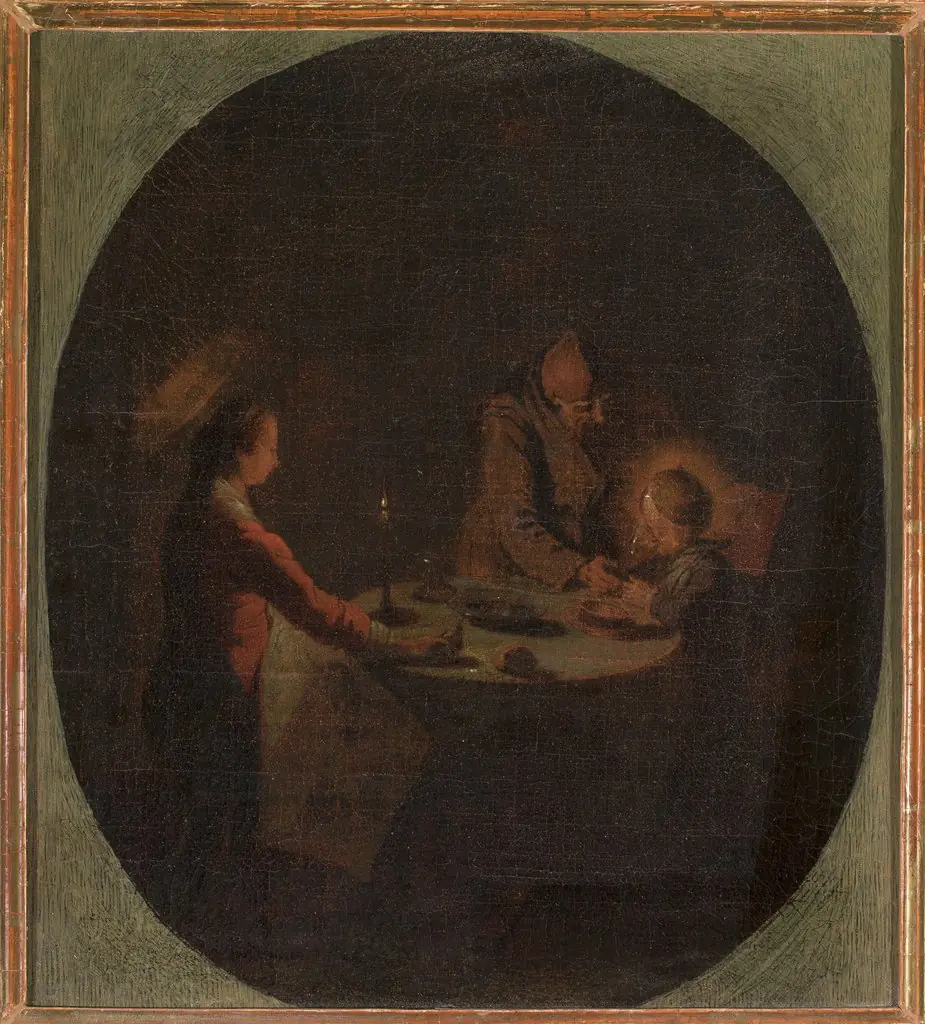 Holy Family at supper
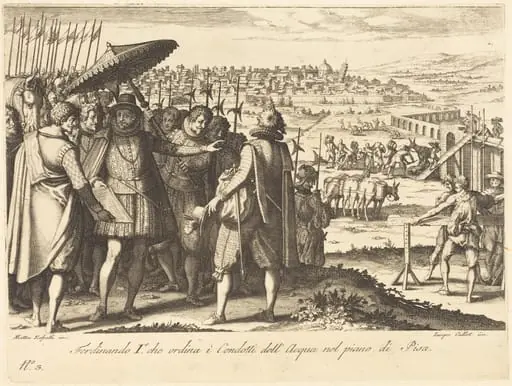 Restoration of the Aqueduct at Pisa
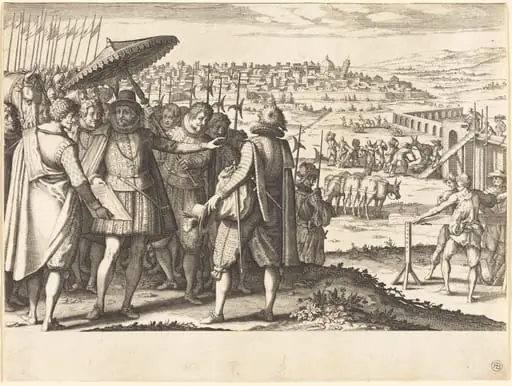 Restoration of the Aqueduct at Pisa
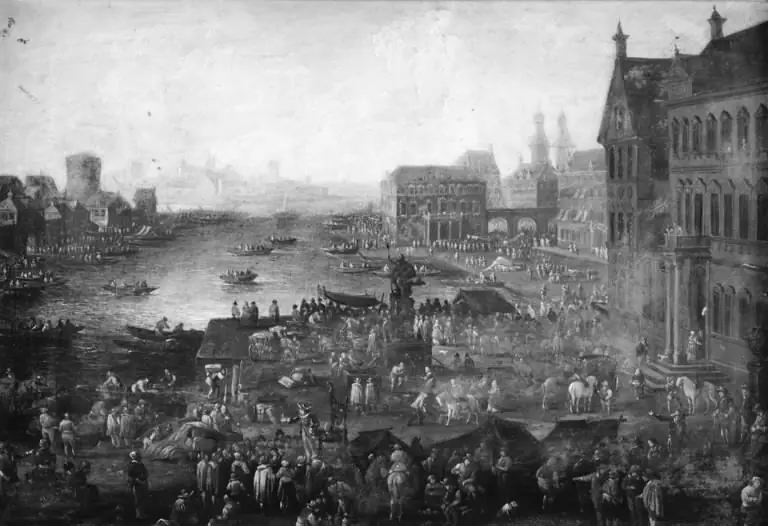 Square in Paris with Many Figures
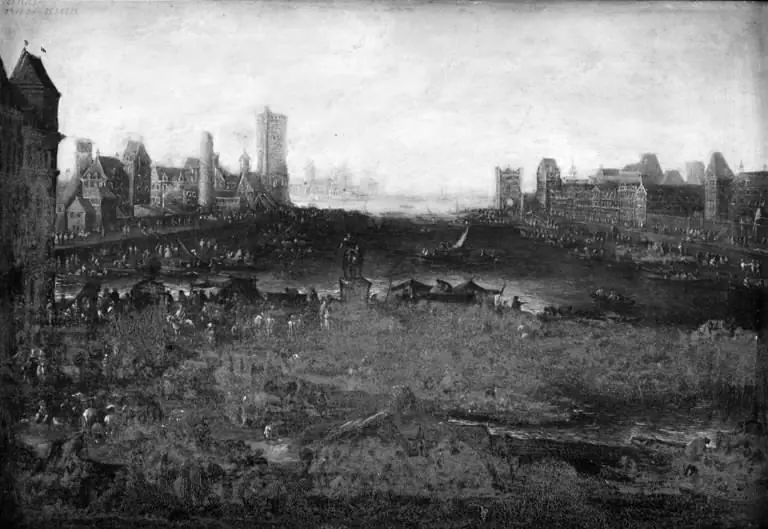 Square in Paris with Many Figures
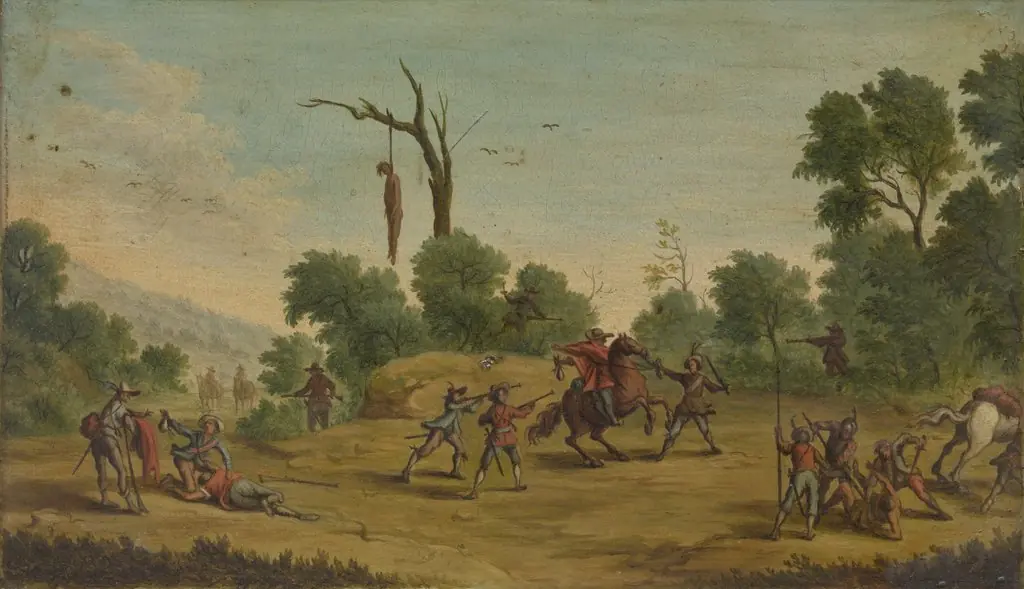 Horsemen Attacked by Robbers
 HOW WILL A COVERED PART BE CORRECTED?HOW WIKA A COVERED HEART DEED CORRECTED?
![Christ Walking on the Water [second plate], by Jacques Callot](https://artifactworldgallery.com/img/jacques-callot--christ-walking-on-the-water-second-plate--2069f3bfe4cb2126-w320.webp) Christ Walking on the Water [second plate]
Christ Walking on the Water [second plate]