Artwork
Rustic Wedding Dance
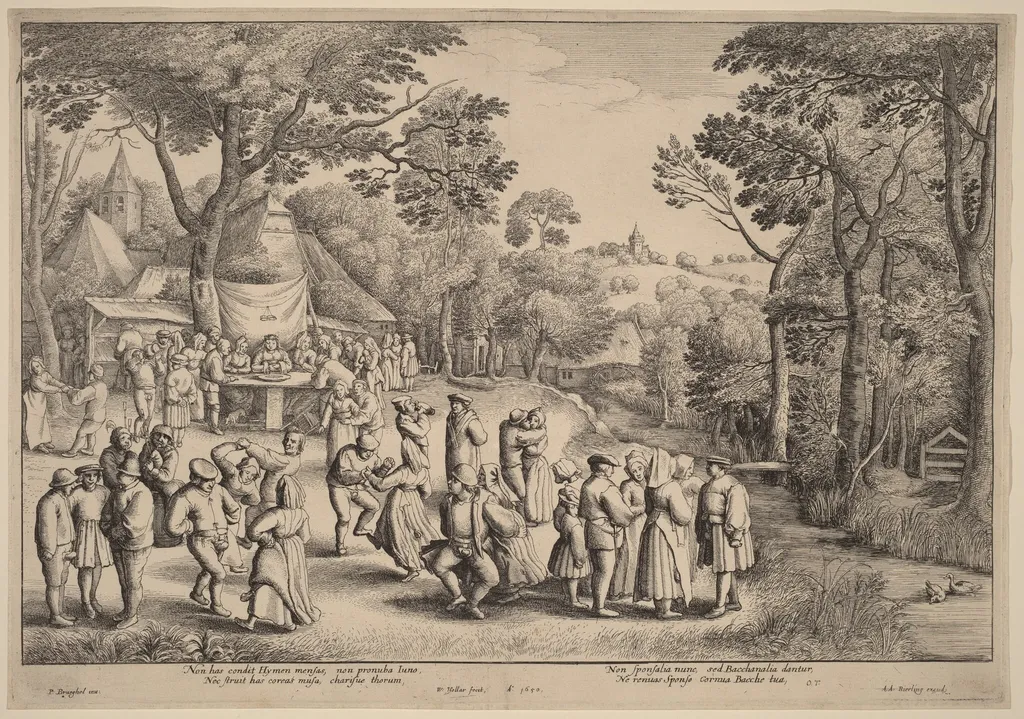
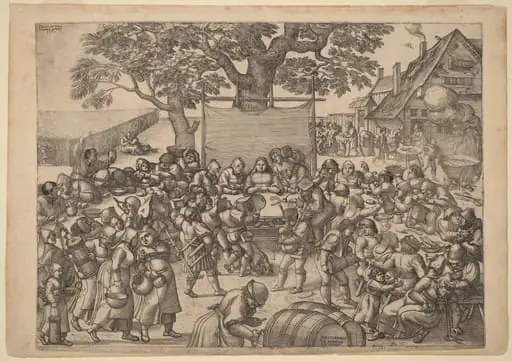
Rustic Wedding Dance is an ink print by the Baroque artist Wenceslaus Hollar. It dates from 1650 and is held in the collection of the Rosenwald Collection.
About this work
Overview
Created in 1650 by Wenceslaus Hollar, a Czech artist active in England, *Rustic Wedding Dance* is an etching that captures a rural celebration. Hollar, known for precise topographical work, turned here to genre scenes, using the etching medium to render a moment of communal festivity. The print reflects his interest in everyday life, rendered with careful observation rather than idealization.
Subject & Meaning
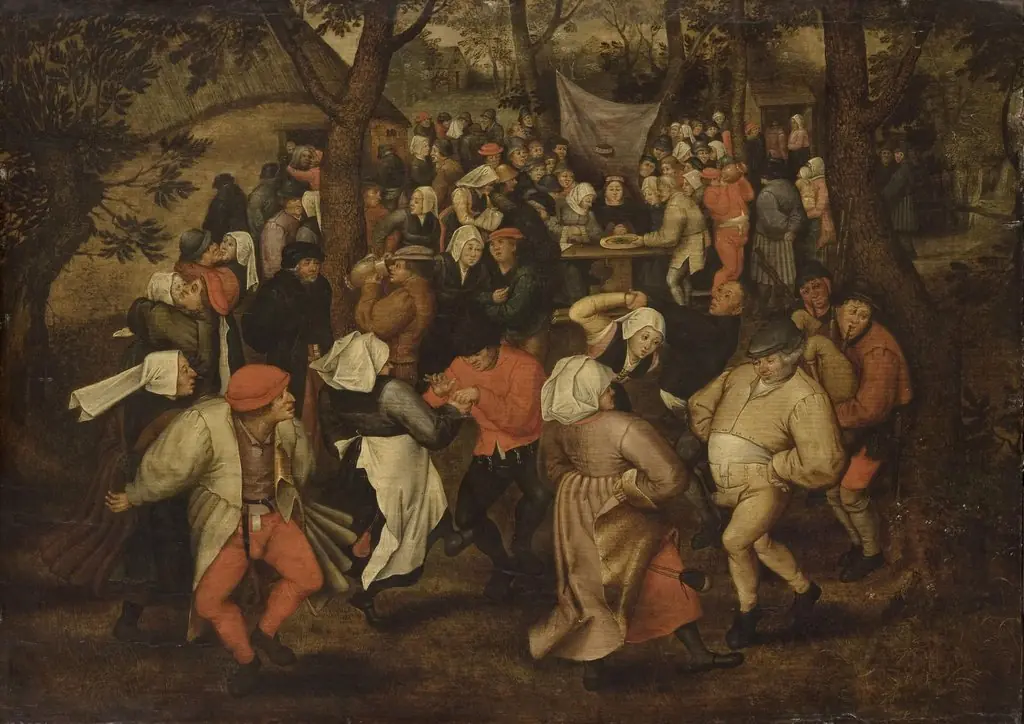
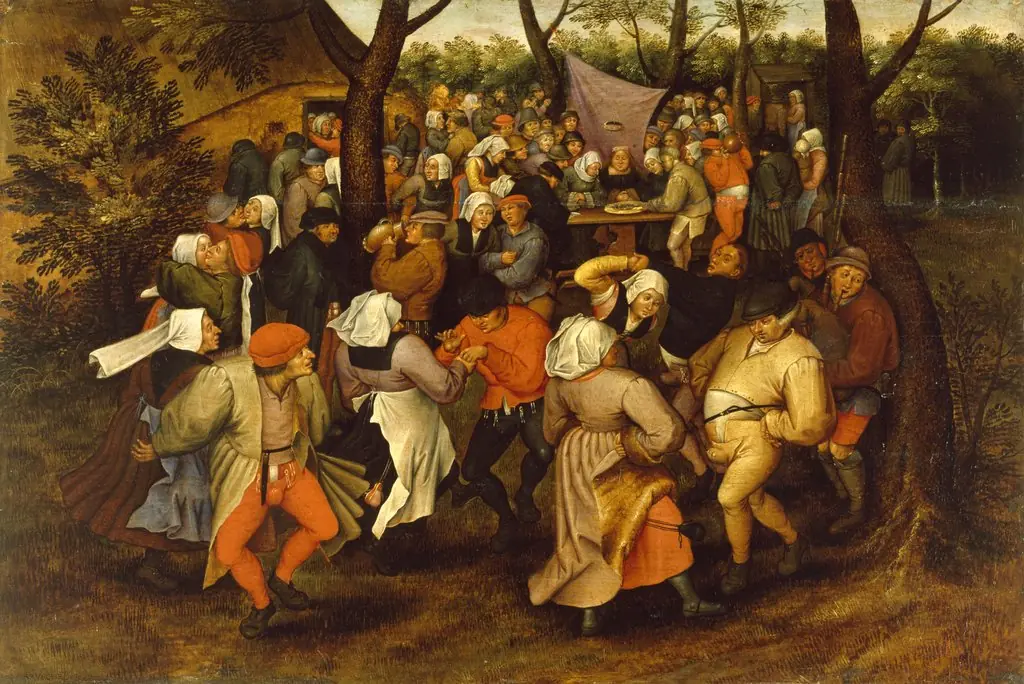
The scene portrays a village wedding dance, with figures arranged in a circular motion, their movements suggesting rhythm and shared joy.
The scene portrays a village wedding dance, with figures arranged in a circular motion, their movements suggesting rhythm and shared joy. Onlookers stand nearby, some conversing, others observing, reinforcing the communal nature of the event. Traditional garments and unrefined settings emphasize the working-class context, presenting celebration as an organic part of rural life rather than a staged spectacle.
Technique & Style
Hollar employed fine, controlled lines typical of etching to define figures, clothing, and foliage. The composition balances movement in the foreground with quieter background elements—trees and distant buildings—creating depth without clutter. His attention to texture in fabric and ground, along with subtle tonal gradations, reveals mastery of the medium and a commitment to naturalistic detail.
History & Provenance
Hollar produced this work during his decades-long residence in England, where he documented both urban and rural life for patrons and publishers. *Rustic Wedding Dance* was likely part of a series of genre prints circulated among collectors interested in European folk customs. Its survival in multiple institutional collections suggests early recognition of its documentary value.
Context
In mid-17th-century Europe, interest in peasant life grew among artists and intellectuals, often tied to broader cultural curiosity about regional traditions. Hollar’s print aligns with this trend, offering a quiet alternative to grand historical or religious themes. It reflects a shift toward valuing ordinary moments, even as the Baroque era favored drama elsewhere in art.
Legacy
Though not widely exhibited today, the etching remains a reference for scholars studying vernacular culture in early modern printmaking. Hollar’s unembellished depiction of rural festivity influenced later genre artists who sought authenticity over ornament. The work endures as a quiet record of social ritual, valued for its observational clarity rather than stylistic flourish.
Artist & collection
Artist
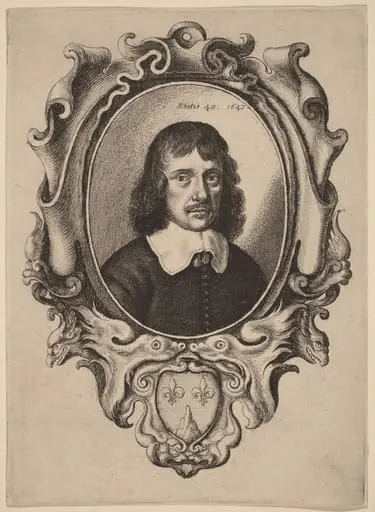
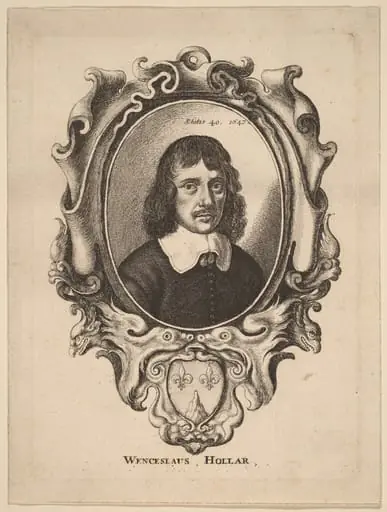
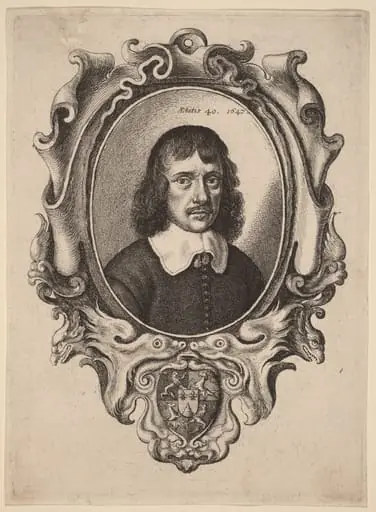
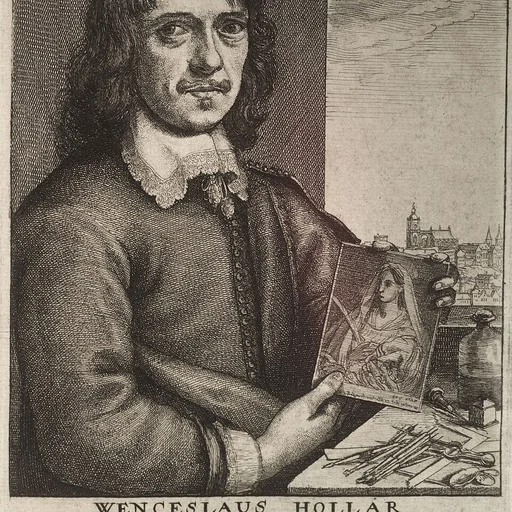
Wenceslaus Hollar (Czech: Václav Hollar (Czech pronunciation: ), German: Wenzel Hollar; 23 July 1607 – 25 March 1677) was a Czech engraver, etcher and painter.