Artwork
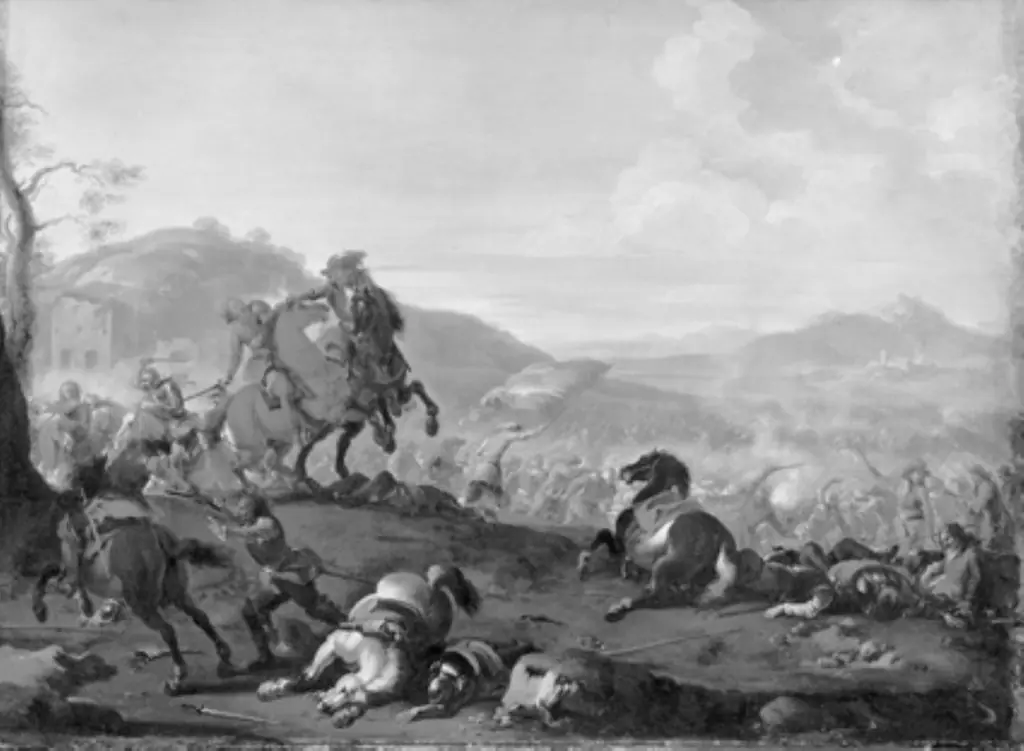
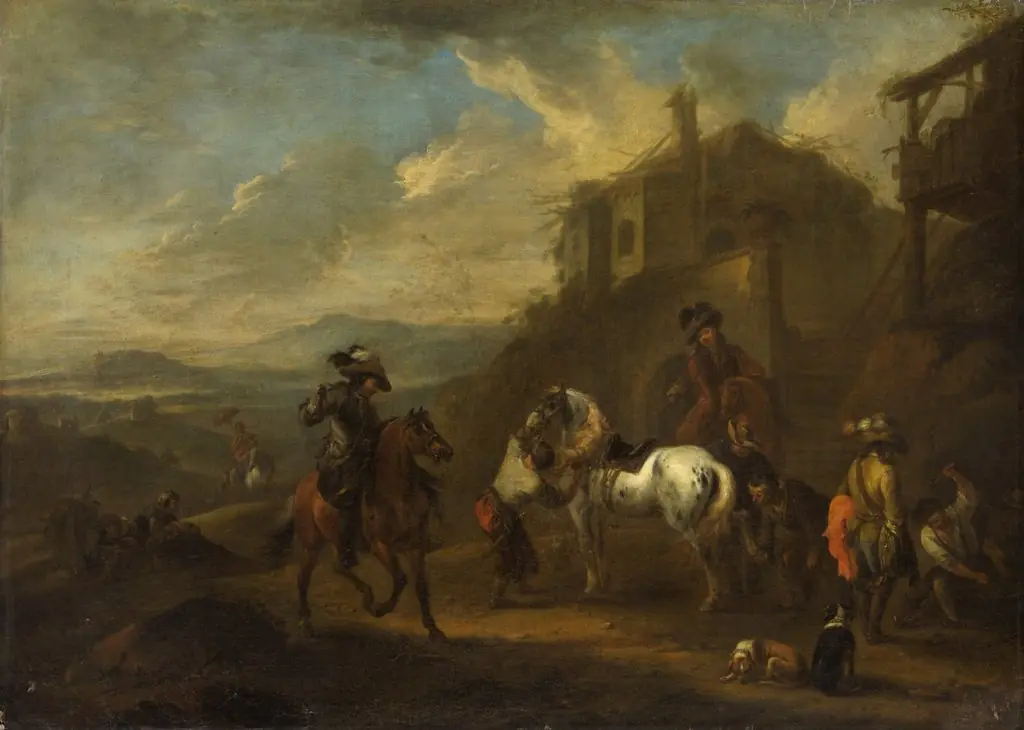
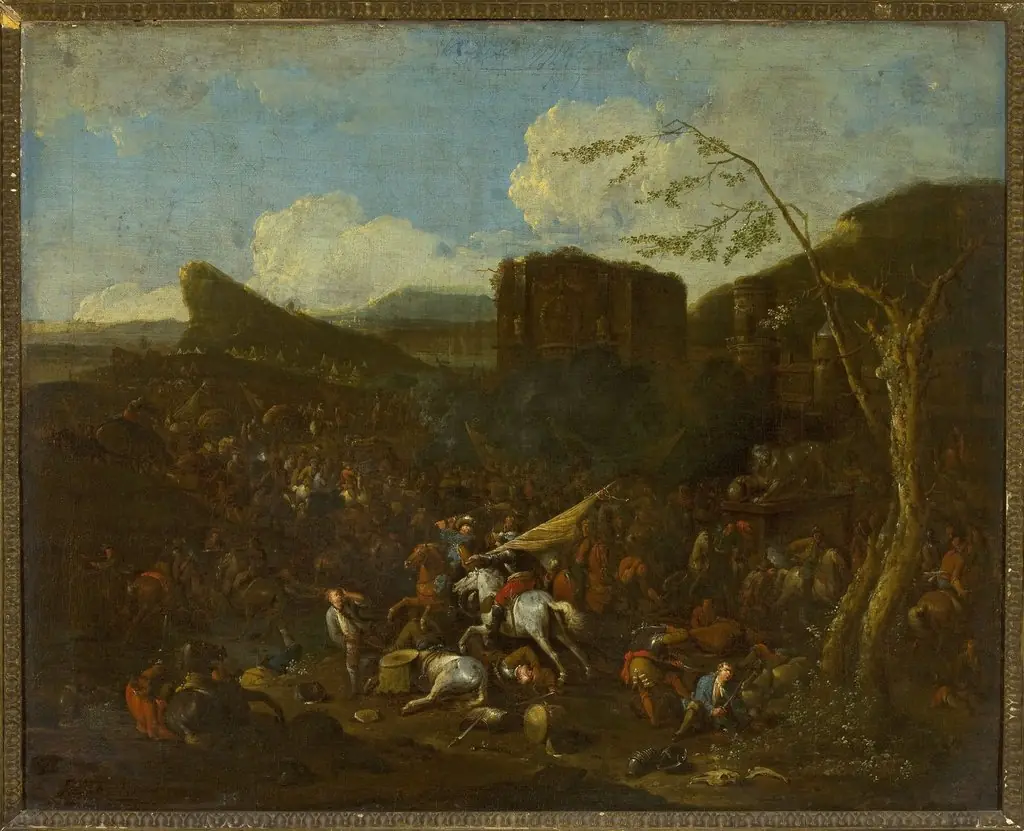
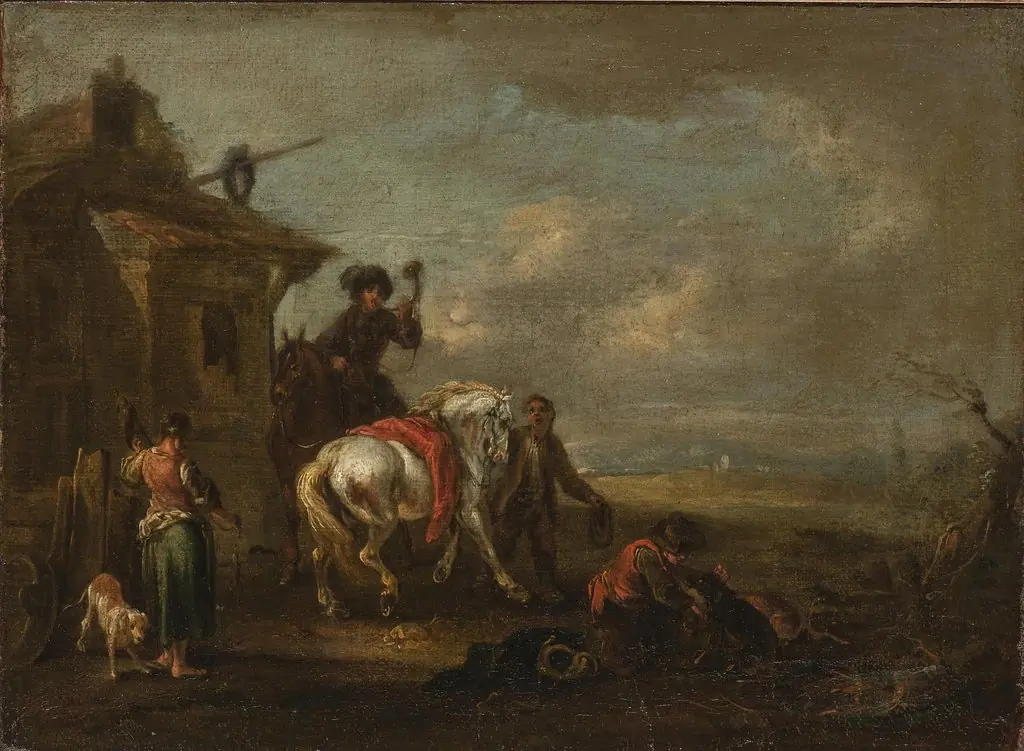
The rearguard of a cavalry engagement
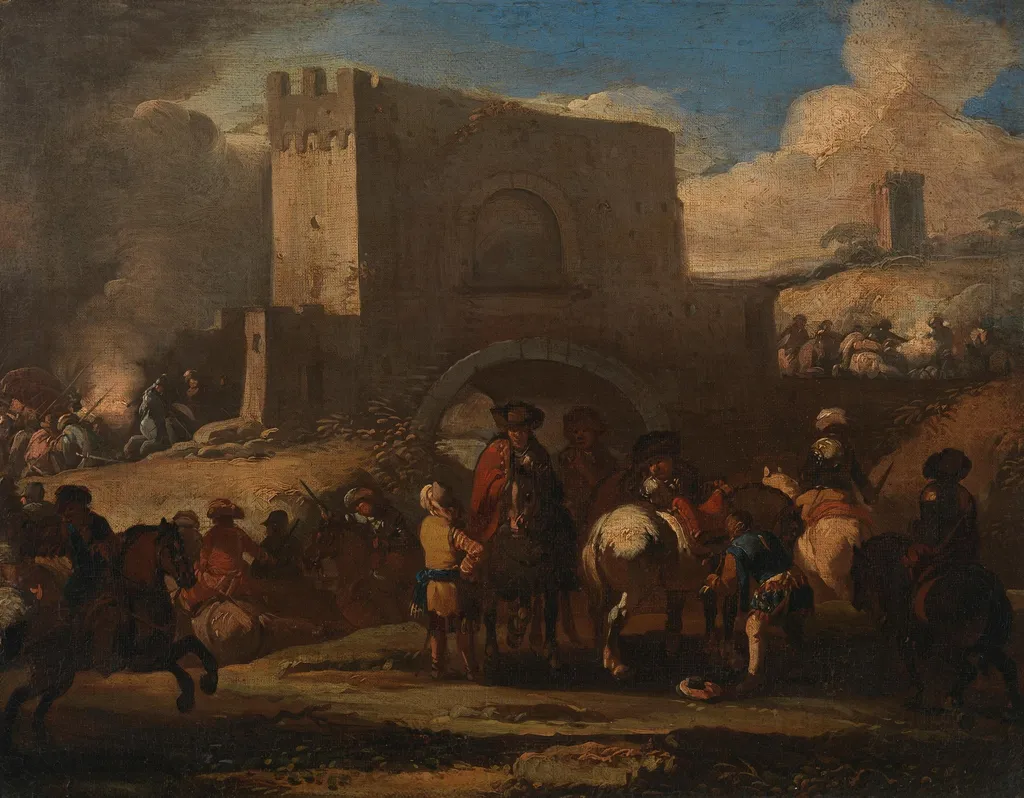
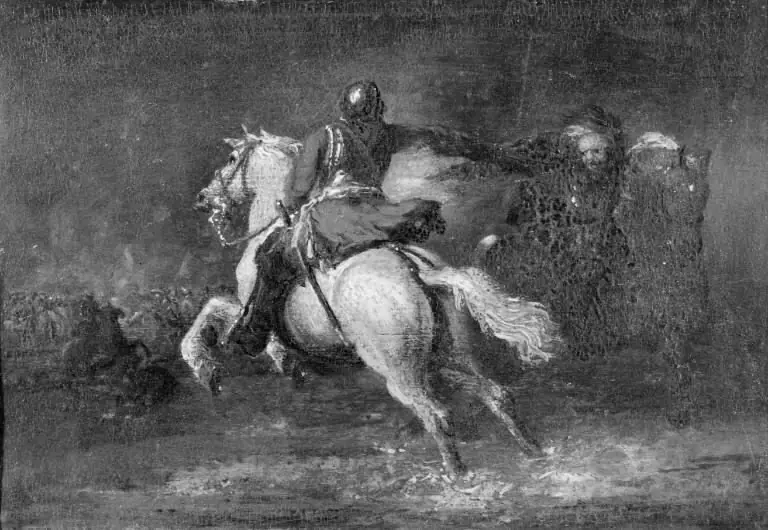
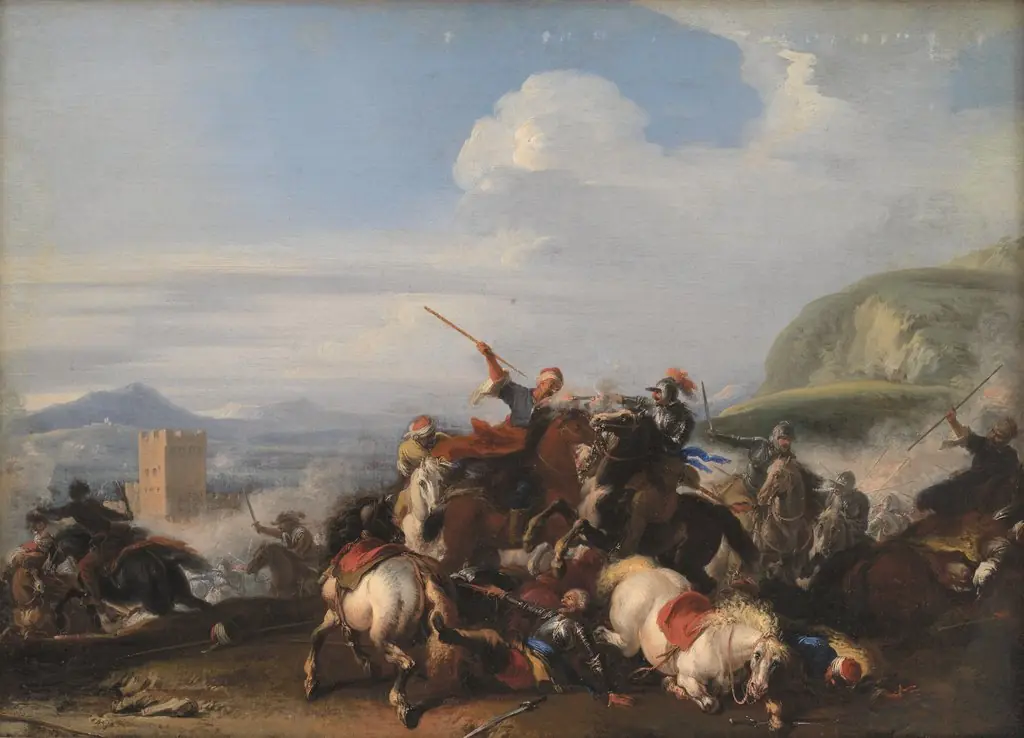
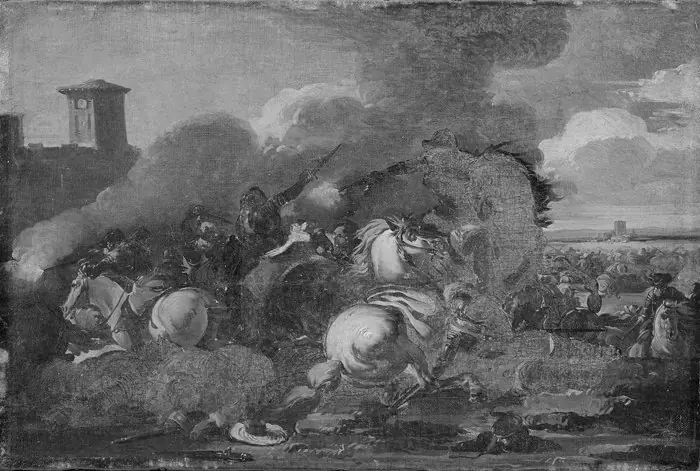
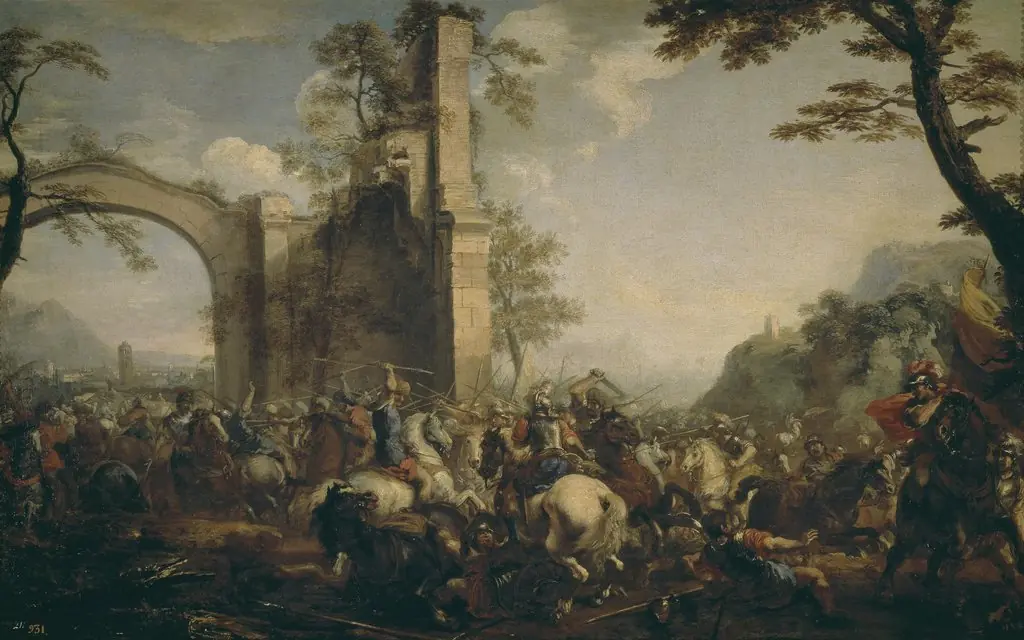
The rearguard of a cavalry engagement is an unspecified painting by the French Classical Baroque artist Jacques Courtois. It dates from 1648 and is held in the collection of the Bavarian State Painting Collections.
About this work
Overview
The painting resides in the Alte Pinakothek in Munich, representing a key example of Baroque military imagery from the French-influenced Italian tradition.
Painted in 1648 by Jacques Courtois, known as il Borgognone, this work captures a moment of cavalry combat during the Thirty Years' War. Courtois, active in Rome and Florence, specialized in military scenes and was regarded as the foremost battle painter of his generation. The painting resides in the Alte Pinakothek in Munich, representing a key example of Baroque military imagery from the French-influenced Italian tradition.
Subject & Meaning
The scene portrays the rearguard of a retreating cavalry unit, caught in disarray amid the chaos of battle. Riders and horses are shown in varied, urgent postures, suggesting both resistance and retreat. The distant stone structure may imply a fortified position or ruin, reinforcing the instability of the moment. The composition avoids glorification, instead emphasizing the turbulence and unpredictability of warfare.
Technique & Style
Courtois employs strong chiaroscuro to model forms and direct attention, with light falling from the left to heighten the drama of motion and shadow. Brushwork is energetic yet controlled, capturing the tension of galloping horses and flailing limbs. The spatial depth is achieved through layered recession, with the architectural element in the background anchoring the scene without dominating it, maintaining focus on the human and equine struggle.
History & Provenance
Created during Courtois’s mature period, the painting reflects his established reputation in Roman artistic circles. It entered the Alte Pinakothek’s collection in the 19th century, likely through royal or aristocratic acquisitions common in Bavarian collections. Courtois later joined the Jesuit order, yet continued painting, suggesting his work retained secular relevance even as his personal life shifted toward religious devotion.
Context
Painted during the final years of the Thirty Years' War, the work reflects the widespread devastation and shifting military tactics of mid-17th-century Europe. Battle scenes like this were commissioned by nobility and military patrons seeking to document or commemorate conflict. Courtois’s focus on the rearguard, rather than the decisive charge, offers a less heroic, more grounded perspective on war’s chaos.
Legacy
Courtois influenced later battle painters through his dynamic compositions and attention to equestrian anatomy. While not widely celebrated today, his body of work remains a vital record of Baroque military aesthetics. His ability to convey motion and tension without overt heroism set him apart from contemporaries, offering a nuanced vision of warfare that resonates in historical studies of the period.
Own this work as a print
Artist & collection
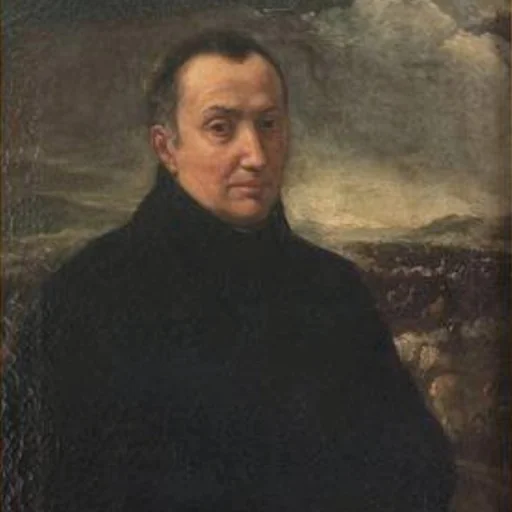
Artist
Jacques Courtois (French pronunciation: ) or Giacomo Cortese, called il Borgognone or le Bourguignon (12 ?December 1621 – 14 November 1676) was a Franche-Comtois–Italian painter, draughtsman, and etcher.