Artwork
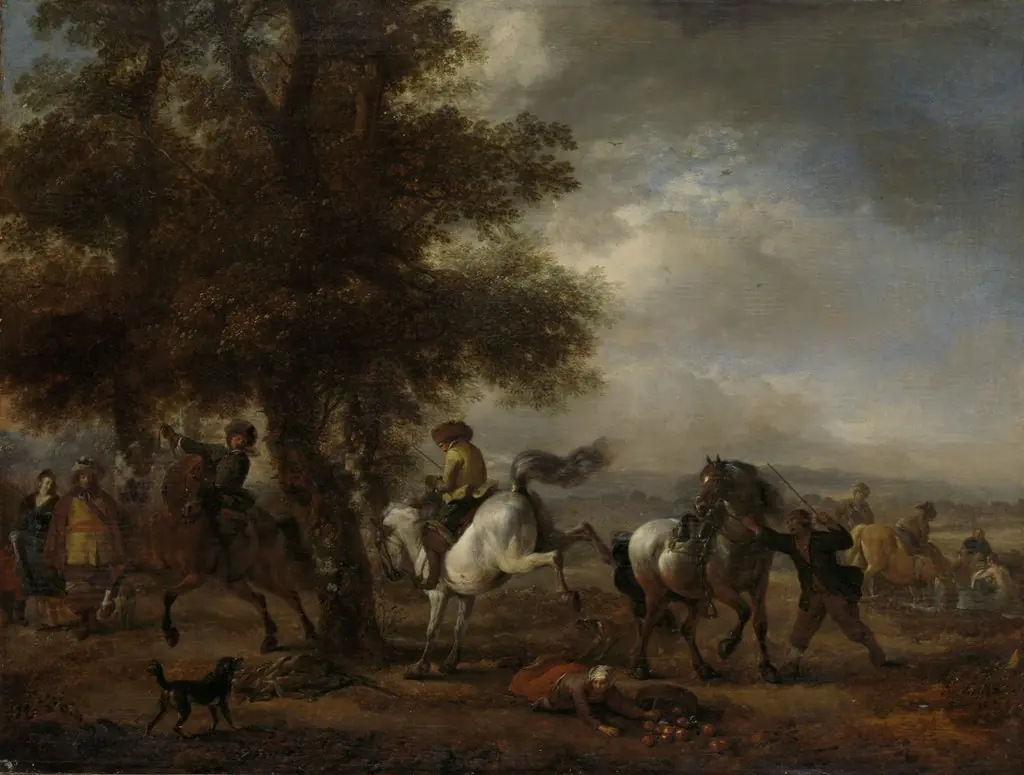
Riding at the Cat
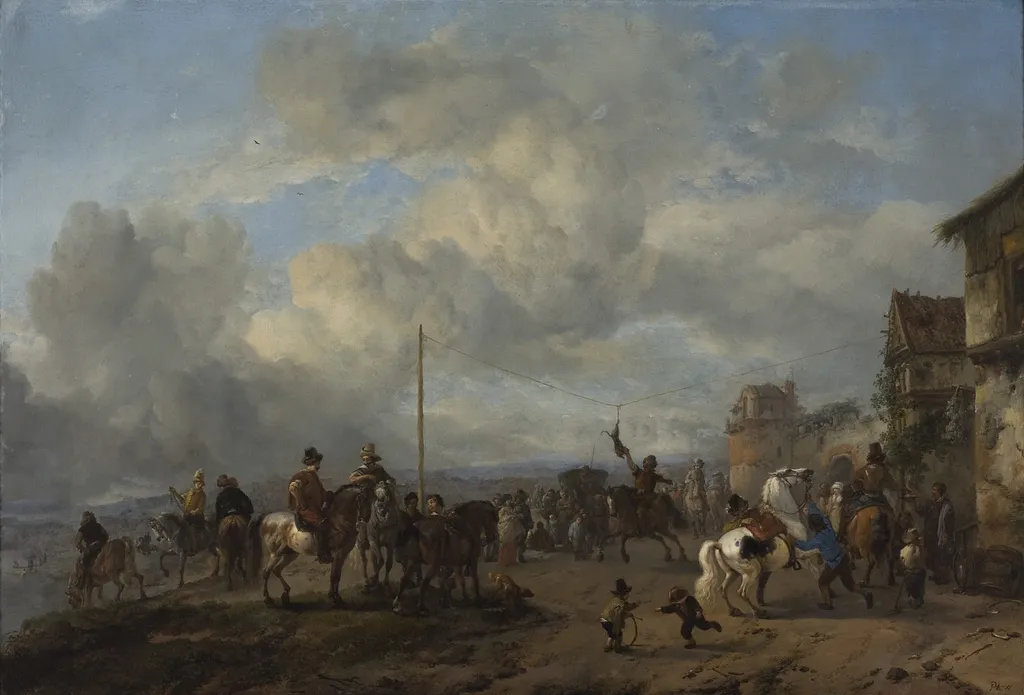
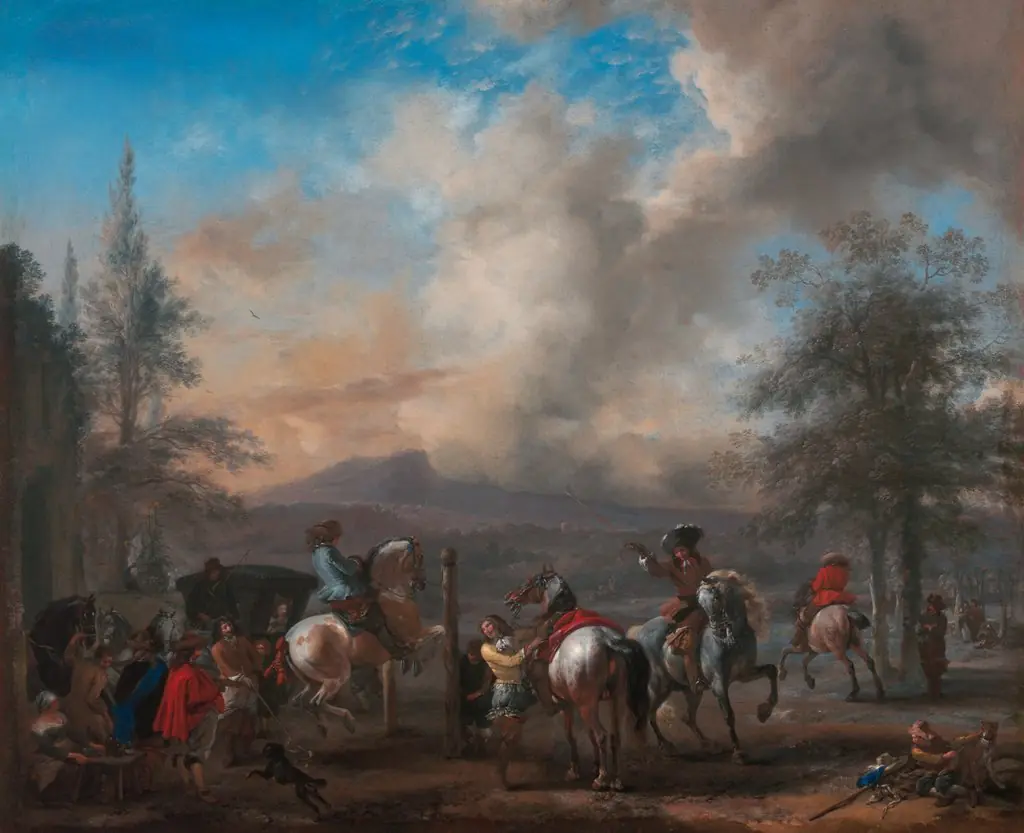
Riding at the Cat is an oil painting by the Dutch Golden Age artist Philips Wouwerman. It dates from 1655 and is held in the collection of the Hermitage Museum.
About this work
Overview
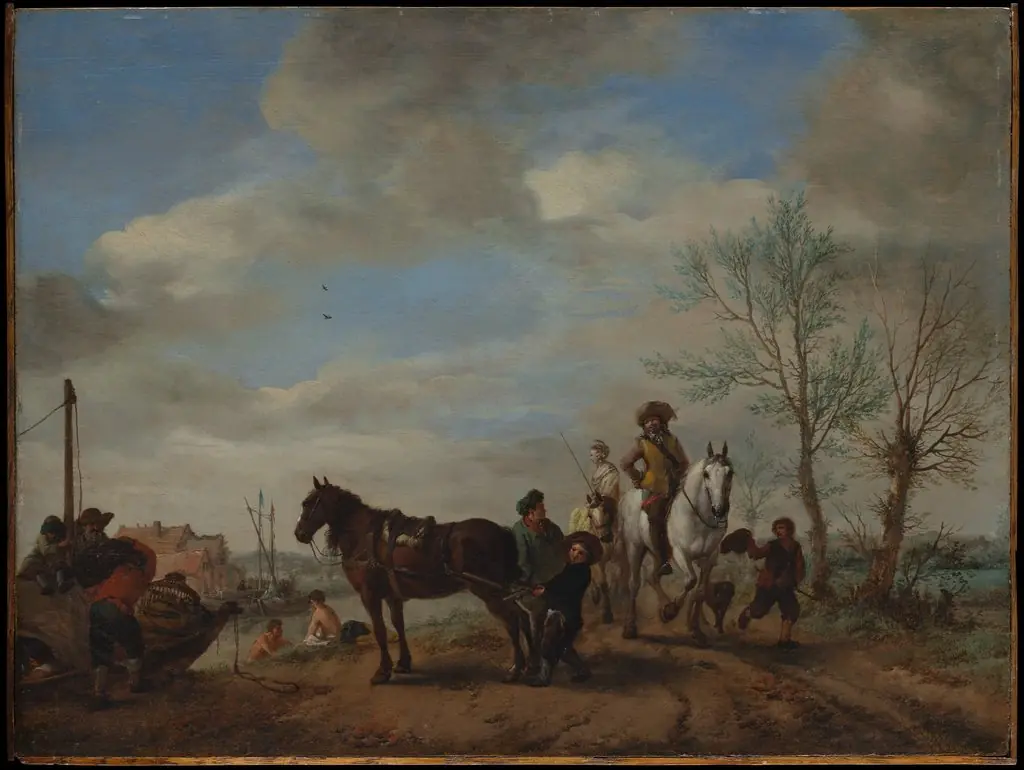
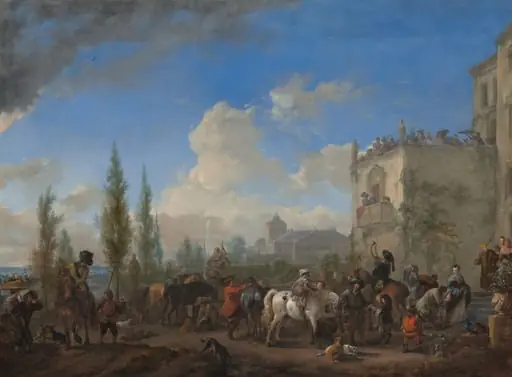
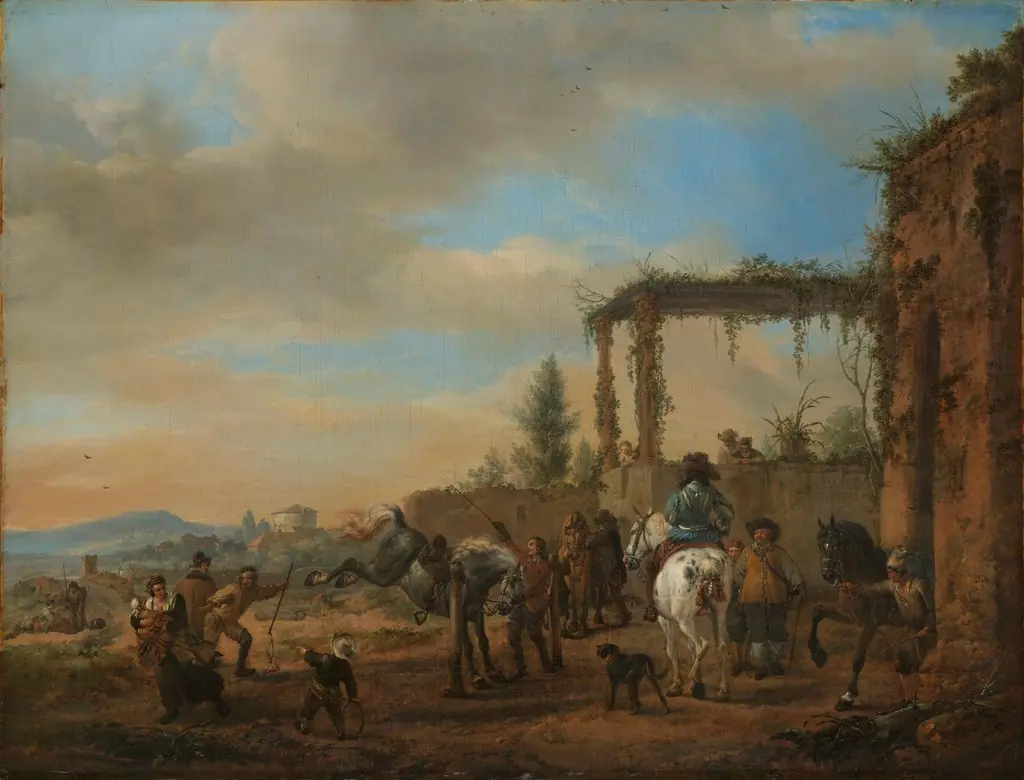
Painted in 1655 by Philips Wouwerman, this oil-on-canvas work captures a moment of equestrian activity in a Dutch town. Wouwerman, a member of the Haarlem Guild of St. Luke, specialized in scenes of rural and urban life featuring horses. The painting reflects his consistent focus on motion and atmosphere, distinguishing his output within the broader Dutch Golden Age tradition of genre painting.
Subject & Meaning
The presence of whips and hats implies casual activity rather than formal ceremony, reinforcing the work’s grounding in observed reality.
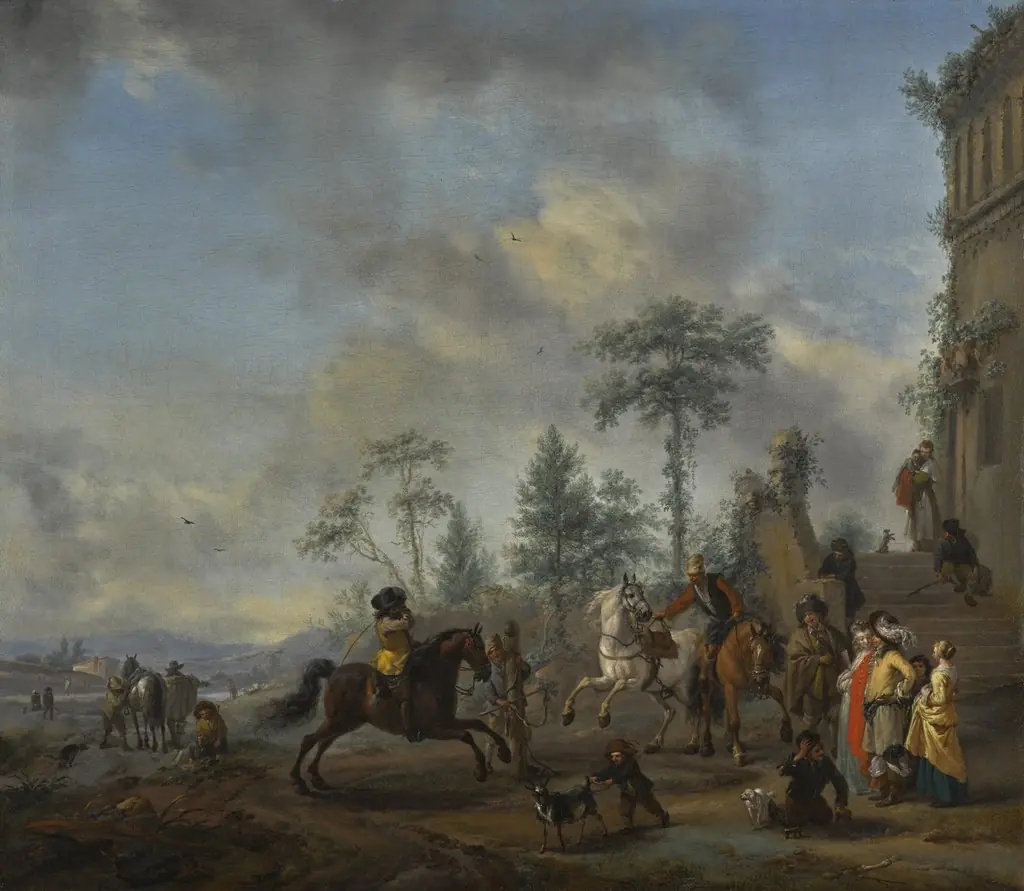
The scene depicts a group of riders passing through a modest town, their gestures and attire suggesting everyday travel or leisure. No single narrative dominates; instead, the painting presents a slice of contemporary life, emphasizing movement and social interaction. The presence of whips and hats implies casual activity rather than formal ceremony, reinforcing the work’s grounding in observed reality.
Technique & Style
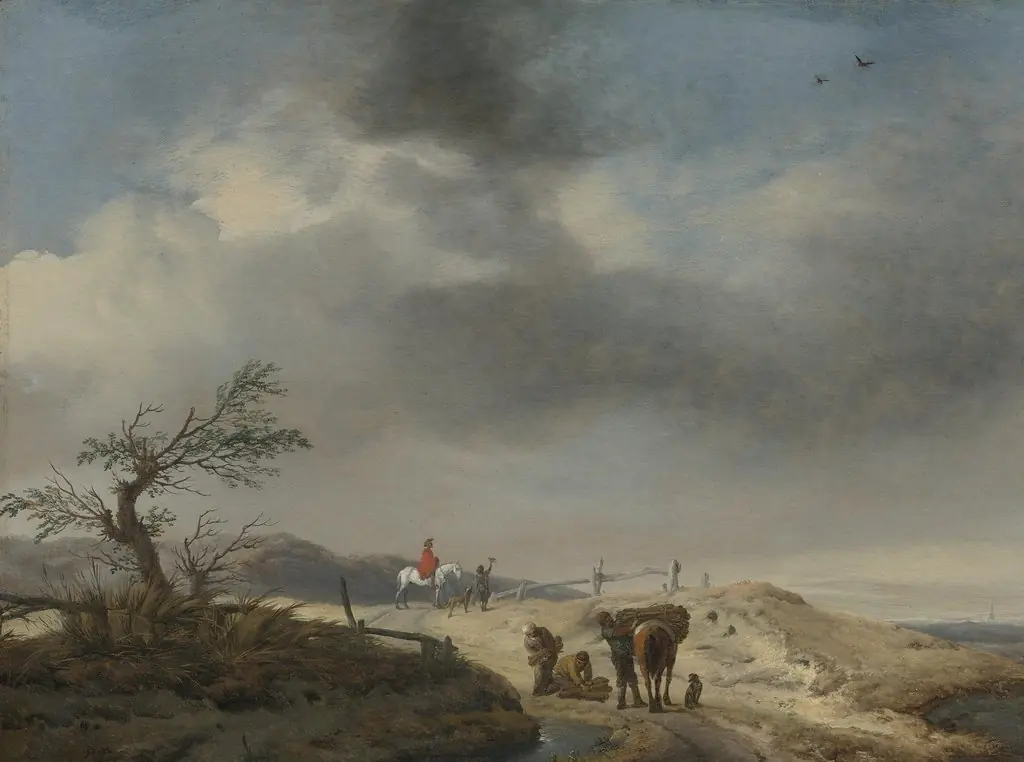
Wouwerman employs loose, fluid brushwork to convey the dynamism of horses and riders, while subtle shifts in color and light model the figures against a hazy, cloud-streaked sky. The composition directs the eye along a diagonal path of motion, enhancing the sense of transit. Atmospheric perspective is achieved through muted tones in the background, contrasting with warmer hues in the foreground figures.
History & Provenance
The painting entered the collection of the State Hermitage Museum in Saint Petersburg, where it remains today. Its journey from 17th-century Haarlem to imperial Russia reflects the broader circulation of Dutch art across Europe during the 18th and 19th centuries. No significant alterations or documented restorations are recorded, preserving its original condition.
Context
Created during the height of the Dutch Golden Age, the painting aligns with a cultural shift toward secular, everyday subjects. While many artists focused on portraiture or still life, Wouwerman’s niche was the active, often equestrian, scene—reflecting the Dutch middle class’s interest in leisure, horsemanship, and the natural world as subjects worthy of artistic attention.
Legacy
Wouwerman’s consistent output and distinctive handling of equine subjects influenced later genre painters in the Netherlands and beyond. His ability to render motion with clarity and atmosphere helped define a subgenre of Dutch painting centered on horses and outdoor activity. Though less celebrated today than Rembrandt or Vermeer, his work remains a vital record of 17th-century Dutch life.
Own this work as a print
Artist & collection
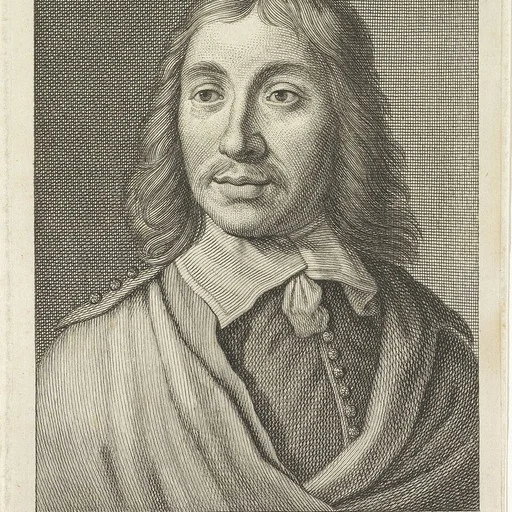
Artist
Philips Wouwerman (also Wouwermans) (24 May 1619 (baptized) – 19 May 1668) was a Dutch painter of hunting, landscape and battle scenes. He became prolific during the Dutch Golden Age and joined the Haarlem Guild of St. Luke.