Artwork
Untitled
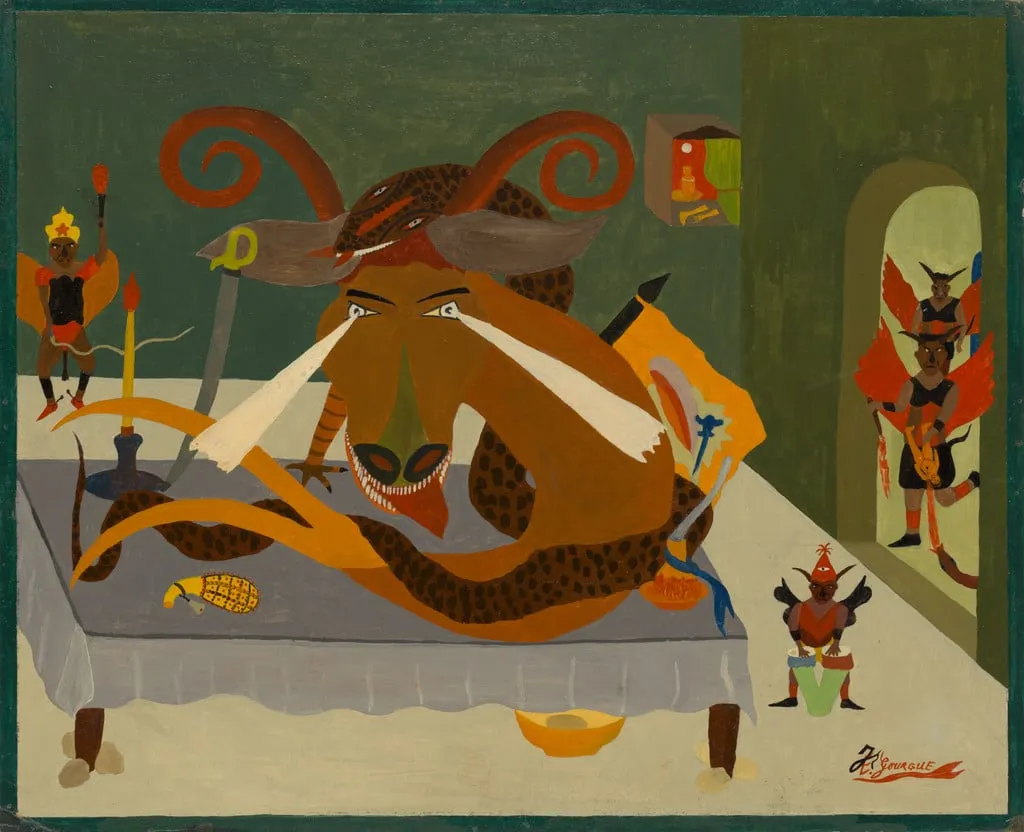
Untitled is an oil drawing by Jacques-Enguérrand Gourgue. It dates from 1947 and is held in the collection of the Museum of Modern Art.
About this work
Overview
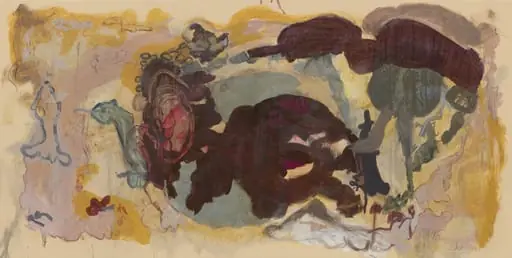
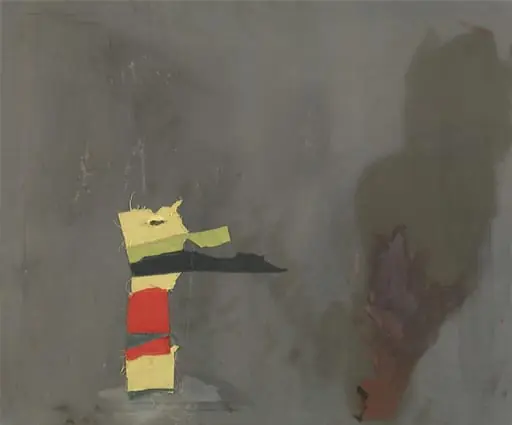
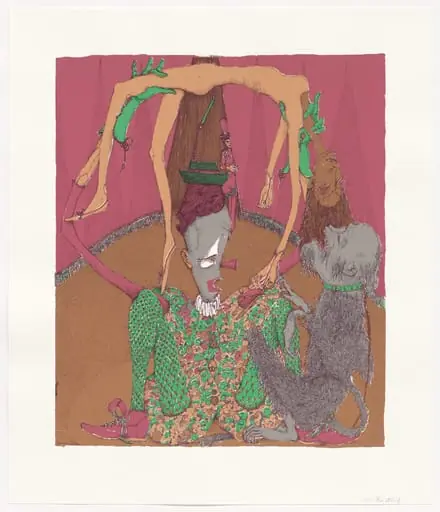
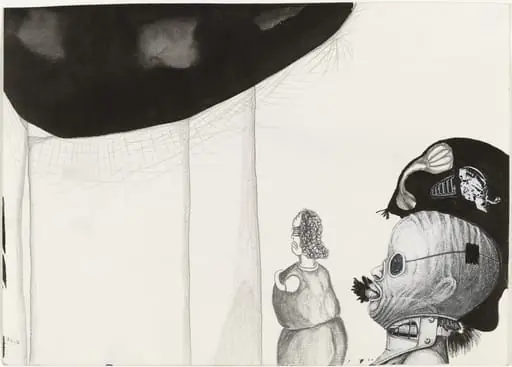
Though untitled, its composition presents a surreal, theatrical scene dominated by a large, anthropomorphized cephalopod.
Created in 1947, this oil on board work by Jacques-Enguérrand Gourgue is part of The Museum of Modern Art’s collection. Though untitled, its composition presents a surreal, theatrical scene dominated by a large, anthropomorphized cephalopod. The painting’s vivid palette and exaggerated forms suggest a dreamlike narrative, resisting literal interpretation while evoking emotional tension through visual dissonance.
Subject & Meaning
A massive octopus, grinning with exaggerated teeth, reclines across a bed, its tentacles entwined with bedding. Four diminutive figures surround it in ritualistic postures—one bearing a torch, another a tray, the others frozen in procession. Their scale and gestures imply subservience or ritual observation, yet their purpose remains ambiguous. The creature’s grin and the staged setting evoke absurdity, perhaps critiquing power, performance, or the grotesque in everyday life.
Technique & Style
Gourgue employs thick, textured impasto for the octopus’s body, contrasting with flat, unmodulated areas in the background. Bold oranges, deep blues, and stark blacks heighten the scene’s theatricality. The creature’s smooth contours clash with rough, scraped surfaces, suggesting both organic vitality and artificial construction. The backdrop resembles a painted stage, reinforcing the work’s sense of performance and constructed reality.
History & Provenance
Painted in 1947, the work entered The Museum of Modern Art’s collection shortly after its creation. Little is documented about its early exhibition history or the artist’s intentions, but its inclusion in MoMA’s holdings reflects institutional interest in postwar surrealism and idiosyncratic figuration. Gourgue’s relative obscurity contrasts with the painting’s striking presence in the collection.
Context
Emerging in the aftermath of World War II, the painting aligns with European surrealism’s preoccupation with the unconscious and the grotesque. While not part of any formal movement, its disjointed imagery and psychological unease echo contemporaneous works by artists like Balthus or Dubuffet. The stage-like setting may reflect a broader cultural fascination with performance and alienation in a fractured postwar world.
Legacy
Though not widely reproduced, the painting remains a distinctive example of mid-century American and European surrealism’s more eccentric strains. Its presence in MoMA’s collection ensures continued scholarly attention, particularly among studies of marginalized surrealist voices. The work’s unresolved symbolism and tactile surface continue to invite open-ended interpretation without settling into a fixed narrative.
Artist & collection
Artist
Jacques-Enguérrand Gourgue (1930–1996) was a Haitian artist, born in Port-au-Prince.