Artwork
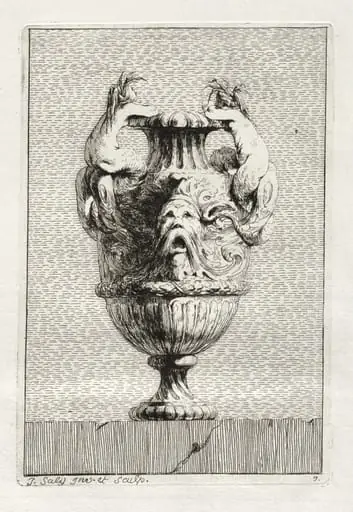
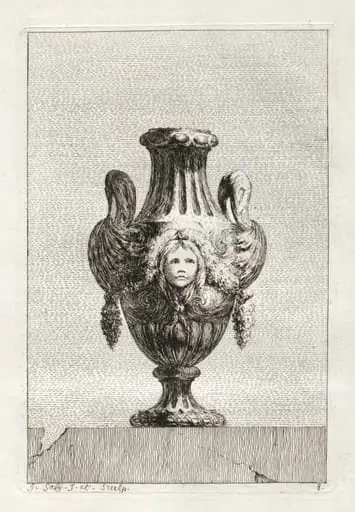
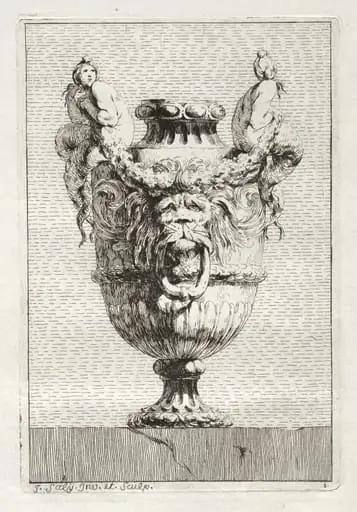
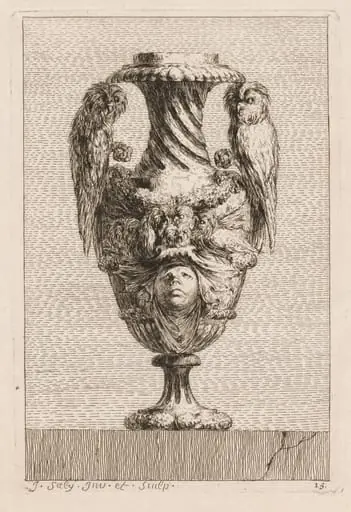
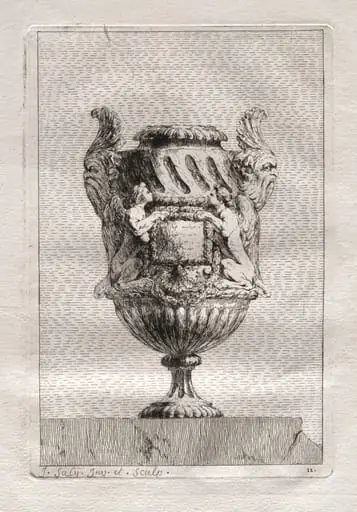
Suite of Vases: Plate 12
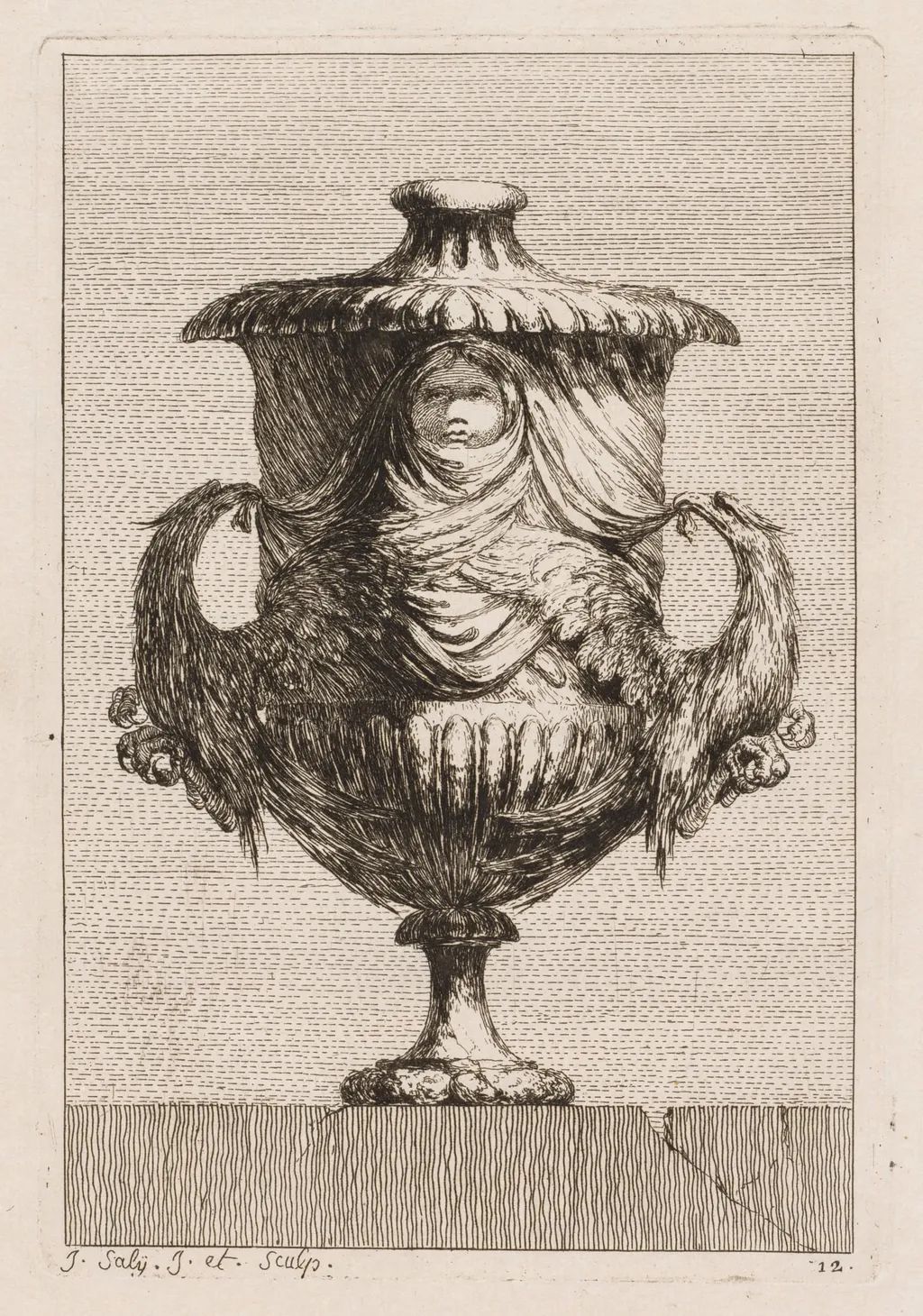
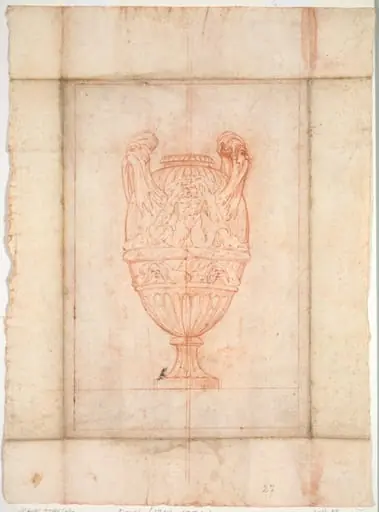
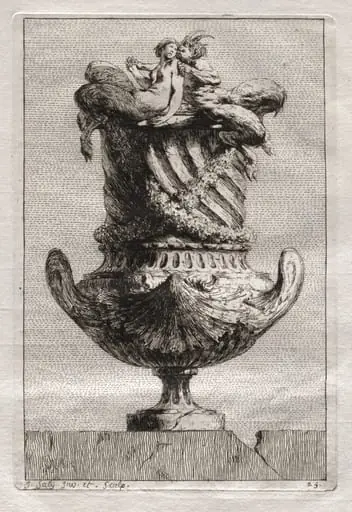
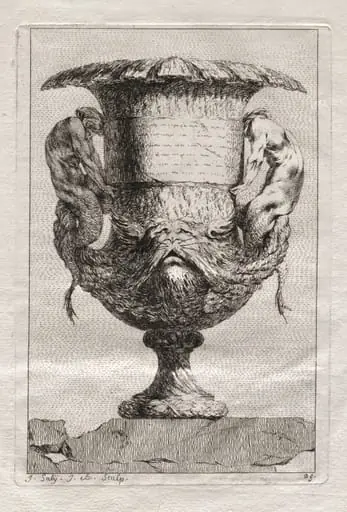
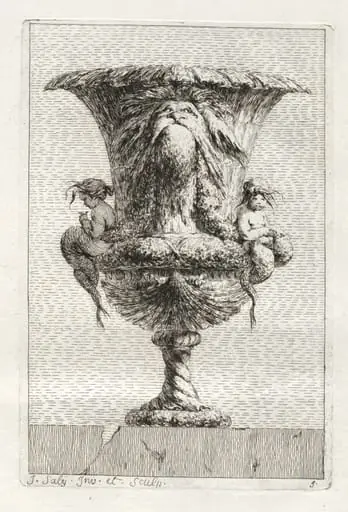
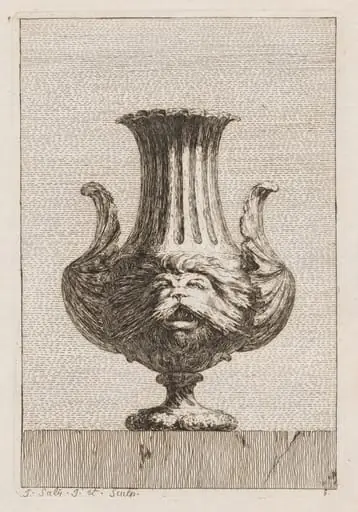
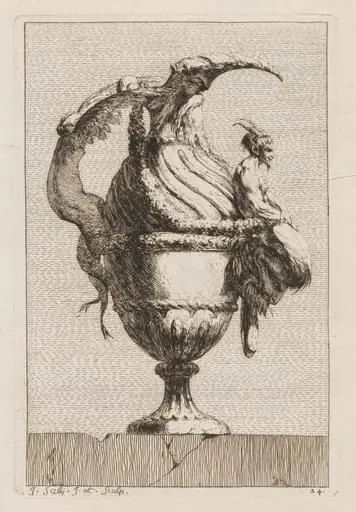
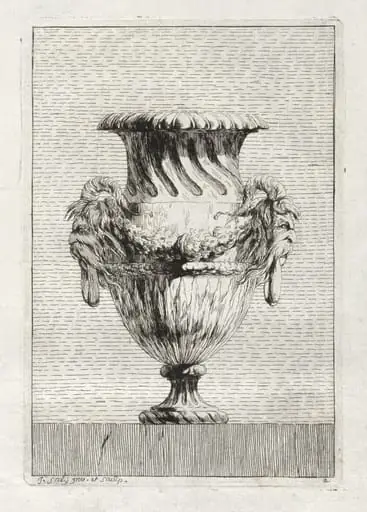
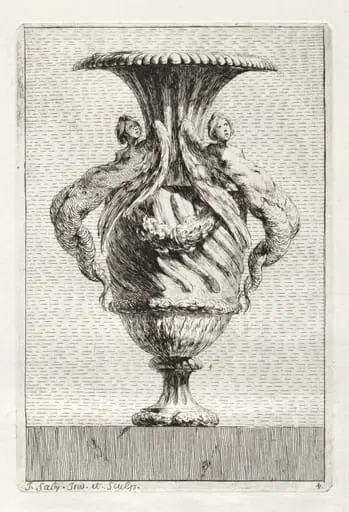
Suite of Vases: Plate 12 is a print by the Baroque artist Jacques François Saly. It dates from 1746 and is held in the collection of the Cleveland Museum of Art.
About this work
Overview
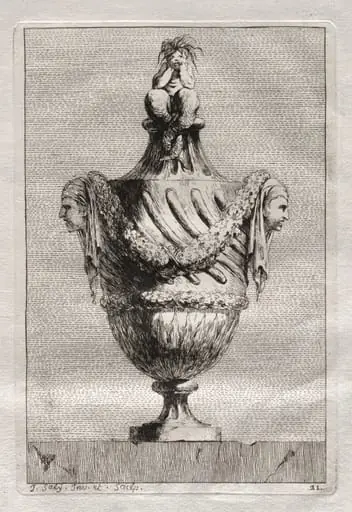
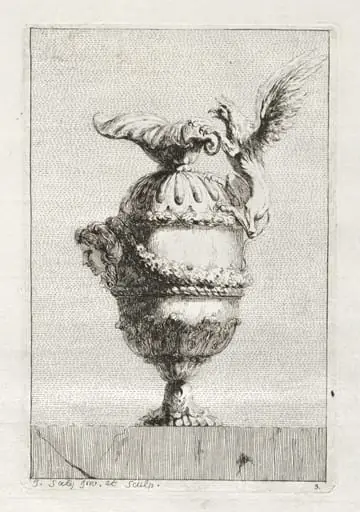
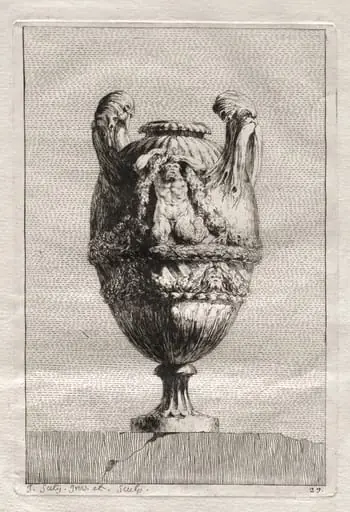
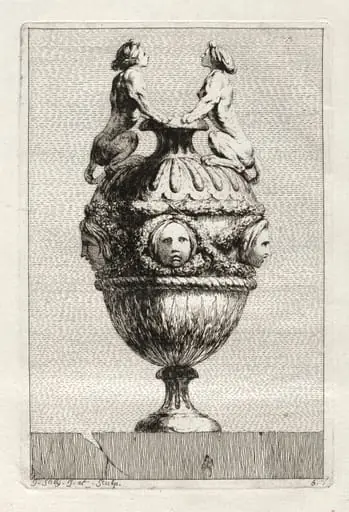
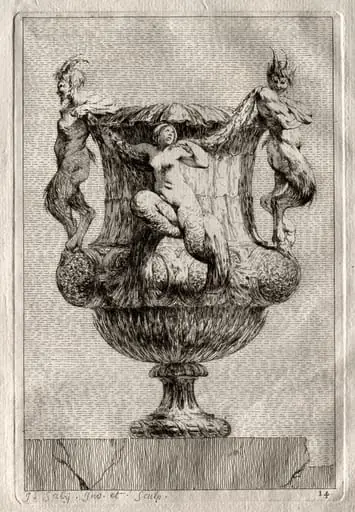
Jacques-Philippe Saly, trained in sculpture, produced a series of thirty etchings depicting classical vases during his time at the Académie de France in Rome.
Jacques-Philippe Saly, trained in sculpture, produced a series of thirty etchings depicting classical vases during his time at the Académie de France in Rome. Upon returning to Paris, these prints were published as a suite, marketed to highlight his inventive approach beyond traditional sculptural practice. The works reflect his engagement with printmaking as a medium for exploring form and ornament, distinct from his three-dimensional output.
Subject & Meaning
The engraved vases draw from ancient prototypes, featuring stylized floral motifs, mythological heads, and balanced proportions. Each design functions as a study in classical revival, emphasizing harmony and restraint. The inclusion of a lion’s head and scrolling leaves references Hellenistic and Roman decorative traditions, signaling a deliberate return to antiquity as a source of aesthetic authority in contemporary design.
Technique & Style
Saly employed fine, controlled etching lines to render the vases with precision, mimicking the clarity of carved stone or metalwork. The plain background isolates each vessel, enhancing its sculptural presence on the page. His technique avoids heavy shading, favoring clean contours and rhythmic detail, which aligns with the emerging Neoclassical preference for clarity and structural integrity over Baroque ornamentation.
History & Provenance
Created during Saly’s tenure in Rome (1740s–1750s), the suite was published in Paris after his return. The prints were promoted as evidence of his intellectual versatility, bridging sculpture and graphic art. Several impressions survive in institutional collections, including The Cleveland Museum of Art, indicating early scholarly and artistic interest in the series as a reference for decorative design.
Context
The suite emerged amid a growing European fascination with antiquity, fueled by archaeological discoveries and the writings of Winckelmann. Saly’s vases contributed to a broader movement in decorative arts that sought to replace Rococo excess with restrained, archaeologically inspired forms. His work offered designers and craftsmen a visual vocabulary rooted in classical precedent, influencing furniture, ceramics, and architectural details.
Legacy
Though Saly is primarily remembered as a sculptor, the Suite of Vases established his influence in the visual culture of Neoclassicism. The prints served as a reference for artisans and designers seeking authentic classical models, helping to standardize certain ornamental motifs in 18th-century interiors. Their enduring presence in museum collections underscores their role as transitional objects between artistic study and applied design.
Artist & collection
Artist
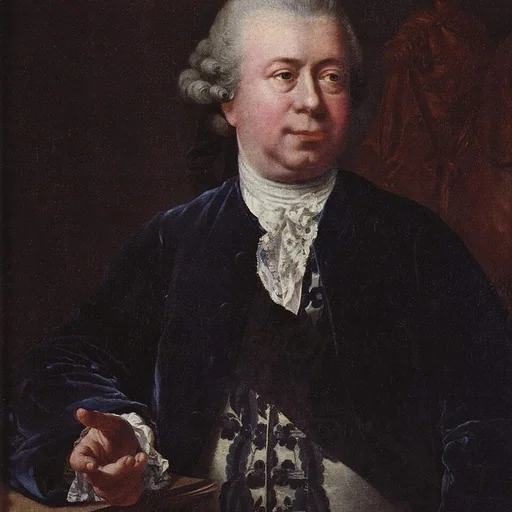
Jacques François Joseph Saly, also known as Jacques Saly (20 June 1717 – 4 May 1776), French-born sculptor who worked in France, Italy and Malta.