Artwork
Suite of Vases: Plate 1
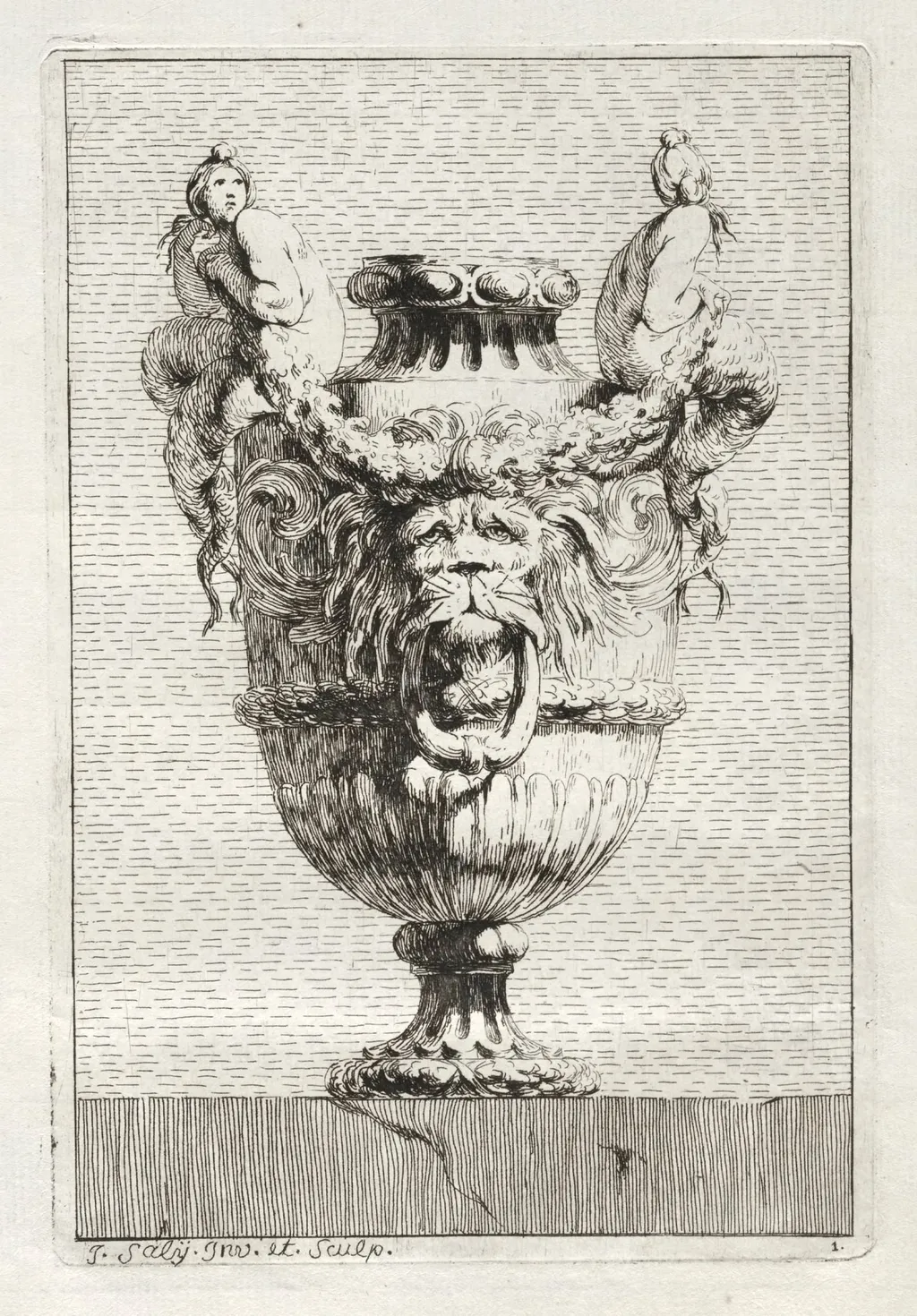
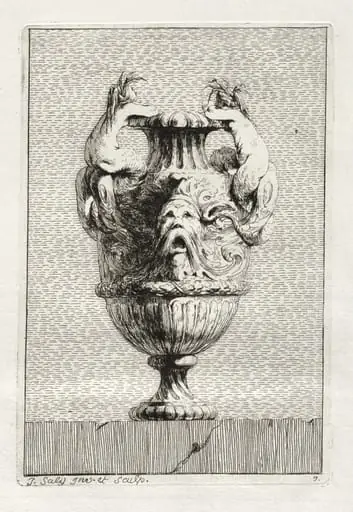
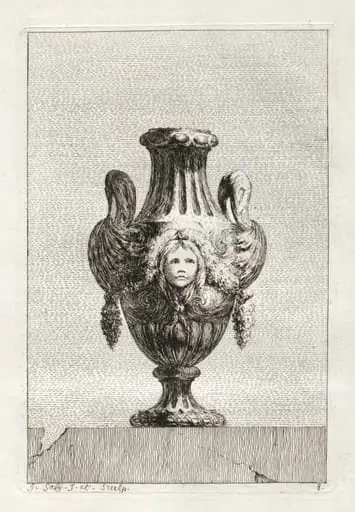
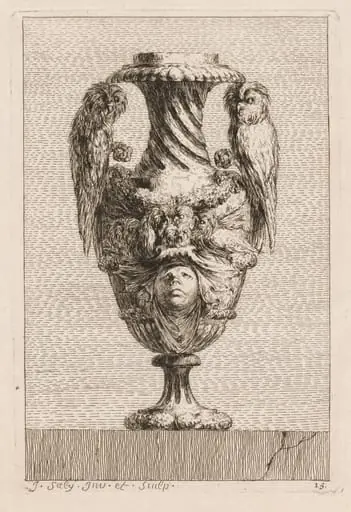
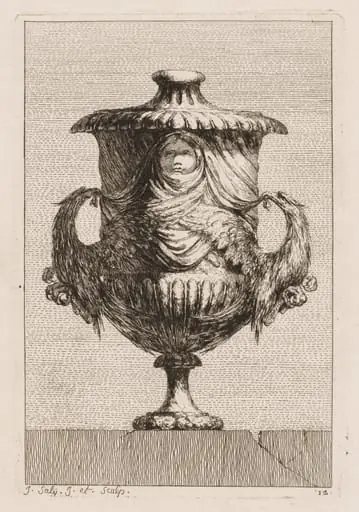
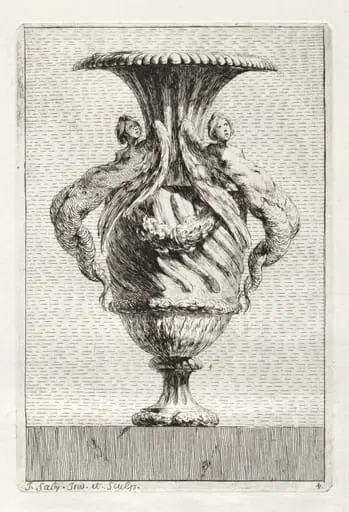
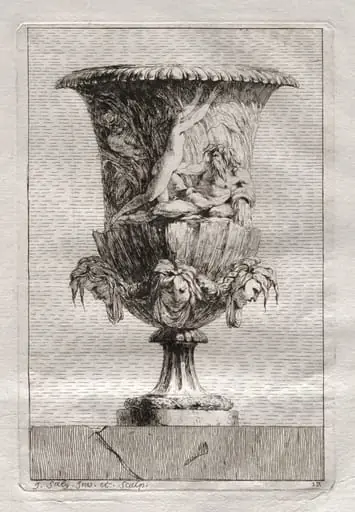
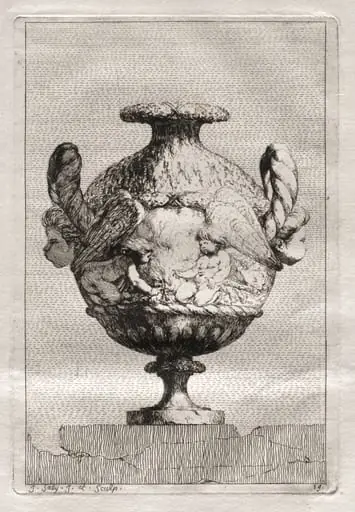
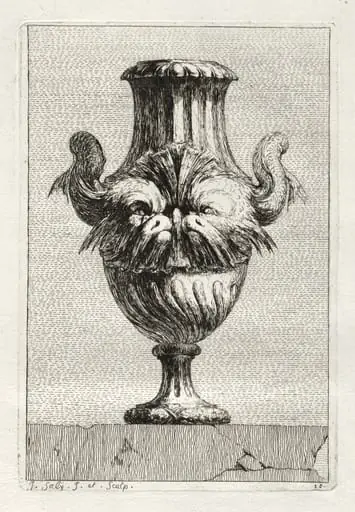
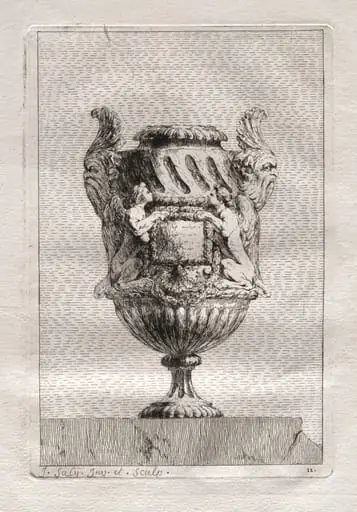
Suite of Vases: Plate 1 is a print by the Baroque artist Jacques François Saly. It dates from 1746 and is held in the collection of the Cleveland Museum of Art. This etching is the first plate from a series of thirty prints by the Danish sculptor Saly, produced during his time in Rome.
About this work
Overview
This etching is the first plate from a series of thirty prints by the Danish sculptor Saly, produced during his time in Rome.
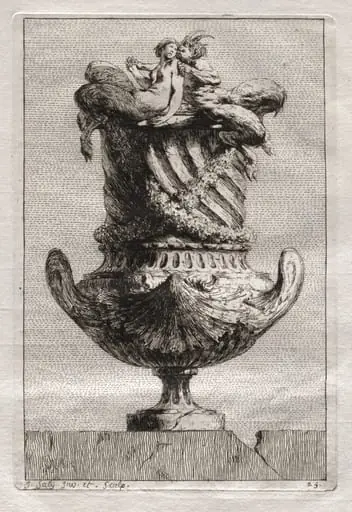
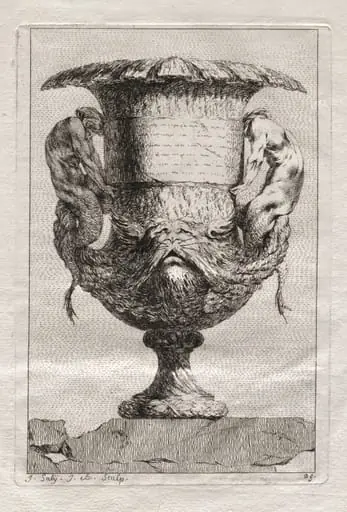
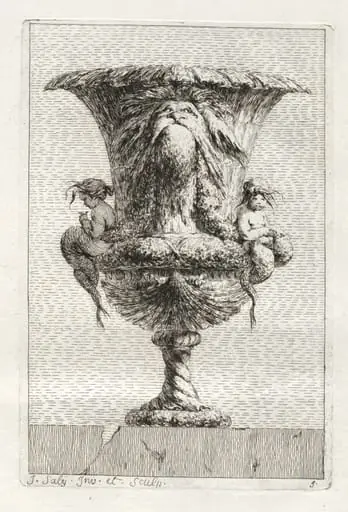
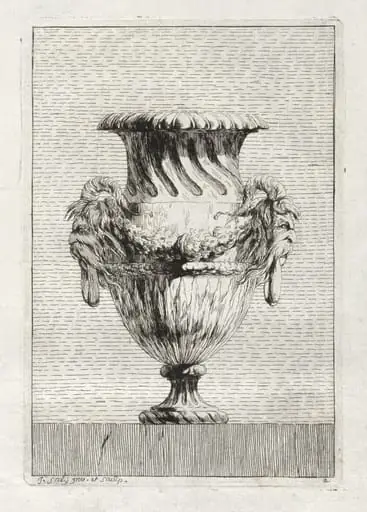
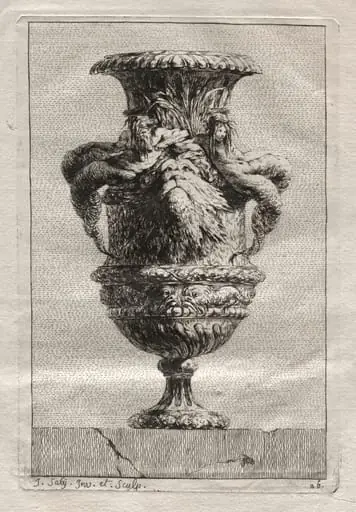
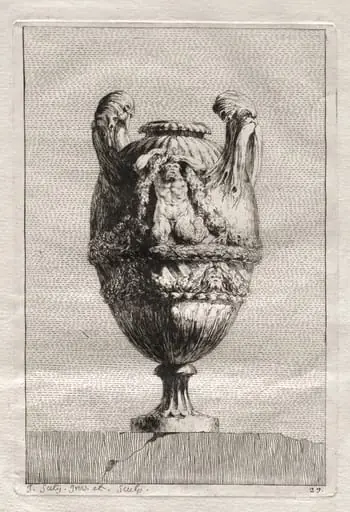
This etching is the first plate from a series of thirty prints by the Danish sculptor Saly, produced during his time in Rome. The series presents elaborate vase designs that blend classical antiquity with imaginative embellishment. Though rooted in ancient forms, the compositions depart from strict historical accuracy, introducing fantastical elements that reflect the artist’s personal vision rather than archaeological fidelity.
Subject & Meaning
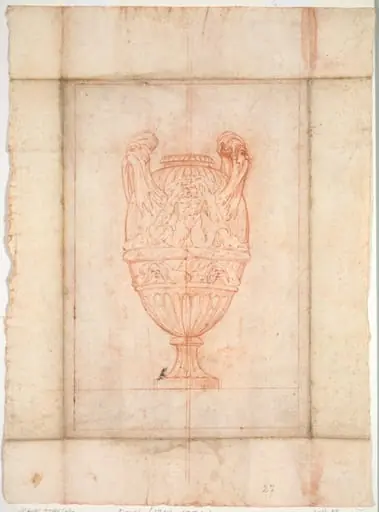
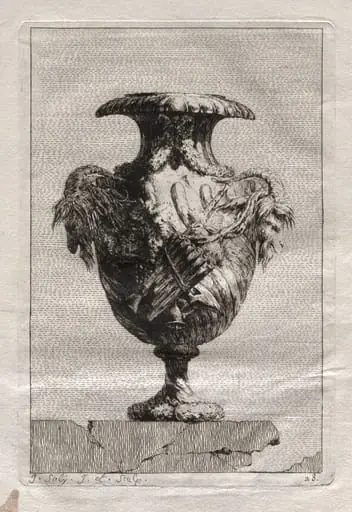
The five vases depicted combine Roman-inspired silhouettes with invented ornamentation: winged creatures, serpentine tails, and hybrid flora-fauna motifs emerge from the surfaces. These embellishments suggest a playful engagement with myth and fantasy, moving beyond the restrained aesthetics of Neoclassicism. The vases function less as functional objects and more as visual explorations of decorative possibility, revealing an interest in the boundaries of artistic invention.
Technique & Style
Saly executed the plate using etching, a method well-suited to fine linear detail and intricate patterning. The lines are precise yet fluid, capturing the sinuous curves of handles and the textured surfaces of fantastical creatures. His sculptural training informs the three-dimensional rendering of forms, giving each vase a sense of volume and weight despite the flat medium. The style prioritizes rhythmic movement over symmetry, creating dynamic visual energy.
History & Provenance
Saly produced the series between 1740 and 1746 while studying at the French Academy in Rome. The prints were published as a set, intended for artists and collectors interested in decorative arts. Though originally circulated in Europe, individual plates later entered institutional collections, including The Cleveland Museum of Art, where other designs from the suite are held. The work reflects the intellectual climate of Roman artistic circles during the mid-18th century.
Context
During this period, European artists increasingly sought to reinterpret antiquity through personal expression rather than strict replication. Saly’s suite aligns with broader trends in Rococo and early Neoclassical circles, where ornamentation became a vehicle for creativity. His departure from conventional motifs—replacing acanthus leaves with winged beasts—signals a shift toward individualized design, anticipating later Romantic tendencies in decorative arts.
Legacy
Saly’s etchings influenced subsequent generations of designers and engravers interested in hybrid ornament. While not widely reproduced in mainstream decorative arts, the series remains a notable example of how sculptors extended their vision into print media. The suite stands as a testament to the permeability between fine and applied arts in 18th-century Europe, offering a unique record of artistic experimentation beyond architectural or monumental sculpture.
Artist & collection
Artist
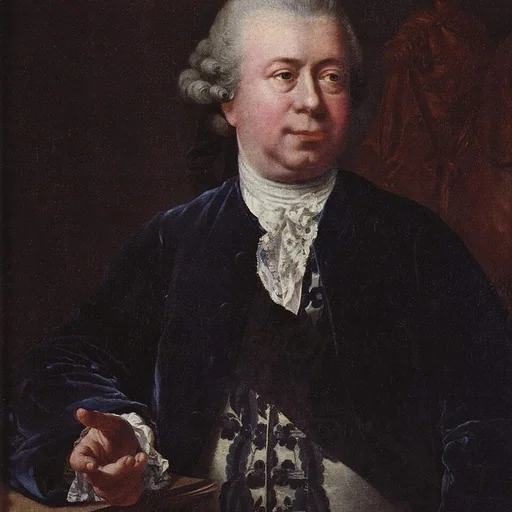
Jacques François Joseph Saly, also known as Jacques Saly (20 June 1717 – 4 May 1776), French-born sculptor who worked in France, Italy and Malta.