Artwork
Suite of Vases: Plate 27
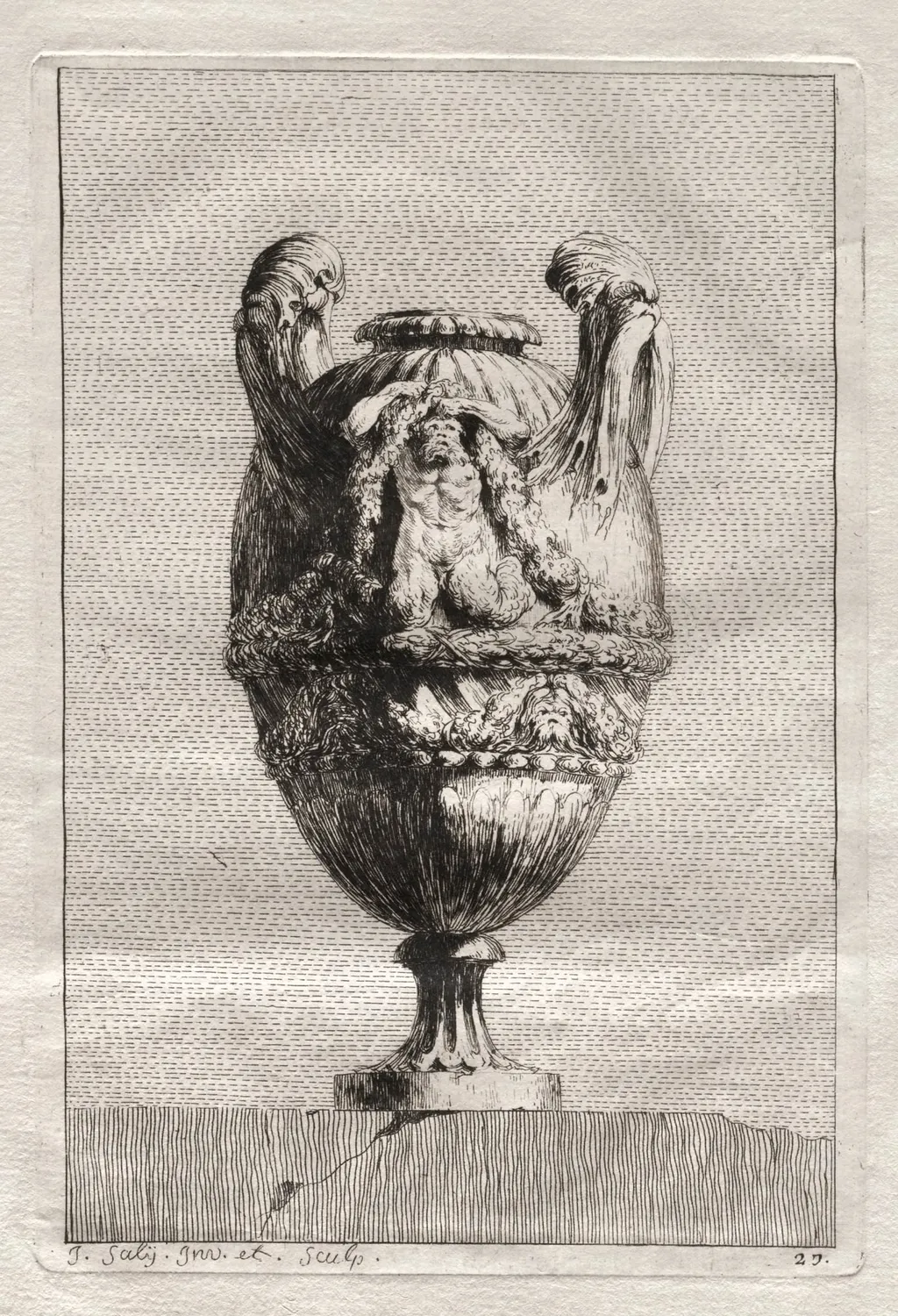
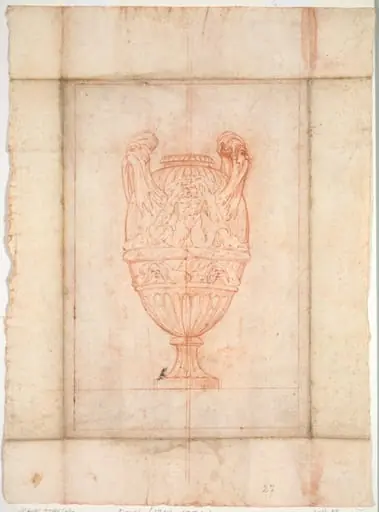
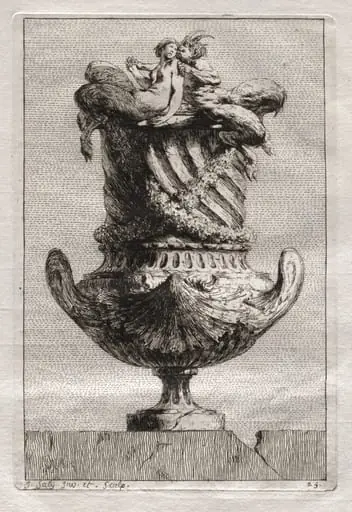
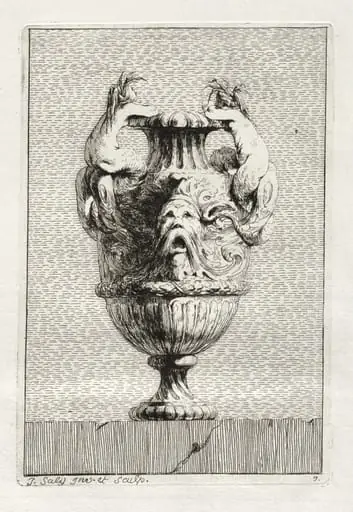
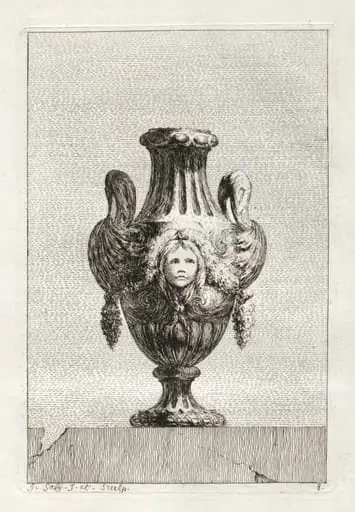
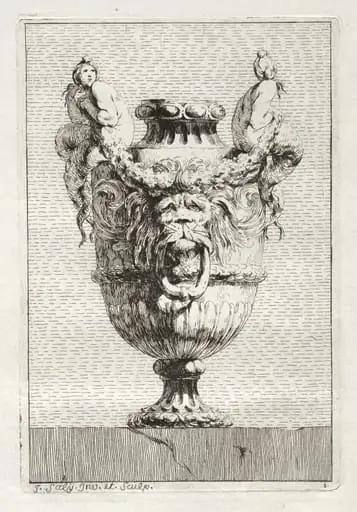
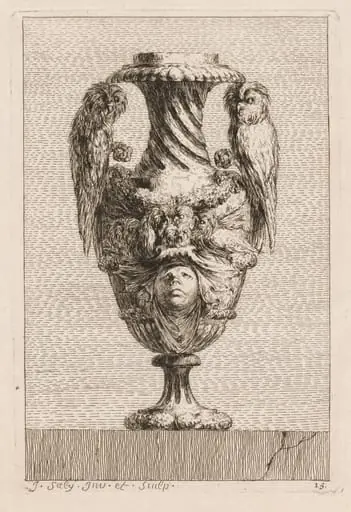
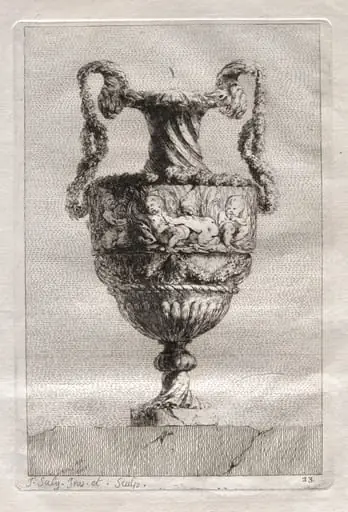
Suite of Vases: Plate 27 is a print by the Baroque artist Jacques François Saly. It dates from 1746 and is held in the collection of the Cleveland Museum of Art.
About this work
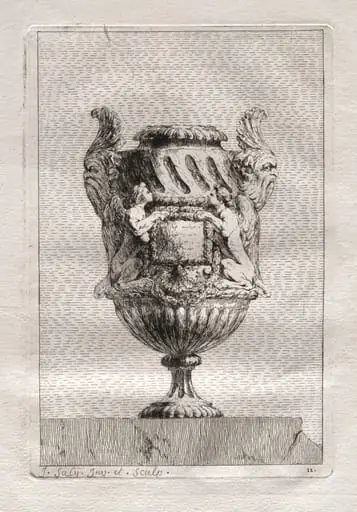
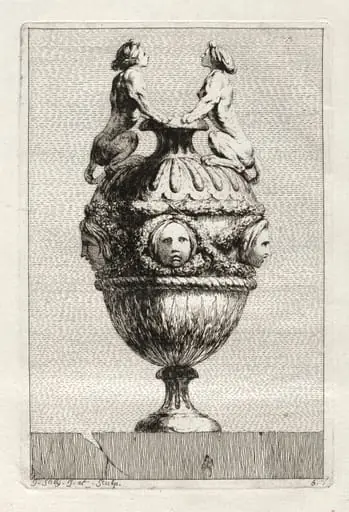
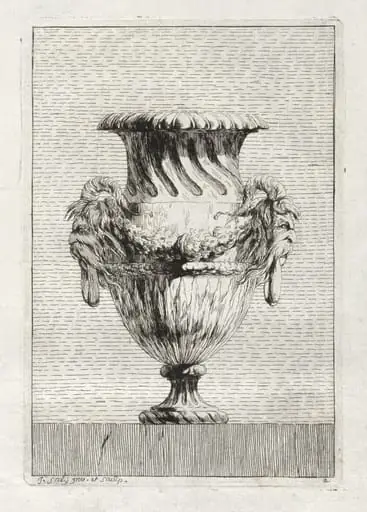
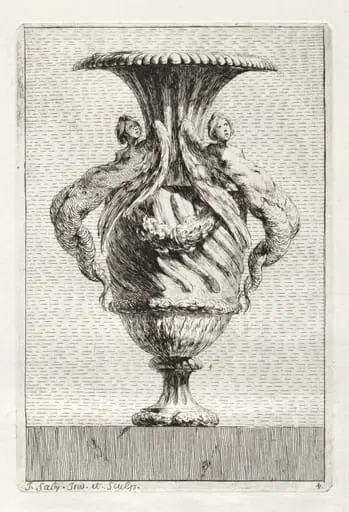
Here’s your rewritten description: This etching shows a fancy vase covered in swirling leaves and odd creatures.
Here’s your rewritten description:
This etching shows a fancy vase covered in swirling leaves and odd creatures. The vase looks like marble, but the carvings are full of strange birds and curling vines.
Saly made these etchings while studying in Rome. He started with simple vase shapes but then added wild decorations. These weren’t real vases—they were made up.
It’s worth comparing to another French sculptor of the same time. Look up Jacques François Saly (French, 1717–1776).
Overview
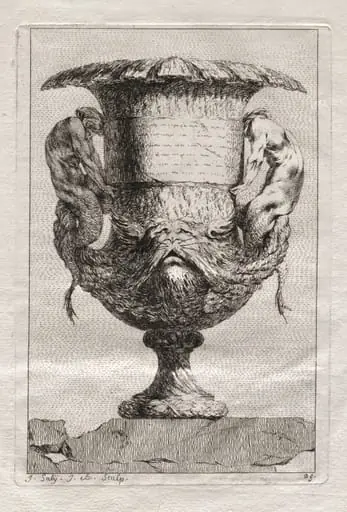
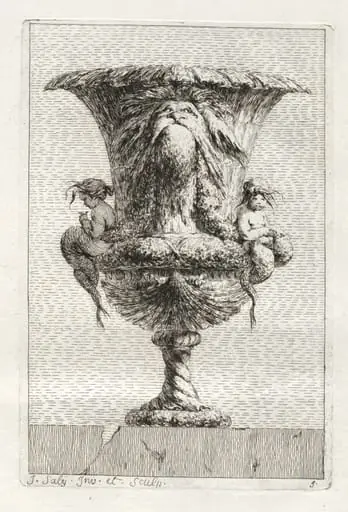
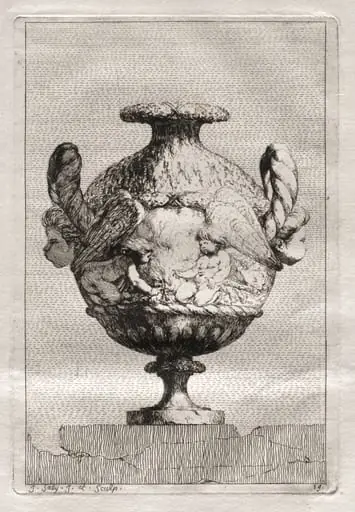
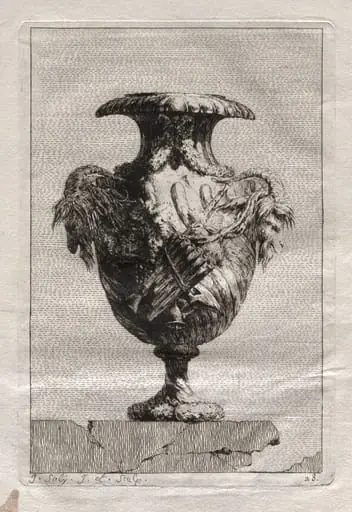
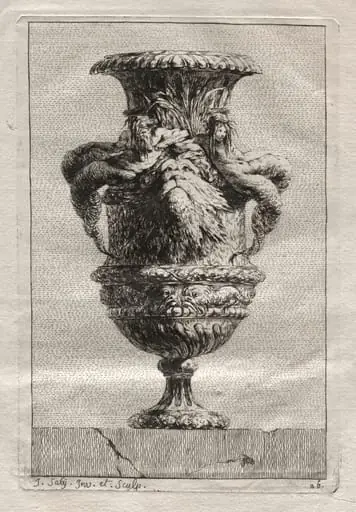
This etching is Plate 27 from a series of thirty prints by Jacques François Saly, produced during his time at the French Academy in Rome. The plates depict imaginary vases, not actual antiquities, blending classical silhouettes with inventive ornamentation. Saly, trained as a sculptor, used etching to explore decorative possibilities beyond stone carving, presenting designs meant for visual contemplation rather than physical realization.
Subject & Meaning
The vase depicted is a fictional object, its form rooted in antique prototypes but adorned with fantastical elements: hybrid birds, serpentine vines, and other invented creatures. These embellishments reflect an 18th-century fascination with the grotesque and the whimsical, departing from strict classical norms. The design suggests a playful engagement with antiquity, where imagination overrides archaeological accuracy.
Technique & Style
Saly employed fine-line etching to render intricate surface details, simulating the texture of carved marble through delicate hatching and cross-contour lines. The composition emphasizes rhythmic movement, with swirling foliage and curving creatures creating a sense of organic flow. His technique balances precision with expressive freedom, revealing his sculptural sensibility translated into print.
History & Provenance
Created between 1740 and 1746, the suite was published while Saly was studying in Rome, a period when exposure to classical ruins influenced European artists. The prints circulated among collectors and designers, serving as sources for decorative arts. Though not commissioned for production, they contributed to the dissemination of ornamental ideas across France and beyond.
Context
Mid-18th-century Europe saw a surge in interest in decorative arts, with designers seeking fresh motifs beyond traditional classical repertoires. Saly’s vases responded to this trend, offering alternatives to rigid symmetry and mythological references. His work aligned with broader currents in Rococo aesthetics, where fantasy and fluidity gained favor over strict antiquarianism.
Legacy
Saly’s etchings influenced later decorative designers by demonstrating how ancient forms could be reimagined through inventive ornament. Though his sculptural career overshadowed his graphic work, the suite remains a documented example of how printmaking facilitated the spread of experimental design ideas in the pre-industrial era.
Artist & collection
Artist
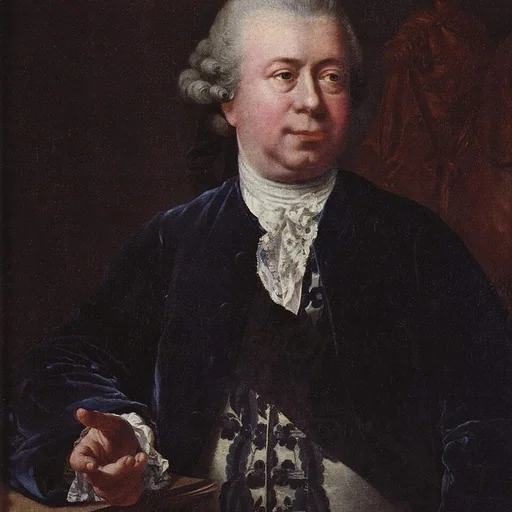
Jacques François Joseph Saly, also known as Jacques Saly (20 June 1717 – 4 May 1776), French-born sculptor who worked in France, Italy and Malta.