Artwork
Chateau Chantilly
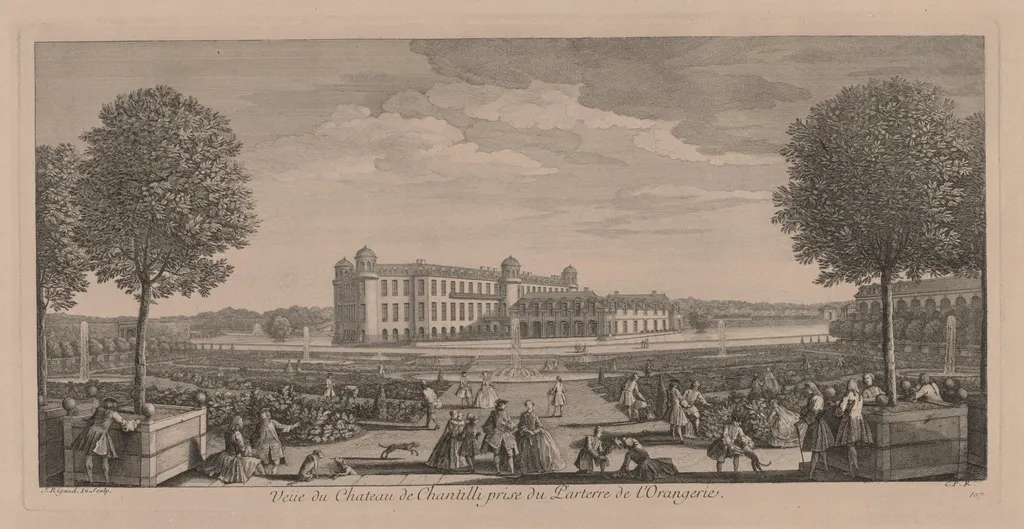
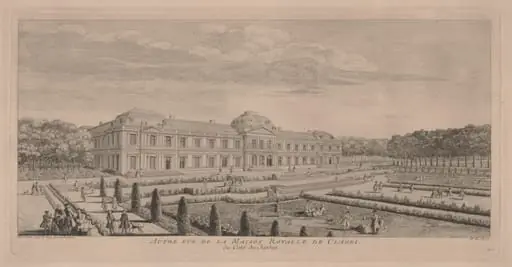
Chateau Chantilly is a print by the Baroque artist Jacques Rigaud. It dates from 1725 and is held in the collection of the Cleveland Museum of Art.
About this work
Overview
Jacques Rigaud’s 1725 print portrays the Château de Chantilly, a prominent French residence, set within an expansive, orderly garden.
Jacques Rigaud’s 1725 print portrays the Château de Chantilly, a prominent French residence, set within an expansive, orderly garden. The composition balances the architectural grandeur of the palace—tall windows, domed roofs—with a foreground populated by elegantly dressed figures strolling, conversing, and engaging in leisurely activities among flower beds and fountains. Two mature trees frame the scene, while a light sky dotted with soft clouds completes the tranquil atmosphere.
Subject & Meaning
The image captures a moment of aristocratic leisure, emphasizing the harmonious relationship between built space and cultivated nature typical of 18th‑century French estates. By depicting well‑dressed individuals enjoying the garden, the print underscores the social rituals of the elite, suggesting both the prestige of the château’s owners and the aesthetic ideals of order and refinement that guided garden design.
Technique & Style
Executed as a print, Rigaud employs fine line work and delicate shading to render architectural details and foliage with clarity. The balanced composition and controlled perspective reflect Baroque sensibilities, while the crisp rendering of figures and landscape elements conveys a sense of realism that aligns with the period’s interest in documenting grand estates.
History & Provenance
Created in 1725, the print entered the collection of the Cleveland Museum of Art, where it remains on view. Its acquisition reflects the museum’s broader effort to represent European printmaking traditions and to provide insight into the visual culture surrounding French aristocratic residences of the early 18th century.
Context
The Château de Chantilly, located north of Paris, was a focal point of French aristocratic life and a model for garden design during the Baroque era. Rigaud’s depiction aligns with contemporary interests in documenting notable architecture and landscaped grounds, serving both as a record of the estate’s appearance and as an illustration of the period’s aesthetic values.
Artist & collection


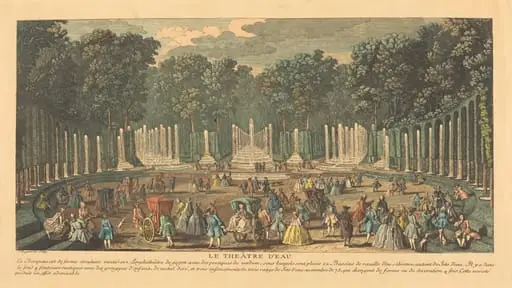 The Theatre of Water (Le Théâtre d'Eau)
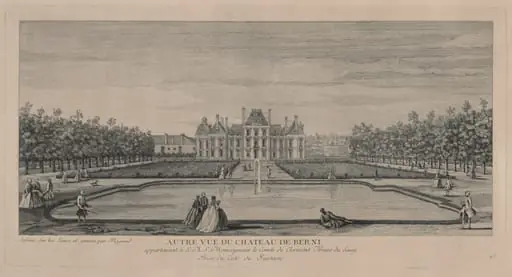 Chateau of Berny from the Gardens
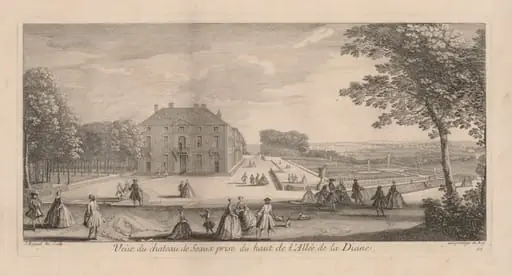 View of the Chateau de Seaux from Diana's Promenade
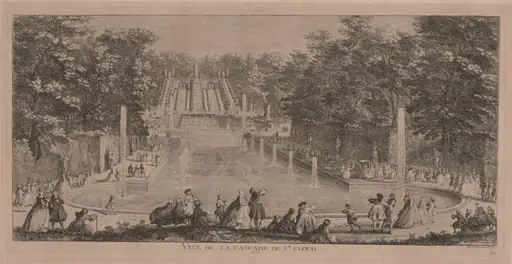 The Cascades of St. Cloud
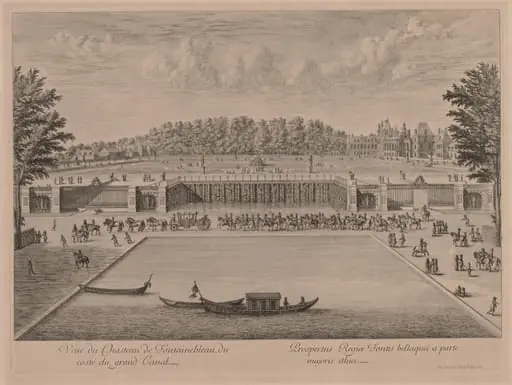 Chateau Fontainebleau from the Grand Canal
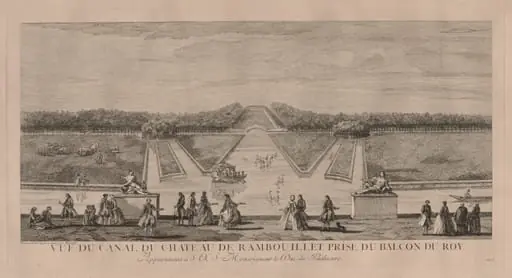 The Chateau from the Canal at Rambouillet
 Chateau of Bagnolet
 Vue du Château royal de Chambord, du côte de la Porte royale