Artwork
The Chateau from the Canal at Rambouillet
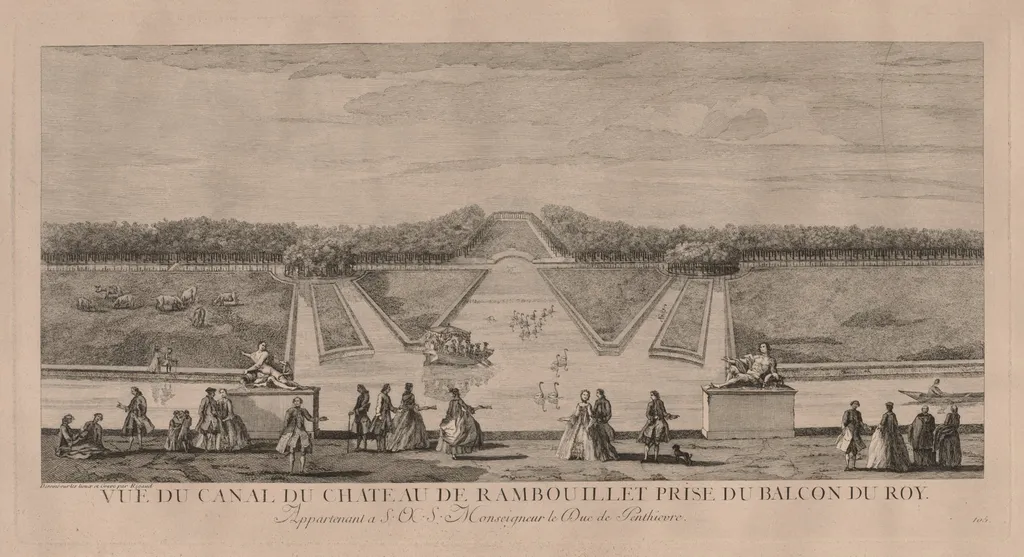
The Chateau from the Canal at Rambouillet is a print by the Baroque artist Jacques Rigaud. It dates from 1727 and is held in the collection of the Cleveland Museum of Art.
About this work
Overview
Created in 1727 by Jacques Rigaud, this print depicts a view of the Château de Rambouillet as seen from its adjacent canal. Executed in a detailed, linear style, the work captures a serene yet lively rural estate scene. It is part of the collection at The Cleveland Museum of Art, where it serves as an example of early 18th-century French topographical printmaking.
Subject & Meaning
The presence of strollers, swimmers, and boaters suggests a leisurely aristocratic outing, reflecting the social rituals of the French elite.
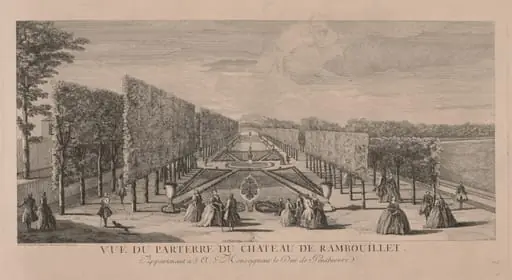
The scene portrays the château at the end of a long, mirrored canal, flanked by formal gardens and lined with figures in contemporary dress. The presence of strollers, swimmers, and boaters suggests a leisurely aristocratic outing, reflecting the social rituals of the French elite. The composition emphasizes order and harmony, reinforcing the château’s role as a symbol of cultivated power and refined recreation.
Technique & Style
Rigaud employed precise pen and ink lines with subtle washes to render architectural detail and atmospheric depth. The figures are rendered in miniature scale, enhancing the grandeur of the landscape. The composition follows a strict perspective, guiding the viewer’s eye toward the château, a hallmark of French academic tradition and the influence of classical landscape ideals.
History & Provenance
The print was made during the reign of Louis XV, when Rambouillet was a favored retreat for the French court. Rigaud, known for his architectural views, documented such estates for aristocratic patrons. The work entered the Cleveland Museum of Art’s collection in the 20th century, having passed through private European holdings before its acquisition.
Context
This print aligns with the French tradition of recording royal and noble residences as both documentary records and expressions of cultural prestige. It reflects the era’s fascination with controlled nature and the integration of architecture into landscaped environments, a trend influenced by Versailles and the broader Baroque aesthetic of order and spectacle.
Legacy
Rigaud’s work contributed to a genre of topographical prints that preserved the appearance of French estates before widespread urbanization. Though not widely known today, such prints were essential in shaping contemporary perceptions of aristocratic life and landscape design, influencing later generations of engravers and landscape artists.
Artist & collection


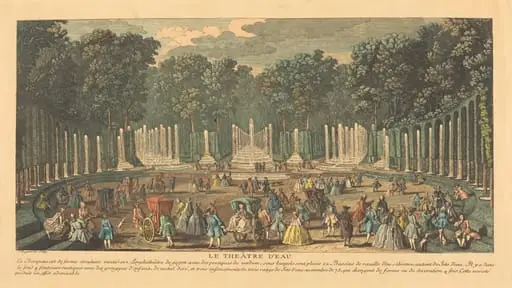 The Theatre of Water (Le Théâtre d'Eau)
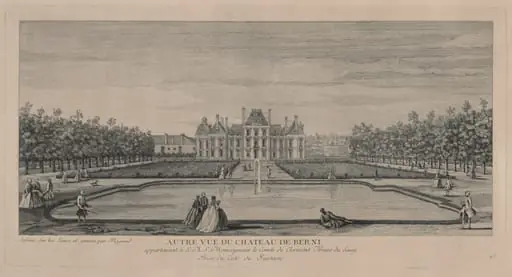 Chateau of Berny from the Gardens
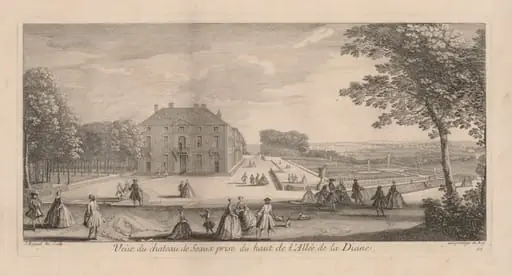 View of the Chateau de Seaux from Diana's Promenade
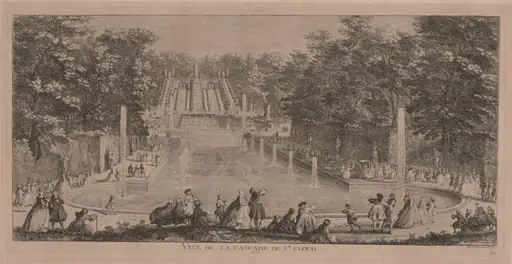 The Cascades of St. Cloud
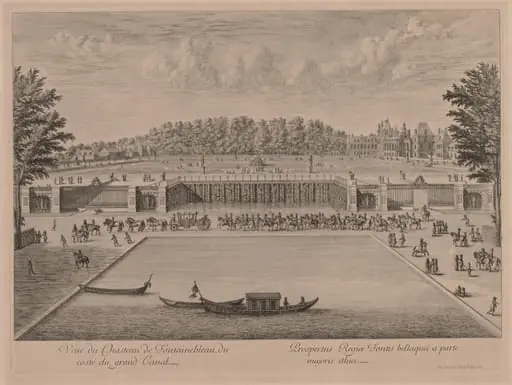 Chateau Fontainebleau from the Grand Canal
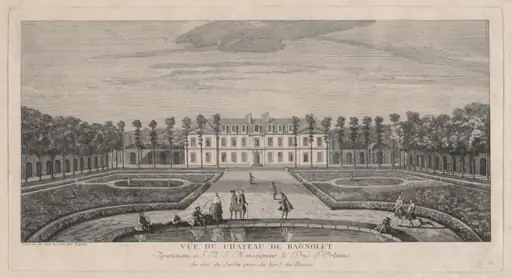 Chateau of Bagnolet
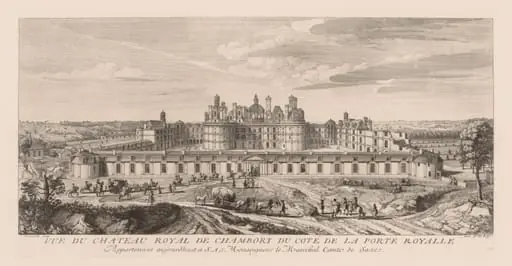 Vue du Château royal de Chambord, du côte de la Porte royale
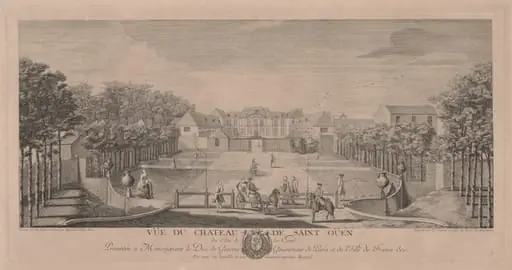 Chateau Saint Ouen from the Court