Artwork
Landscape with House by a Pond
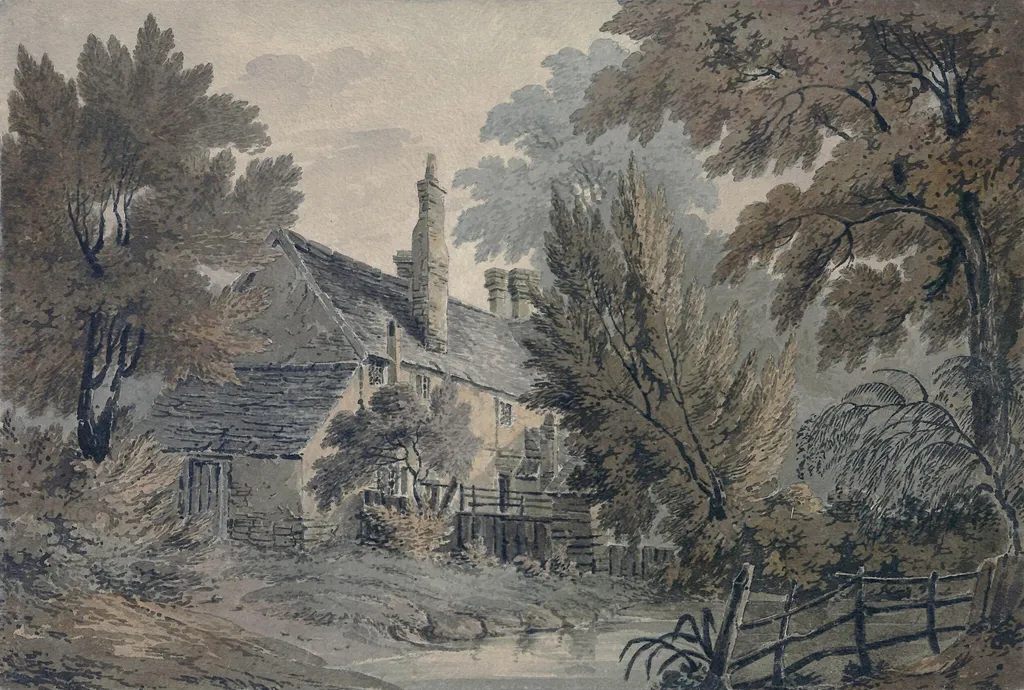
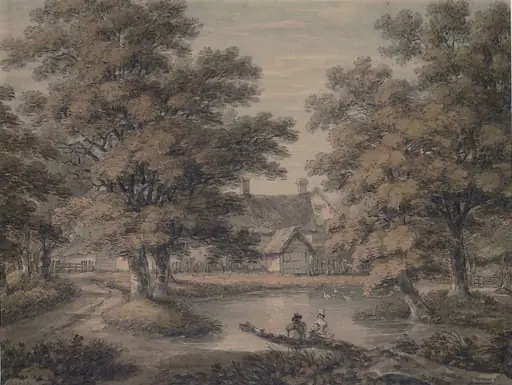
Landscape with House by a Pond is a watercolor work on paper by the Romanticist artist James Bourne. It dates from 1800 and is held in the collection of the Victoria and Albert Museum.
About this work
Overview
Its small scale and delicate handling reflect the intimate nature of watercolour as a medium favored for personal observation rather than grand display.
James Bourne painted this watercolour in 1800, capturing a tranquil rural scene with modest means. The work is executed in transparent washes, emphasizing atmosphere over detail. Its small scale and delicate handling reflect the intimate nature of watercolour as a medium favored for personal observation rather than grand display. The composition centers on a solitary house beside a still pond, framed by sparse woodland.
Subject & Meaning
The scene depicts a modest stone cottage with a steep roof and chimney, nestled beside a pond under a muted sky. Bare trees and uneven ground suggest late autumn or early winter, reinforcing a sense of quiet solitude. The wooden fence along the edge implies human presence without intrusion. The painting conveys stillness not as emptiness, but as a contemplative harmony between architecture and landscape, aligned with early Romantic sensibilities.
Technique & Style
Bourne employed loose, fluid brushwork to suggest texture and motion—ripples in the water, rustling leaves, and the roughness of stone and earth. Muted greys, browns, and pale ochres dominate, with minimal contrast to preserve the hazy, diffused light. The watercolour’s transparency allows underlying paper to contribute to the tonal range, enhancing the sense of atmospheric depth without heavy pigment.
History & Provenance
The painting’s early 19th-century origin places it within a period when watercolour was gaining recognition as a serious medium in Britain. While Bourne was not a widely documented artist, this work aligns with the practices of amateur and professional watercolourists who documented the English countryside. Its survival suggests it was privately held, possibly by a collector interested in topographical or pastoral subjects.
Context
Created during the rise of Romanticism, the painting reflects a cultural shift toward valuing quiet, unidealized nature. Unlike grand landscapes of the past, this scene offers no heroic scale or dramatic narrative—only a humble dwelling and its immediate surroundings. Such works responded to industrialization by idealizing rural stillness, not as nostalgia, but as a quiet affirmation of natural order.
Legacy
Though Bourne’s oeuvre remains limited in the historical record, this watercolour exemplifies a broader trend in early 19th-century British art: the use of modest scale and restrained palette to evoke emotional resonance through everyday nature. It stands as a quiet testament to the medium’s capacity for nuance, influencing later generations who sought sincerity over spectacle in landscape representation.
Own this work as a print
Artist & collection

Artist
James Elliot Bourne is an English singer-songwriter and musician. He is known as the co-founder of pop-punk bands Busted and Son of Dork, and he also created his own electronic project under the alias Future Boy. From…

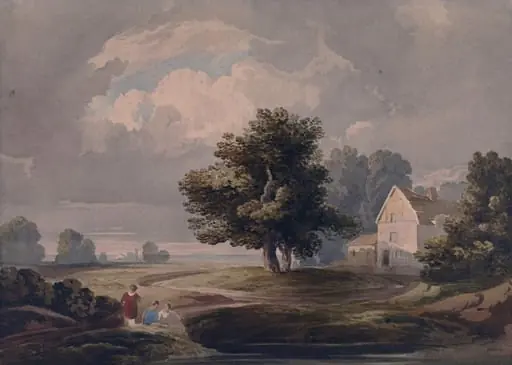 Landscape with cottage
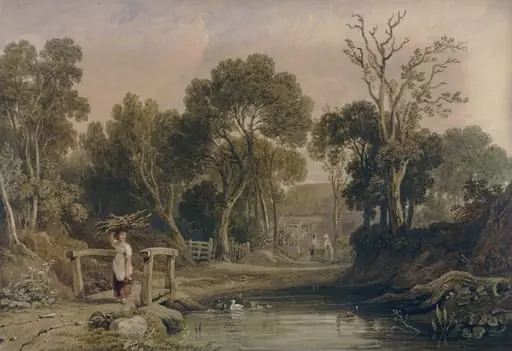 Landscape with a pond and country folk outside a cottage
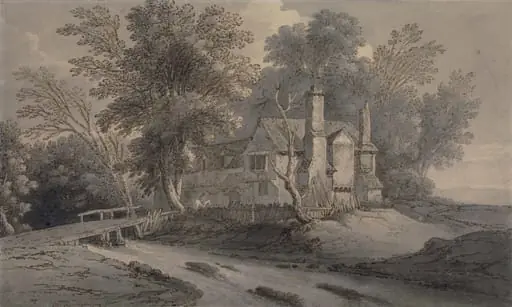 An Old Manor House
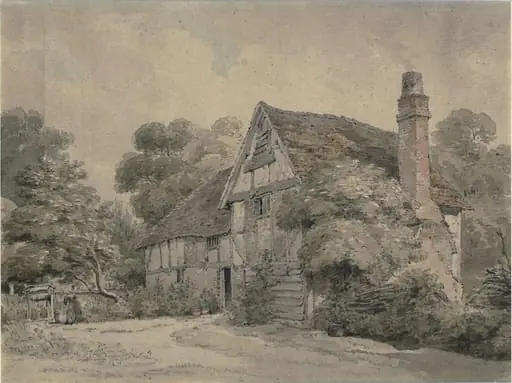 Cottage at Bookham
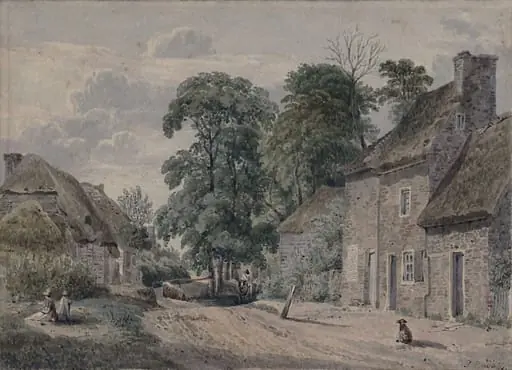 Manstone, near Ramsgate, Kent
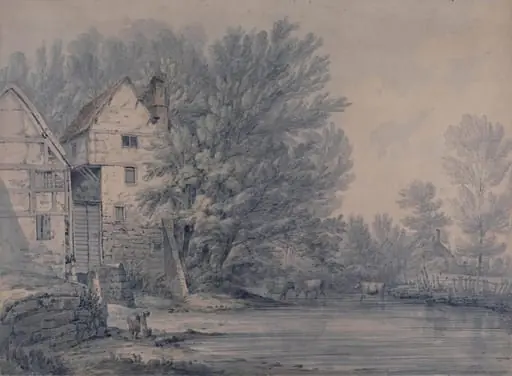 Millpond near Shrewsbury
 The Gateway at Beaulieu Abbey, Hants
 Near Esther, Surrey
 Lake House, Epping
 Landscape with cottage and figures
 Farmhouse and Trees
 Landscape with pond and trees