Artwork
On the Ausable
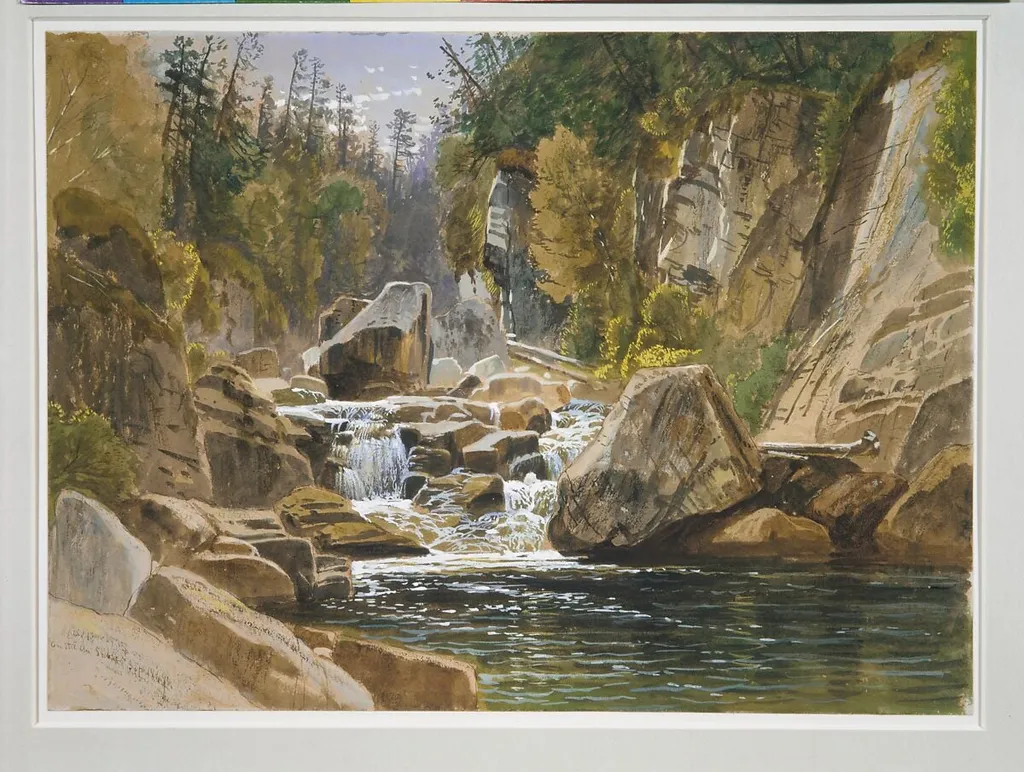
On the Ausable is a watercolor work on paper by the Hudson River School artist James David Smillie. It dates from 1869 and is held in the collection of the Metropolitan Museum of Art.
About this work
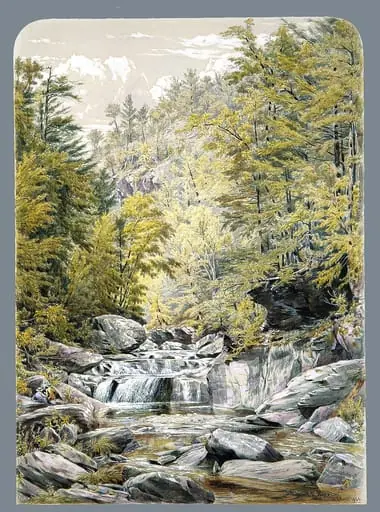
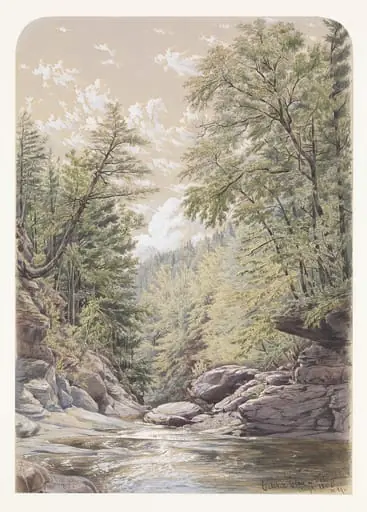
You see a quiet river winding through tall trees, their leaves just starting to turn gold.
Smillie painted this in 1869, right after the Civil War. The calm water feels like a pause—nature healing. Look close: he used tiny strokes of gouache (thicker, opaque watercolor) to make the sunlight pop on the bark.
If you like this, try searching for the subject *rivers*.
Overview
The painting exemplifies Smillie's reputation as a master of watercolor, prioritizing atmospheric light and detailed observation over dramatic narrative.
James David Smillie's 'On the Ausable,' executed in 1869, is a watercolor and gouache study on green-gray wove paper depicting the Ausable River in the Adirondack Mountains. The composition centers on a calm, winding waterway that guides the viewer's eye through a dense forest of tall trees. Smillie captures the transition of seasons, with foliage beginning to turn gold, suggesting early autumn. The artist employs a technique characteristic of his mature landscape work, utilizing fine, precise strokes of opaque gouache to render dappled sunlight filtering through the canopy and reflecting off the water's surface. This approach creates a luminous contrast against the darker, more muted tones of the surrounding woods and the green-gray paper ground. Created shortly after the American Civil War, the work reflects the Hudson River School tradition of finding spiritual renewal and national identity in the American wilderness. The painting exemplifies Smillie's reputation as a master of watercolor, prioritizing atmospheric light and detailed observation over dramatic narrative. It stands as a representative example of his contributions to American landscape art during the late 19th century, emphasizing the serene and restorative qualities of the natural world.
Subject & Meaning
The work captures a quiet stretch of the Ausable River flanked by tall trees, the leaves just beginning to turn gold. The subdued atmosphere may reflect a post‑Civil War desire for natural renewal, offering viewers a visual pause that evokes the restorative qualities of the American countryside.
Technique & Style
Smill employs a combination of watercolor and gouache, using fine, opaque gouache strokes to accentuate sunlight on the tree bark. The delicate layering of translucent washes conveys the river’s calm surface, while the contrast between the transparent and opaque media highlights texture and light within the scene.
History & Provenance
Created in 1869, shortly after the Civil War, On the Ausable entered the American Wing collection of the museum. The piece remains an example of mid‑nineteenth‑century American landscape painting, illustrating the period’s interest in depicting regional waterways and seasonal change.
Artist & collection

Artist
James David Smillie was an American artist, cofounder of the American Watercolor Society and New York Etching Club. His brother was painter George Henry Smillie.