Artwork
Catskill Clove
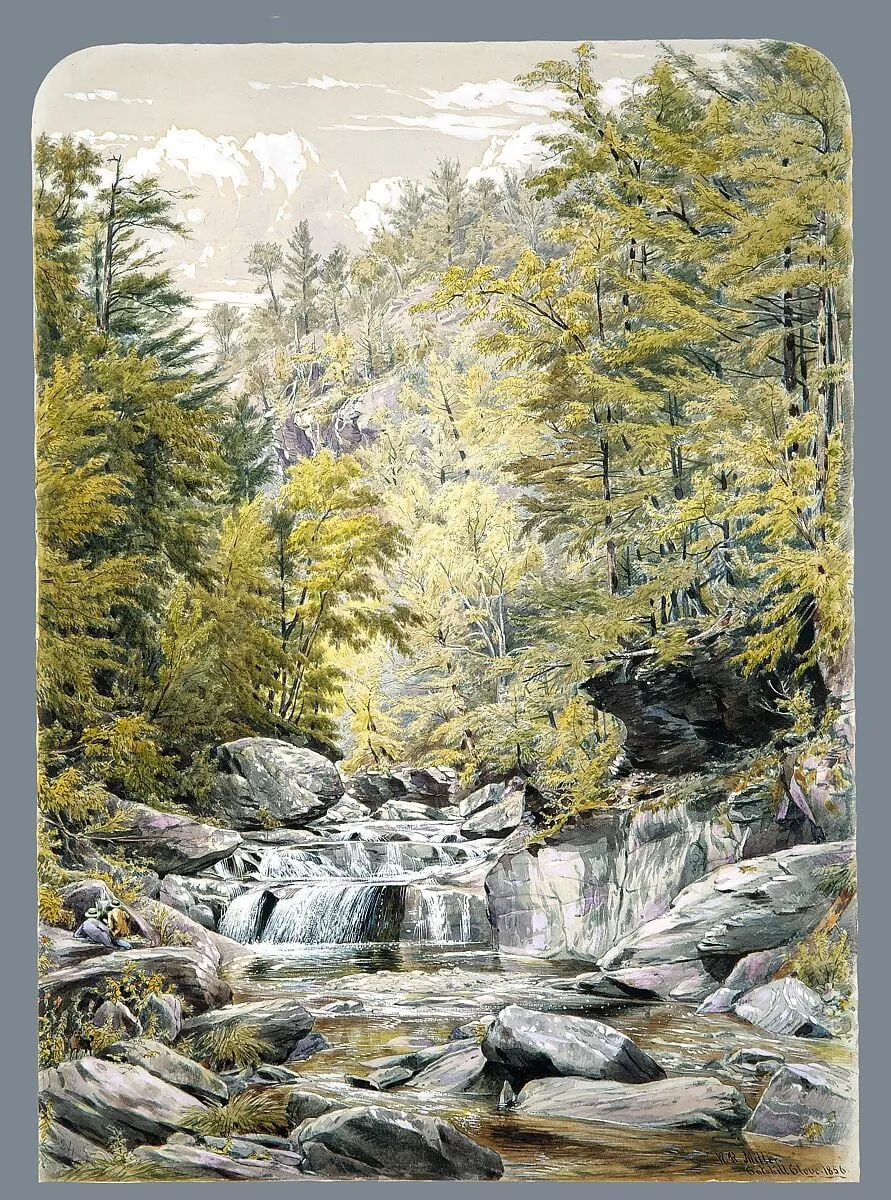
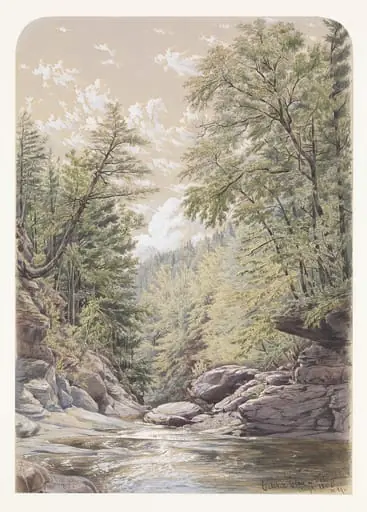
Catskill Clove is a watercolor work on paper by the Hudson River School artist William Rickarby Miller. It dates from 1856 and is held in the collection of the Metropolitan Museum of Art.
About this work
Overview
Created in 1856, William Rickarby Miller’s work titled Catskill Clove is executed on light‑green wove paper with watercolor, gouache, and graphite. The composition presents a tranquil river winding through steep, verdant hills, its surface catching the sun’s reflection. A solitary tree leans over the riverbank, anchoring the scene and inviting the viewer’s eye along the water’s course.
Subject & Meaning
The painting captures a specific slice of the Catskill region in upstate New York, emphasizing the interplay of water, foliage, and a lone tree. By focusing on a quiet, natural moment, Miller highlights the serenity of the American landscape, offering a contemplative view of rural life that contrasts with the more dramatic, narrative scenes popular in European art of the period.
Technique & Style
Miller builds the image through fine, overlapping washes of watercolor—a glazing method that layers translucent tones to render the luminous quality of leaves and rock surfaces. Gouache adds opacity where needed, while graphite outlines subtle details. The combined media create a soft, atmospheric effect that suggests the warmth of a summer afternoon without relying on bold, linear strokes.
History & Provenance
Catskill Clove belongs to the American Wing collection, reflecting Miller’s early commitment to depicting native scenery at a time when many American artists still favored European subjects. The work entered the museum’s holdings through acquisition in the early 20th century, illustrating the institution’s effort to document the development of a distinctly American landscape tradition.
Artist & collection