Artwork
Carnival in Flanders (Zürich)
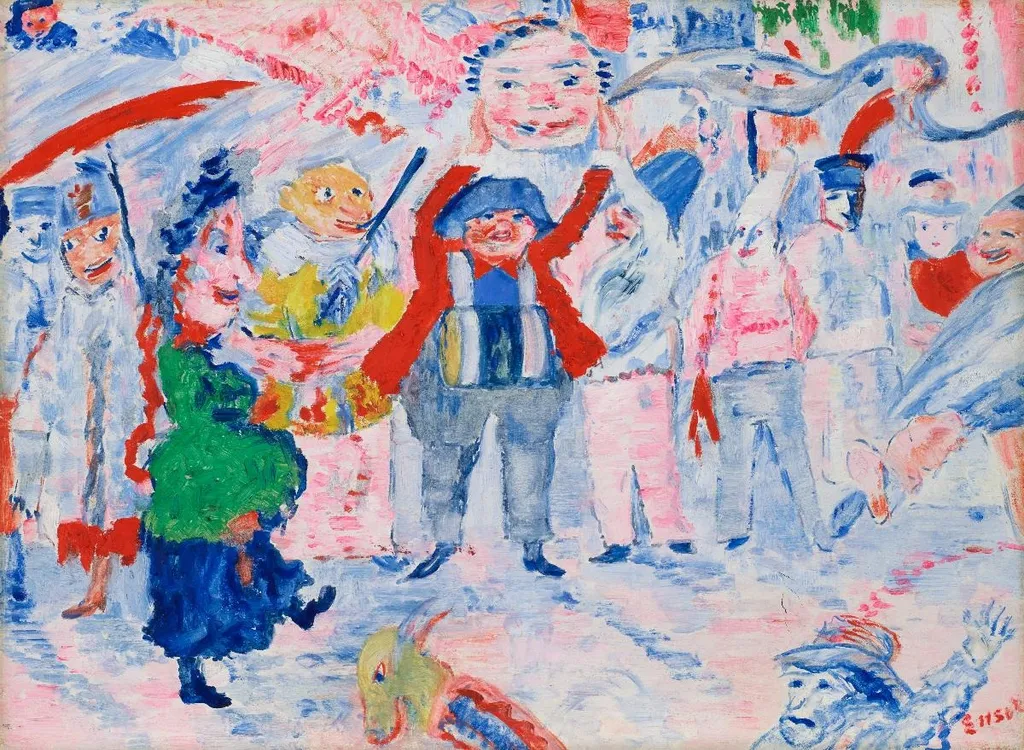
Carnival in Flanders (Zürich) is an oil painting by James Ensor. It dates from 1927 and is held in the collection of the Kunsthaus Zürich.
About this work
Overview
James Ensor’s 1927 oil painting *Carnival in Flanders (Zürich)* captures a bustling street festivity. The canvas is dominated by a central crowd of masked revelers whose bright costumes and animated gestures convey a sense of communal exuberance. The work is part of the permanent collection of the Kunsthaus Zürich.
Subject & Meaning
The scene portrays a carnival procession, with figures in vivid attire—among them a man in a red jacket, a woman in green, and a participant raising his arms in celebration. The composition suggests a collective joy, while the masks hint at the tradition of anonymity and social inversion typical of Flemish carnivals.
Technique & Style
Executed in oil, the painting employs saturated hues and brisk brushwork that lend a kinetic quality to the figures. A muted backdrop recedes behind the central group, emphasizing the bright costumes and creating depth through layered pigment and textured surface.
History & Provenance
Created in the late 1920s, the work reflects Ensor’s mature period after his long association with the avant‑garde collective Les XX. It entered the Kunsthaus Zürich’s holdings in the mid‑20th century, where it remains on display as part of the museum’s modern European collection.
Context
Ensor, a native of Ostend, Belgium, was a pivotal figure linking 19th‑century symbolism to later expressionist and surrealist currents. His fascination with masks, masquerades, and the grotesque informed this painting, situating it within his broader exploration of societal masks and the tension between public festivity and private identity.
Artist & collection
Artist
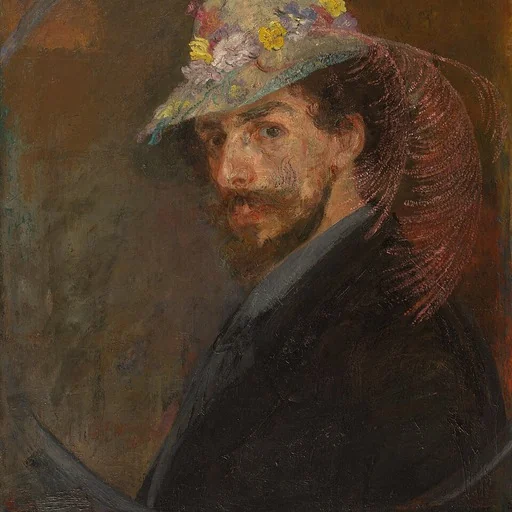
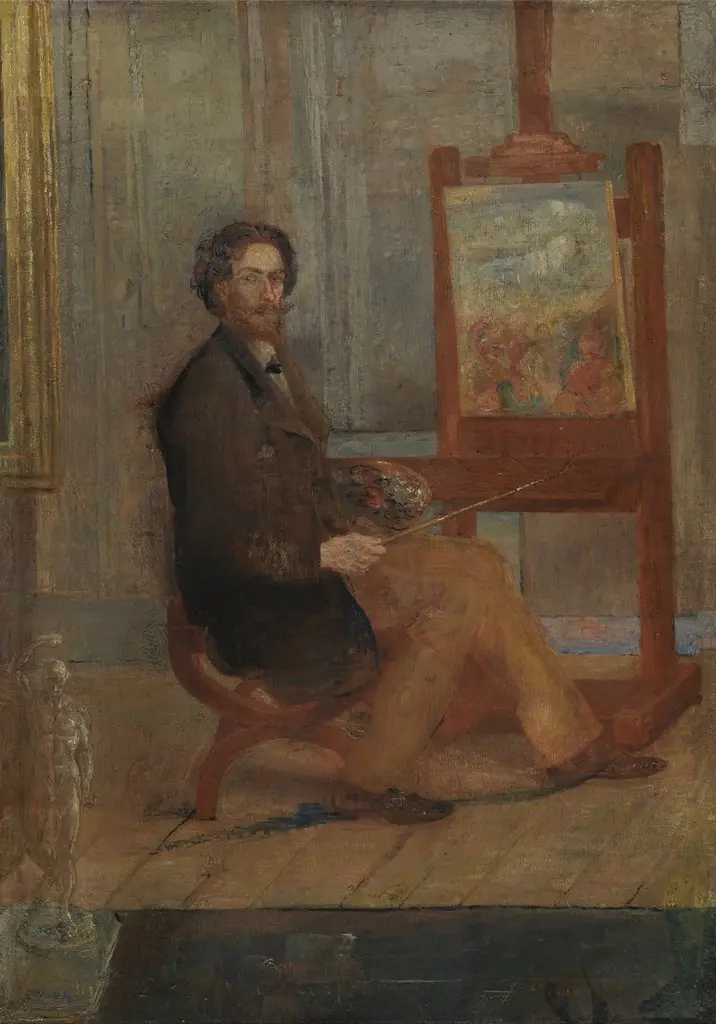
James Sidney Edouard, Baron Ensor (13 April 1860 – 19 November 1949) was a Belgian painter and printmaker, an important influence on expressionism and surrealism who lived in Ostend for most of his life.

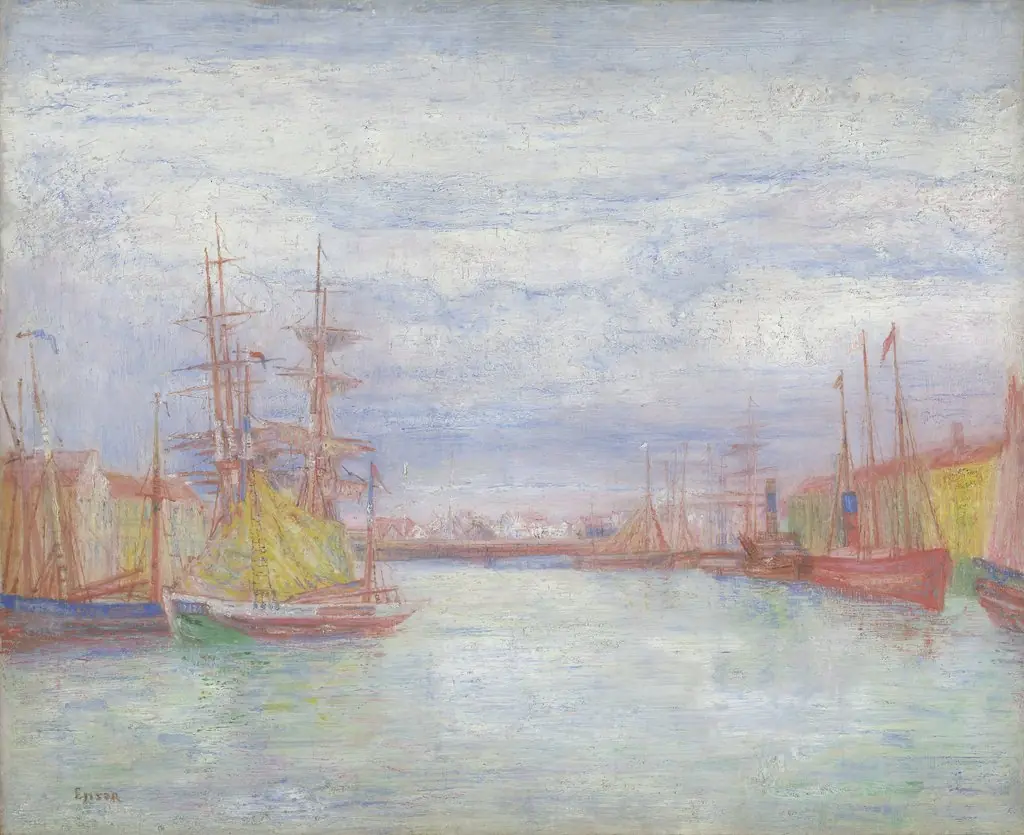
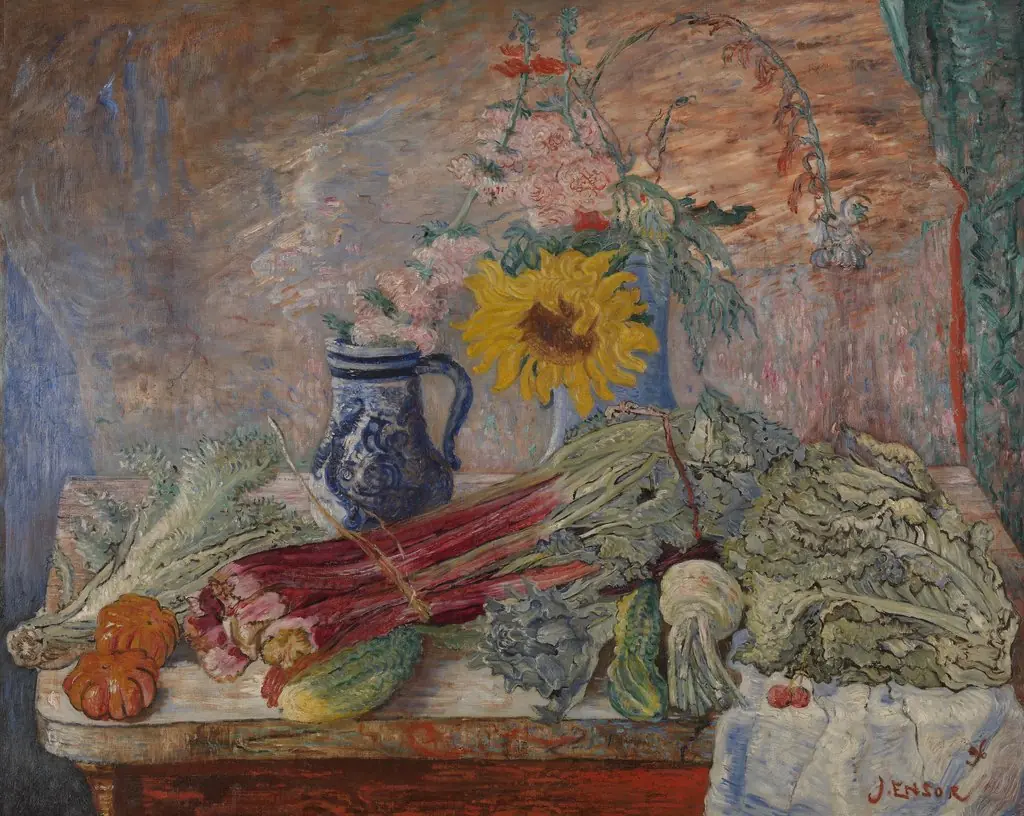
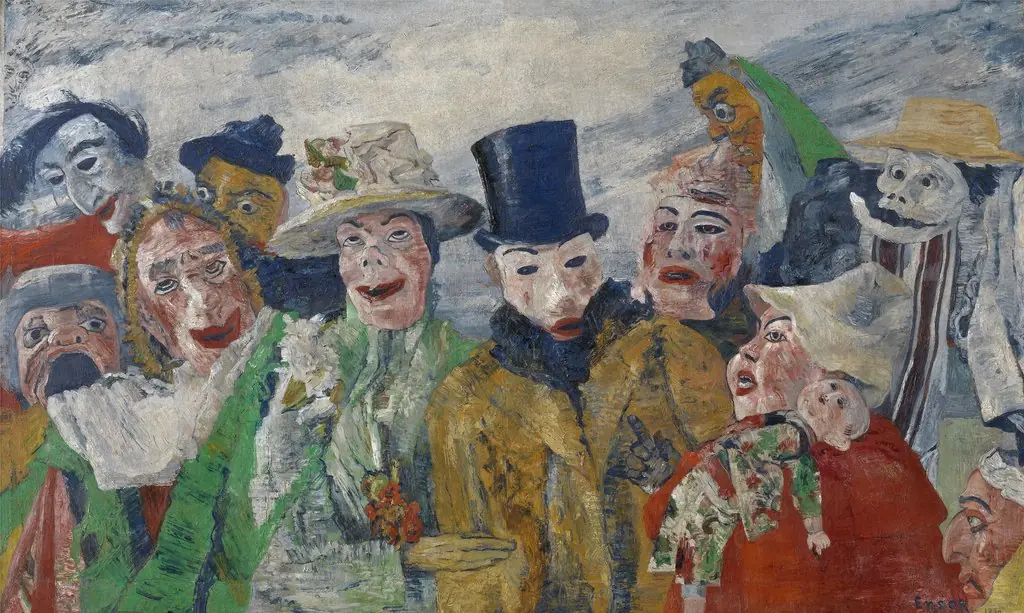 The Intrigue (Ensor)
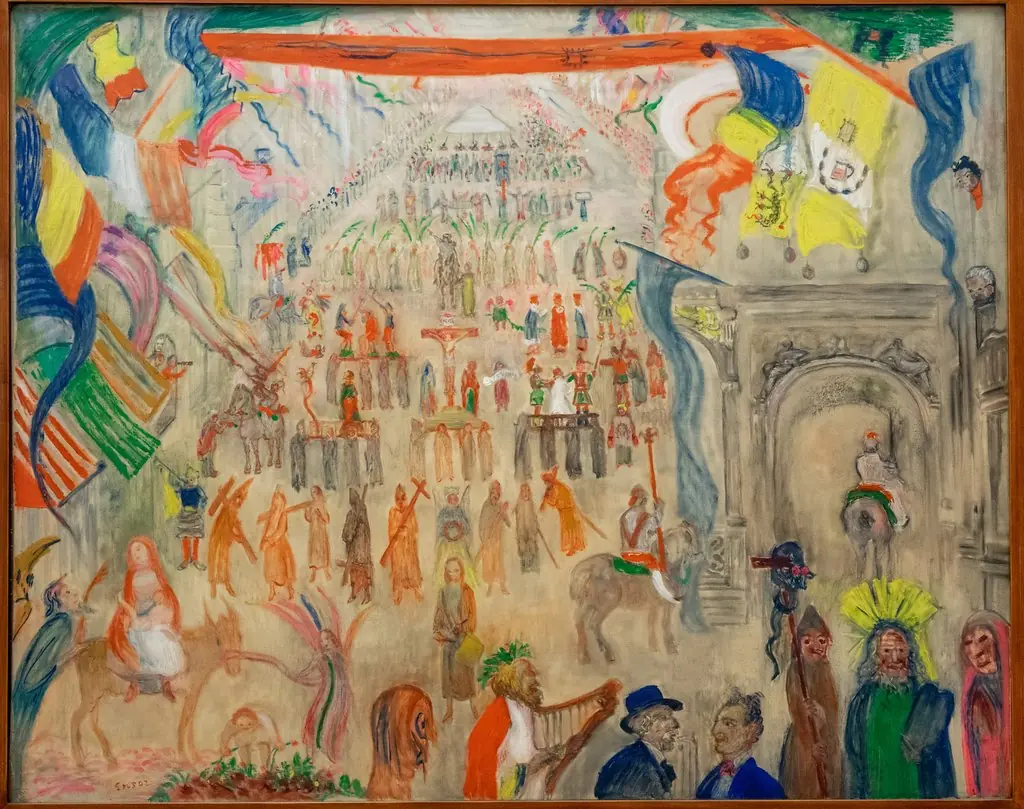 The Procession of the Penitents at Furnes
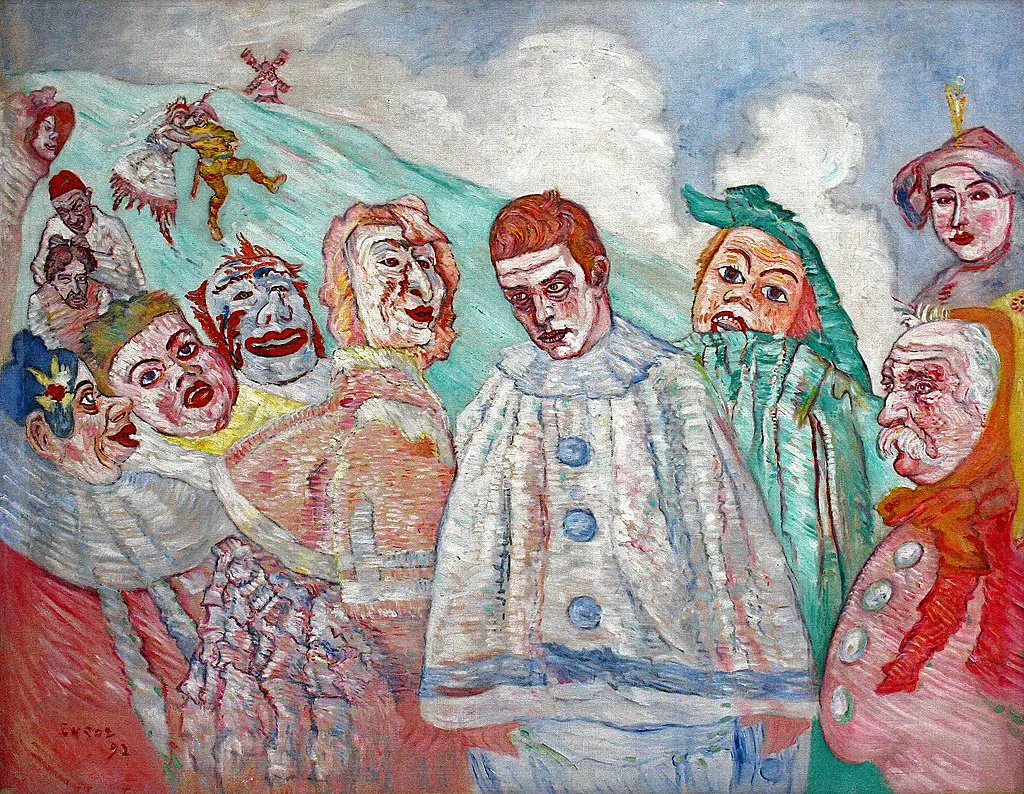 Pierrot's despair
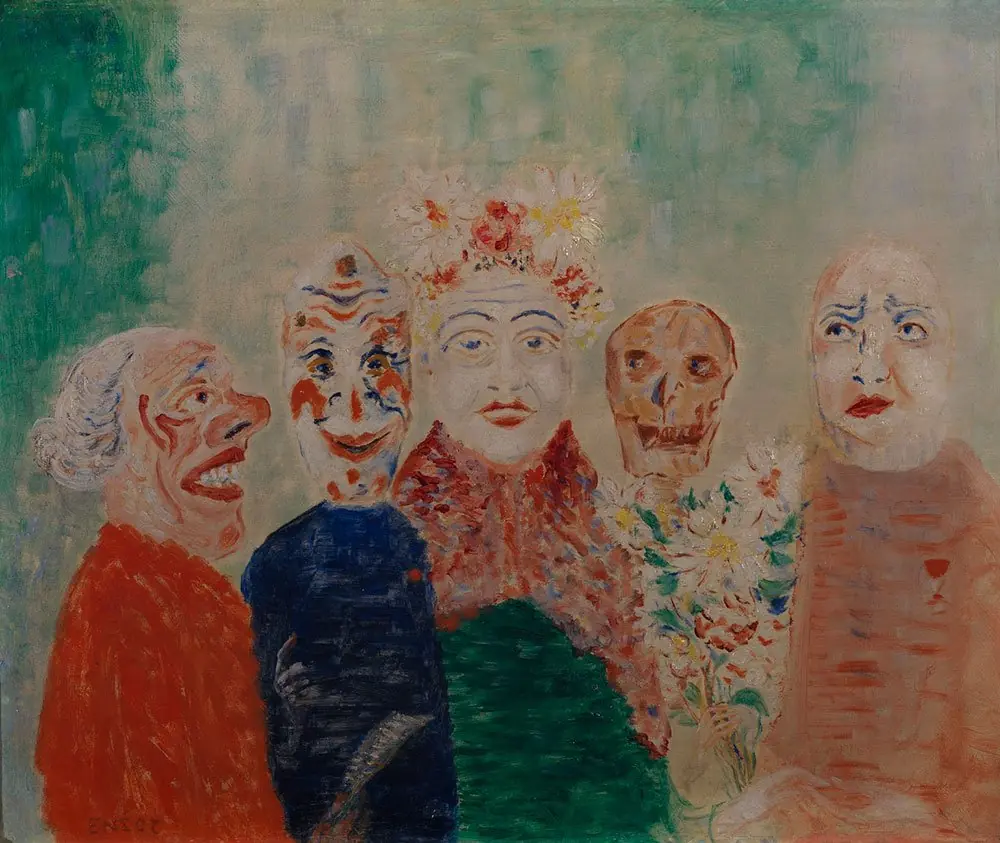 The Mask's Wedding
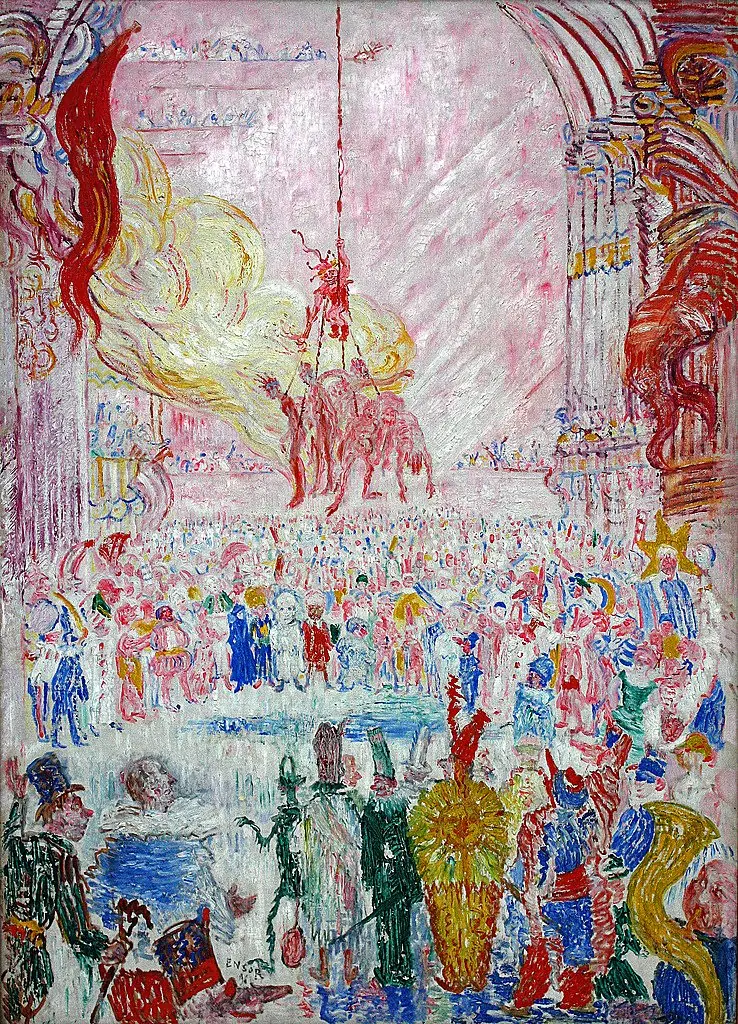 The Vengeance of Hop-Frog
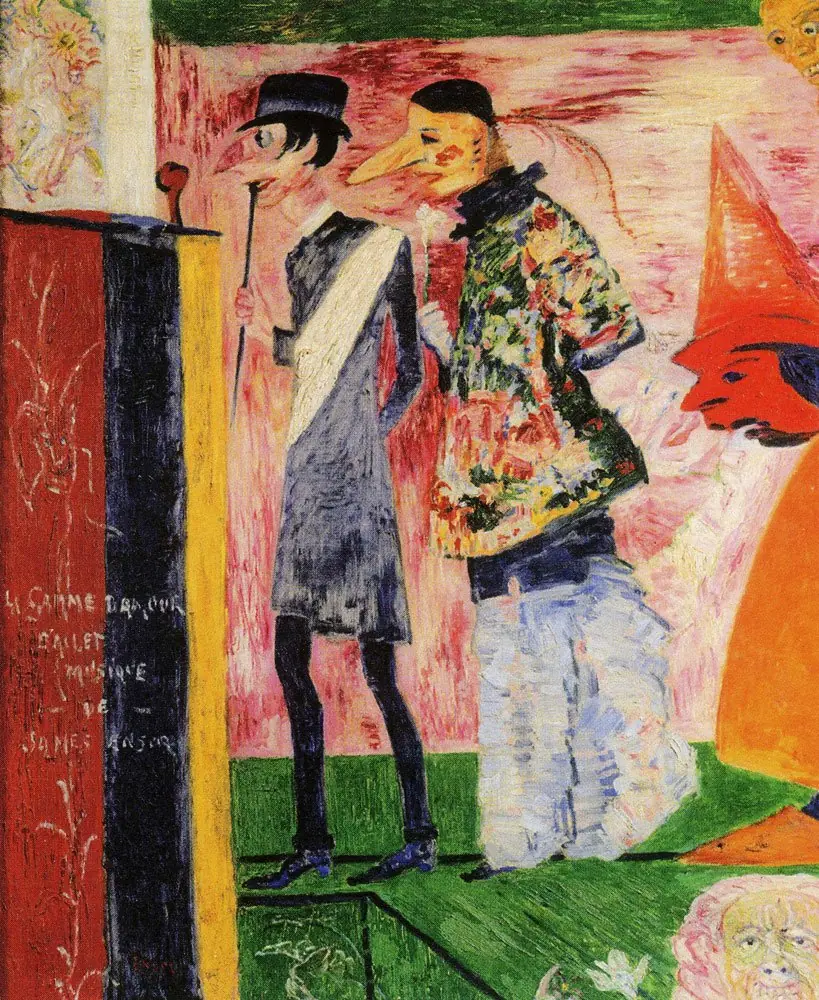 Figures in Front of a Poster of La Gamme d’amour (after The Entry of Christ into Brussels in 1889)
 17th of May in a Small, Norwegian Town
 Children in the Street
 Christ's Entry Into Brussels in 1889
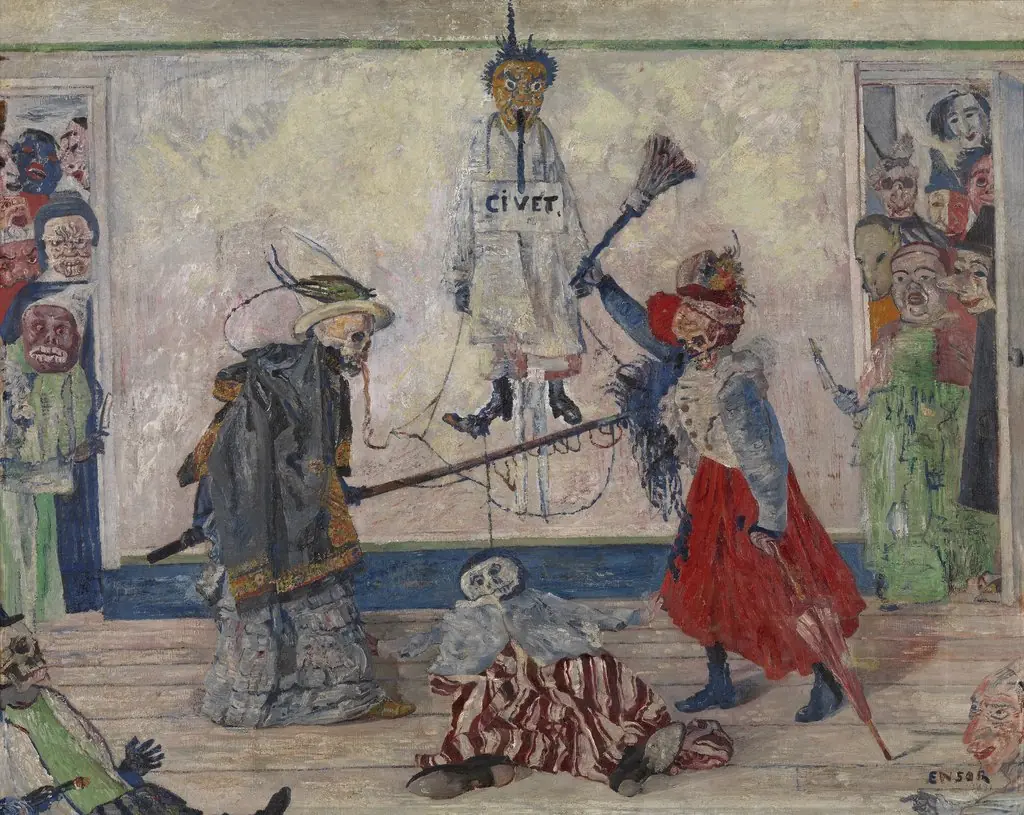
 Masks Confronting Death
 Force Love Rage
 Cofetărie la Putna