Artwork
The Vengeance of Hop-Frog
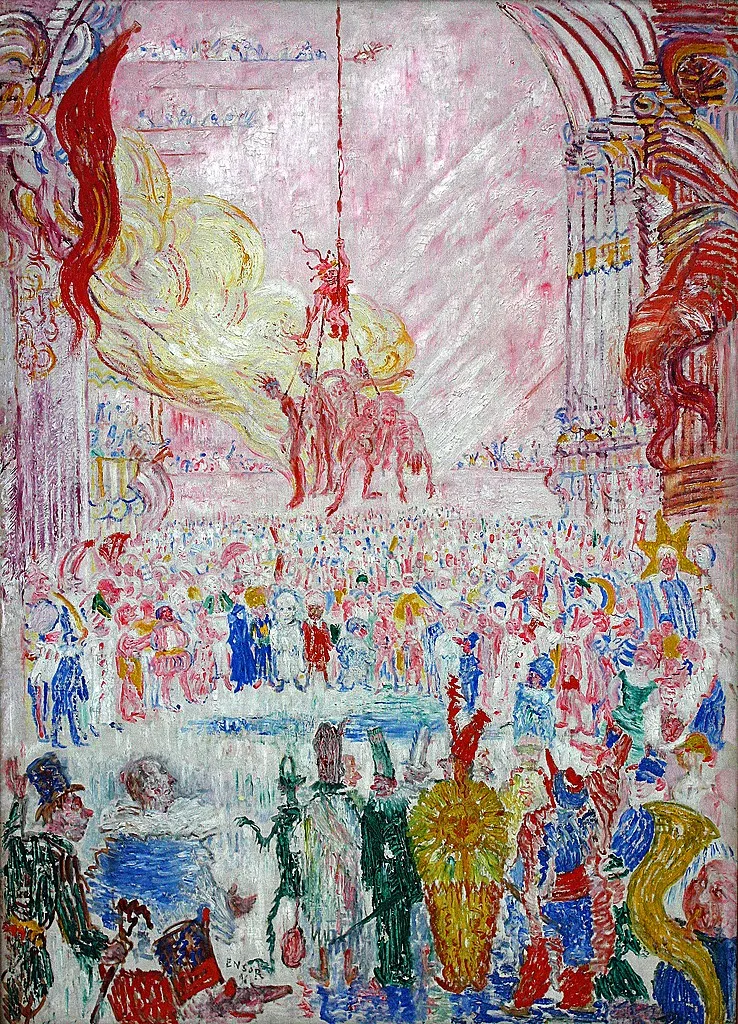
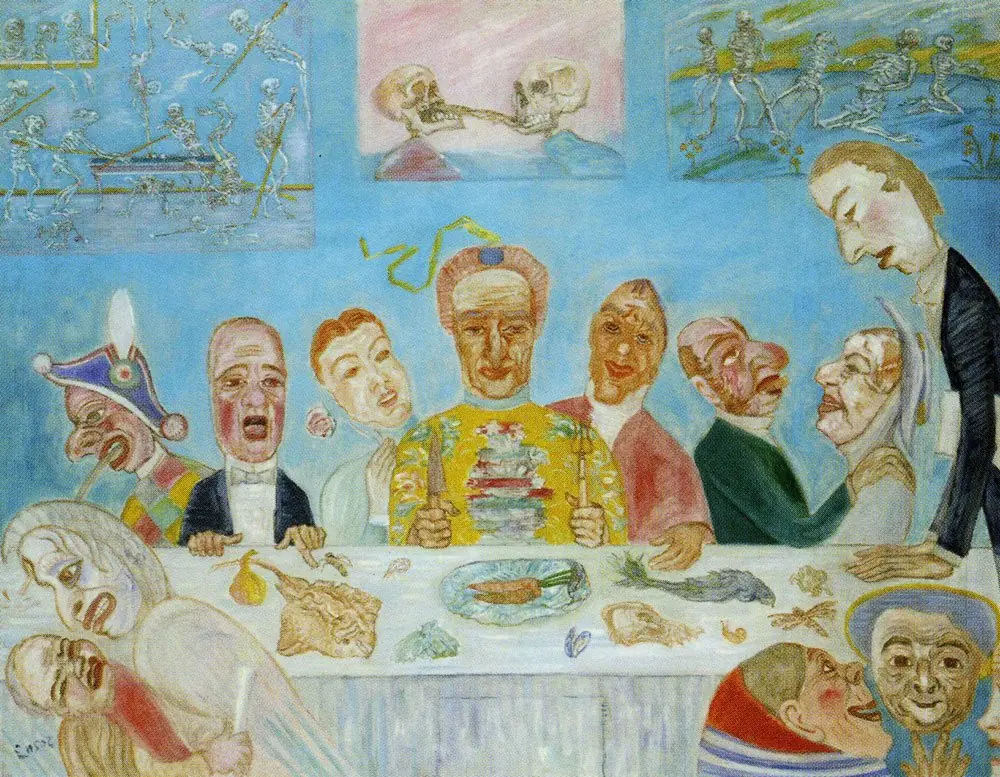
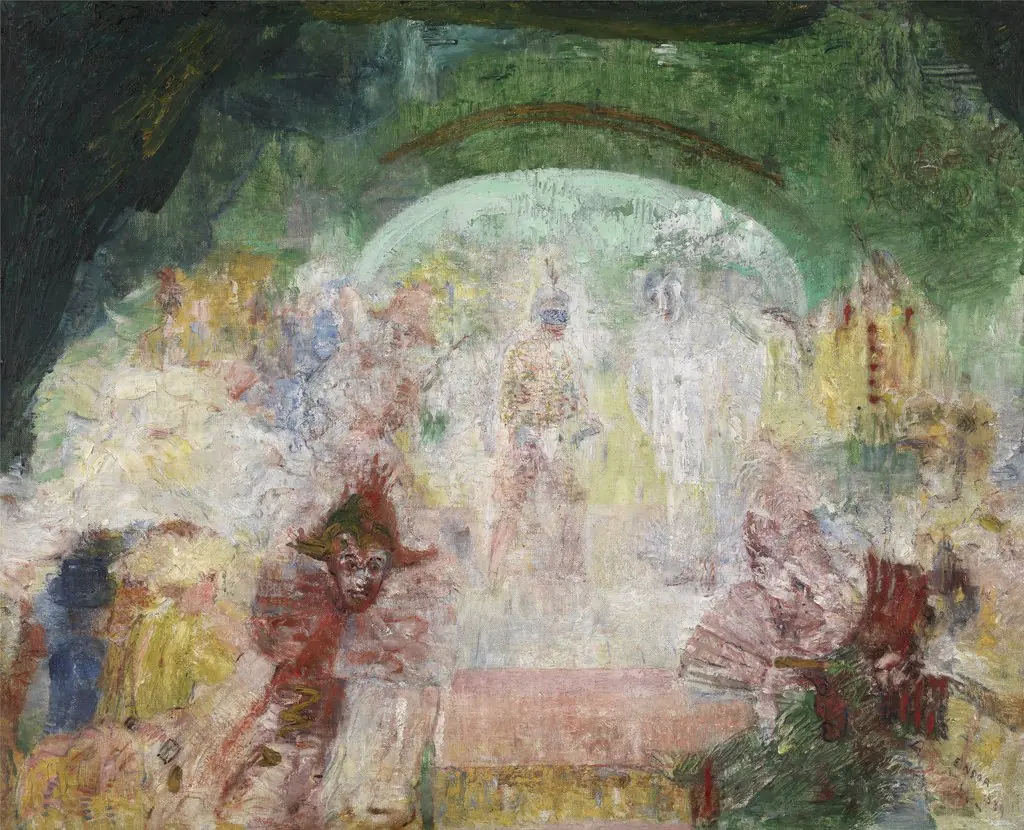
The Vengeance of Hop-Frog is an oil painting by the Post-Impressionist artist James Ensor. It dates from 1898 and is held in the collection of the Kröller-Müller Museum.
About this work
Overview
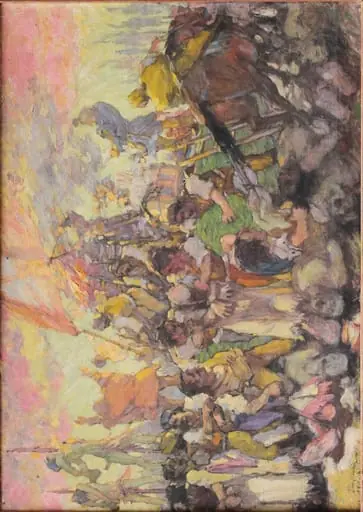
James Ensor's 1898 oil painting, *The Vengeance of Hop-Frog*, captures a moment of violent retribution drawn from Edgar Allan Poe’s short story.
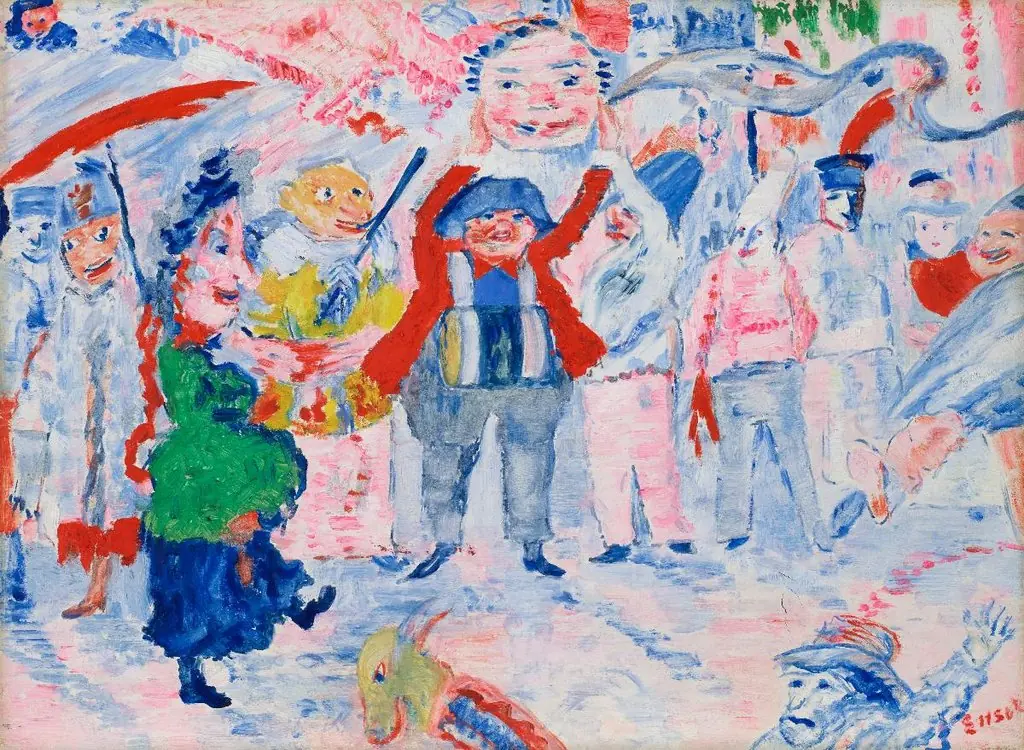
James Ensor's 1898 oil painting, *The Vengeance of Hop-Frog*, captures a moment of violent retribution drawn from Edgar Allan Poe’s short story. Executed in a bold, expressive style, the work reflects Ensor’s fascination with theatricality and social critique. As a central figure in Belgium’s avant-garde circle Les XX, Ensor used this painting to explore the boundaries between reality and grotesque fantasy, pushing beyond conventional representation.
Subject & Meaning
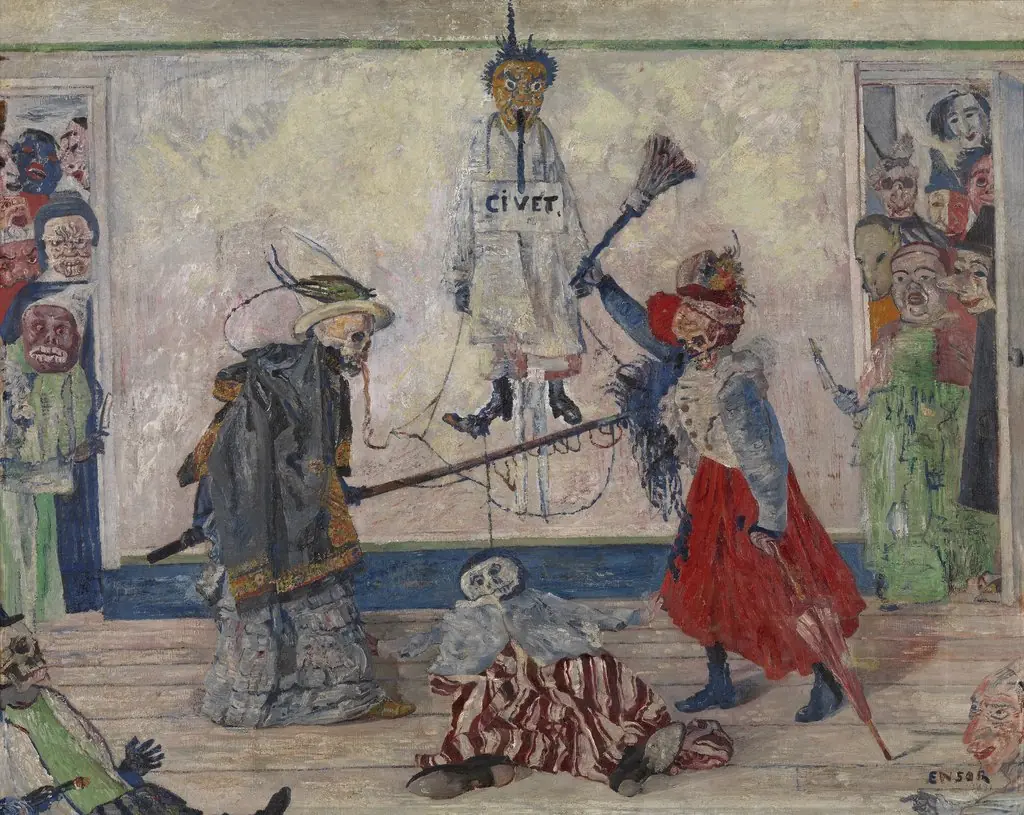
The painting illustrates Hop-Frog, a disabled jester seeking revenge against his royal tormentors. Ensor transforms Poe’s narrative into a chaotic crowd scene, where masked figures and swirling motion suggest collective hysteria. The jester’s presence is implied rather than central, emphasizing the collapse of power and the eruption of suppressed rage. The work critiques aristocratic cruelty through symbolic spectacle, not literal storytelling.
Technique & Style
Ensor employs thick, rapid brushwork and a vivid palette dominated by reds, blues, and yellows to generate emotional intensity. Forms are distorted and flattened, rejecting naturalism in favor of psychological expression. The composition’s diagonal energy and layered figures create a sense of unstable motion, aligning the work with emerging expressionist tendencies while retaining a distinctly personal, almost hallucinatory vision.
History & Provenance
Created in 1898, the painting emerged during Ensor’s most experimental phase, when he increasingly turned to literary and satirical themes. It entered the Kröller-Müller Museum’s collection in the early 20th century, where it remains part of a significant holding of Ensor’s oeuvre. The work was not widely exhibited during his lifetime but gained recognition as modernist movements reevaluated his contributions to visual language.
Context
Ensor painted this during a period when Belgian artists were challenging academic norms through symbolic and grotesque imagery. His engagement with Poe’s tale coincided with broader European interest in psychological horror and the uncanny. The painting reflects anxieties about class, identity, and performance, resonating with the era’s shifting social hierarchies and the rise of modernist disillusionment.
Legacy
Though not widely known in Ensor’s time, *The Vengeance of Hop-Frog* later became a touchstone for expressionist and surrealist artists drawn to its emotional rawness and symbolic density. Its rejection of realism and embrace of psychological distortion anticipated key developments in 20th-century art. Today, it stands as a testament to Ensor’s role in redefining painting as a vehicle for inner turmoil and social critique.
Artist & collection
Artist
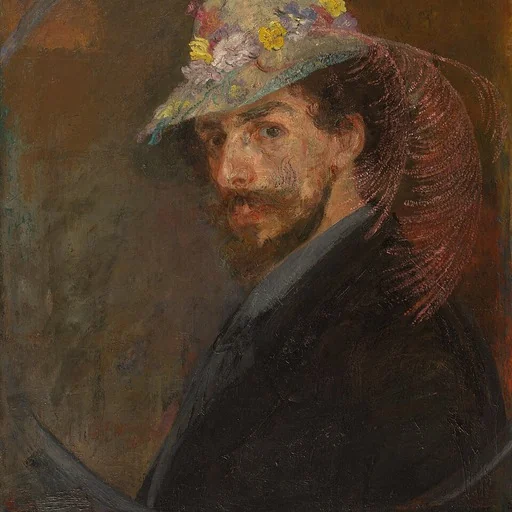
James Sidney Edouard, Baron Ensor (13 April 1860 – 19 November 1949) was a Belgian painter and printmaker, an important influence on expressionism and surrealism who lived in Ostend for most of his life.