Artwork
Pierrot's despair
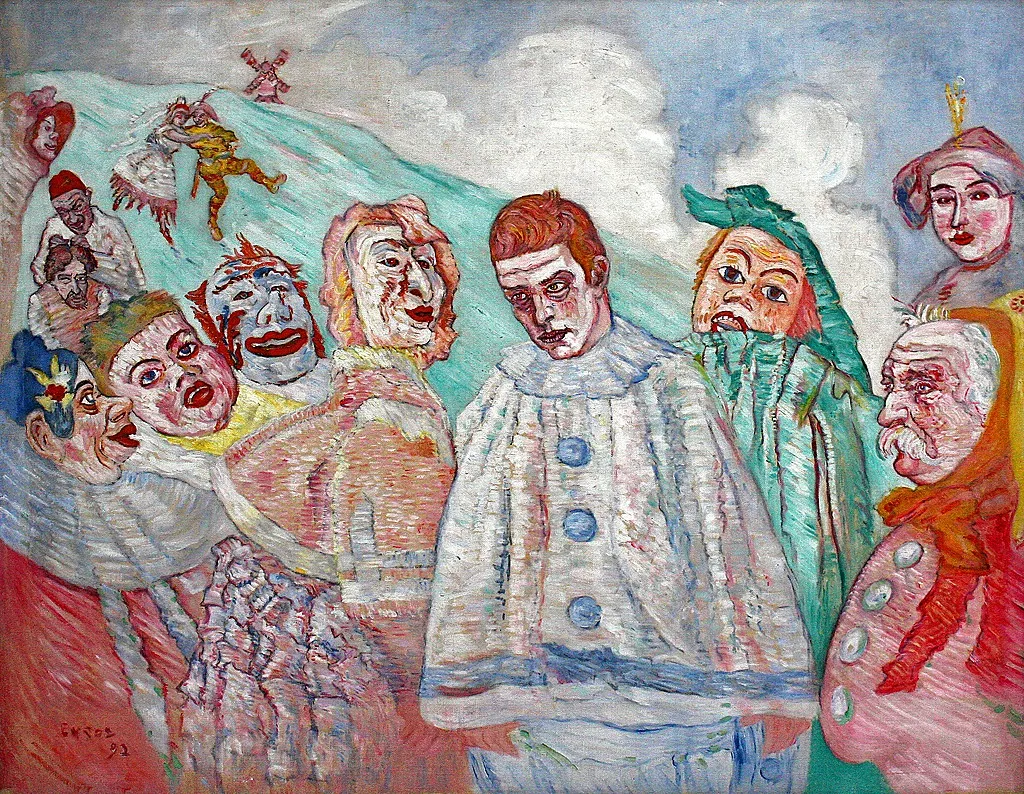
Pierrot's despair is an unspecified painting by the Post-Impressionist artist James Ensor. It dates from 1910 and is held in the collection of the Kröller-Müller Museum.
About this work
Overview
Ensor, who lived and worked in Ostend, used theatrical archetypes to explore psychological states.
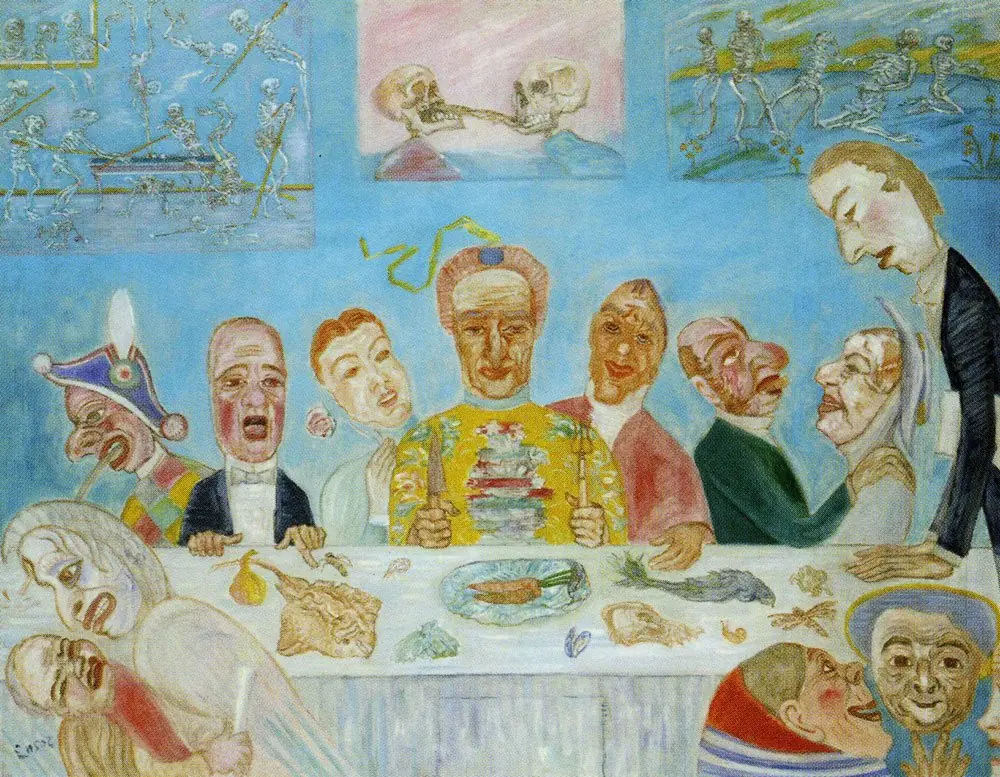
Painted in 1910 by Belgian artist James Ensor, *Pierrot’s Despair* is a vividly colored composition centered on the traditional commedia dell’arte figure Pierrot. Ensor, who lived and worked in Ostend, used theatrical archetypes to explore psychological states. The painting reflects his engagement with symbolic and expressive forms, moving beyond Impressionism toward a more personal, emotionally charged visual language.
Subject & Meaning
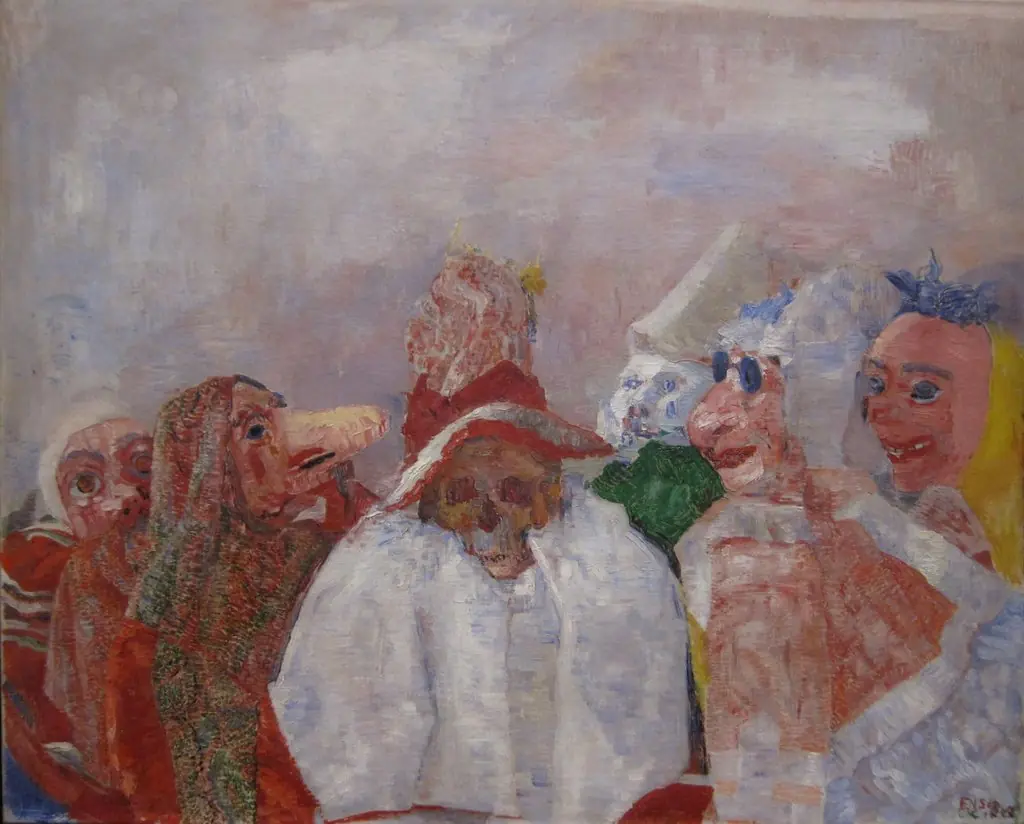
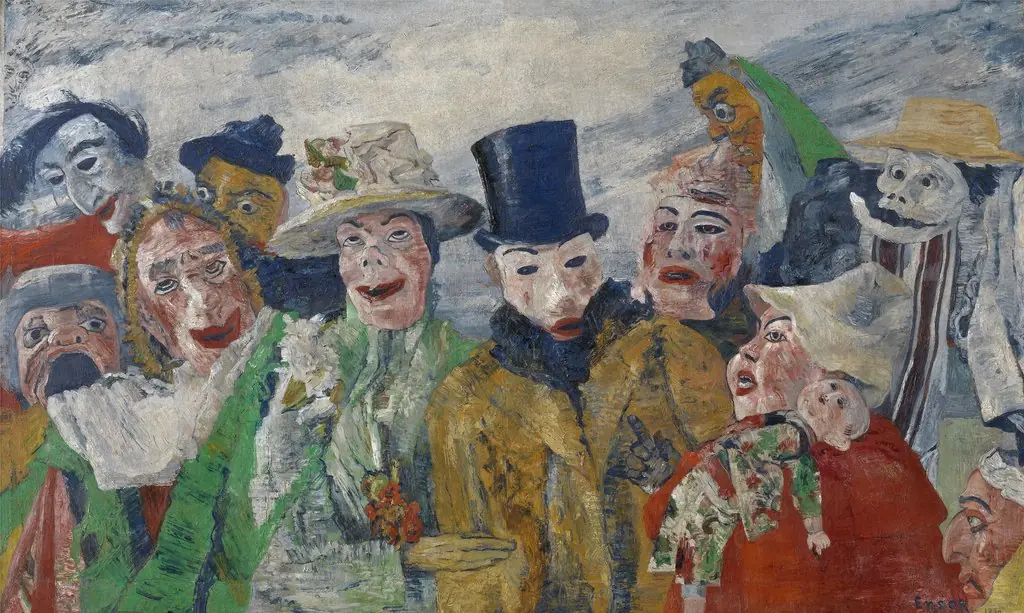
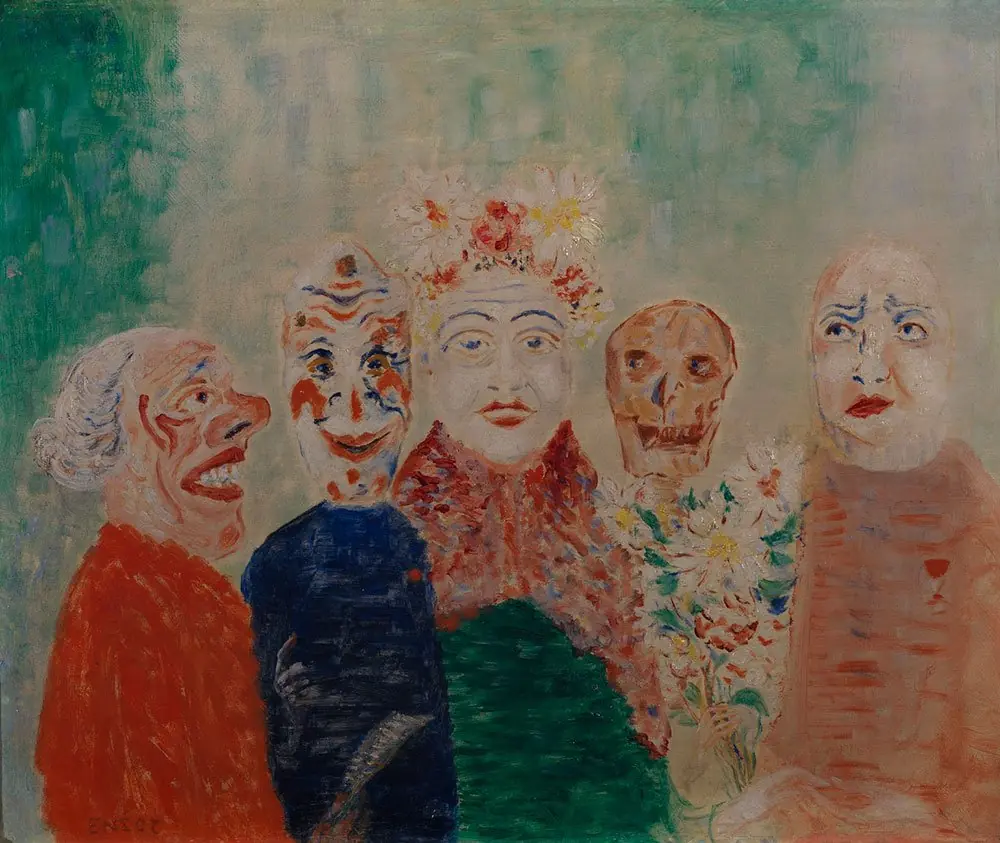
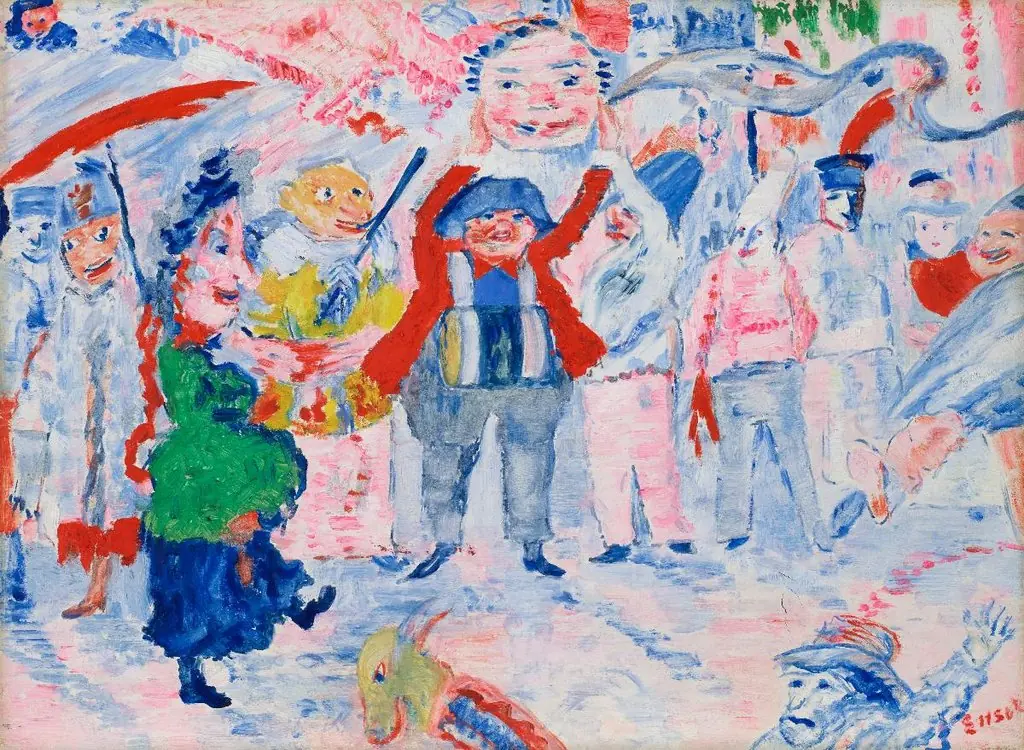
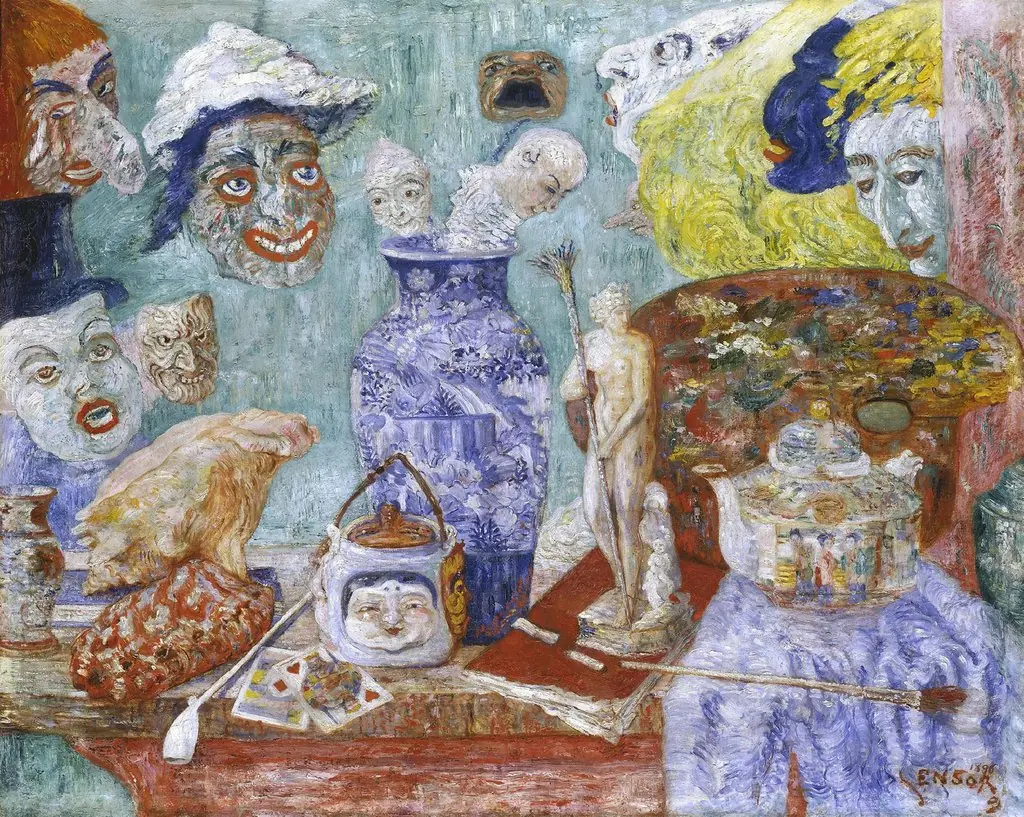
The central figure, Pierrot, is rendered in a white costume with blue buttons and a green hat, standing apart amid a crowd of masked and costumed individuals. His posture and expression convey isolation and melancholy, contrasting with the animated, distorted figures around him. The scene suggests a carnival or performance, but the emotional tone shifts from spectacle to inner turmoil, reflecting Ensor’s interest in human alienation and the fragility of identity.
Technique & Style
Ensor employed bold, non-naturalistic color and thick, expressive brushwork to construct a chaotic yet deliberate composition. Faces are exaggerated, costumes layered with clashing hues, and the background a swirling mix of red, blue, and white that blurs boundaries between figures and space. This approach rejects realism in favor of emotional intensity, aligning with Post-Impressionist concerns while anticipating Expressionist tendencies.
History & Provenance
The painting entered the collection of the Kröller-Müller Museum in the Netherlands, where it remains today. Ensor’s work gained recognition through his association with Les XX, a progressive Belgian artists’ group that championed avant-garde practices. Though initially met with resistance, his paintings like this one gradually influenced younger generations of modernists seeking new modes of psychological representation.
Context
In early 20th-century Europe, traditional theatrical figures like Pierrot were reinterpreted as symbols of existential loneliness. Ensor, disillusioned by societal norms and fascinated by masks and masquerade, used these characters to critique conformity and explore inner life. His work emerged amid broader cultural shifts toward psychological depth in art, paralleling developments in literature and philosophy.
Legacy
Though not widely celebrated in his lifetime, Ensor’s use of distortion, symbolic costume, and emotional intensity paved the way for Expressionist and Surrealist artists. *Pierrot’s Despair* exemplifies his unique fusion of satire and sorrow, influencing how later generations approached the representation of psychological states through figural distortion and theatrical metaphor.
Artist & collection
Artist
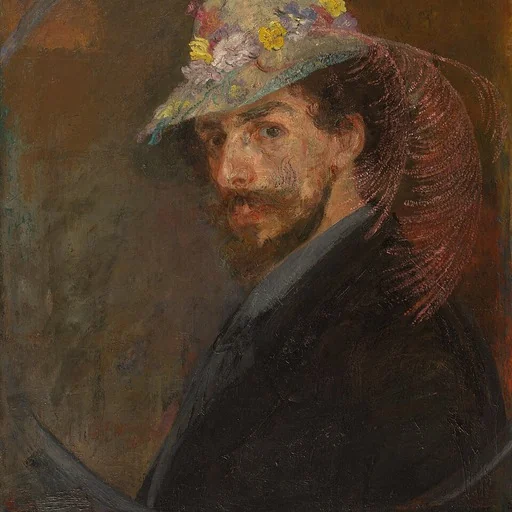
James Sidney Edouard, Baron Ensor (13 April 1860 – 19 November 1949) was a Belgian painter and printmaker, an important influence on expressionism and surrealism who lived in Ostend for most of his life.