Artwork
Portrait of the Artist's Father
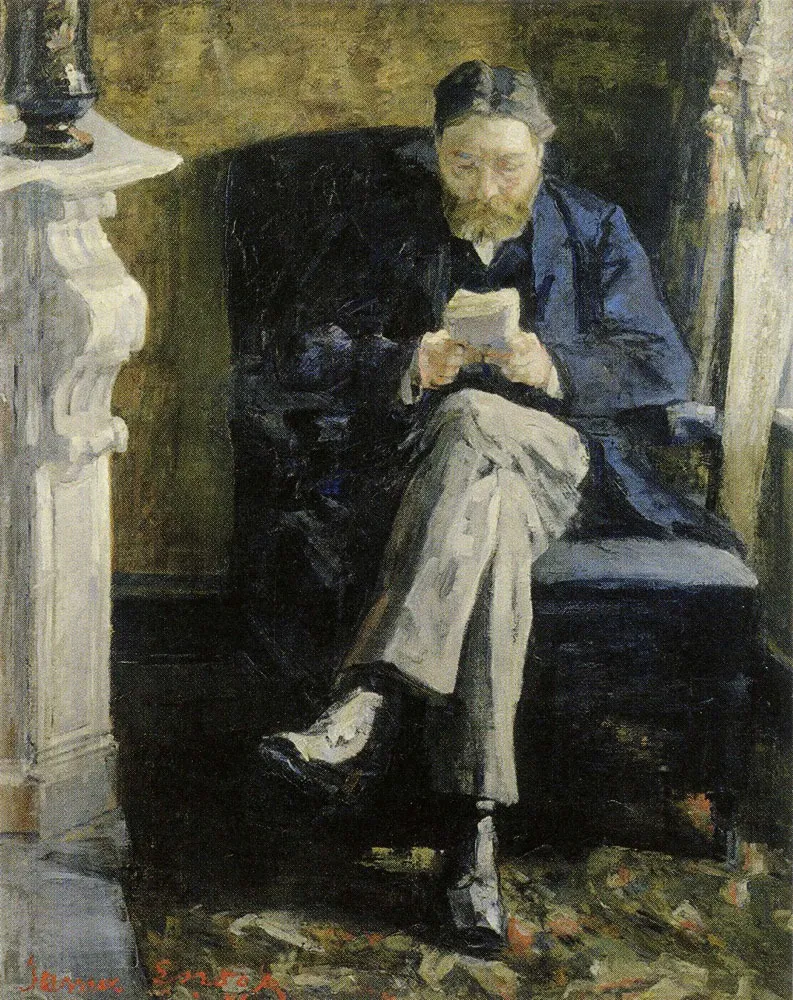
Portrait of the Artist's Father is an oil painting by the Post-Impressionist artist James Ensor. It dates from 1891 and is held in the collection of the Royal Museums of Fine Arts of Belgium.
About this work
Overview
Executed in the artist’s native Ostend, the work reflects a personal engagement rather than public spectacle.
Painted in 1891, this oil portrait captures James Ensor’s father in a moment of quiet absorption. Executed in the artist’s native Ostend, the work reflects a personal engagement rather than public spectacle. It belongs to the Royal Museums of Fine Arts of Belgium, where it remains part of a broader collection documenting Ensor’s evolution as a painter and printmaker within late 19th-century Belgian art.
Subject & Meaning
The subject is Ensor’s father, seated in a domestic interior, engrossed in reading. His face is partially hidden by the book, suggesting introspection and emotional distance. The absence of overt narrative or symbolism invites interpretation as a study of solitude and familial presence. The painting conveys a subdued intimacy, emphasizing the quiet dignity of ordinary life rather than dramatic expression.
Technique & Style
Ensor employs loose, expressive brushwork and a restrained palette dominated by dark blues and muted tones. Chiaroscuro models the figure with subtle gradations of light, enhancing the three-dimensionality of the form. The background remains indistinct, focusing attention on the seated figure. The technique balances realism with a tactile, almost tactile immediacy, avoiding the polish of academic portraiture.
History & Provenance
Created in 1891, the painting remained within Ensor’s personal circle until its acquisition by the Belgian state. It entered the collection of the Royal Museums of Fine Arts of Belgium in the early 20th century, where it has been consistently exhibited as part of the artist’s domestic oeuvre. Its provenance reflects the growing institutional recognition of Ensor’s work beyond his association with the avant-garde group Les XX.
Context
Painted during Ensor’s mature period, this portrait diverges from the grotesque and satirical themes of his more famous works. It aligns with a quieter phase in his practice, influenced by Flemish realism and the introspective tone of contemporary European portraiture. While linked to Les XX, this piece reveals a personal, non-confrontational side of the artist, grounded in observation rather than allegory.
Legacy
The portrait stands as a quiet counterpoint to Ensor’s more theatrical works, illustrating his range as a painter. It has contributed to scholarly discussions on the intersection of personal and public identity in his oeuvre. Though less widely known than his masks and carnival scenes, this painting endures as a sensitive record of familial presence and the artist’s capacity for understated observation.
Artist & collection
Artist
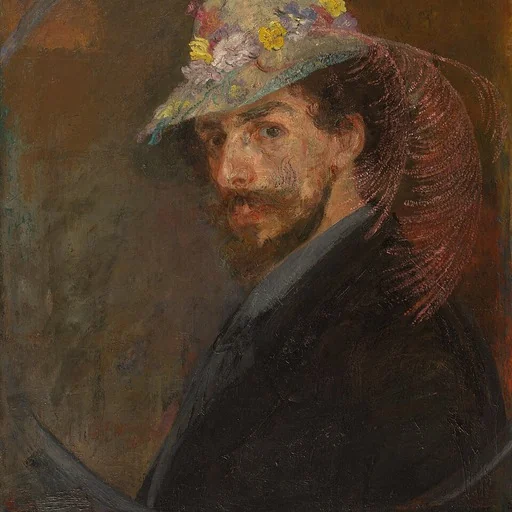
James Sidney Edouard, Baron Ensor (13 April 1860 – 19 November 1949) was a Belgian painter and printmaker, an important influence on expressionism and surrealism who lived in Ostend for most of his life.

Museum
Royal Museums of Fine Arts of Belgium
Continue through works from the same source collection.
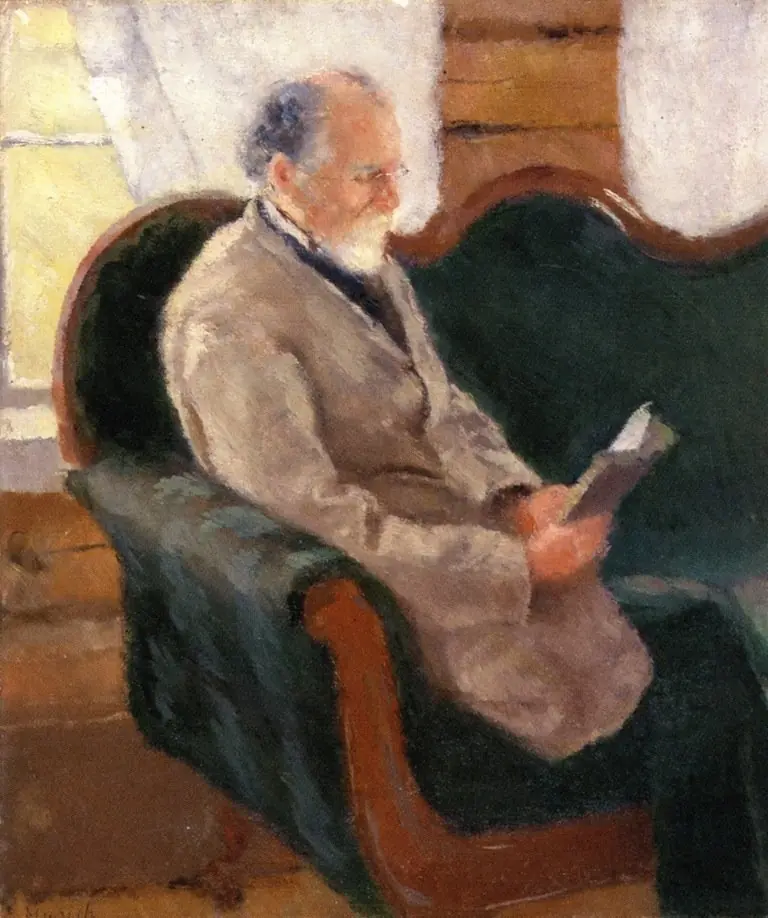 Christian Munch on the Couch
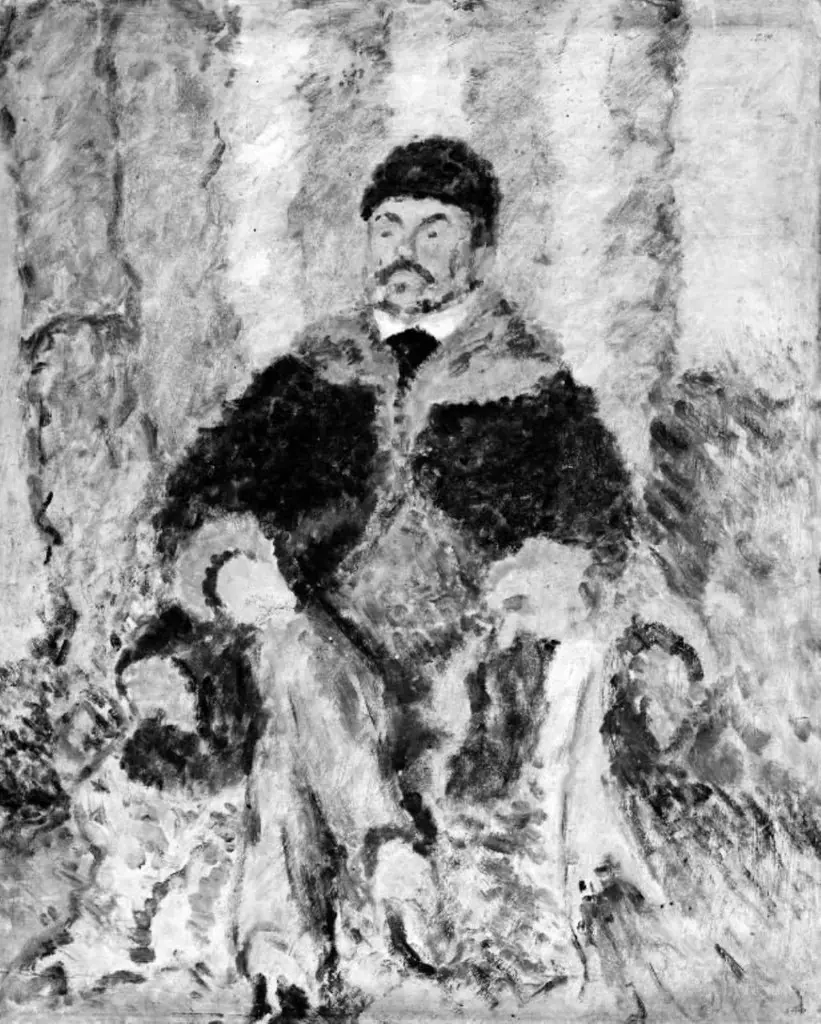 A Gentleman in Furs (The Artist's Father)
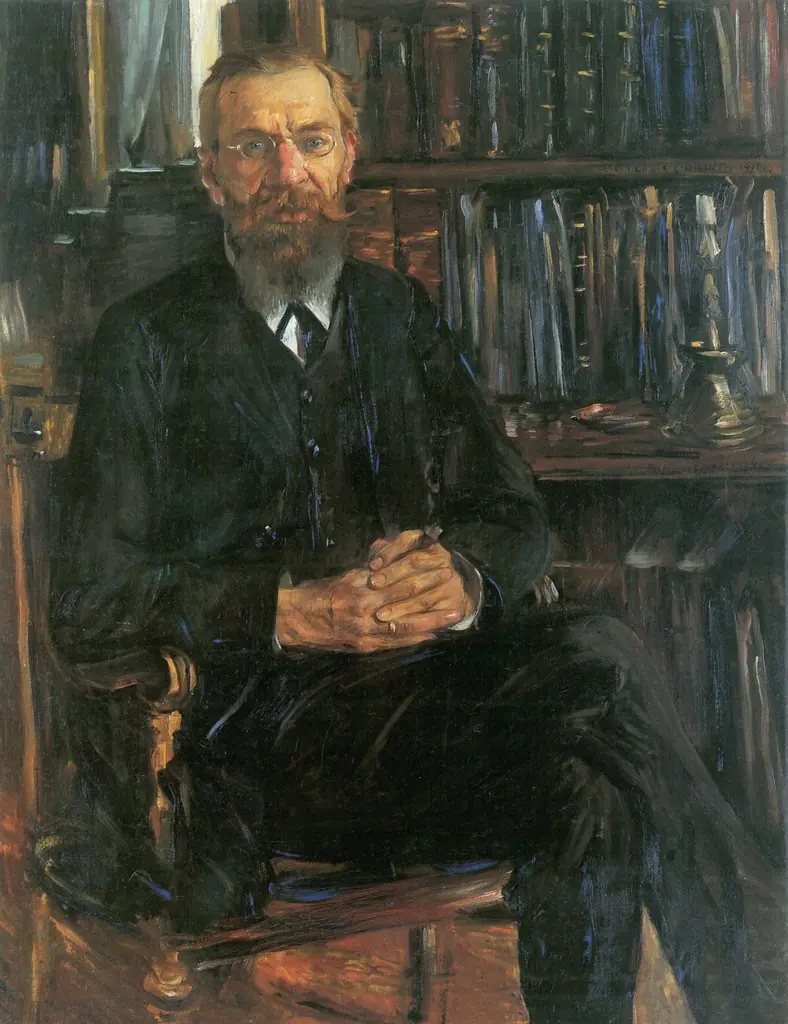 Portrait of Dr Edward Meyer (1855-1930), German historian
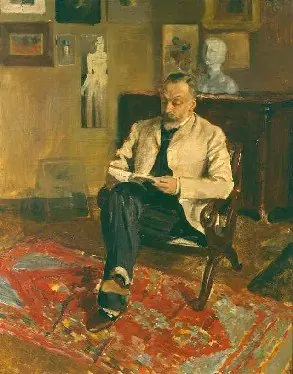 Edmond Evenepoel bij het lezen
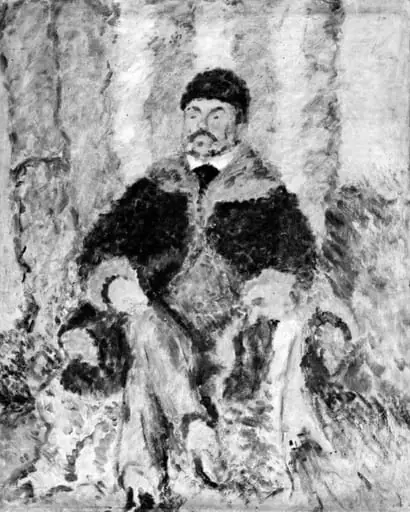 A Gentleman in Furs (The Artist's Father)
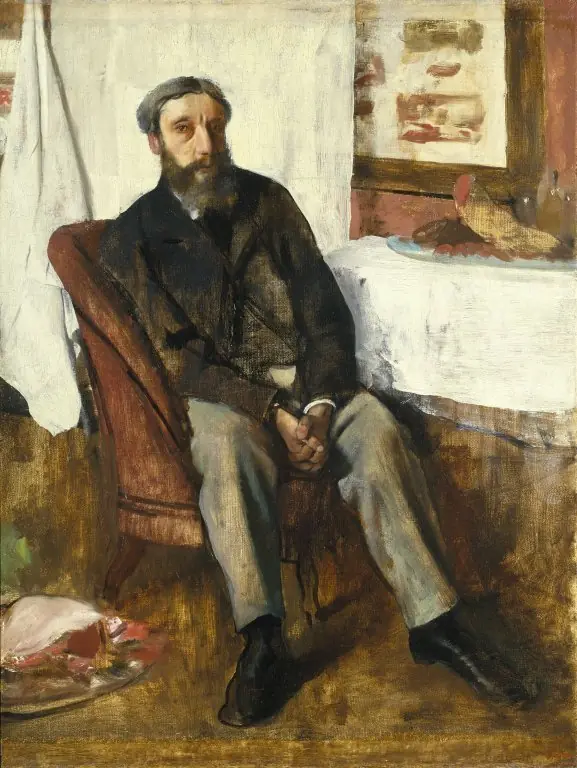 Portrait of a Man
 Self-Portrait
 Portrait of Gottfried Keller
 The Gardener Vallier
 Portrait of the Veterinarian Reindl
 Claude Monet
 Selfportrait Jozef Israëls