Artwork
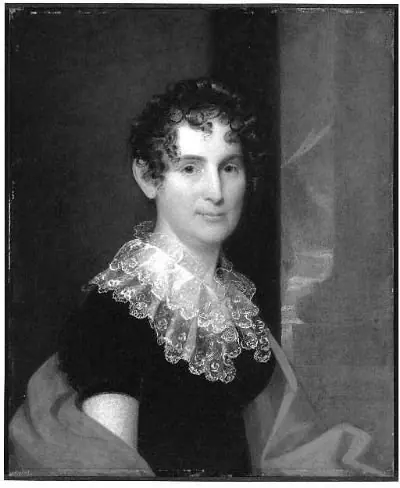
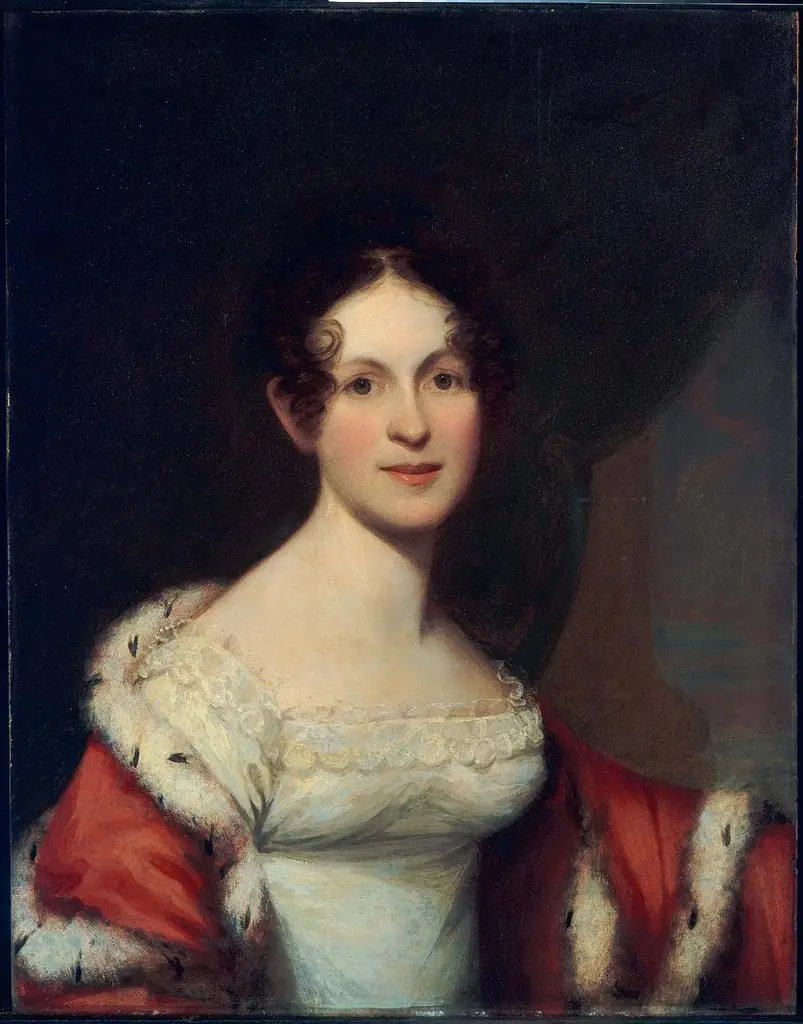
Mrs. Joseph Warren Revere (Mary Robbins)
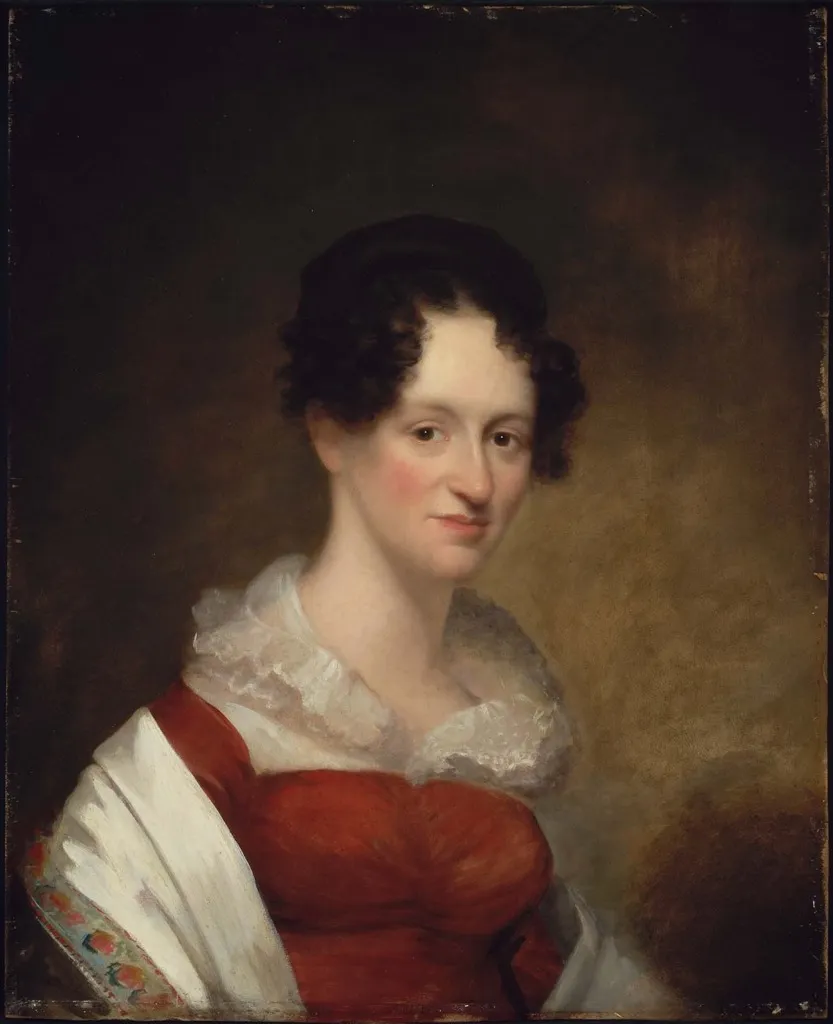
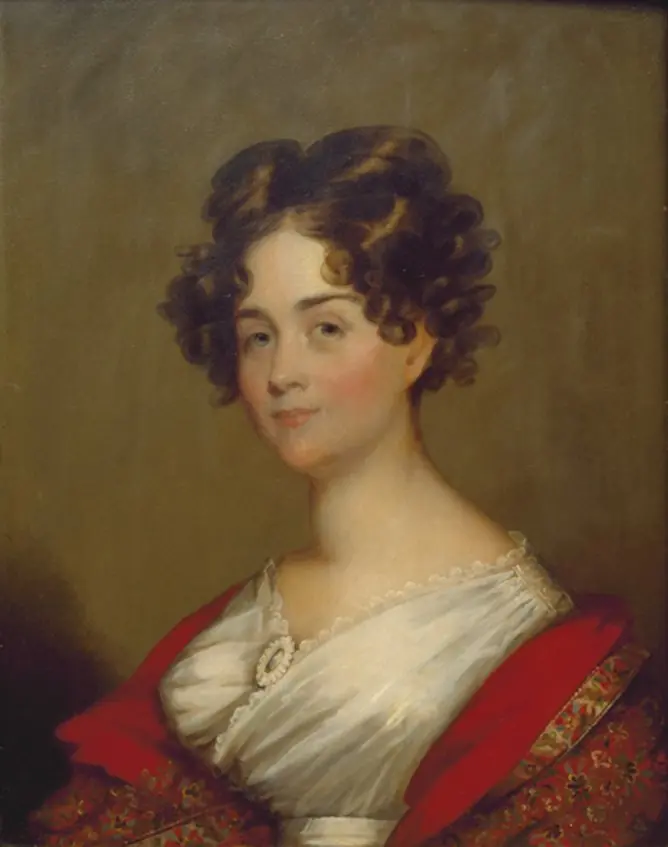
Mrs. Joseph Warren Revere (Mary Robbins) is an unspecified painting by the American Folk Art artist James Frothingham. It dates from 1821 and is held in the collection of the Museum of Fine Arts Boston.
About this work
Overview
The painting is part of the Museum of Fine Arts, Boston’s collection, reflecting its significance in early 19th-century American visual culture.
Painted in 1821 by James Frothingham, this portrait captures Mary Robbins, wife of Joseph Warren Revere. Frothingham, active in Massachusetts and New York, worked within a regional tradition of American portraiture that favored clarity and restraint over ornamentation. The painting is part of the Museum of Fine Arts, Boston’s collection, reflecting its significance in early 19th-century American visual culture.
Subject & Meaning
Mary Robbins is depicted as a member of a prominent New England family, her identity tied to her marriage to Joseph Warren Revere, son of the Revolutionary figure Paul Revere. The portrait conveys social standing through modest formality rather than grandeur. Her composed expression and simple attire suggest values of propriety and quiet dignity, typical of middle- and upper-class women of the era.
Technique & Style
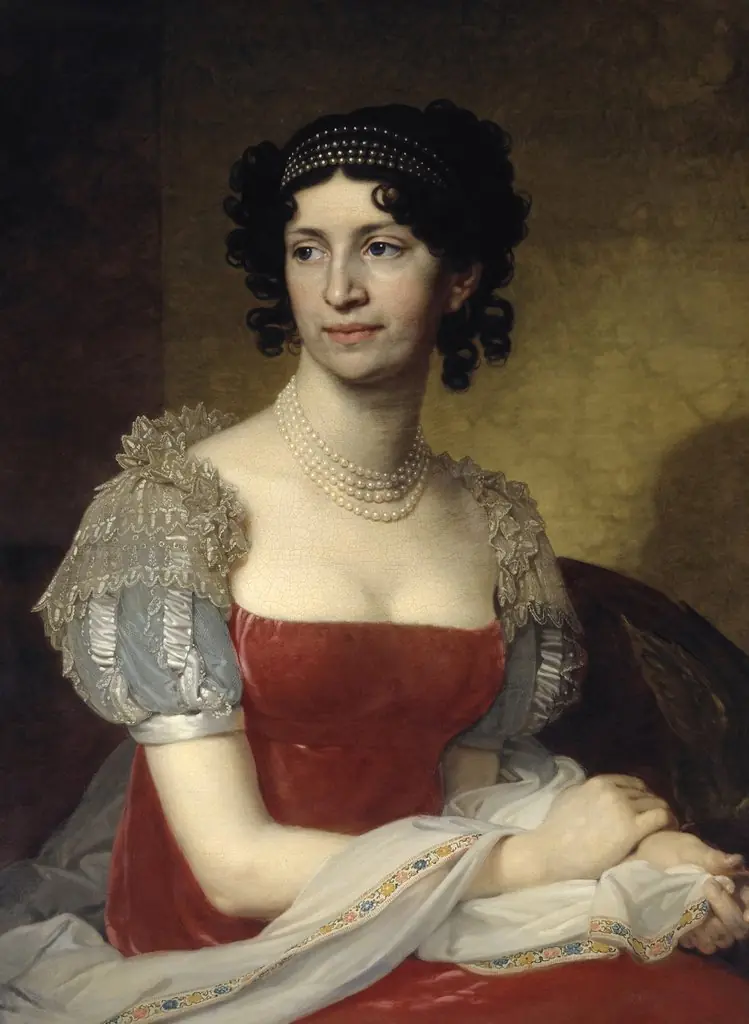
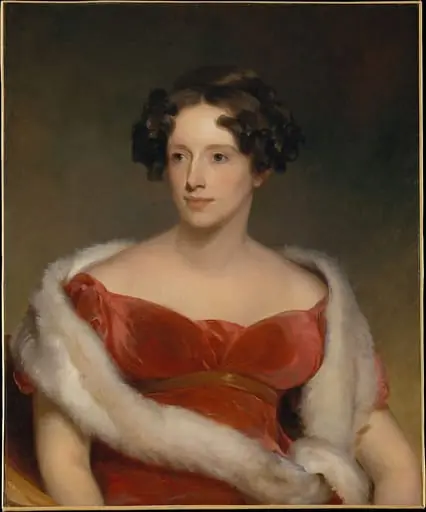
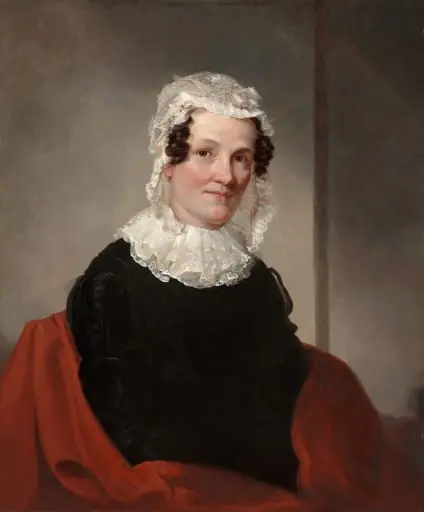
Frothingham rendered the subject with careful attention to textile detail, particularly the folds of the red dress and the edged white shawl. The dark background isolates the figure, drawing focus to her face and clothing. The style is realistic but unadorned, avoiding theatrical lighting or elaborate settings. Brushwork is precise yet unshowy, aligning with the functional aims of domestic portraiture in early America.
History & Provenance
Commissioned shortly after Mary Robbins’s marriage, the portrait likely served as a personal or familial keepsake. It entered the Museum of Fine Arts, Boston’s collection in the 20th century, where it remains as part of a broader effort to preserve regional American art. Its survival reflects the enduring interest in portraits of Boston’s merchant and military families from the post-Revolutionary period.
Context
In the 1820s, American portraiture was dominated by local artists serving middle-class patrons who valued likeness over idealization. Frothingham’s work fits within this trend, contrasting with the more ornate European styles. The painting’s simplicity reflects both economic pragmatism and cultural preferences in New England, where understated elegance was often preferred over ostentation.
Legacy
The portrait contributes to the understanding of how American families represented themselves during a period of national identity formation. It exemplifies the quiet, domestic character of early 19th-century portraiture outside major urban centers. Today, it stands as a record of personal and social norms, valued for its historical authenticity rather than artistic innovation.
Artist & collection
Artist
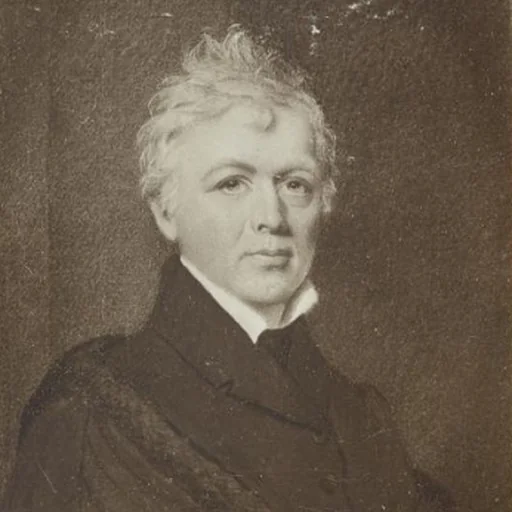
James Frothingham (1786–1864) was an American portrait painter in Massachusetts and New York. He was the father of the painter Sarah C. Frothingham.