Artwork
Cushendun in June
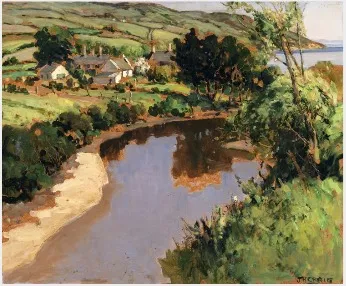
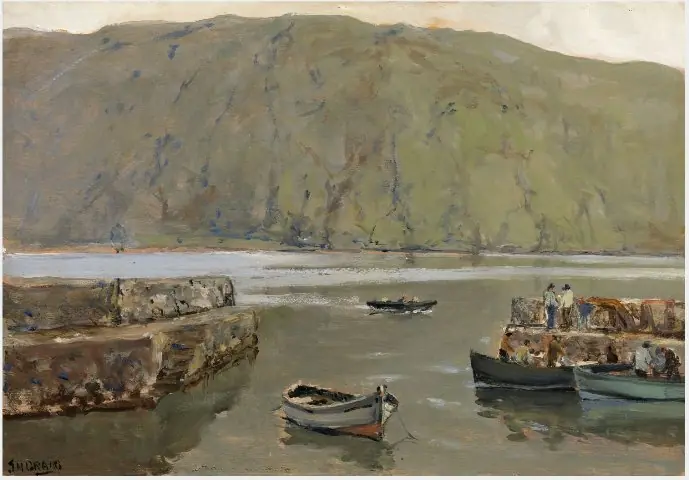
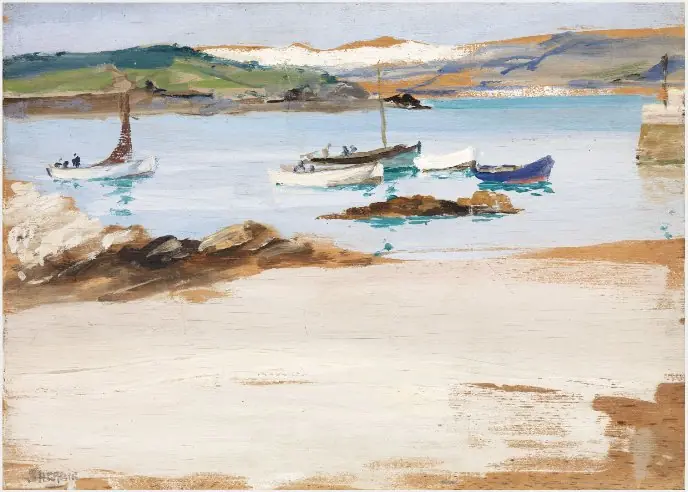
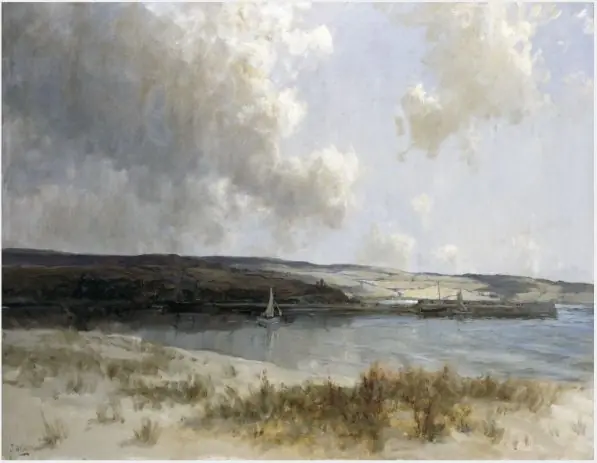
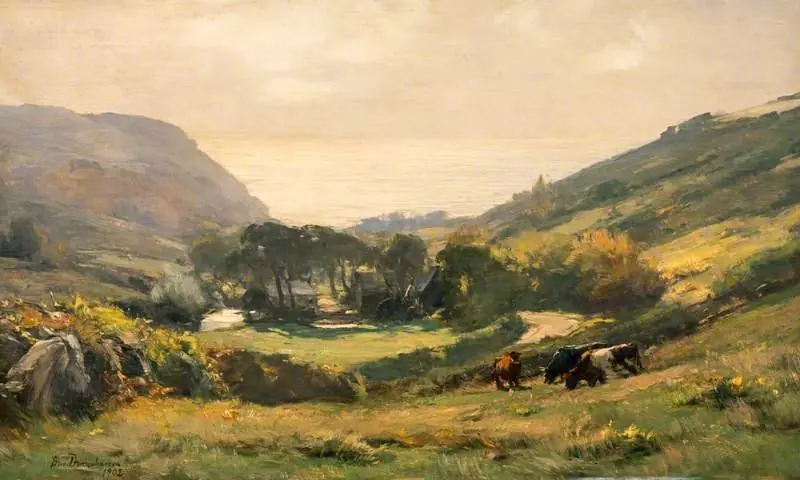
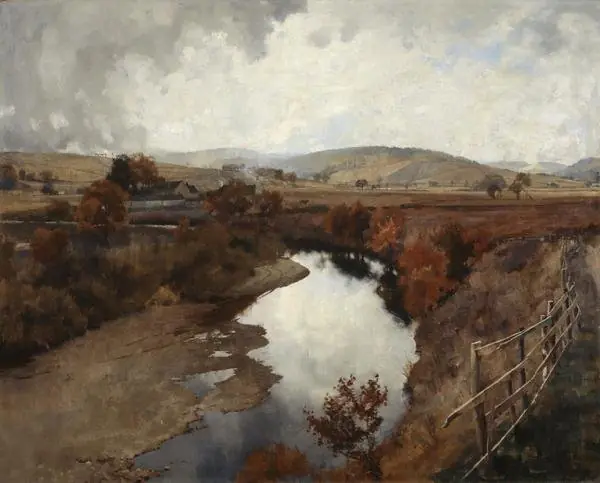
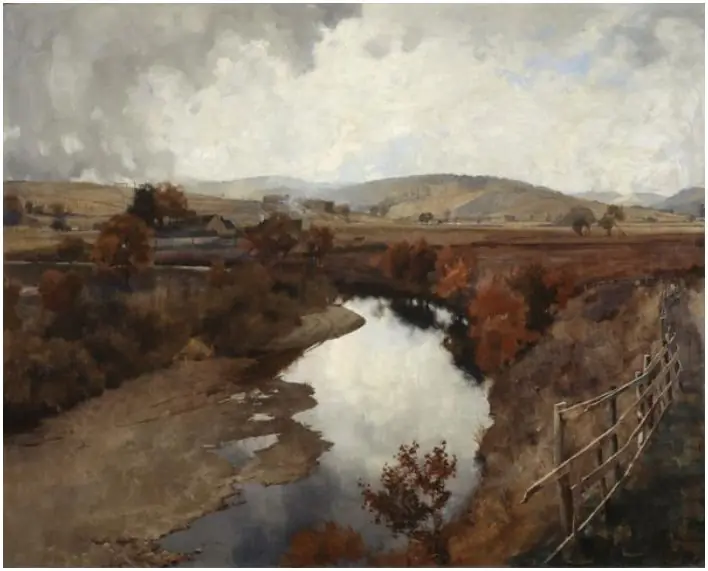
Cushendun in June is an unspecified painting by James Humbert Craig. It dates from 1920 and is held in the collection of the National Gallery of Ireland. Created circa 1920, the work portrays a river winding through a coastal setting near Cushendun in County Antrim.
About this work
Overview
Created circa 1920, the work portrays a river winding through a coastal setting near Cushendun in County Antrim. A sandy bank lines the water, which mirrors the sky and surrounding foliage, while modest dwellings and undulating green hills rise in the distance. The composition captures a tranquil moment of the Irish shoreline during early summer.
Subject & Meaning
The scene focuses on the interplay between water, land, and sky, emphasizing the quiet rhythm of a rural river landscape. By situating human habitation within the broader natural environment, the painting reflects a harmonious relationship between community and the rugged terrain of Northern Ireland, a recurring theme in the artist’s oeuvre.
Technique & Style
Visible brushwork creates a textured surface, particularly in the foliage and undergrowth, where varied hues of green and brown convey depth and shifting light. The artist employs a palette rich in earth tones, allowing reflections on the water to echo the sky’s tones. The handling of detail in trees and banks demonstrates a self‑taught yet confident approach to landscape painting.
History & Provenance
The piece was produced by James Humbert Craig, a Belfast‑born painter who left a commercial career to pursue art. Craig, known for depictions of the Glens of Antrim, Donegal, and Connemara, later earned membership in both the Royal Ulster Academy and the Royal Hibernian Academy. The painting is presently held in the collection of the National Gallery of Ireland.
Artist & collection
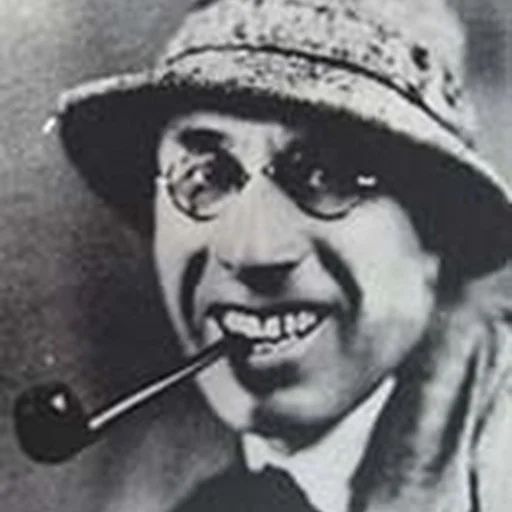
Artist
James Humbert Craig (12 July 1877 in Belfast – 12 June 1944) was an Irish painter.Craig was born in Belfast to Alexander Craig, a tea merchant, and a Swiss mother, Marie Metzenen, from a family with a painting tradition.