Artwork
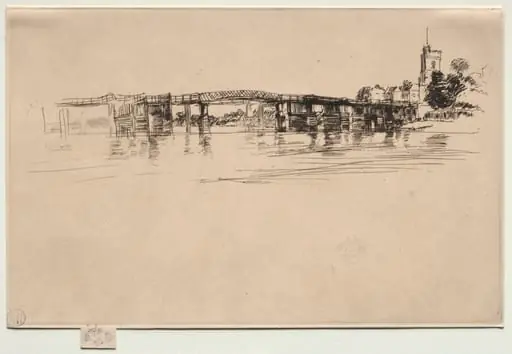
Evening, Little Waterloo Bridge
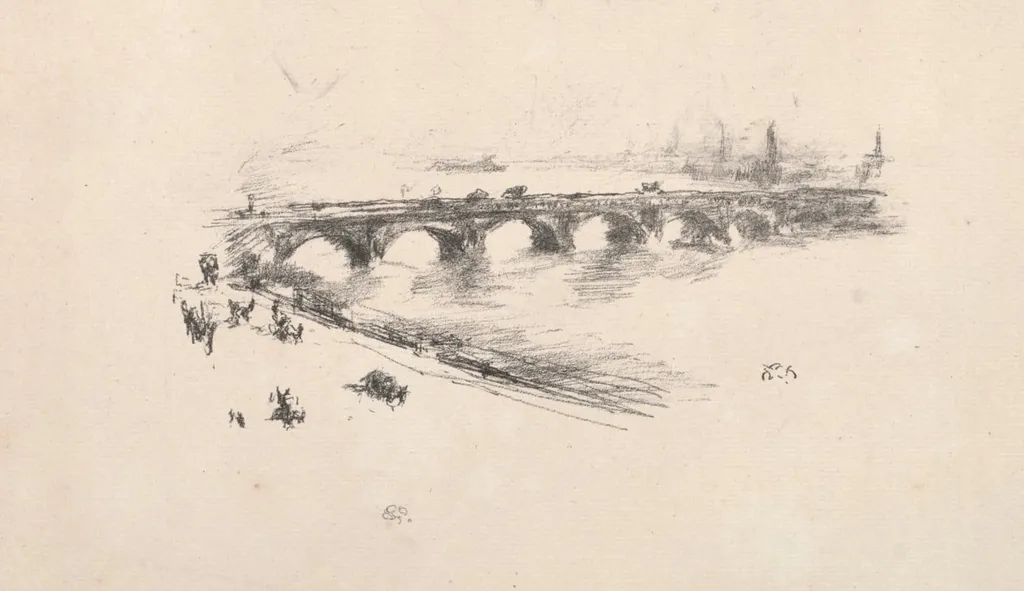
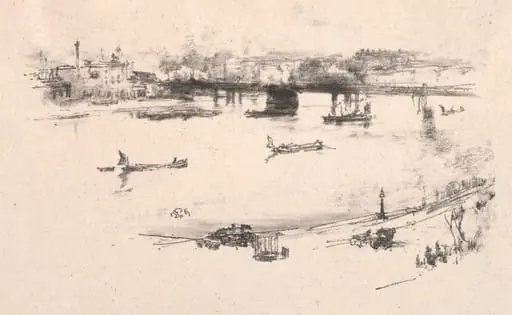
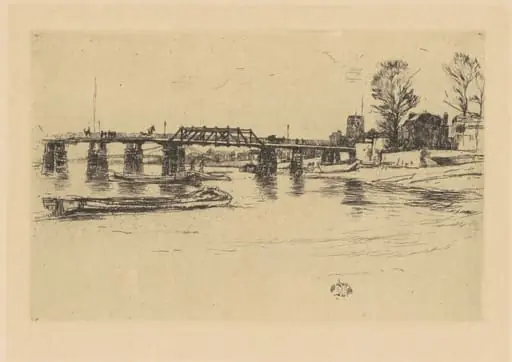
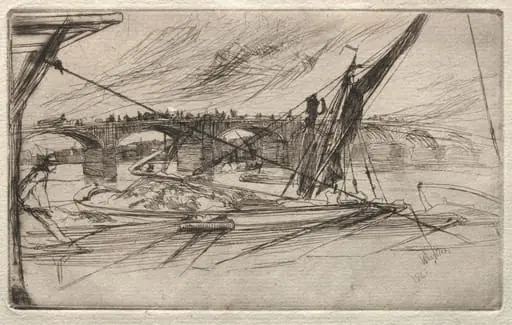
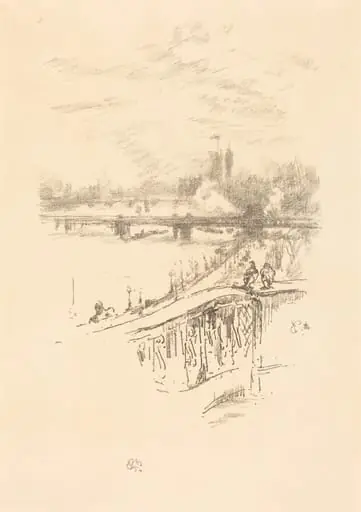
Evening, Little Waterloo Bridge is a print by the Impressionist artist James McNeill Whistler. It dates from 1896 and is held in the collection of the Cleveland Museum of Art.
About this work
The artist's use of light and shadow creates a sense of depth and atmosphere, drawing the viewer's eye to the bridge.
The painting "Evening, Little Waterloo Bridge" by James McNeill Whistler, created in 1896, is an Impressionist and Realist work held at The Cleveland Museum of Art. The image depicts a serene evening scene with a bridge in the background, set against a soft, muted color palette. The artist's use of light and shadow creates a sense of depth and atmosphere, drawing the viewer's eye to the bridge. The brushstrokes are loose and expressive, adding to the overall sense of movement and energy in the painting. The artist's use of chiaroscuro creates a sense of volume and texture, adding depth to the scene. The painting's soft colors and gentle light evoke a sense of calm and tranquility. To learn more about the artist's use of light and shadow, explore the technique of chiaroscuro.
Overview
Created in 1896, Evening, Little Waterloo Bridge is a print by James McNeill Whistler, part of his series exploring urban twilight scenes. It is held in the collection of The Cleveland Museum of Art. Unlike his more famous oil paintings, this work is executed in etching and aquatint, capturing the quiet transition from day to night over the Thames. The composition emphasizes atmosphere over detail, reflecting Whistler’s interest in tonal harmony and mood.
Subject & Meaning
The print depicts the Little Waterloo Bridge, a modest structure near the larger Waterloo Bridge, framed by the hazy silhouette of evening figures and distant buildings. Whistler avoids narrative detail, instead focusing on the stillness of dusk. The absence of clear human activity invites contemplation, aligning with his belief that art should evoke emotion through form and tone rather than tell stories. The bridge becomes a silent witness to the passage of time.
Technique & Style
Whistler employed etching and aquatint to achieve subtle gradations of gray and muted tones. His technique minimized sharp lines, favoring soft, blended textures that mimic the diffused light of twilight. The sparse use of ink creates negative space that suggests fog and water, while delicate hatching implies movement in the air and river. This restrained method reflects his aesthetic philosophy: art as an arrangement of tone, not a record of fact.
History & Provenance
The print was produced during Whistler’s later years, when he increasingly focused on nocturnal and atmospheric subjects. It was likely printed in a small edition, typical of his printmaking practice. The Cleveland Museum of Art acquired it in the 20th century as part of its growing collection of American prints. Its provenance traces back to Whistler’s personal archive and early collectors who valued his tonal experiments over traditional subject matter.
Context
Created during a period when London’s industrial landscape was rapidly changing, the print reflects Whistler’s fascination with the city’s quieter, less monumental corners. While contemporaries like Monet painted the grandeur of Waterloo Bridge, Whistler turned to its lesser-known neighbor, emphasizing solitude over spectacle. His approach aligned with Aesthetic Movement ideals, prioritizing sensory experience over moral or historical narrative.
Legacy
Evening, Little Waterloo Bridge exemplifies Whistler’s influence on modern printmaking through its emphasis on mood and abstraction. Later artists, particularly those in the American Tonalist tradition, drew from his use of limited palettes and atmospheric suggestion. Though not widely exhibited, the work remains a quiet touchstone in studies of late 19th-century print aesthetics, valued for its restraint and emotional nuance.
Artist & collection
Artist
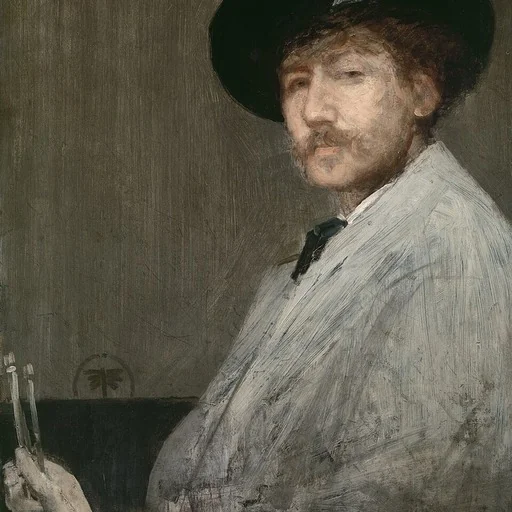
James Abbott McNeill Whistler was an American painter in oils and watercolor, and printmaker, active during the American Gilded Age and based primarily in the United Kingdom.

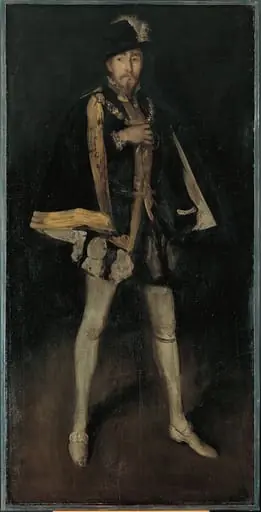 Arrangement in Black, No. 3: Sir Henry Irving as Philip II of Spain
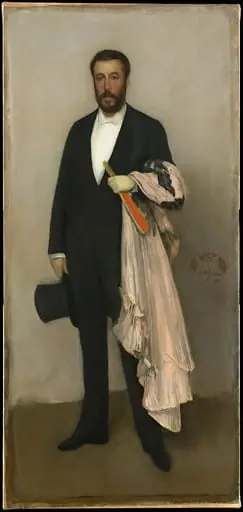 Arrangement in Flesh Colour and Black: Portrait of Theodore Duret
 Gold and Brown: Self-Portrait
 Edward Guthrie Kennedy
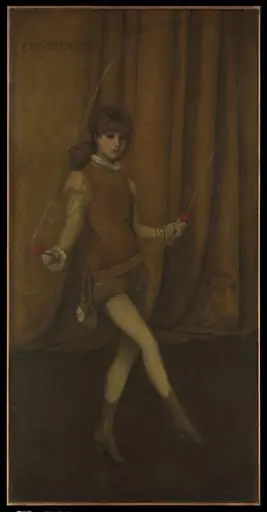 Harmony in Yellow and Gold: The Gold Girl—Connie Gilchrist
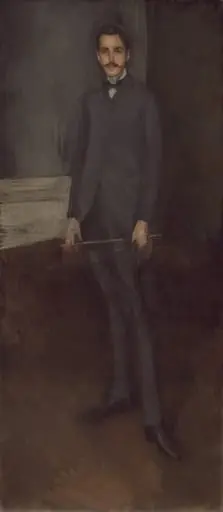 George W. Vanderbilt
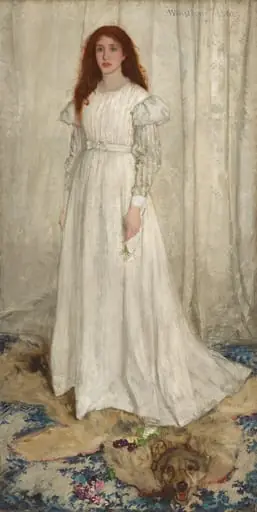 Symphony in White, No. 1: The White Girl
 Henry Irving as Philip II of Spain